
This Philippine-based startup reframes prefab housing through precision engineering, sustainable systems, and a globally informed perspective.
Shelter has always been shaped by systems. Concrete dictates cadence. Steel defines sequence. Entire lives are arranged around timelines that stretch, stall, and slip. Traditional construction asks for patience, often without precision. Even the most carefully planned homes become subject to variables beyond the owner’s control—weather, workforce, workflow.
Hive Modular enters this equation by removing uncertainty at its source. Instead of assembling structures entirely on-site, the company builds its homes inside a controlled factory environment, where materials, measurements, and methods are managed with exactness. The result is a different construction experience—one defined less by delay and more by delivery.
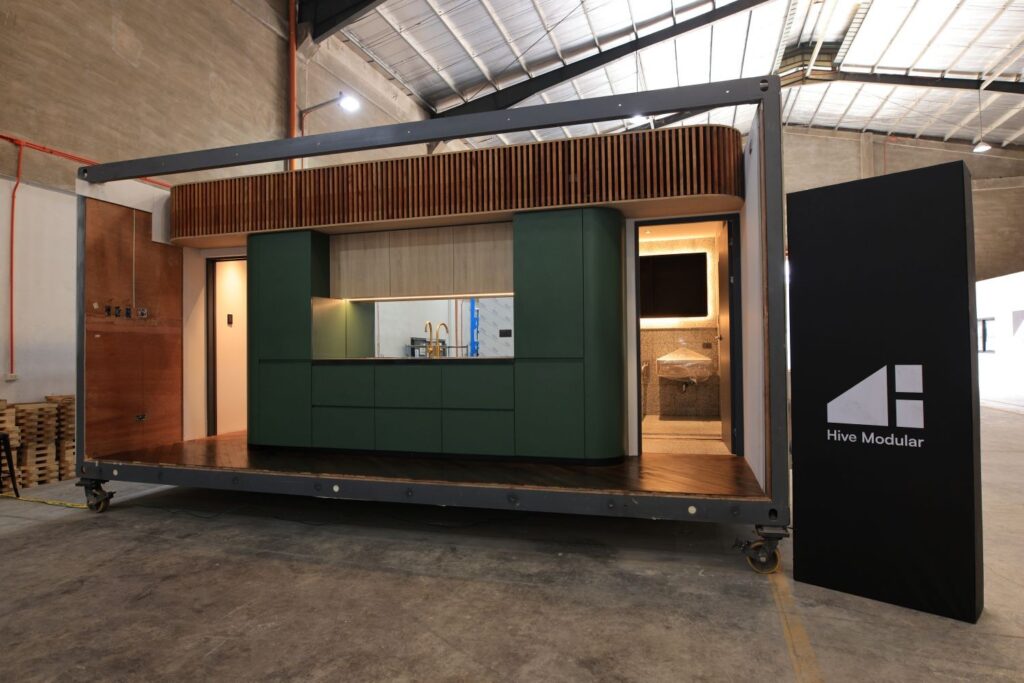
Founded in 2023, Hive Modular positions itself within a growing global movement toward prefabrication. But its approach is shaped as much by engineering discipline as it is by cultural and economic context. The company builds modular homes designed to last more than 50 years, each backed by a 15-year structural warranty. Longevity, in this case, is engineered from the outset rather than tested over time.
Engineering a different approach
Hive Modular’s origins reflect the interdisciplinary perspective of its founder, John Avrett. Before establishing the company, Avrett served as head of the U.S. Embassy’s trade and investment office in the Philippines, where he worked closely with multinational firms navigating the local market. His role exposed him to the country’s manufacturing potential and its capacity for high-skill industrial production.
“I saw high-tech, highly skilled manufacturing as a true driver of economic development,” Avrett said during the factory tour. “The Philippines has the workforce and the capability. The question was how to apply that to an industry that hasn’t seen much innovation.”
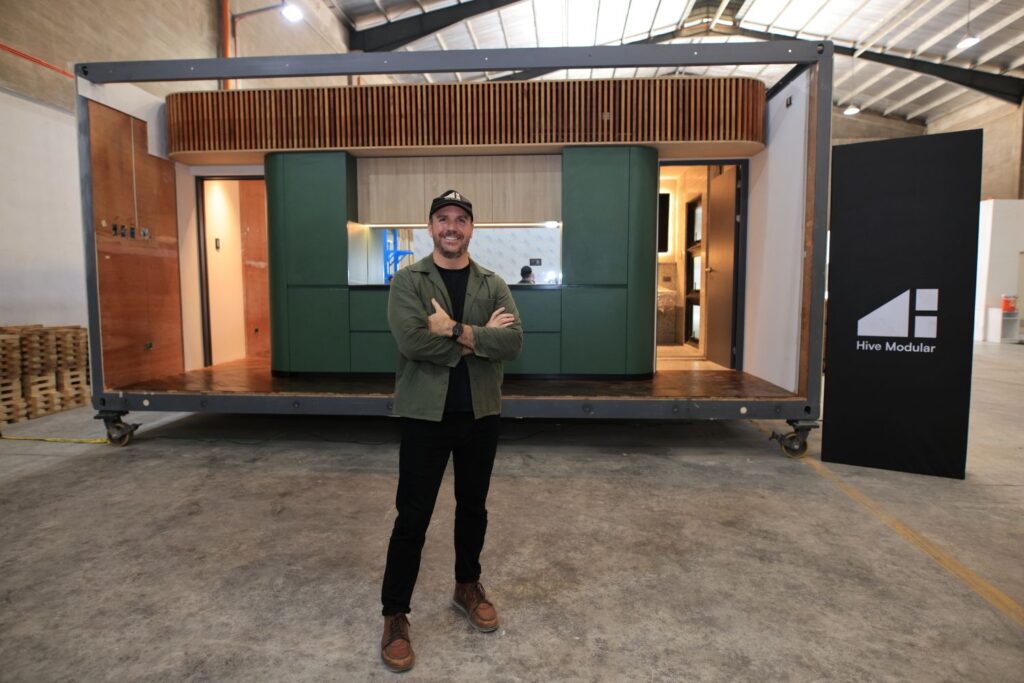
Avrett’s technical foundation preceded his diplomatic career. Trained as an electrical engineer, he previously worked with the U.S. Air Force on aerospace systems—an environment where precision, repeatability, and efficiency are essential. The contrast between aerospace manufacturing and conventional construction was immediate.
“What motivated me to start Hive was applying lessons from aerospace and automotive industries to construction,” he explained. “It’s an industry that’s hugely important, but one that hasn’t fundamentally changed in how it builds.”
That perspective informs Hive Modular’s core process. Structural components are fabricated in the factory, where conditions remain stable and quality can be monitored consistently. Once completed, units are transported to their destination and installed on-site. By shifting complexity away from the construction site, the company reduces exposure to delays while improving consistency.
Standardization without uniformity
Prefabrication often raises questions about customization. Hive Modular addresses this through a system that standardizes structure while allowing variation in finishes and interior details. Flooring, cabinetry, and material selections can be tailored, while the underlying framework remains consistent.
Avrett describes this balance as essential.
“A house isn’t just a product. People have an emotional connection to it,” he said. “By standardizing the structural components, we can ensure quality and efficiency. That allows owners to focus on the elements that define their space.”
The company currently offers multiple pre-designed models, including a 60-square-meter unit with integrated outdoor space. These structures are intended for both residential and hospitality use, where speed and predictability are particularly valuable.
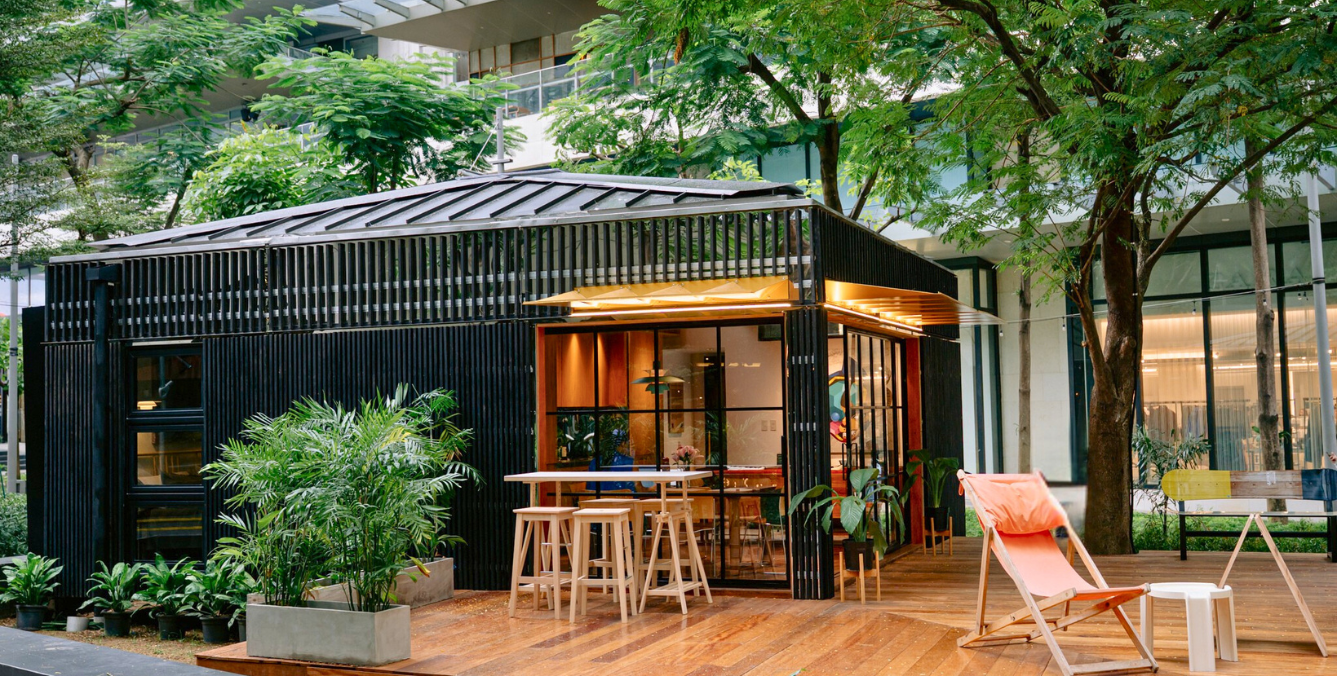
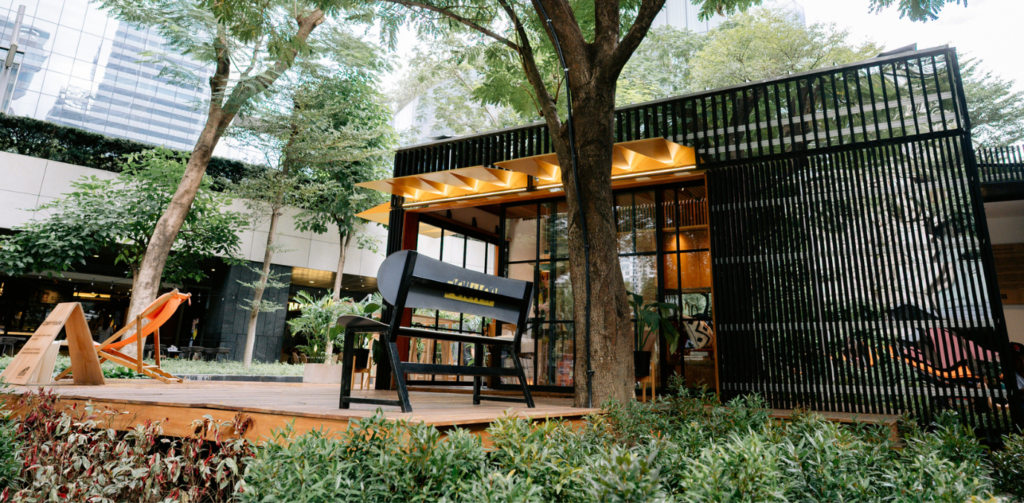
In early 2025, Hive Modular demonstrated its installation capabilities by placing a prototype unit in Bonifacio Global City. The structure was transported and assembled within a highly visible urban environment—an exercise that underscored both mobility and feasibility.
For Avrett, the installation marked a turning point.
“That was when we were able to show people what we could actually deliver,” he said. “Not just in theory, but in practice.”
Building within a broader framework
Hive Modular’s ambitions extend beyond individual housing units. The company situates its work within a larger industrial and economic context, emphasizing local manufacturing and technical employment.
By producing units domestically, Hive contributes to the development of engineering and manufacturing capacity in the Philippines. This approach aligns with broader efforts to strengthen industrial infrastructure while addressing housing demand.
Sustainability remains a parallel priority. Hive Modular is currently pursuing EDGE certification, an international standard that evaluates resource efficiency in building design. The company also emphasizes responsible sourcing and material efficiency within its production process.
These considerations reflect a shift in how housing is evaluated—not only as shelter, but as part of a wider system that connects technology, labor, and environmental impact.
Financing the future of faster housing
Beyond engineering and efficiency, modular construction faces a quieter structural challenge: financing. Traditional housing loans are designed around conventional timelines, where construction unfolds gradually and collateral forms in stages. Modular building reverses that sequence. Most of the work is completed upfront, inside the factory, long before the structure reaches its final site.
This inversion requires financial systems to adapt.
Avrett acknowledged that access to financing remains one of the industry’s most significant barriers globally. “Lack of financing is one of the key roadblocks to scaling modular construction,” he said. “Compared to traditional construction, we require more capital upfront to complete the unit before installation.”
Hive Modular is currently in discussions with local financial institutions to develop lending frameworks suited to prefabricated housing. These conversations signal a shift not only in how homes are built, but in how they are valued. As banks begin to recognize modular housing as durable, insurable, and permanent, accessibility expands.
What follows is not simply faster construction—but broader participation.
Standardized structure, scalable living
Hive Modular’s current residential offerings reflect a balance between fixed engineering and flexible habitation. Each unit follows a standardized structural framework, allowing the company to maintain consistency in performance while accommodating variations in finishes and external features.
The Casita X, Hive Modular’s flagship model, measures 60 square meters in total area, including a private outdoor deck. It includes one bedroom, one bathroom, and a fully equipped kitchen with full-size appliances. The unit arrives fully air-conditioned and configured for immediate occupancy, with provisions for utility integration depending on site conditions. Pricing begins at ₱7.5 million, with reservations secured through an initial ₱25,000 deposit.

A more economical option, the Casita M, offers the same total footprint but with 45 square meters of interior space and simplified finishes. Designed with scalability in mind, the model prioritizes efficiency without compromising structural integrity. It includes a bedroom, bathroom, living area, kitchen, and deck, and starts at ₱5 million.
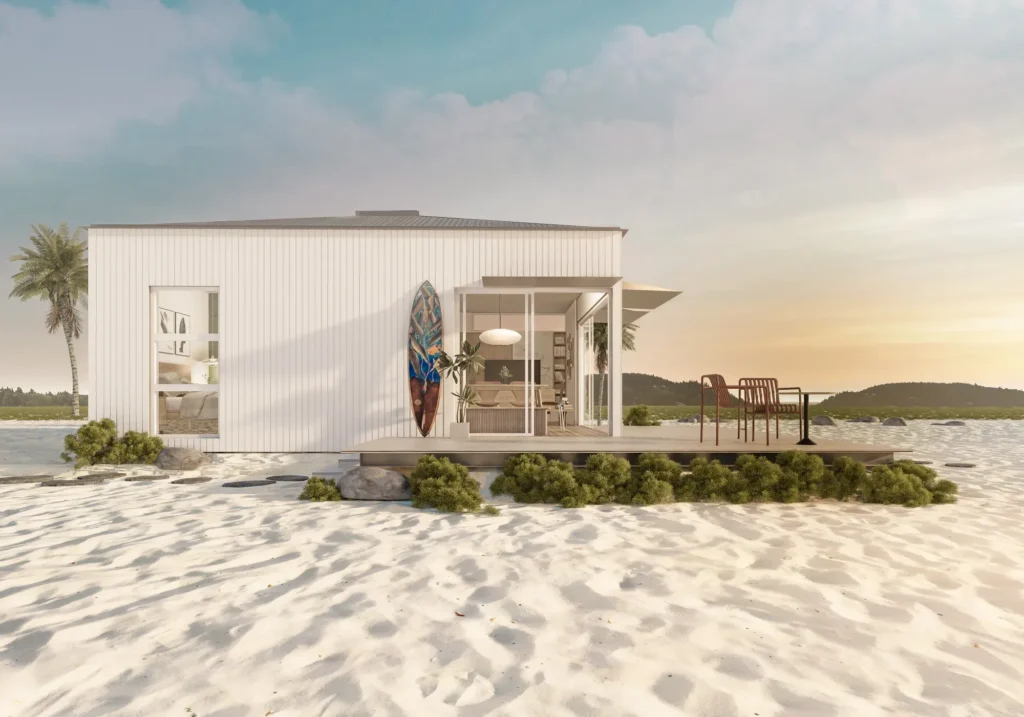
Both models operate within a modular system that accommodates site-specific extensions and third-party integrations. Owners may incorporate off-grid energy systems, water storage solutions, or outdoor architectural features such as pergolas and decking. Hive Modular coordinates these additions alongside installation, allowing each structure to adapt to its environment while preserving its engineered core.
Rethinking permanence for a generation in motion
For many millennials, housing exists in tension with mobility. Careers evolve across cities. Lifestyles shift across seasons. Ownership no longer follows a single, linear trajectory. Instead, it adapts—balancing permanence with possibility.
Modular construction responds to this reality by redefining how permanence is achieved. A home is no longer tied to prolonged construction cycles or prolonged disruption. It arrives complete, designed for longevity yet delivered with immediacy.
The implications extend beyond efficiency. They reshape the emotional timeline of ownership itself. Instead of waiting years for a home to materialize, individuals can move directly into a finished structure—one built to endure, yet created through contemporary methods.
This shift reframes housing not as a prolonged process, but as a deliberate outcome.
And in a landscape where shelter has long been governed by delay, Hive Modular presents a system shaped by intention, precision, and permanence—one that aligns as much with the pace of modern life as it does with the structures meant to hold it.
Reframing the timeline of housing
Modular construction does not eliminate the emotional and cultural significance of a home. Instead, it alters the process through which that home comes into being. By transferring structural complexity into a controlled setting, Hive Modular reduces unpredictability while maintaining design integrity.
The factory becomes the site of precision. The installation becomes the moment of completion.
What emerges is not simply a faster way to build, but a different way to think about building altogether—one that reflects contemporary expectations around efficiency, sustainability, and permanence.
In a landscape where housing often feels defined by delay, Hive Modular introduces a process defined by intention, precision, and permanence.
Related story: What’s in and what’s out: Simple quirks that are quietly shaping a layered living
Related story: Your neighborhood might be IKEA’s next stop