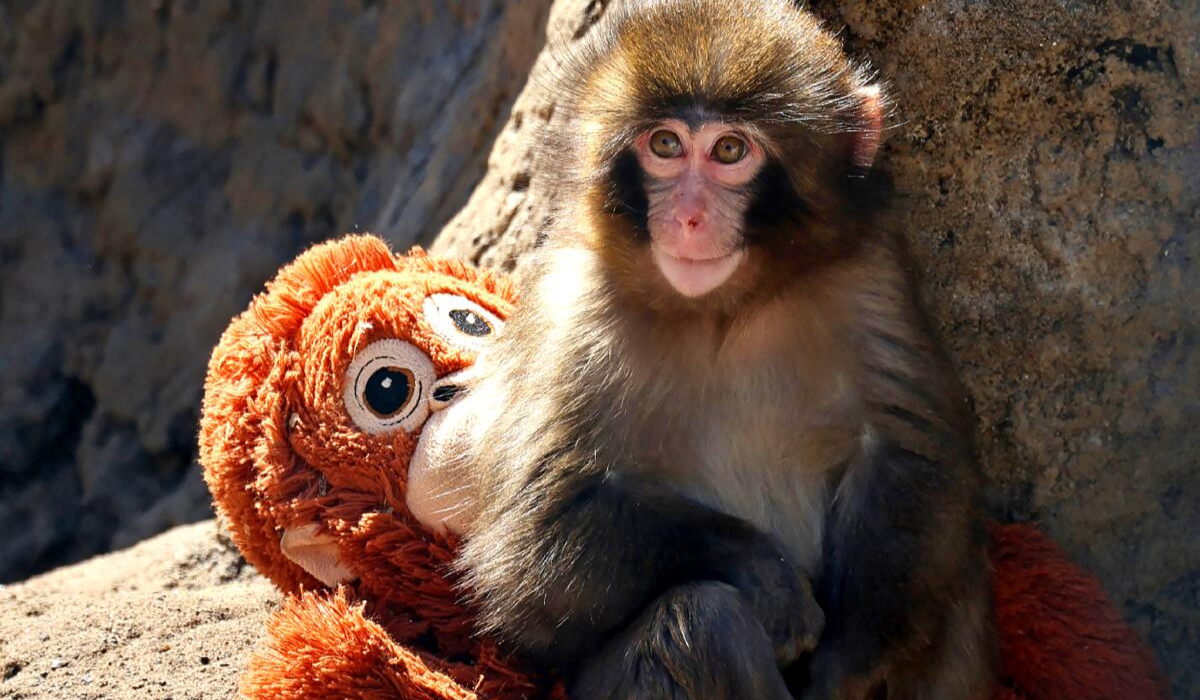

After being abandoned at birth, Punch the baby macaque went viral for clinging to a plush toy, drawing global attention, IKEA donations, and widespread calls to protect him.
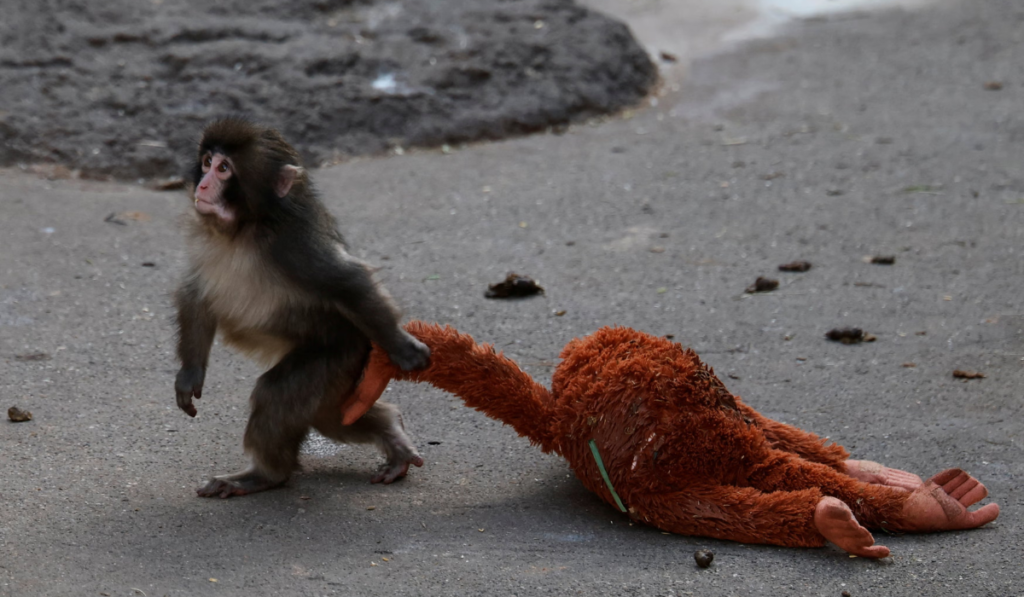
For a brief moment, the internet stopped scrolling—not because of a celebrity, but because of a baby monkey clutching a stuffed toy. His name is Punch, and in a matter of days, he transformed from an abandoned infant in a Japanese zoo into one of the most recognizable animals in the world—sparking tears, adoption offers, sold-out toys, and a global conversation about loneliness, empathy, and resilience.
Related story: Your pets, strays need protection from the heatwave, too
Related story: What losing a pet teaches us about grief
How a single video changed everything
Punch, a baby Japanese macaque born in July 2025 at Ichikawa City Zoo near Tokyo, was abandoned by his mother shortly after birth. Without maternal care, zoo staff stepped in, feeding him by hand and raising him themselves. But what truly captured the world’s attention came later.
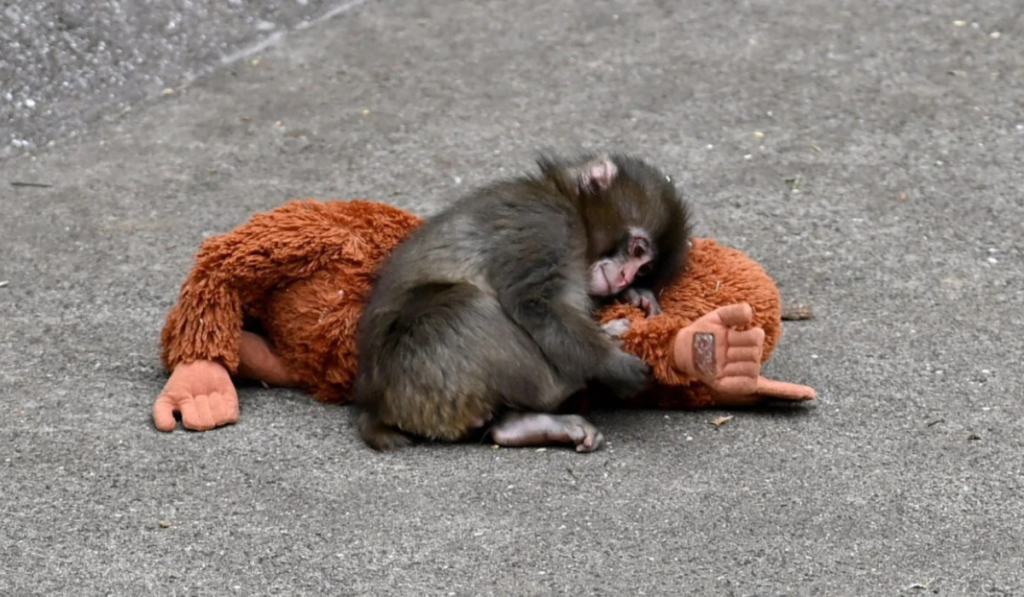
In viral videos posted online, Punch was seen clinging tightly to a plush orangutan toy—using it the way baby macaques naturally cling to their mothers. Other clips showed him being pushed away, bullied, or ignored by older monkeys, and retreating to the toy for comfort.
The emotional imagery resonated immediately. Within days, millions watched, shared, and commented. A hashtag translating to “Hang in there, Punch” spread across platforms, turning him into a symbol of vulnerability and endurance. For many, the story felt deeply human.
Why other monkeys initially rejected him
Punch’s early rejection wasn’t unusual in the primate world, but it was heartbreaking to witness. Japanese macaques are intensely social animals, living in structured groups where bonding begins at birth through maternal attachment. Without that bond, Punch entered the troop lacking the social cues and confidence typically learned from a mother.
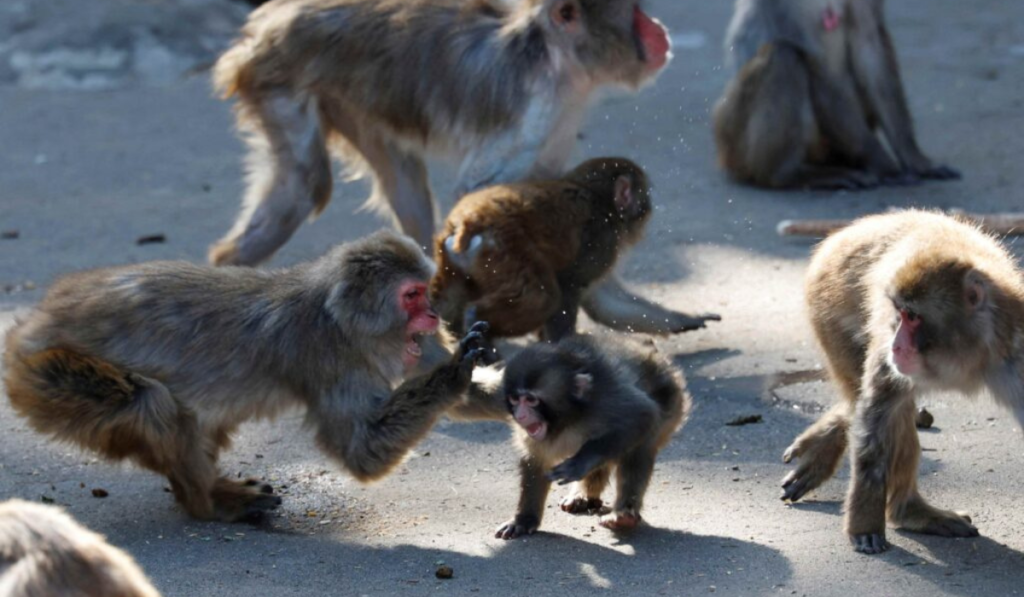
When Punch was introduced to a troop of about 60 macaques, he showed signs of anxiety and isolation, struggling to integrate socially. Experts say maternal abandonment in macaques can occur for several reasons—including inexperience, environmental stress, or health issues affecting the mother. In Punch’s case, the absence of early maternal care made him vulnerable—not just physically, but socially.
Understanding the social behavior of macaques
Japanese macaques, often called snow monkeys, are highly social primates that live in structured, hierarchical troops. These groups can range from a few dozen to over a hundred individuals, and social bonds are central to survival.
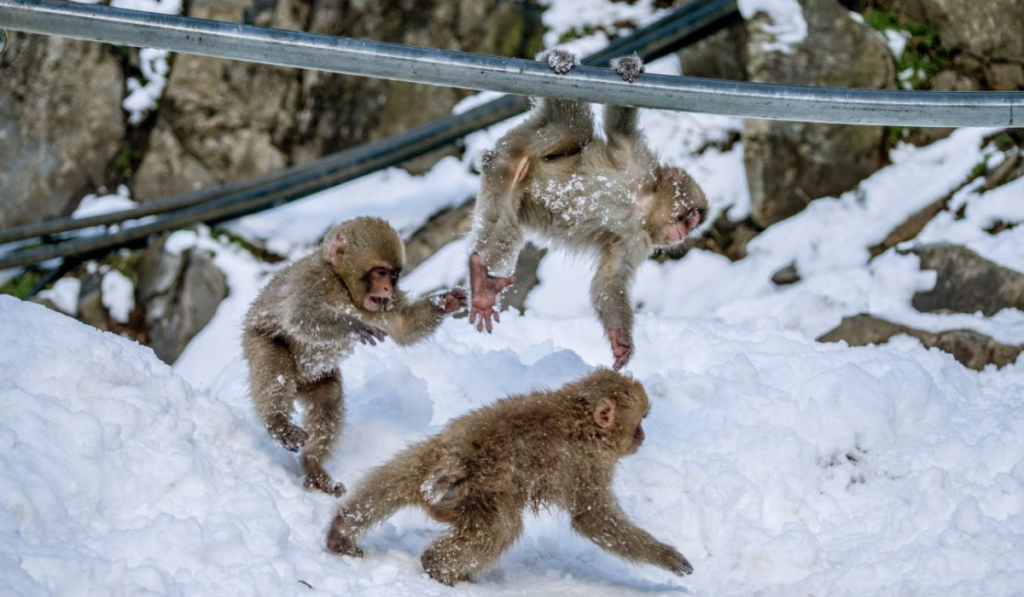
From birth, infant macaques cling tightly to their mothers, relying on them not only for nourishment but for protection, warmth, and social learning. Through maternal contact, young monkeys begin to understand group dynamics—who outranks whom, how to groom properly, how to interpret facial expressions, and when to submit or assert dominance.
Grooming plays a crucial role in macaque society. It’s not just about hygiene; it’s about trust and alliance-building. Monkeys that groom one another strengthen bonds and improve their social standing. Without early maternal attachment, an infant macaque may struggle to interpret these cues correctly.
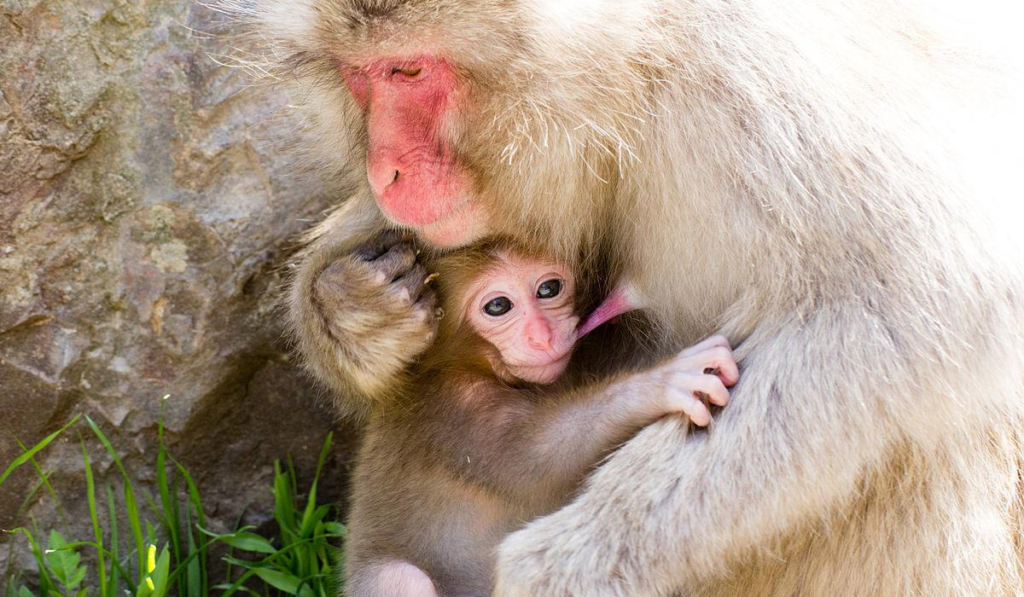
Macaques also maintain strict dominance hierarchies, especially among females, where rank can be inherited from the mother. A mother’s position in the troop significantly affects her offspring’s social future. Without that maternal anchor, integration into the group becomes more complex. In Punch’s case, it meant he entered social interactions without the foundational security macaques naturally develop.
Why did Punch’s mother leave him?
While the internet framed Punch’s story as purely tragic, maternal abandonment in primates—though rare—is not unheard of. There are several possible reasons a macaque mother may reject her infant:
- Inexperience: First-time mothers sometimes struggle with maternal instincts. Without prior experience, they may fail to properly bond or respond to the newborn.
- Stress: Environmental disruptions, social instability within the troop, or captivity-related stress can affect maternal behavior.
- Health Issues: If a mother senses that an infant is weak or unwell, instinct may drive her to conserve energy for future offspring.
- Social Pressure: In tightly ranked groups, lower-status females may experience additional stress that impacts maternal care.
In primate societies, survival often overrides sentiment. What appears emotionally harsh to humans can sometimes be instinctive behavior rooted in evolutionary survival patterns.
Zoo caretakers stepped in immediately when Punch was rejected, ensuring he received nourishment and warmth during his most vulnerable stage. While his mother’s absence shaped the early narrative of his life, it also set the stage for the extraordinary global empathy that followed.
Today, as Punch gradually forms bonds within his troop, his story reflects both the fragility and resilience embedded in primate social systems.
The IKEA toy that became his “mother”
Zoo staff eventually gave Punch an IKEA orangutan plush toy designed with long fur and a primate-like shape—something he could cling to naturally. He immediately formed a bond with it.
Punch carried it everywhere: climbing with it, hugging it, and even shielding it from other monkeys. Many observers described the toy as a surrogate mother figure, filling the emotional gap left by his abandonment.
The emotional power of those images triggered an unexpected chain reaction. The toy—which costs P699 in the Philippines—sold out in some countries worldwide. Some resellers even listed it for as much as US$350.
IKEA Japan responded by donating dozens of replacement plush toys directly to Punch and his caretakers, ensuring he would always have a source of comfort.
The internet tried to adopt him
As Punch’s story spread, social media users flooded comment sections with messages of support. Some offered to adopt him; others pledged donations to the zoo or purchased identical plush toys in solidarity.
Even public figures were moved. Former football star Javier “Chicharito” Hernandez shared his emotional reaction online, describing Punch’s story as a reminder of vulnerability and resilience.
Filipina content creator Lottie Bie took to Instagram as well, calling attention to his story in the midst of her own postpartum struggles.

Meanwhile, the zoo saw unprecedented visitor numbers, with crowds forming just to catch a glimpse of the tiny macaque who had captured the internet’s heart.
Where is Punch now?
Today, Punch remains at Ichikawa City Zoo, where caretakers continue to monitor his emotional and social development.
Thankfully, his situation has improved. Zoo officials report that he has begun forming bonds with other monkeys and gradually integrating into the troop. This progression is critical. For macaques, belonging to a social group is essential for long-term psychological health. While the plush toy helped Punch survive his emotional isolation, real social bonds are necessary for his future.
Experts expect that as he matures, he will rely less on the toy and more on relationships with other monkeys. In many ways, Punch is still in the middle of his story.
Why his story resonated so deeply
Punch’s viral moment wasn’t just about a monkey and a toy. It was about something universal. His story mirrored human experiences of rejection, loneliness, and the search for a safe space. Watching him cling to something soft and familiar felt relatable, even across species.
It also highlighted the emotional complexity of primates, whose social structures, attachments, and emotional responses often resemble our own. In the end, Punch didn’t go viral because his narrative was unusual. He went viral because people can identify with his social isolation. He was recognizable.
A symbol of survival—and connection
Punch remains a small figure in a large enclosure in a city outside Tokyo. But his impact has extended far beyond it. He was able to change consumer behavior in one go, drawing national and global attention. He moved strangers and maybe even the coldest hearts to tears, raked in unsolicited donations, and received love from different directions.
Most importantly, he reminded millions of people—if only briefly—of the quiet power of empathy. Somewhere in Japan, Punch still holds his plush companion. Although in some occasions, he is beginning to let go—not because he no longer needs comfort, but because he is finally finding something else: belonging.
Related story: After a spate of animal cruelty, here’s a look at PH laws protecting our furry friends
Related story: A fur-ever home: Lessons on caring for stray animals from Mexico’s palace cats
Related story: My aspin Abby and I are no strangers to discrimination. We are the outliers