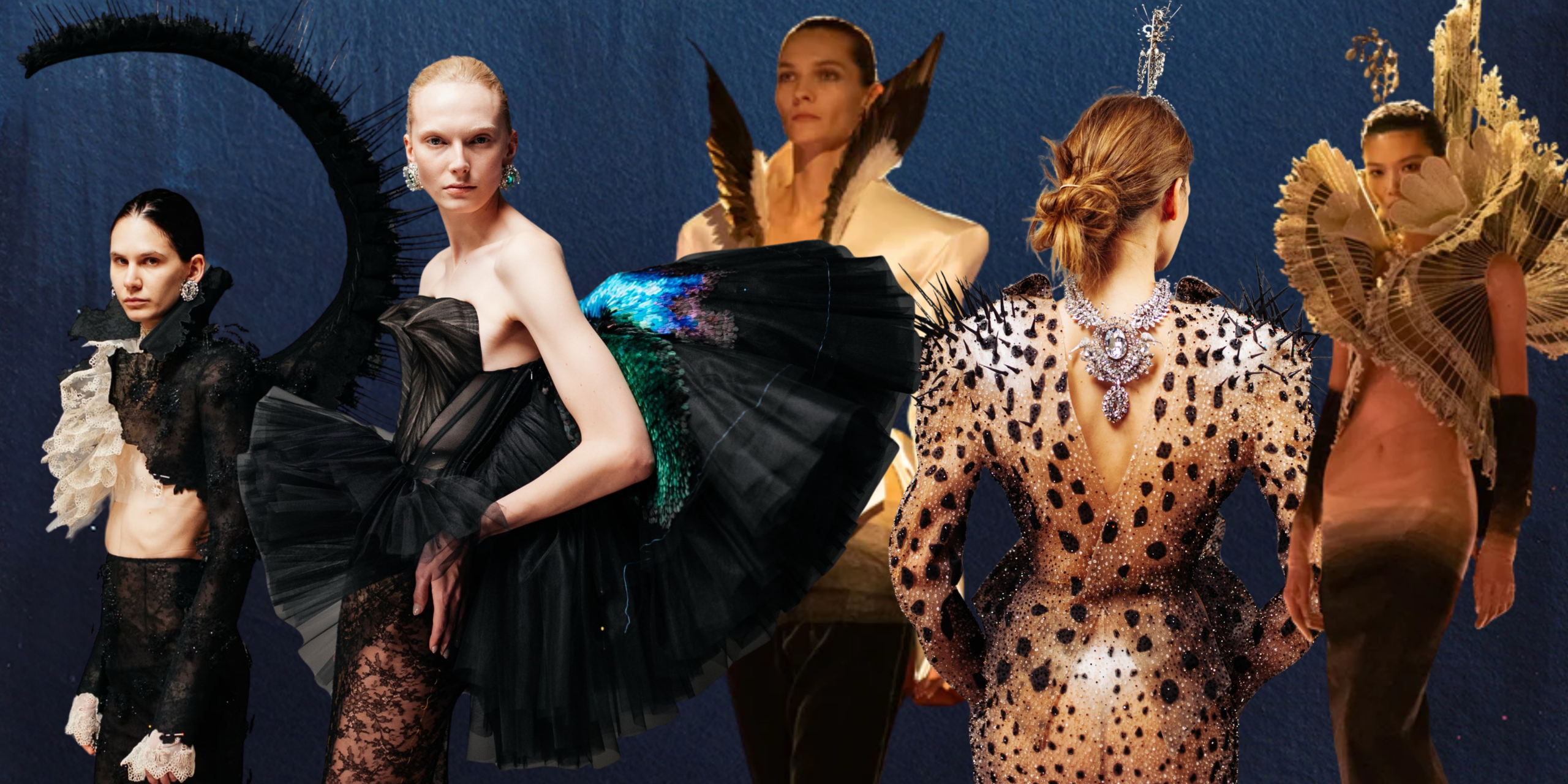

The show opened with a warning of sorts: this will not be a ‘gentle’ collection.
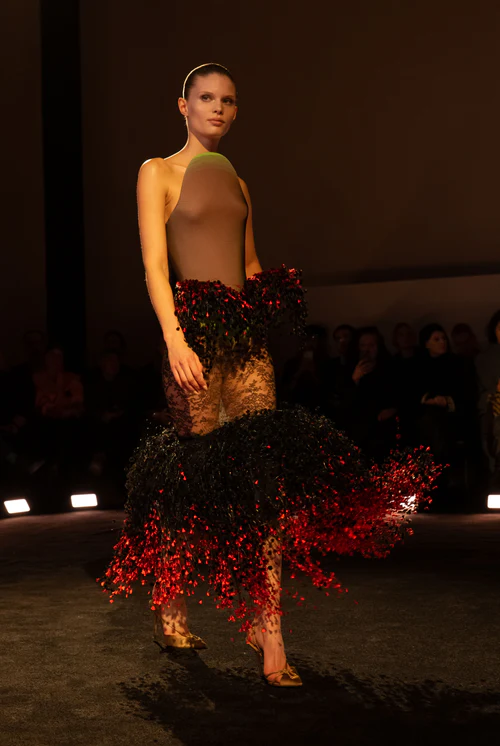
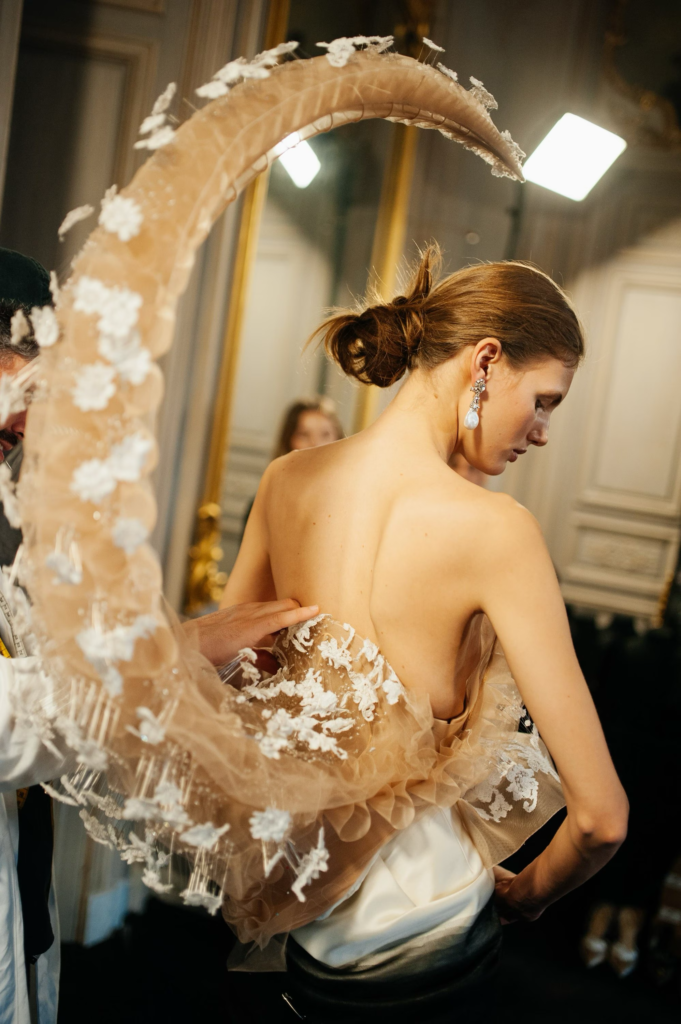
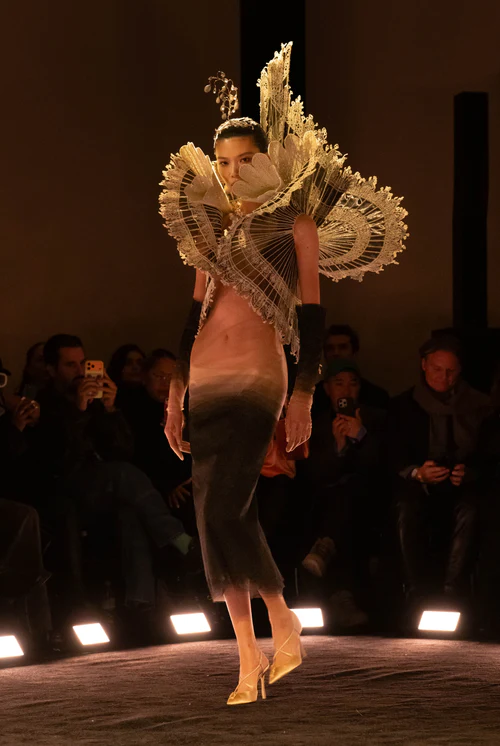
Under creative director Daniel Roseberry, the house leaned fully into sharp silhouettes, animal imagery, and aggressive forms. Scorpion tails curved from lace jackets. Organza spikes burst from skirts. Wings, horns, and beaks emerged from the body of the clothes themselves.
In the official show notes, Roseberry wrote that the emotional starting point of the collection came during a trip to Rome, when he visited the Sistine Chapel. He describes how the experience shifted his way of thinking. “If you’ve been there, you know that the first thing you see isn’t the ceiling, but the walls,” he wrote. Those walls, painted decades before Michelangelo’s work, were created to “tell, to educate.” But everything changed when he looked up. “Crane your neck skyward, and thought stops. Feeling begins.”
Related story: Couture gets a futuristic twist at Schiaparelli’s Fall 2025/26 show
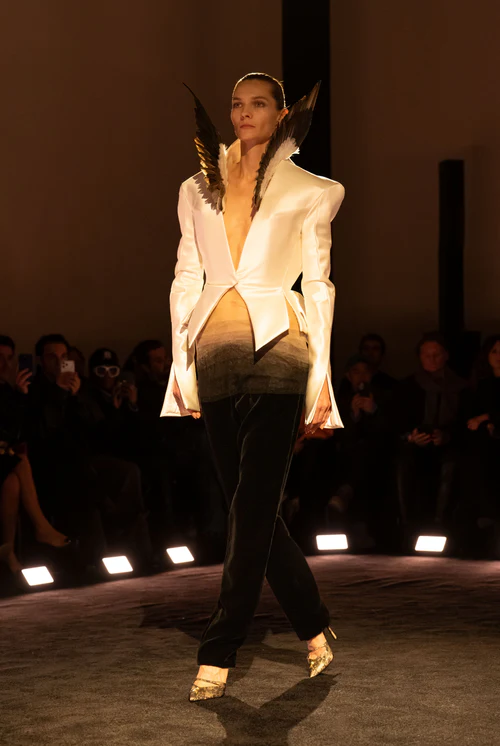
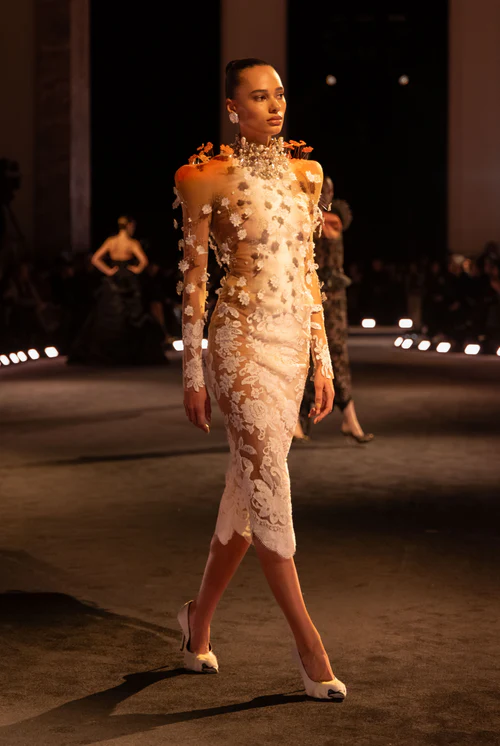
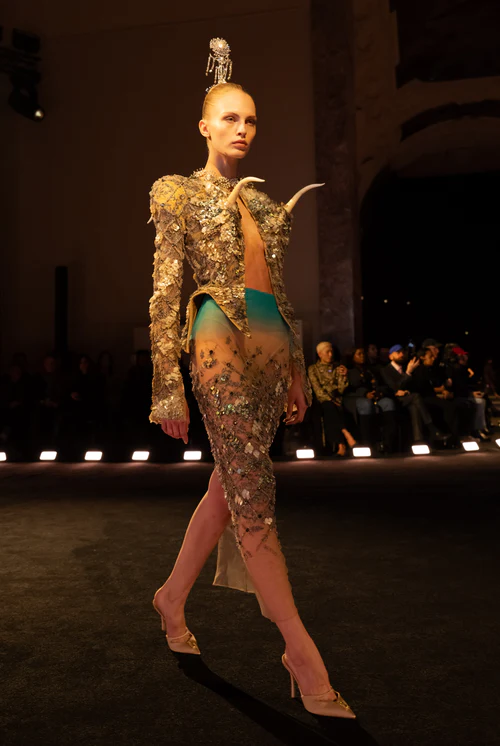
Roseberry explains that Michelangelo’s ceiling mixed “agony and ecstasy,” something he describes as both “terrible and exquisite.” Instead of explaining meaning, the artwork gave people “permission on how to feel when they looked at art.”
“That was it,” he wrote. “The entire emotional heartbeat of this season became not what does it look like, but how do we feel when we make it?”
That idea shaped the direction of the collection titled The Agony and The Ecstacy. Instead of focusing on what couture should look like, Roseberry focused on emotion—on instinct, release, and intensity. The result was a collection that felt raw and expressive.
Predators, not flowers
Unlike many couture collections that lean on floral themes, Schiaparelli Spring–Summer 2026 was built around animals—specifically predators.
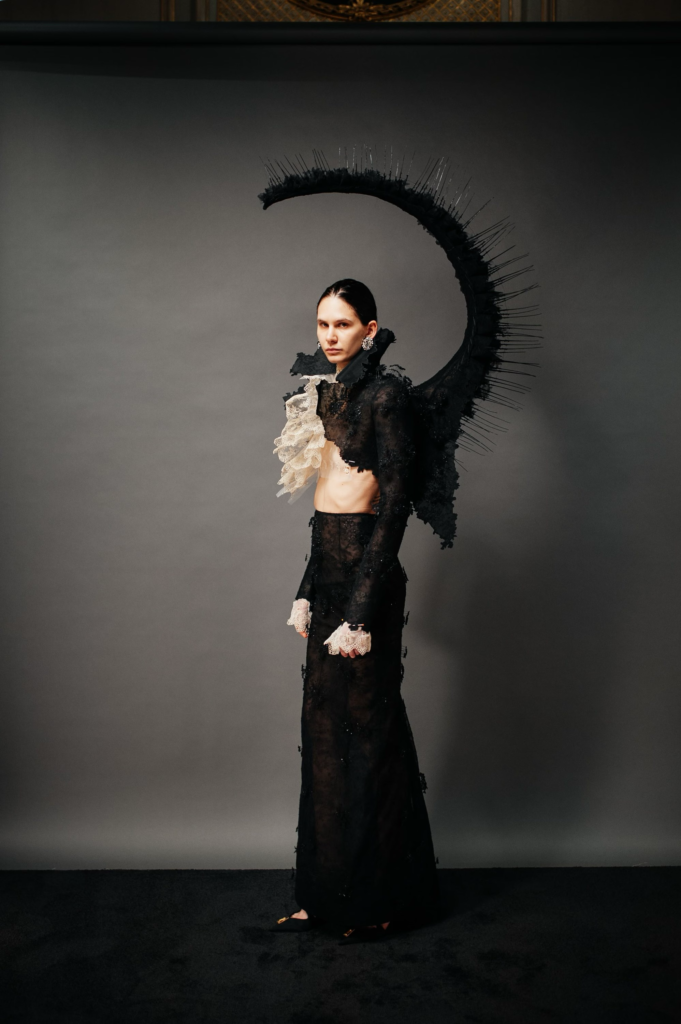
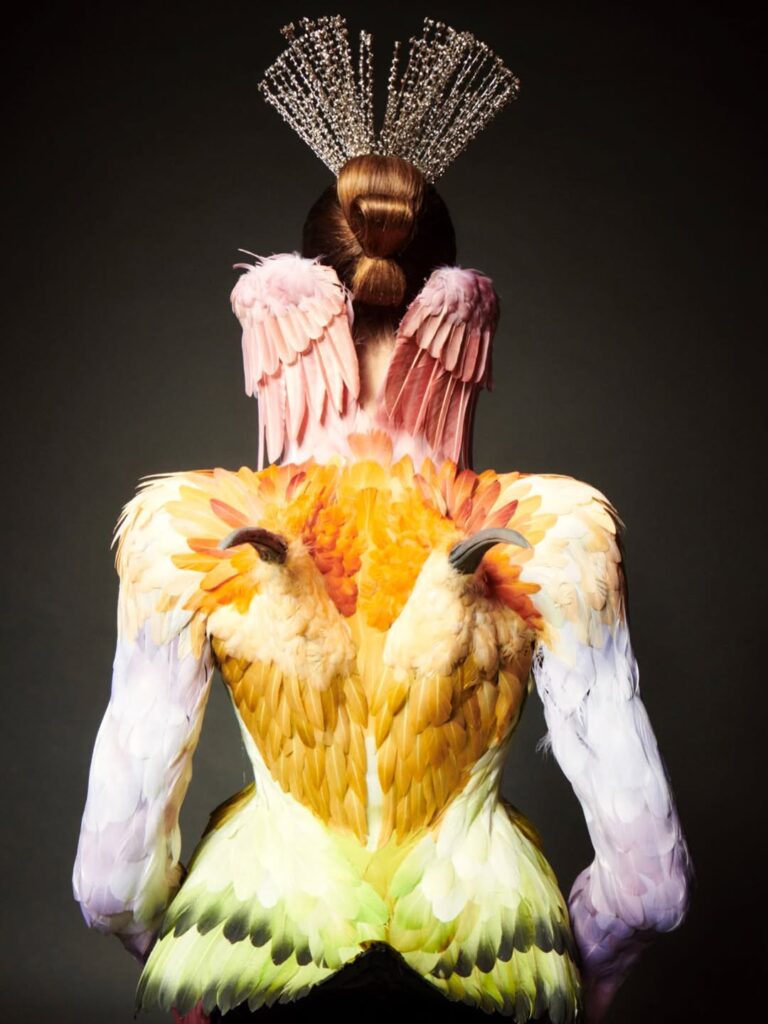
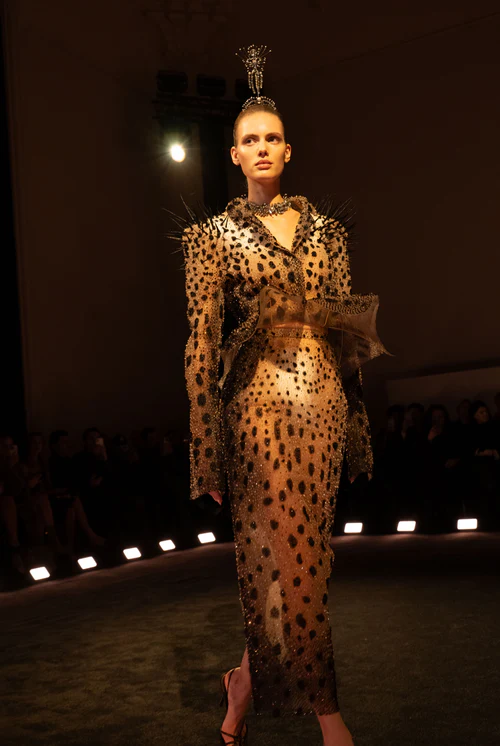
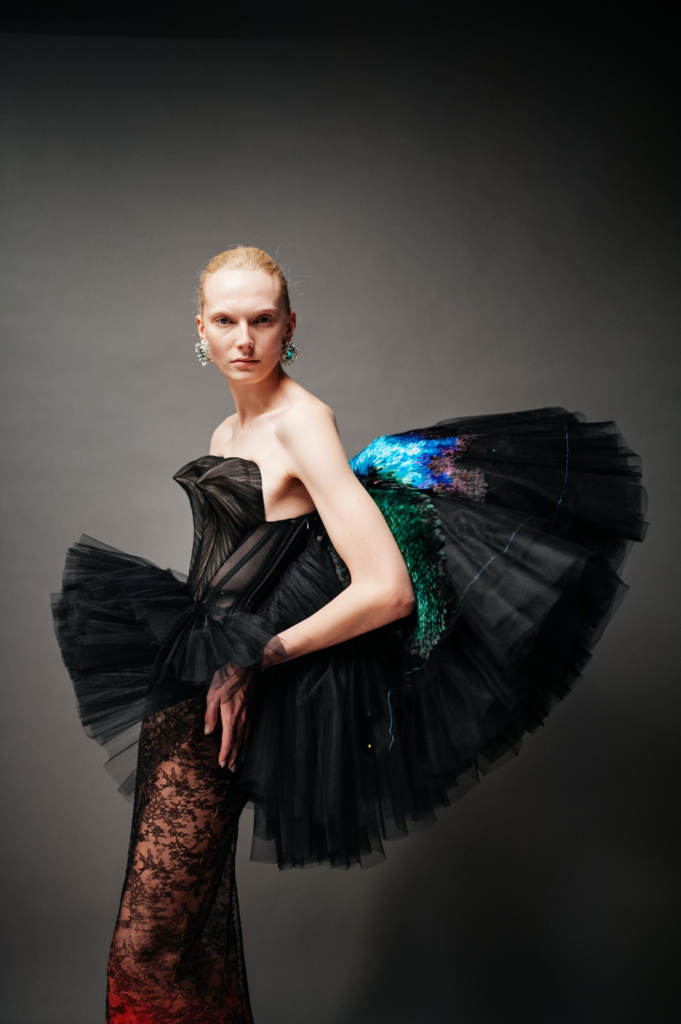
A sheer black Chantilly lace jacket extended into a large scorpion tail, curved and edged with silver needle-like spines. A translucent skirt suit was covered in layers of tulle and organza spikes, inspired by the defensive form of a blowfish. Other looks featured horned shoulders, winged backs, and sculptural protrusions that made the body look part-human, part-creature.
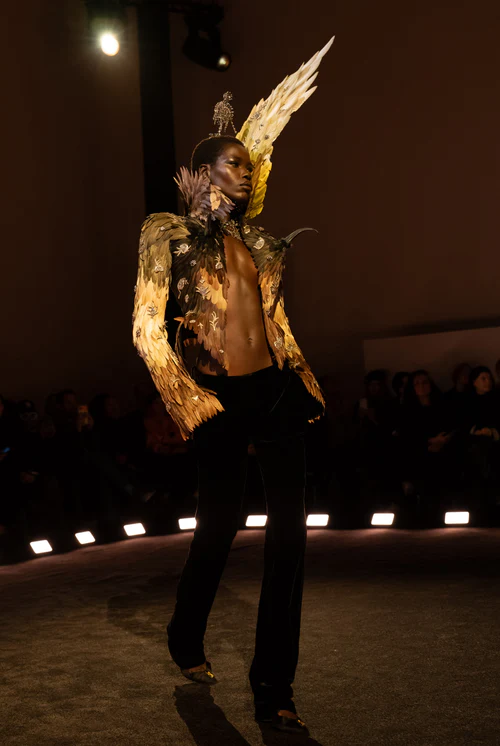
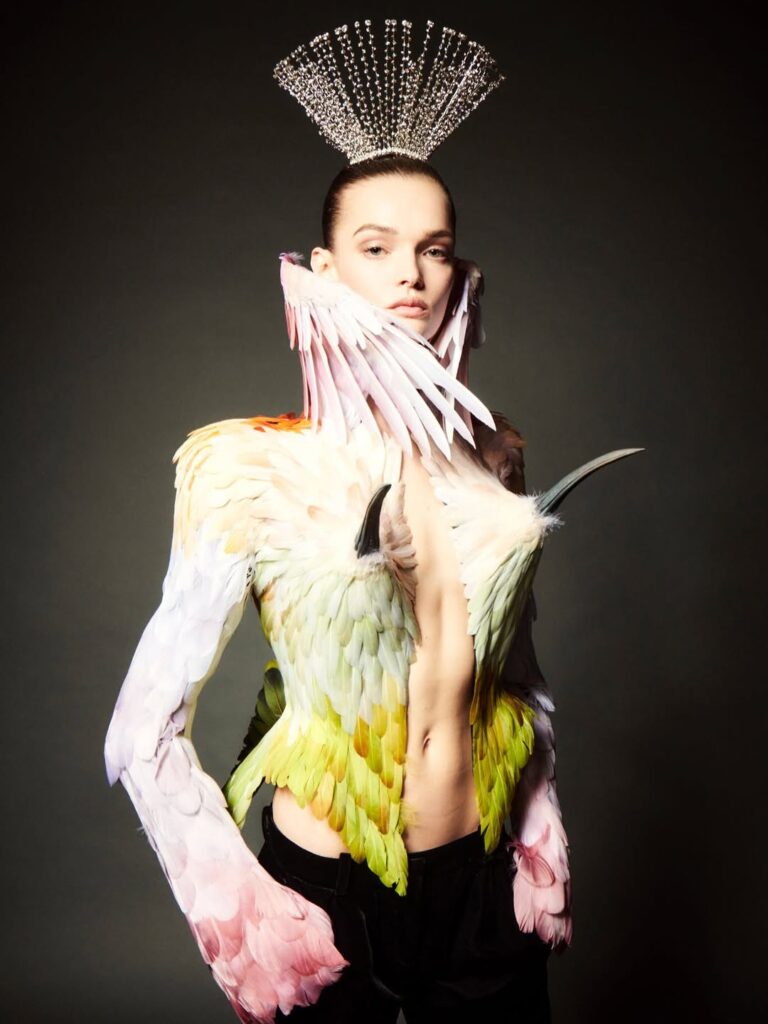
Two of the final looks featured multicolored feathered jackets pierced by oversized bird beaks at the chest and back.

Anger as creative energy
Roseberry described the emotional tone of the collection as anger but not violence.
In a press preview, he referenced a line from poet David Whyte about anger being a form of compassion. That the feeling wasn’t about destruction, but about care for the body, for craft, and for creative freedom. “Anger is the deepest form of compassion, for another, for the world, for the self, for a life, for the body, for a family and for all our ideals, possibly about to be hurt.”

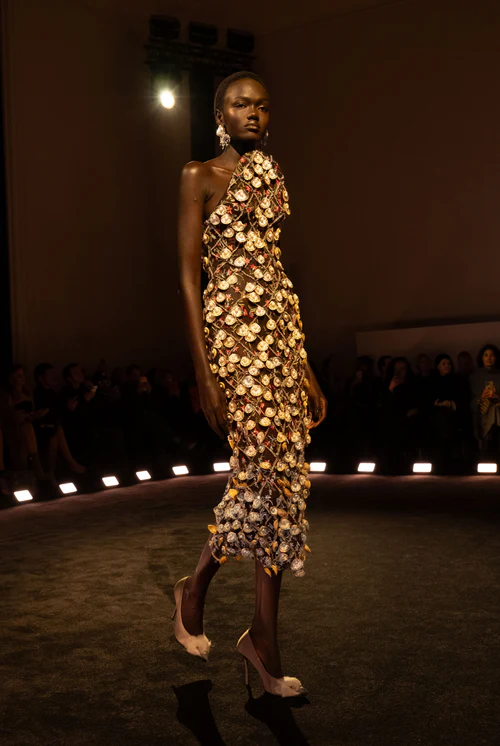
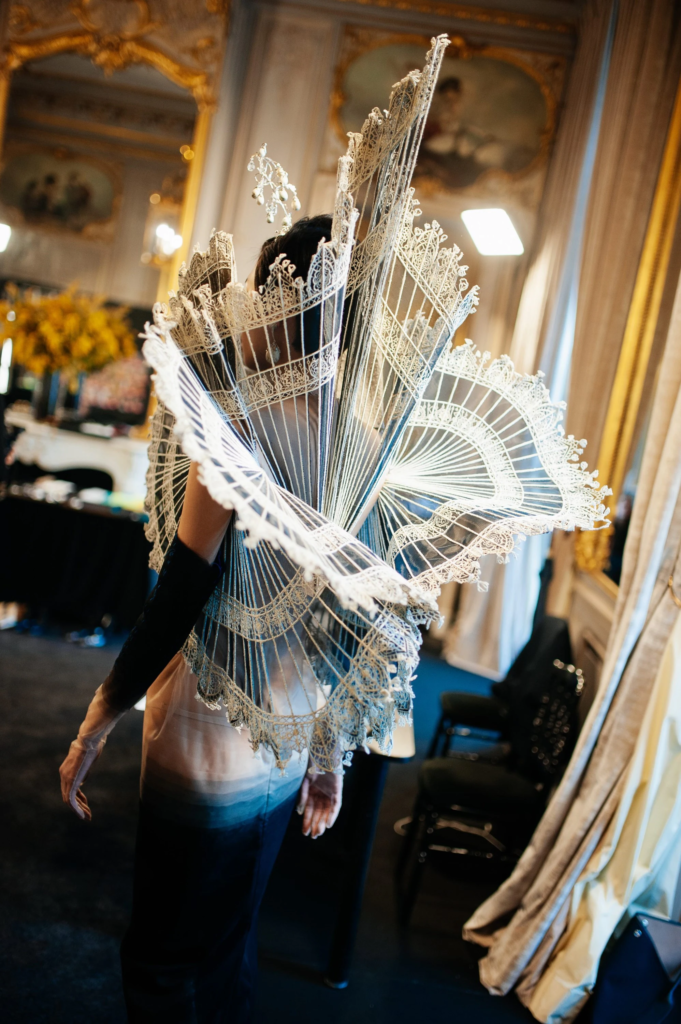
Serious craftsmanship is very much evident. One tiered ballgown, covered in 65,000 raw silk feathers dyed in black and kingfisher blue, took over 8,000 hours to complete. A bustier dress made from 690 of natural shells, each finished with a dangling pearl, required 4,000 hours of handwork. Most of the elements were hand-painted, airbrushed, dipped in resin, and covered in crystals.
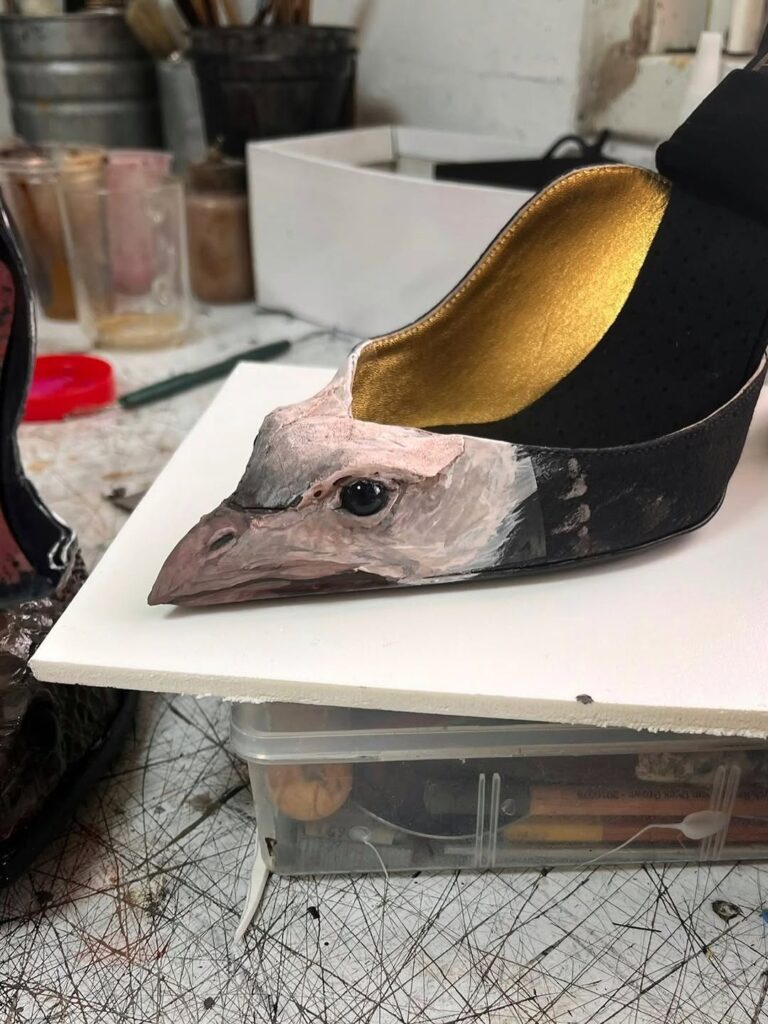
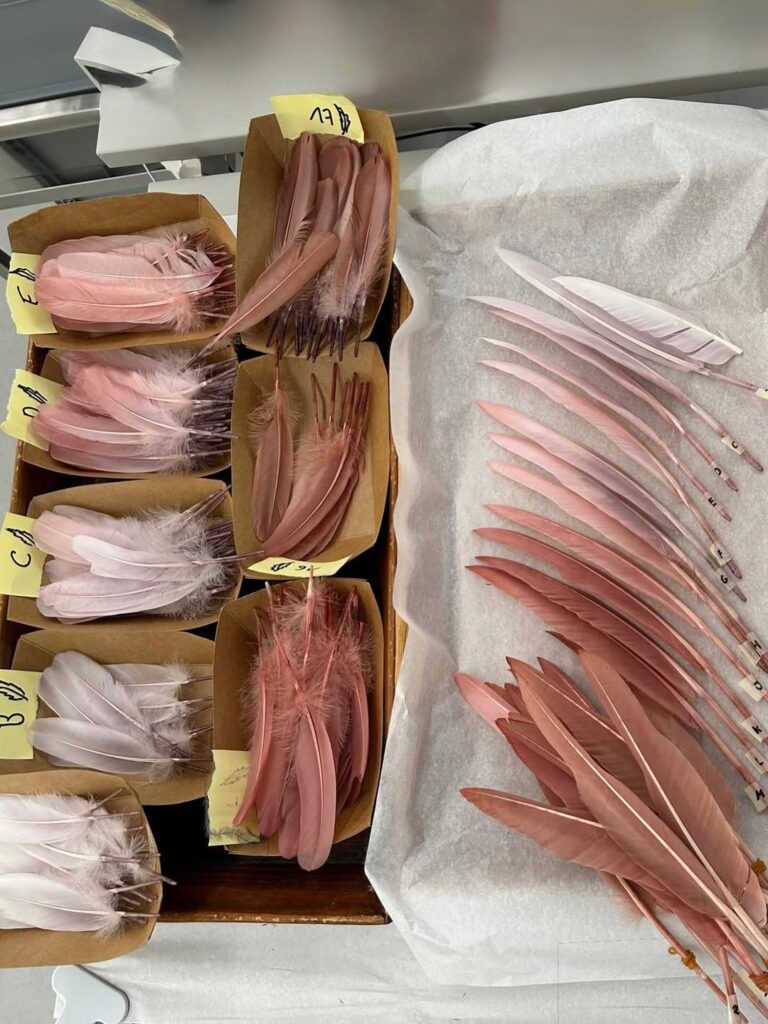
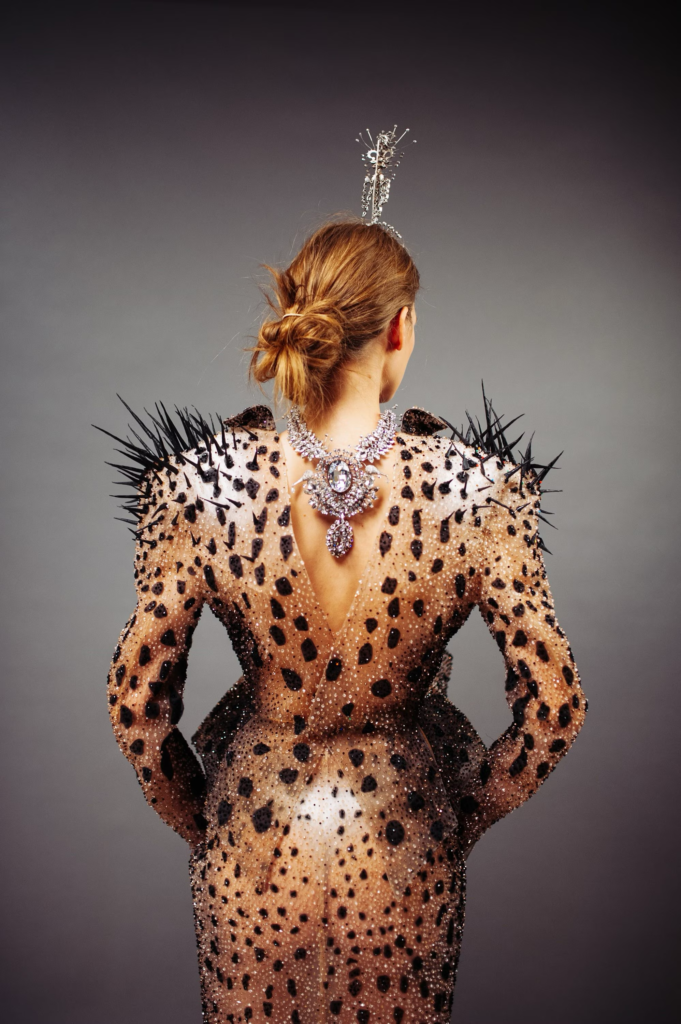
Each look was given a name and identity. One standout, Isabella Blowfish, was a sharply cut skirt suit built from layers of tulle and organza, dusted with crystals arranged in blowfish-like patterns and finished with rigid spikes.
Elsa Schiaparelli’s codes
Animal imagery has long been part of Schiaparelli’s history (Who will forget the iconic lobster dress in the 1930s), and Roseberry made that connection explicit.
Accessories featured sculptural bird heads made from silk feathers, with resin beaks and pearl cabochon eyes. These pieces referenced Elsa Schiaparelli’s fascination with animals while pushing them into a more surreal, sculptural direction.
Through sharp animal forms, intense handwork, and strong emotion, Roseberry delivered a collection that felt physical, specific, and alive.
He ends the notes by addressing the purpose of couture itself.
“So many people ask me what the point is of couture. It’s certainly not to create clothing for daily life.” he writes, “But for me, couture allows me to connect with the hopeful adolescent I once was,the one who decided to not go into medicine or finance or law, but to chase that singular fantasy that fashion can still provide”
Watch the full show below:
Related story: Flowers bloom in motion at Jonathan Anderson’s first Dior haute couture show
Related story: Jacquemus Fall/Winter 2026: No pressure, just fun and glamour
Related story: Remembering Valentino Garavani, master of Italian glamour