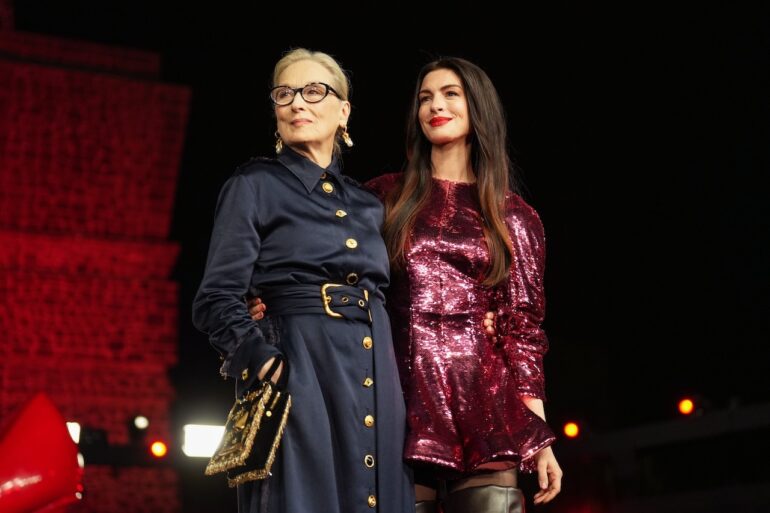
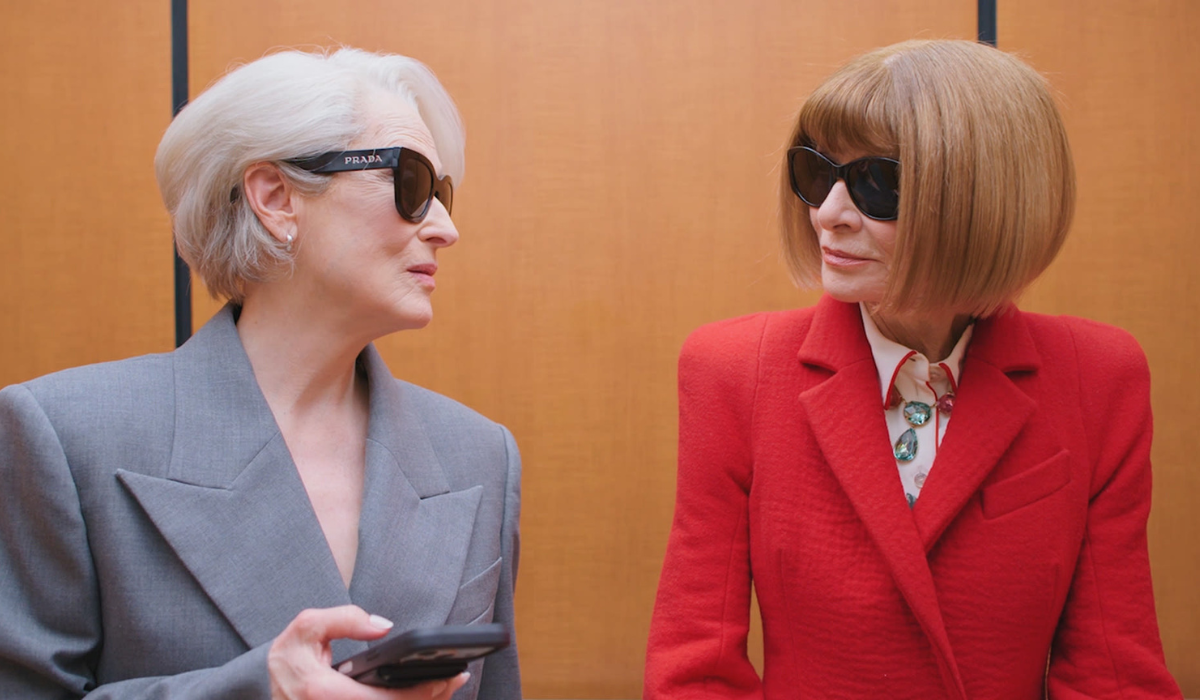

Meryl Streep revives Miranda Priestly opposite Anna Wintour in a viral magazine cover video—where fashion fiction meets real-life authority in a sharp, self-aware exchange.
It’s not every day that fashion witnesses its most famous fiction confront its most powerful reality, but a recent magazine cover did exactly that. Bringing together Anna Wintour and Meryl Streep in a tightly scripted elevator scene, the feature engineered a moment that feels both playful and pointed—one that blurs the line between the editor who defined an industry and the character inspired by her.
At the center of the conversation isn’t just nostalgia for The Devil Wears Prada, but a layered look at power, persona, and perception. For longtime followers of fashion and audiences who grew up fearing Miranda Priestly’s icy gaze, the scene reads like a cultural full circle.
A meeting years in the making
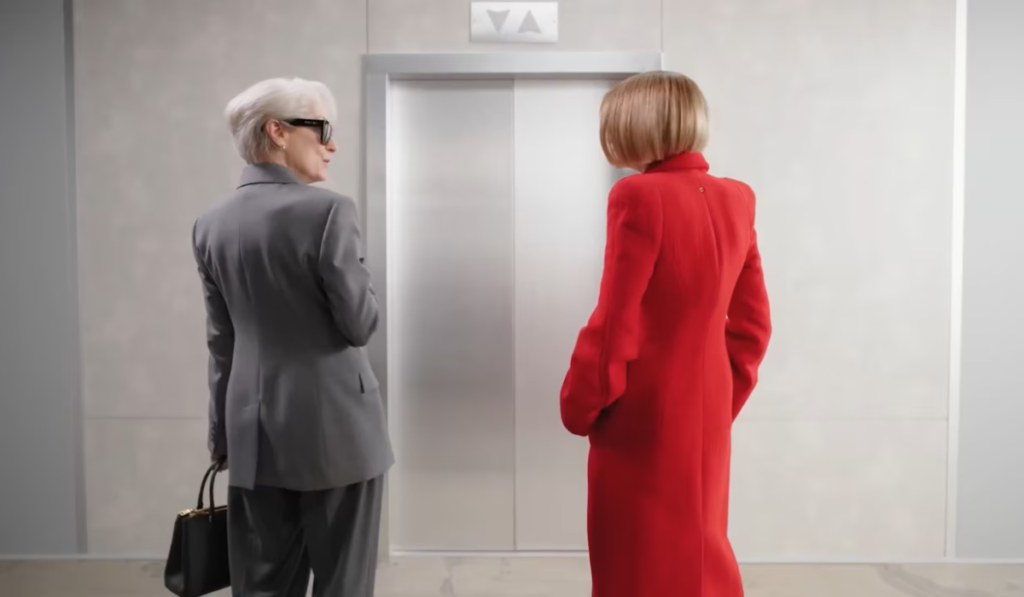
The now-viral video places Wintour and Streep—fully in Miranda mode—inside a sleek elevator, a setting that feels deliberate. It’s intimate, enclosed, and unmistakably symbolic: two women who shaped the same narrative, finally sharing space.
The dialogue unfolds with subtle humor and sharp restraint. Both women circle around recognition, teasing the idea that they’ve met before but can’t quite place where—whether at the Met Gala or the Oscars—turning the moment into a knowing nod to their intertwined legacies. Lines like “Have we met?” land less as questions and more as quiet provocations, playing on years of public speculation.
Rather than leaning into confrontation, the exchange thrives on tension. There’s no overt clash, no dramatic showdown—just controlled conversation, quiet confidence, and the kind of understated authority both figures are known for. Even the brief pivot to something as simple as shoes becomes loaded—an inside reference to fashion’s fixation on detail, and to Miranda’s legacy of exacting standards.
Miranda Priestly, revisited—but reframed
Streep’s return to Miranda Priestly doesn’t feel like a repetition; it feels like a recalibration. The character, first introduced in 2006, has long been associated with control, precision, and near-mythical authority. But here, placed beside Wintour, Miranda becomes something else: self-aware, almost referential.
The role has always carried an unspoken connection to Wintour. Over time, that link has evolved from industry rumor into cultural shorthand, turning Miranda into a symbol of fashion’s highest—and harshest—standards. Seeing the two side by side reframes that narrative. It’s no longer about imitation; it’s about intersection.
Anna Wintour steps into the frame
Equally significant is Wintour’s presence—not just in the video, but within the concept itself. Known for shaping fashion from behind the scenes, her participation signals a shift from observer to subject—someone now actively engaging with the mythology built around her.
There’s also a strategic layer at play. The feature arrives alongside renewed interest in The Devil Wears Prada universe, positioning Wintour not just as inspiration, but as a figure willing to acknowledge—and subtly reinterpret—that influence.
Between nostalgia and nuance
Online reactions have been immediate and mixed, but undeniably engaged. Some viewers praised the video’s restraint and wit, calling it a “full-circle fashion moment,” while others dissected every frame for deeper meaning, from wardrobe choices to body language.
What stands out is the level of attention. This isn’t just a campaign; it’s a conversation. Fans are revisiting Miranda Priestly, re-evaluating Anna Wintour, and rethinking the relationship between the two.
More than a moment
What this cover achieved goes beyond a clever concept. It created a layered narrative—one that merges past and present, fiction and fact, persona and person.
For audiences, especially those attuned to fashion and media, the appeal lies in its restraint. Nothing is overstated, yet everything is implied. It’s a reminder that in fashion, as in film, the most powerful statements are often the quietest ones.
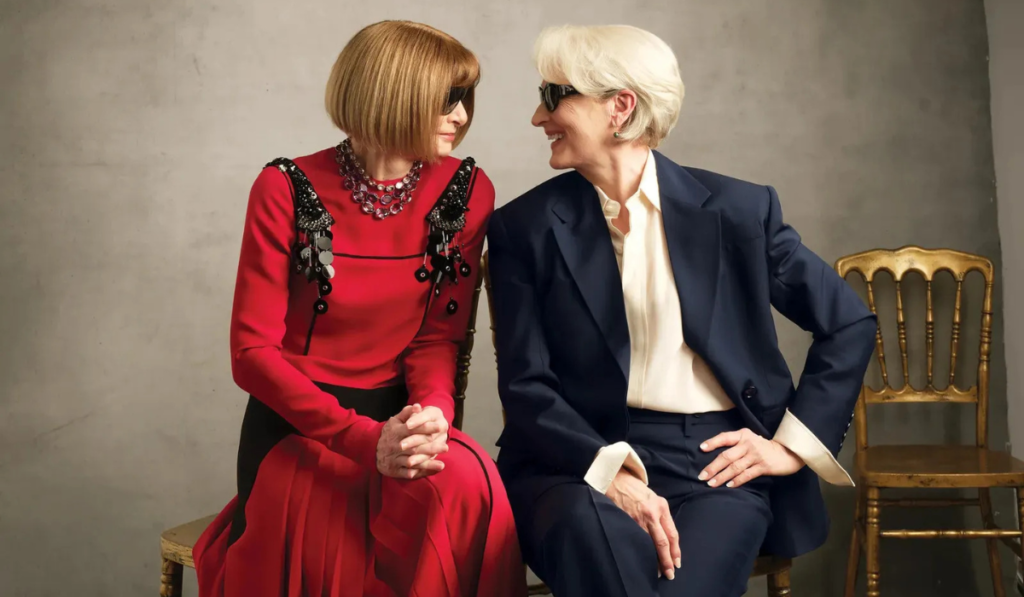
In that shared space, between a glance and a line of dialogue, two worlds didn’t just meet; they mirrored each other.
More than the meeting, the elevator exchange ultimately works because it understands the weight behind both women—not just as figures in fashion and film, but as symbols of authority shaped by decades of scrutiny, storytelling, and shifting standards. What could have easily been a gimmick instead lands as something more measured: a quiet acknowledgment of legacy, and a subtle negotiation of how that legacy continues to evolve in public view.
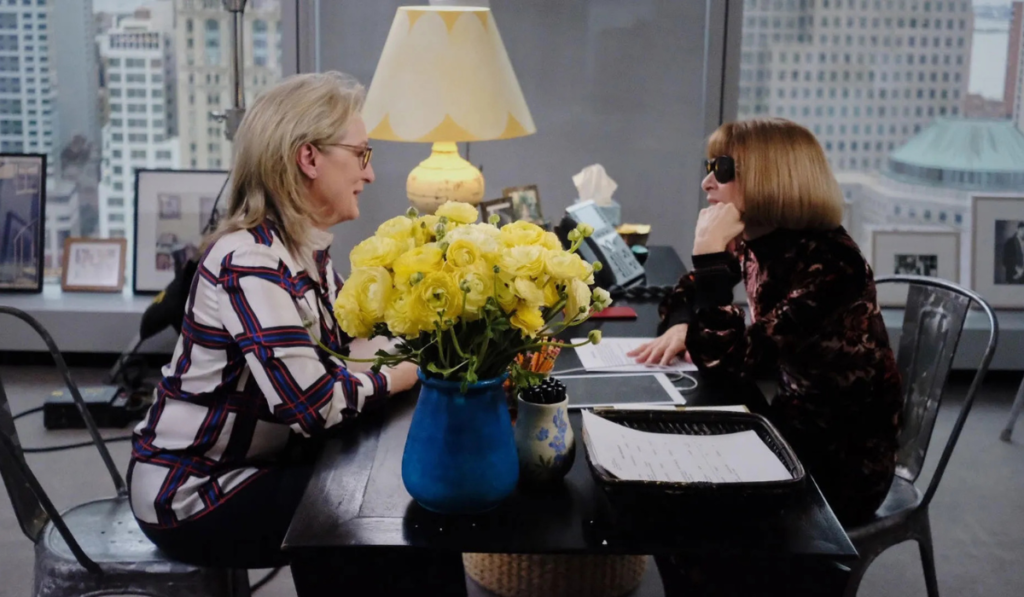
That same sense of reflection carries into a broader conversation between Meryl Streep and Anna Wintour—one that extends beyond fashion and into questions of truth, power, and responsibility. In a separate interview, Streep underscores the difficulty of speaking up, noting how “it’s hard to risk a great deal to tell the truth,” especially in moments when clarity feels increasingly elusive. The empowering encounter touches on everything from journalism and political climate to workplace dynamics and female empowerment—issues that mirror the same tensions subtly embedded in the elevator scene.
Taken together, both the cinematic skit and the candid conversation point to something larger than a single cover or campaign. They frame an ongoing dialogue about influence: who holds it, how it’s portrayed, and how it’s challenged. In revisiting Miranda Priestly alongside the woman long associated with her, the feature doesn’t just revisit the past; it reframes it for a more aware, more questioning audience.