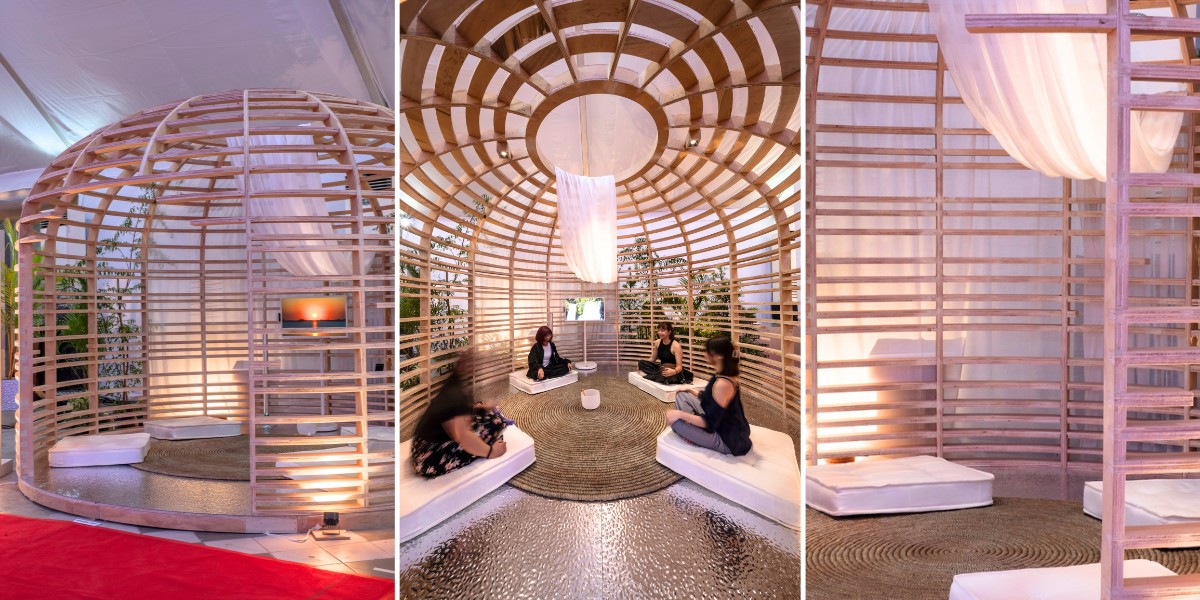

The design concept by interior designer Cecil Ravelas is an exploration of how spaces shape how we feel, think, and move through the world.
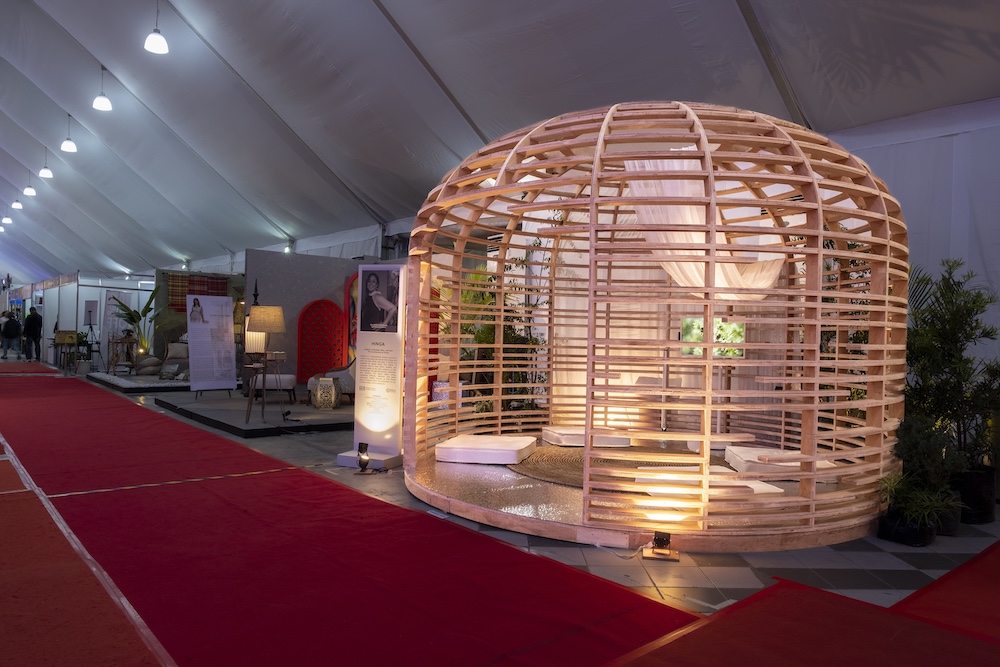
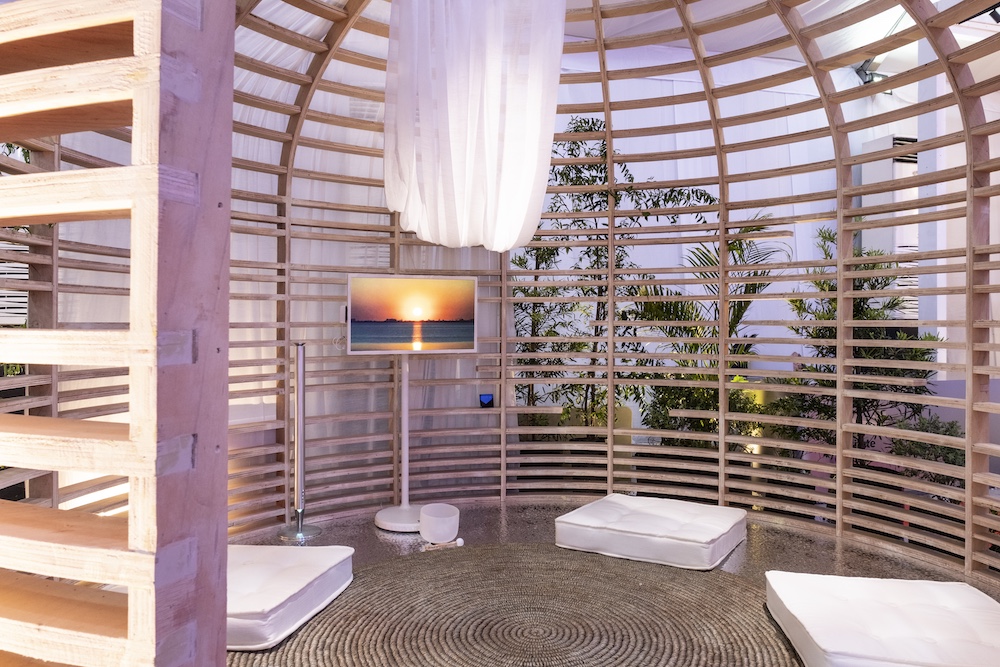
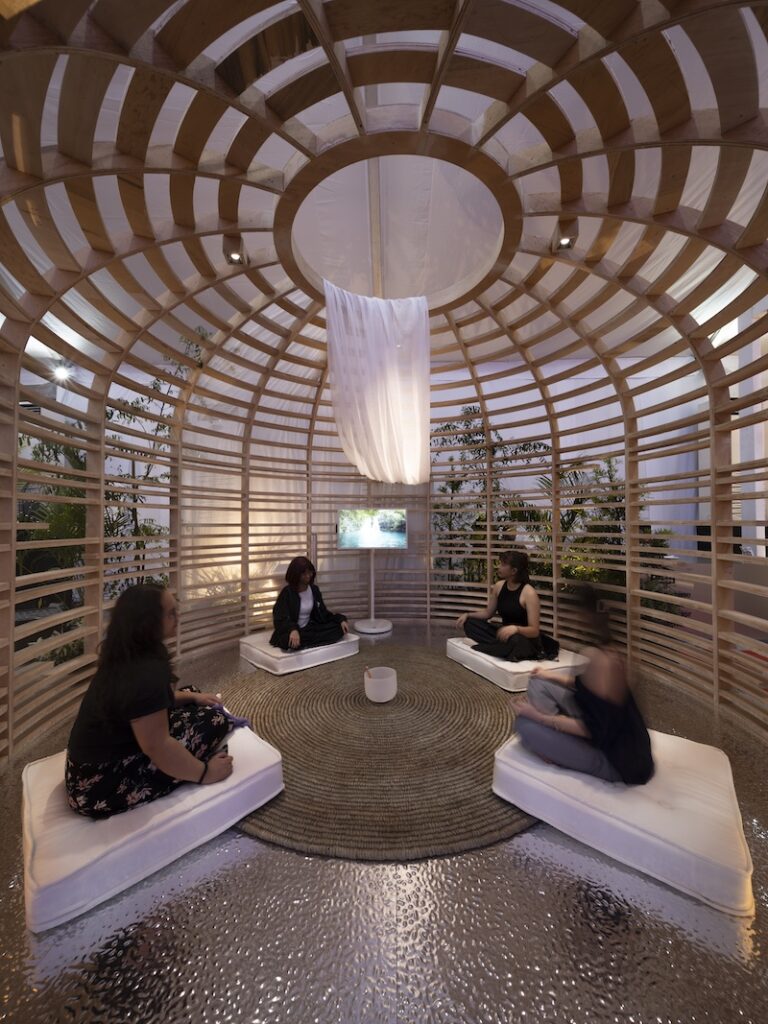
The World Trade Center was bustling with activity throughout the three-day WorldBex 2026 exposition. But somewhere in the east wing stood a small, dome-like sanctuary. HINGA, a design concept by IDr. Cecil Ravelas for Red Interior Design, was an open invitation for exhibit-goers and exhibitors alike to experience stillness, reflection, and restoration.
“Many of the environments we inhabit today are designed for speed, efficiency, and constant stimulation,” observes Ravelas. “Very few spaces allow us to pause.” Yet in her design practice, stillness, calm, and quiet have become attributes that distinguish her work. “I have always been interested in how spaces influence how we feel, think, and move through the world. I believe spaces carry energy, and they shape our inner state in ways we often do not immediately recognize.”
HINGA was conceived out of an inner desire to create space that inspires others to slow down, breathe, and reconnect with themselves. “The intention behind it is simple: to create a space for pause and well-being. Through this project, I explore how design can create environments that allow us to step out of the rhythms of everyday life, even for a moment.”
Related story: Handcrafted for the world: Why the Philippines returns to Ambiente every year
Related story: Wilbert Novero: Three decades of championing Philippine design on the global stage
Designing and building it was a meditation on materiality and how this can evoke feelings. Ravelas gravitated towards raw, simple, natural textures, allowing the space to take precedence over visual noise. She details, “We primarily used plywood, which is one of the most common and accessible building materials in the Philippines.” In doing so, the space affirmed that when designed with clarity and intention, meaningful spaces do not require rare and expensive materials.
HINGA was also built upon key pillars of sustainability and circularity: re-use, re-purpose, and re-imagine. “The installation was designed using a modular construction system, allowing it to be dismantled, reused, and reconfigured for future presentations rather than discarded after a single exhibition. For me, responsible design is not just about aesthetics. It is also about how we work with materials thoughtfully and how we extend their life while creating spaces that support wellbeing ,” elaborated Ravelas.
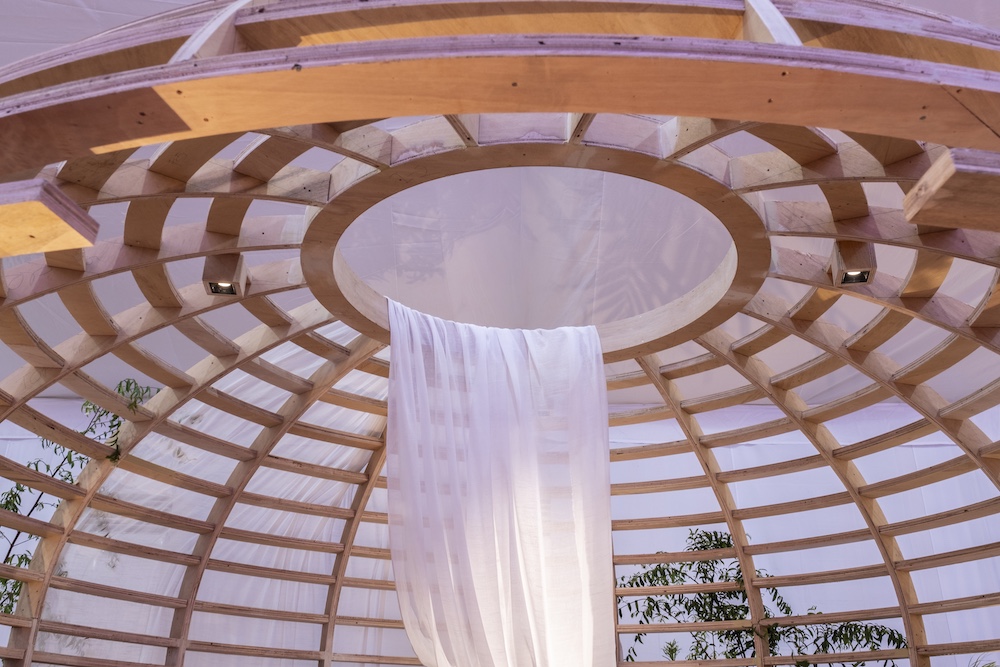
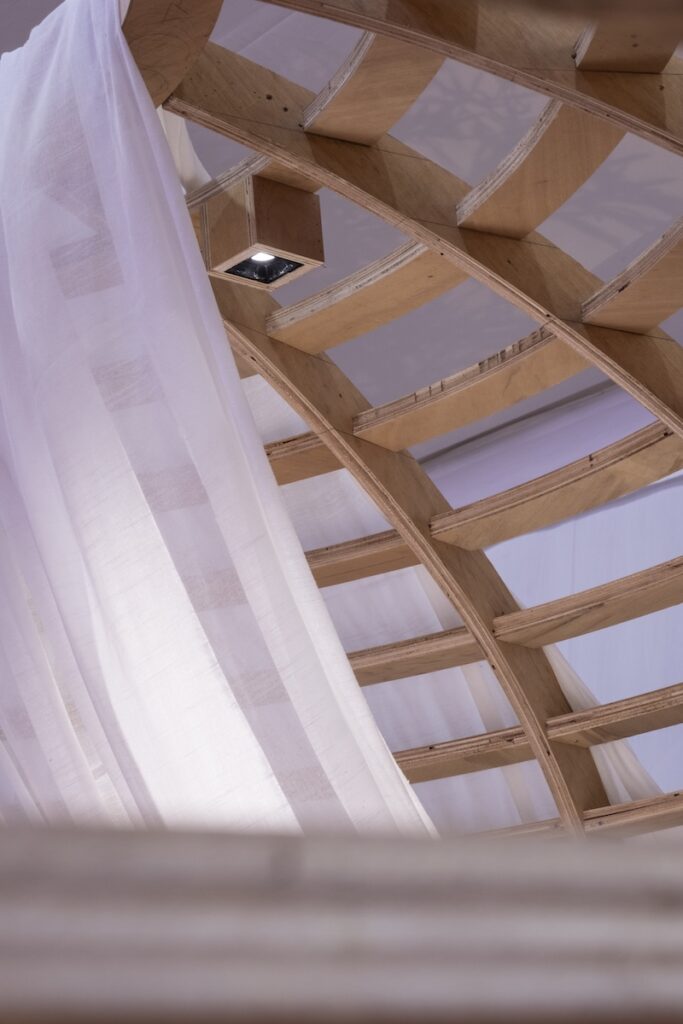
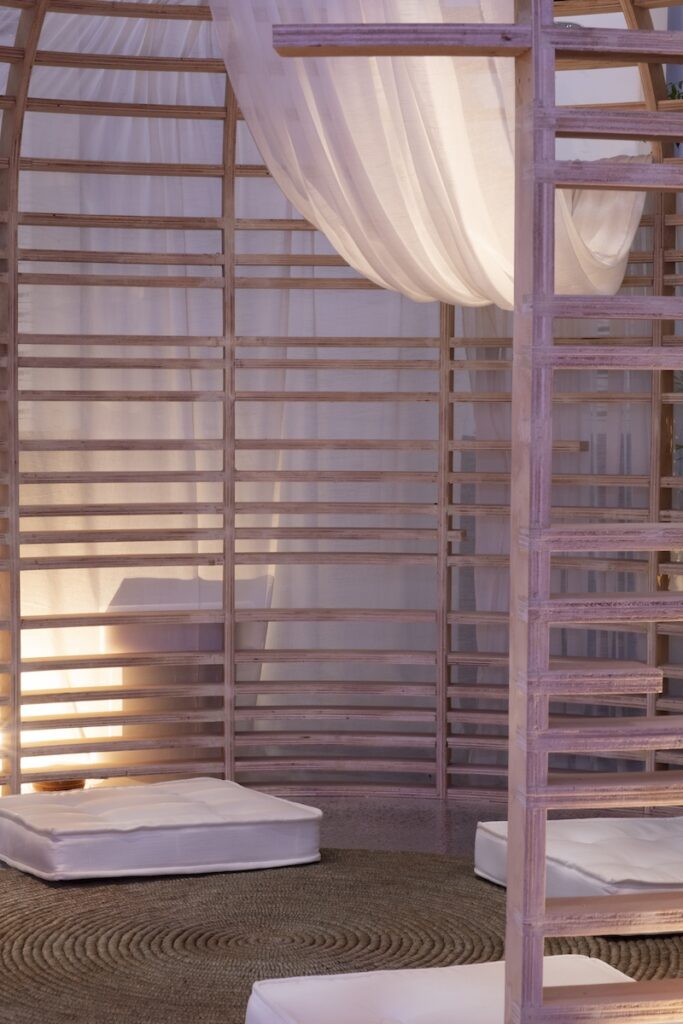
That HINGA can be re-used and reconfigured in a variety of ways makes it adaptable to many types of environments including: wellness destinations, offices, hospitals, cultural institutions, schools, and even residential enclaves.
“What matters is not the size but the intention behind it. HINGA could take the form of a quiet pavilion, a contemplative room, a garden sanctuary, or simply a moment of pause within a larger architectural environment. The interactions that happen in the space are intentionally gentle–meditation, breathwork, sound healing, quiet reflection, journaling, or simply sitting in silence. These are not programmed activities, but invitations.”
Related story: Built with intention, delivered with immediacy: Hive Modular and the recalibration of construction
Related story: A tale of two stunning designs

According to Ravelas, the installation presented during WorldBex 2026 is only the first expression of HINGA. The concept, which the designer also regards as a spatial principle, was meant to evolve and respond to different contexts and environments.
“HINGA asks a very simple question: Where in our built environments do we allow people to pause and breathe? If we begin to intentionally create spaces for pause within our cities and buildings, we can transform how people experience the environments around them. Ultimately, HINGA is an invitation to designers, developers, and communities to recognize that design can do more than serve function. It can also create moments of care, reflection, and restoration.”
HINGA was launched last March 12, 2026 at this year’s WorldBex. trade show The design concept will be back on show this coming May.
Related story From architecture to accessories: How Royal Pineda shapes the vision of modern Filipino
Related story: How Paolo Feliciano took a detour in photography—then embraced his manufacturing legacy