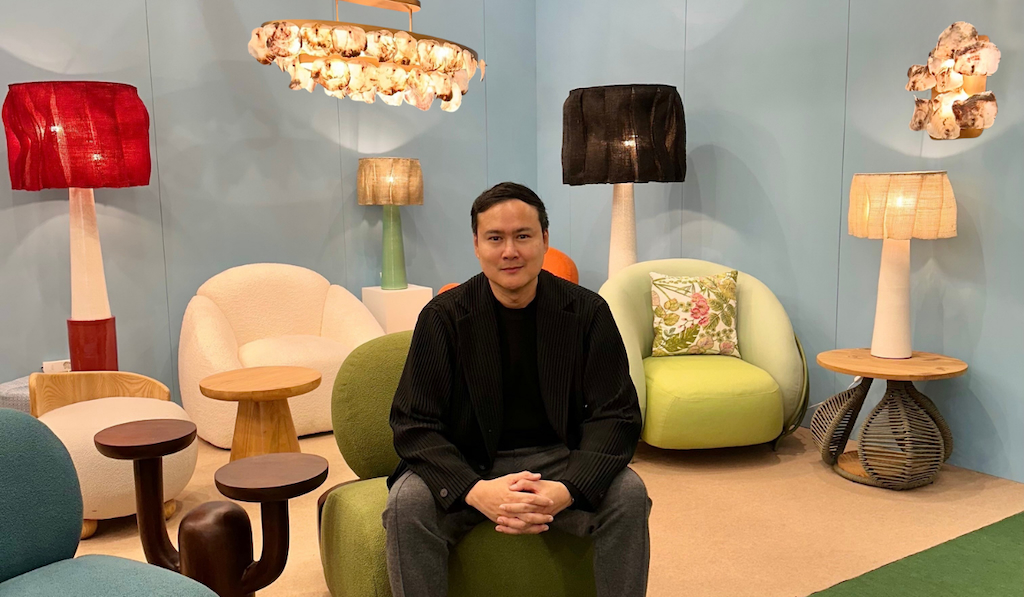

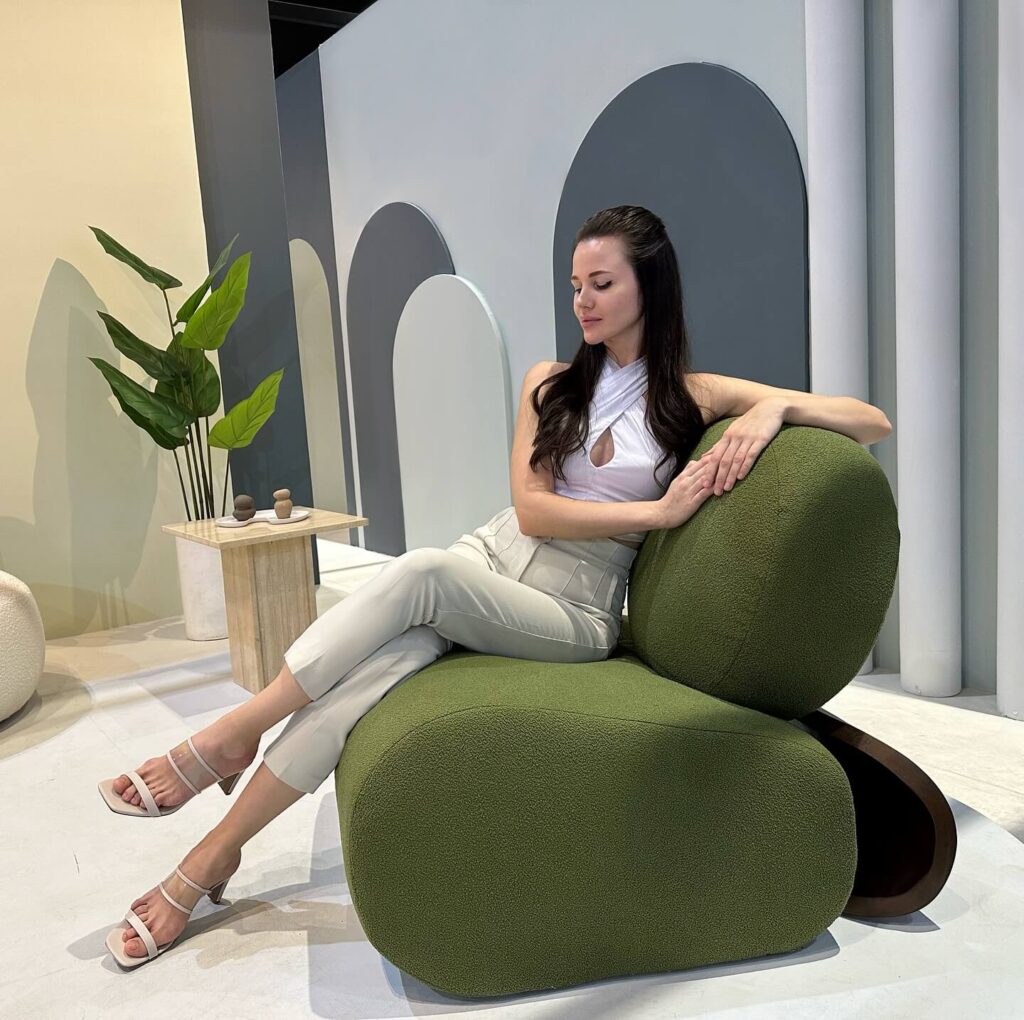
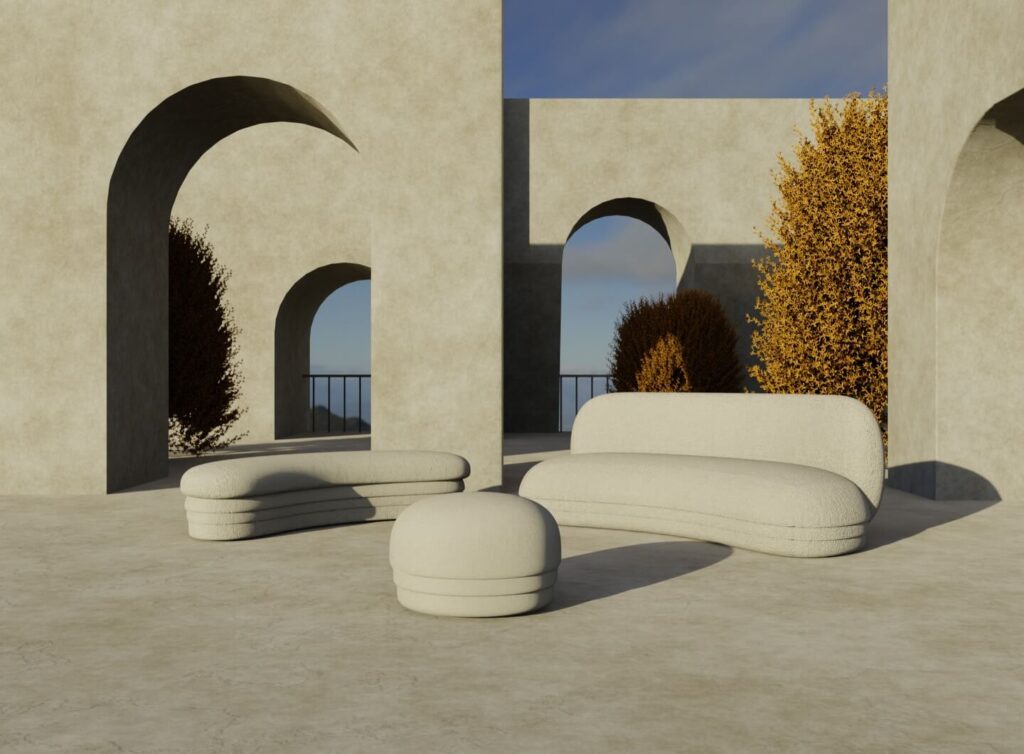
Their roundness and fullness of form feel less like seating and more like sculptures you happen to sit on. They remind me of Botero, in a way that brings a smile.
Some designs stay with us for one simple reason: they delight us. It could be a building, a chair, a lamp, or a chopstick rest.
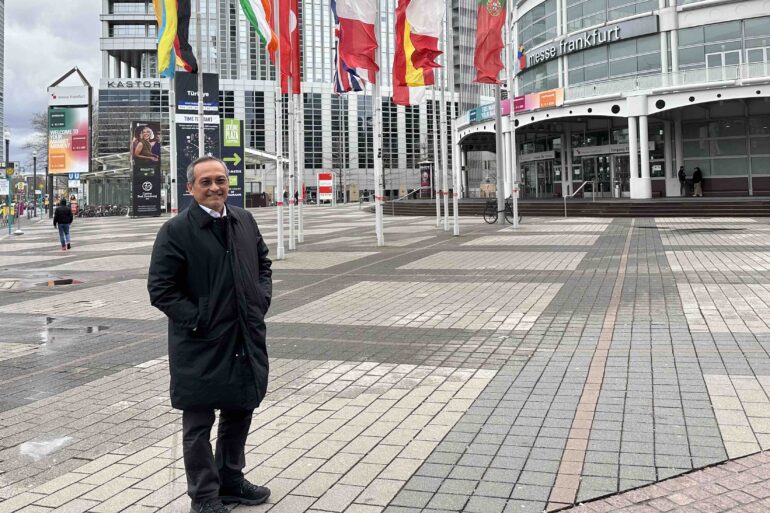
At Ambiente in Messe Frankfurt, that delight is exactly how Moodism’s furniture makes me feel. The collection includes sculptural seating and side tables that are playful, mischievous, yet equally impressive in function. One sofa features armrests that curve all the way to the floor, creating a sheltered nook where a small dog can curl up beneath you while you stretch out across its full length. A book for you, a bone for the dog.
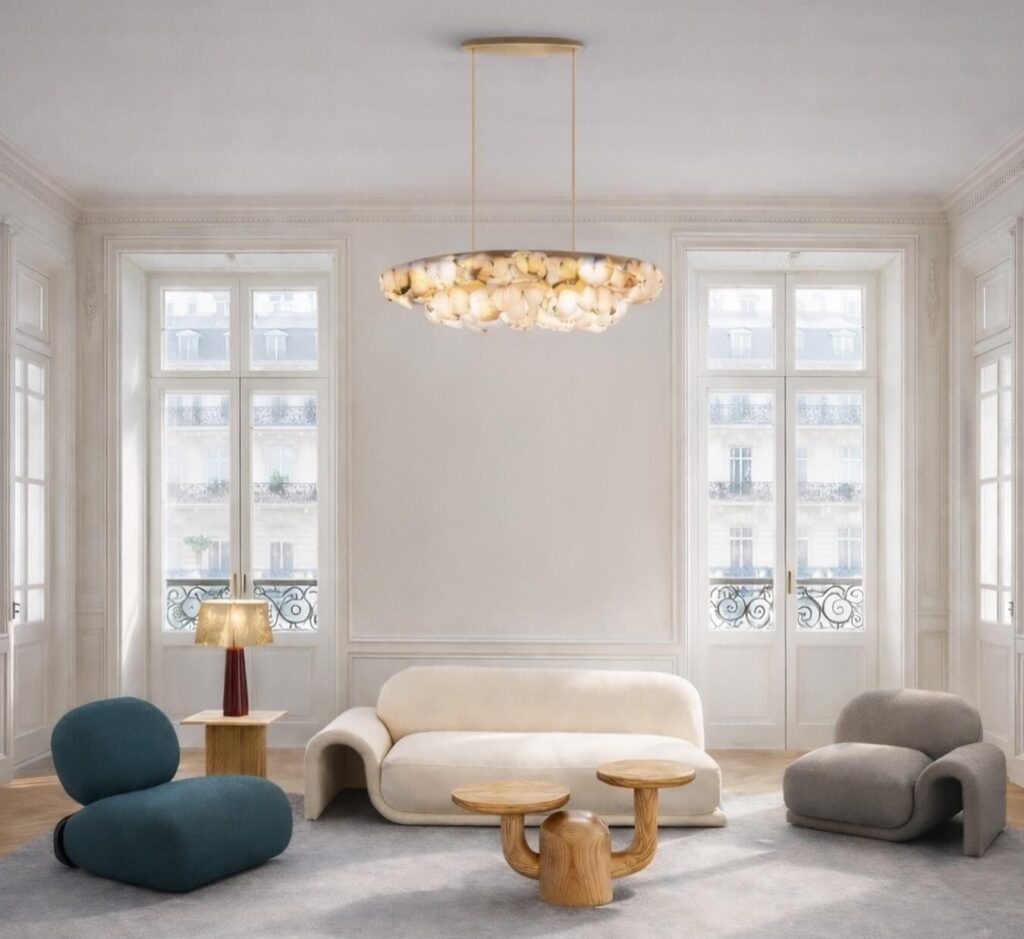
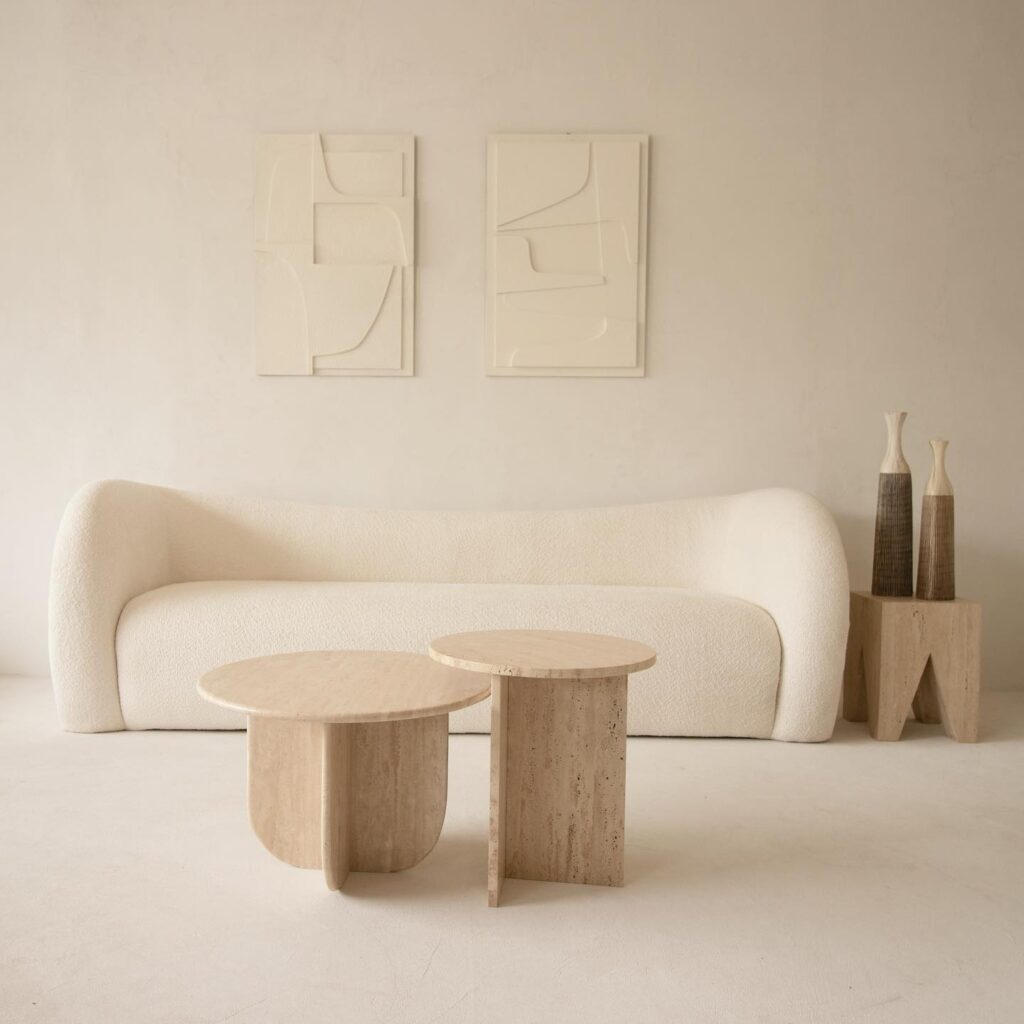
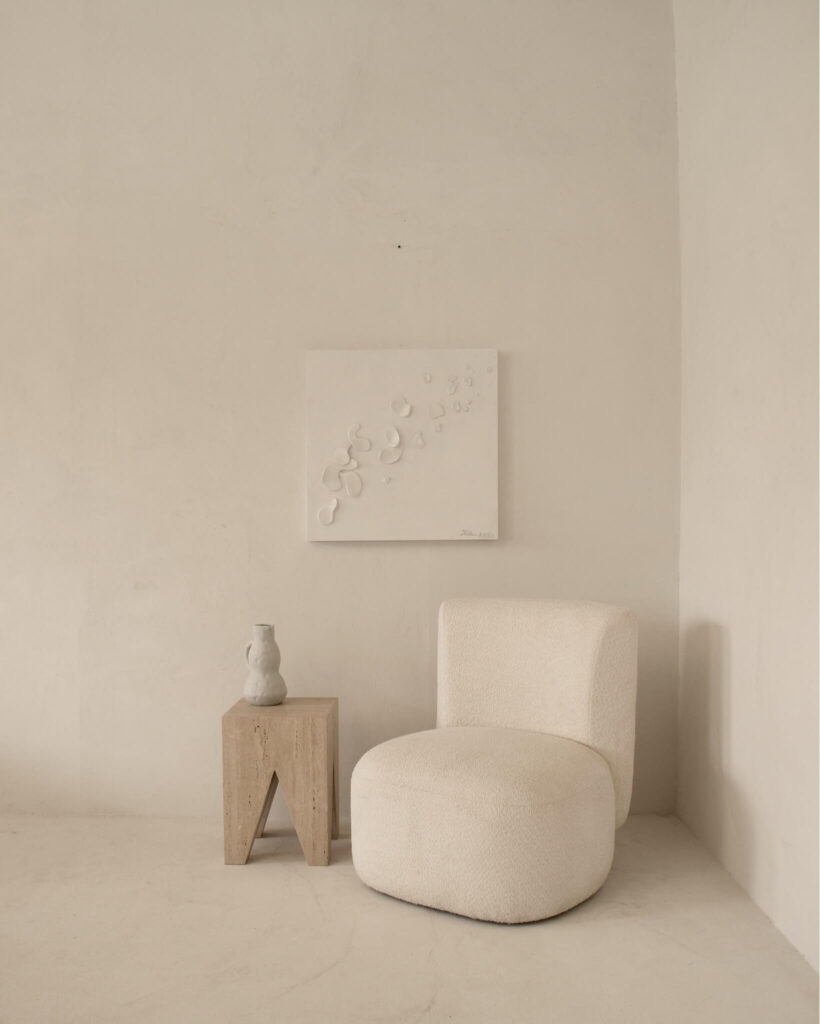
Furniture, for Moodism, is emotional architecture. It’s a statement, a vibe, a declaration of personality in sculptural form. The brand name itself hints at this philosophy, transforming moods into forms. Like Colombian painter Fernando Botero’s canvases, there’s an exaggeration in volume to delight.
Such shapes in architecture have been around in many masterpieces. Consider Antoni Gaudi’s Casa Batlló in Barcelona, whose undulating façade resembles a dragon’s back and its bone-like balconies feel almost cartoonish. Inside, the rigidity of right angles disappears, the structure seems to move, and the building feels alive.
On the other hand, there are the sharp angles interspersed with sweeping curves in Frank Gehry’s Disney Concert Hall in Downtown LA. The titanium ripples under the California sun, an urban space that gives visitors one of few reasons to head to DTLA.
In both cases, the shapes bring joy—at least that’s how I felt standing outside looking at these buildings. It’s the same feeling that Moodism evokes.
Mid-century influence
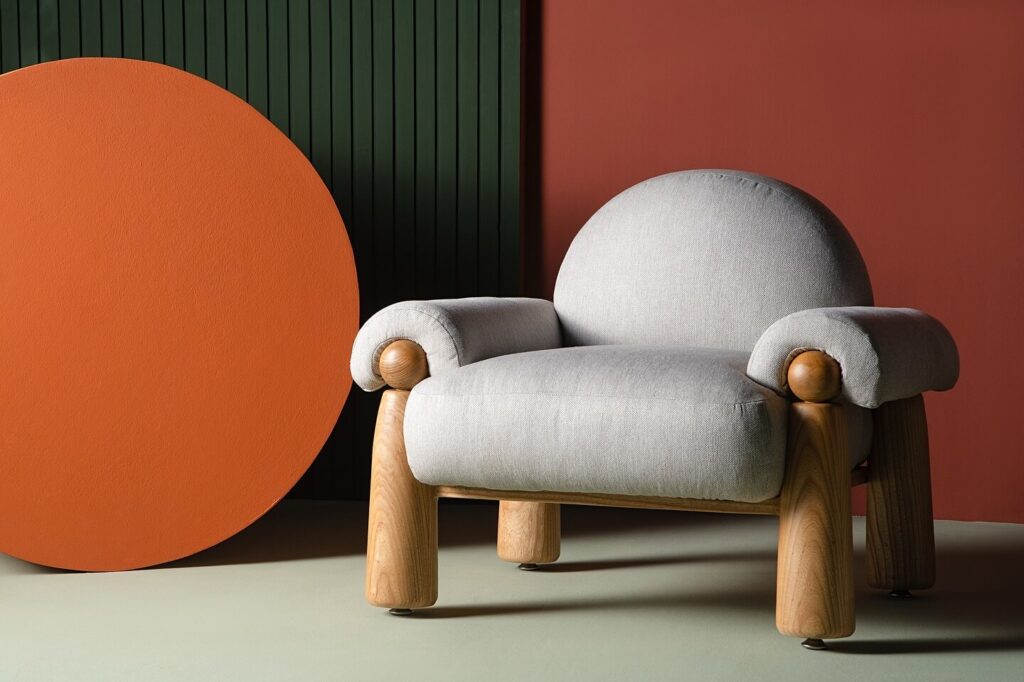
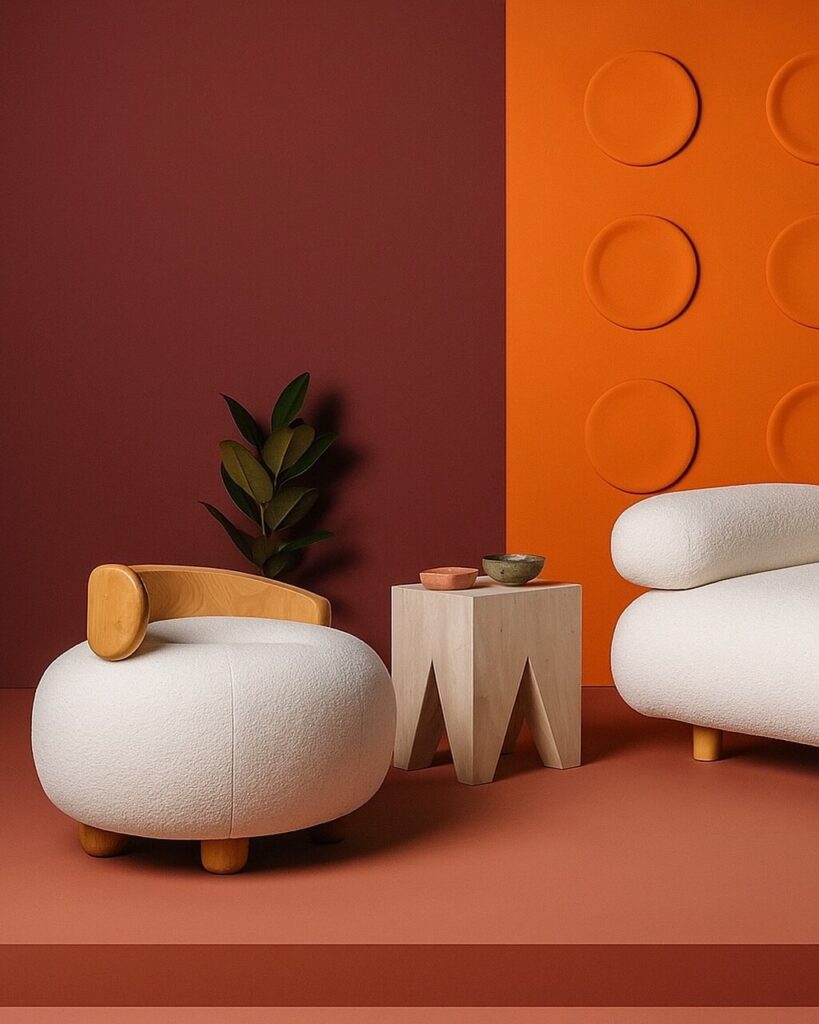
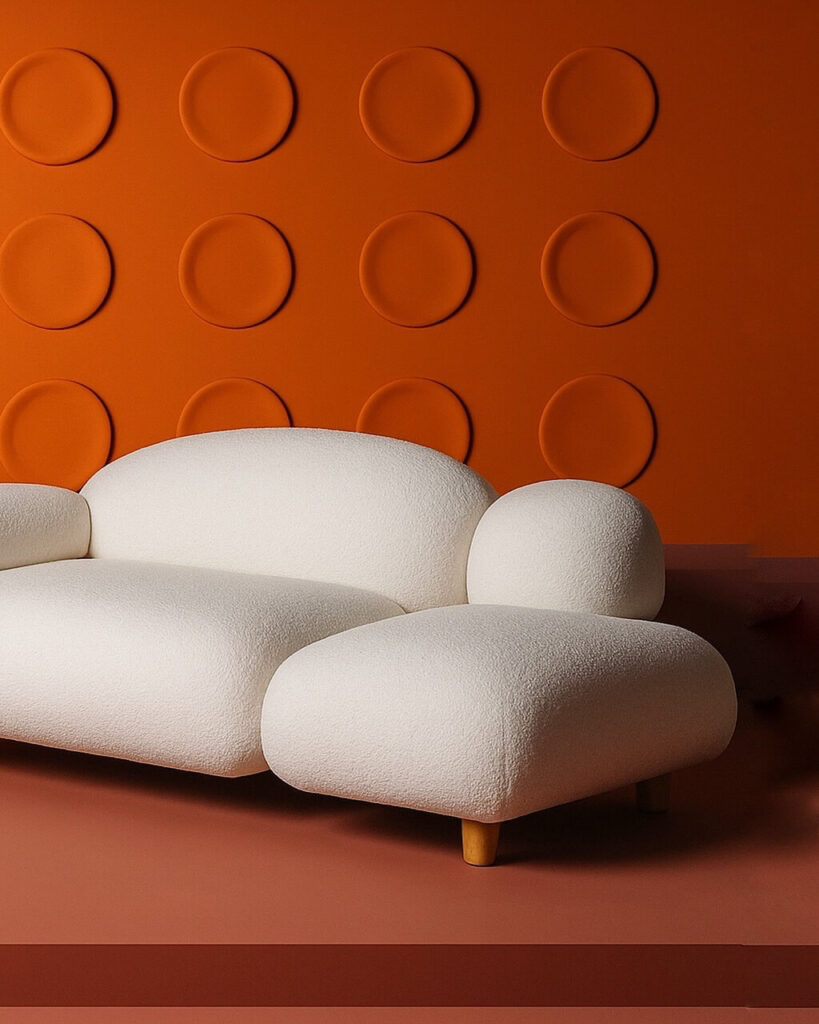
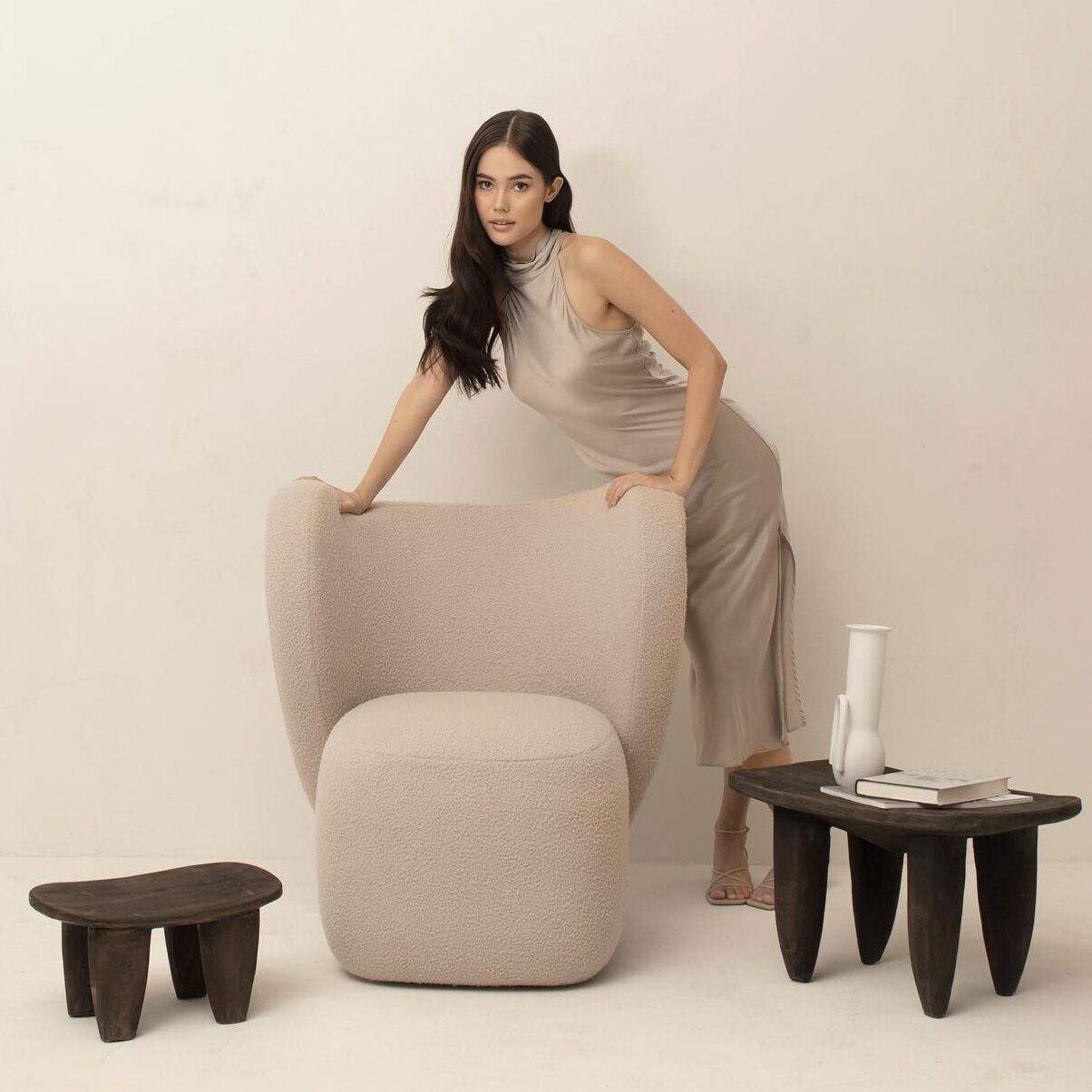
Mid-century Modern’s philosophy of optimism is one of Moodism’s clear influences. Some chairs are shaped like mochi, pastillas and rosebud; a wooden table draws from Mid-century lineage. They are sculptural, yes—but more importantly, they are emotive in a way that few minimalist designs can evoke.
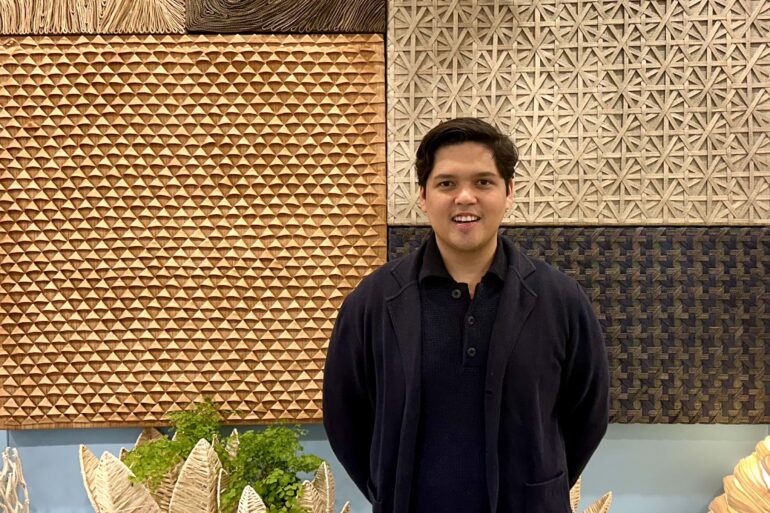
Michael is seated on one of his rounded chairs as we talk. Mid-conversation, I notice it shift beneath him. “It’s a swivel chair,” he says casually. I light up with the same delight women feel when they unexpectedly discover their dress has pockets. I cannot overstate that joy—pockets!
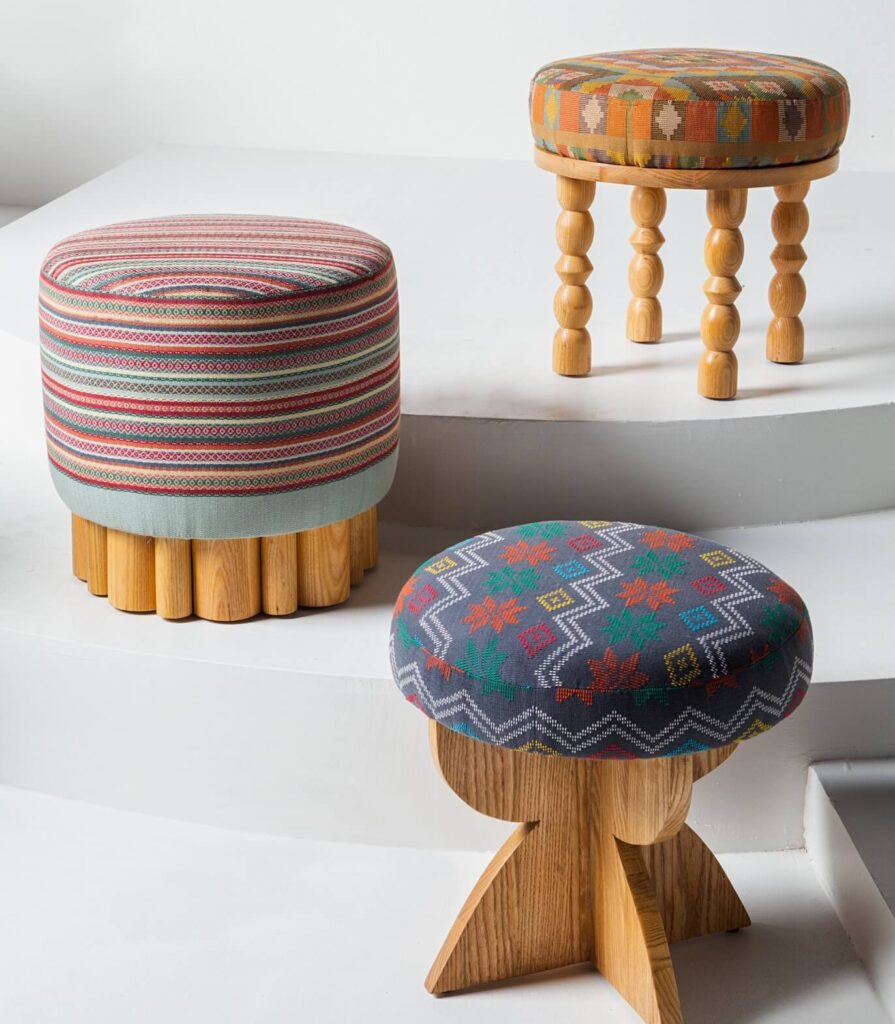
It doesn’t look like a swivel chair because the legs aren’t “legs”—they’re like tennis balls that bring the chair so close to the ground that the legs are almost invisible.
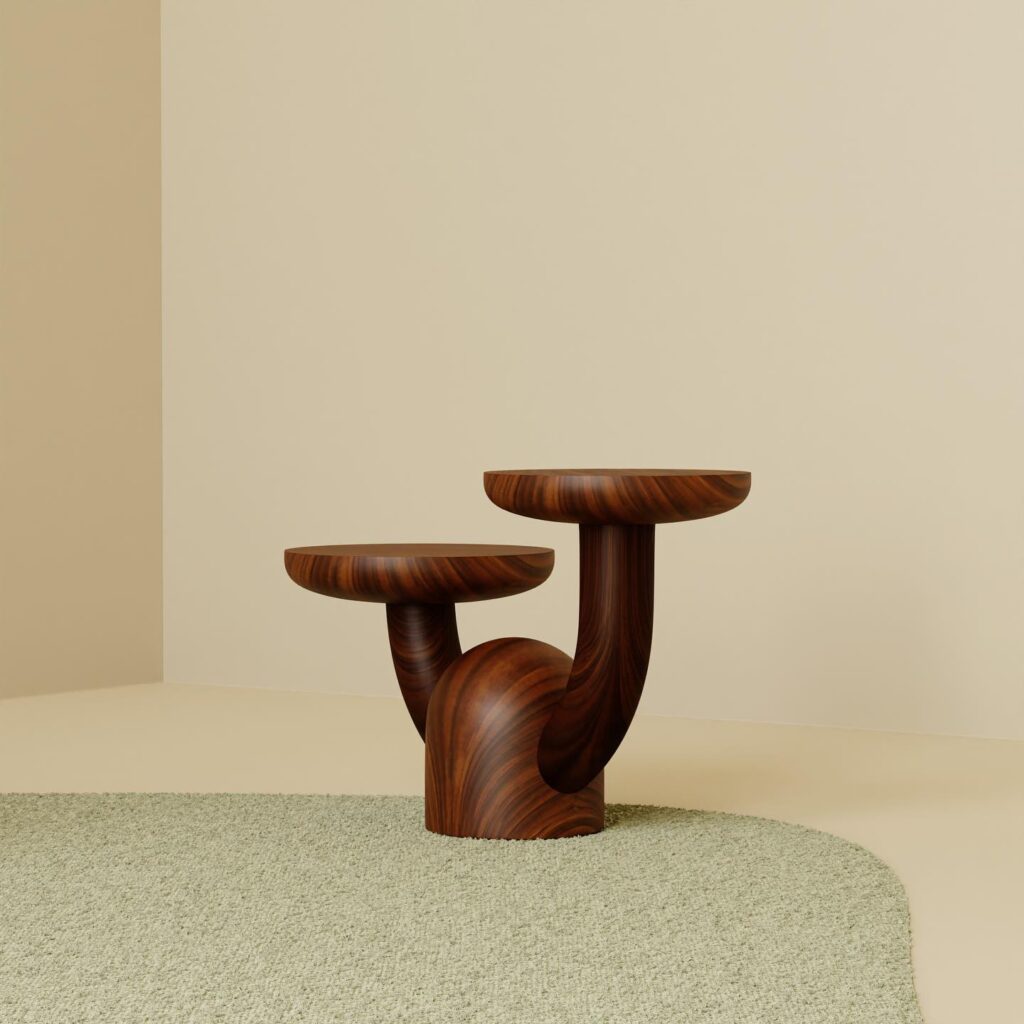
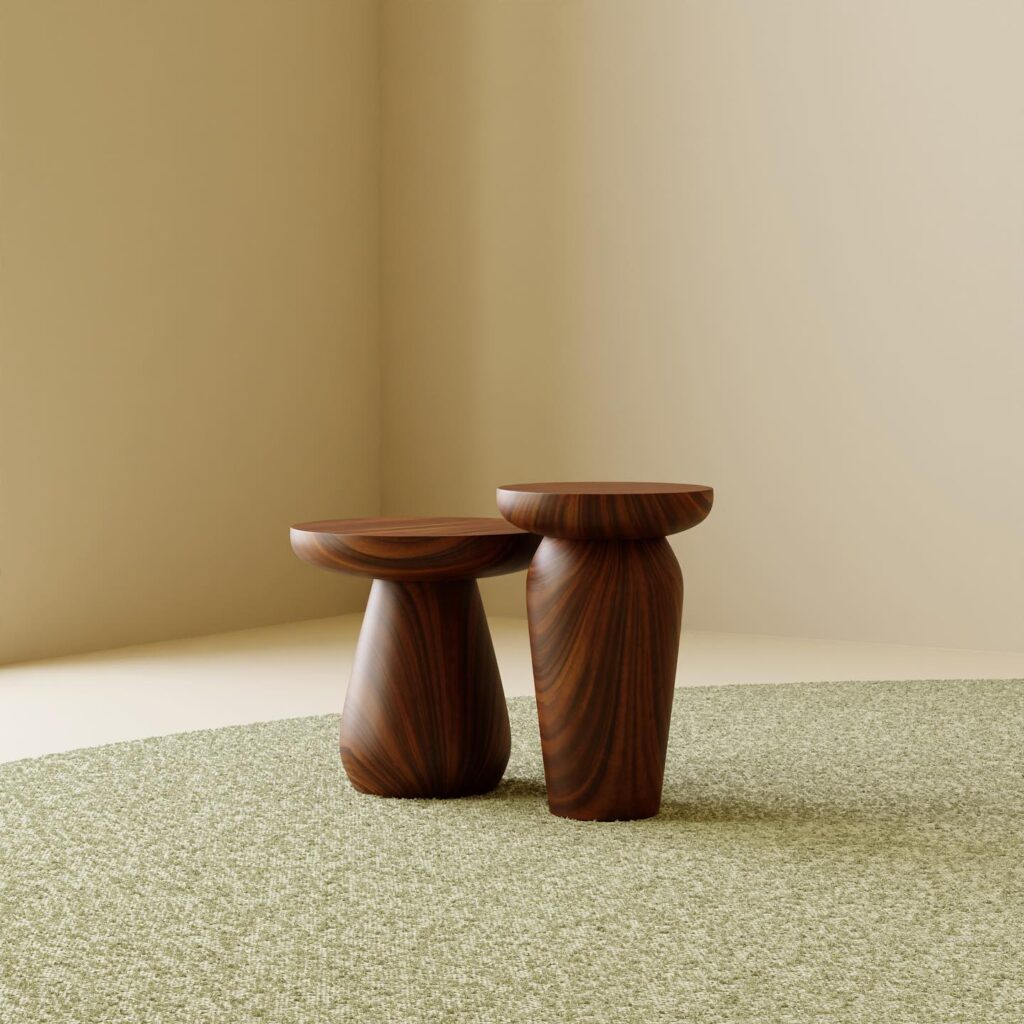
Michael points to the wooden side tables and says they were inspired by mushrooms. In my head, I’m picturing cactus in the Arizona desert—sunbaked and standing quietly dramatic in their own silhouette.
Moodism’s philosophy of transforming moods into material form aligns with a larger movement in product design that veers away from sterile perfection and goes toward intentional delight. Michael wants to serve feeling, not just comfort, which probably stems from Moodism being a pandemic baby, born at a time when everyone needed something positive to look forward to, and he needed something new to do.
An industrial engineer by training, Michael spent three decades in his family’s garments business. They made jeans for export, working with global brands and mastering production systems, fit, proportion, and quality control. When COVID-19 disrupted apparel manufacturing worldwide, he began asking a familiar entrepreneurial question: What else can I build?
It started with a renovation. Designing his own condo in late 2019 led to deeper involvement in space planning and sourcing. From there, he launched a design studio, offering interior and architectural services. Furniture followed naturally.
“I saw the need for customization,” Michael says. “When you design a space, clients ask, ‘Where can we find furniture that fits this exactly?’ So I decided we would make it.”
He set up a factory in Pampanga, a province long known for its craftsmanship. He studied proportions the way he once studied denim patterns, and workers carved foam by hand. “If you treat furniture like jeans, you look at fit,” Michael explains, “It’s the same principle: you check the front, the side, the back.”

The engineering behind the emotion

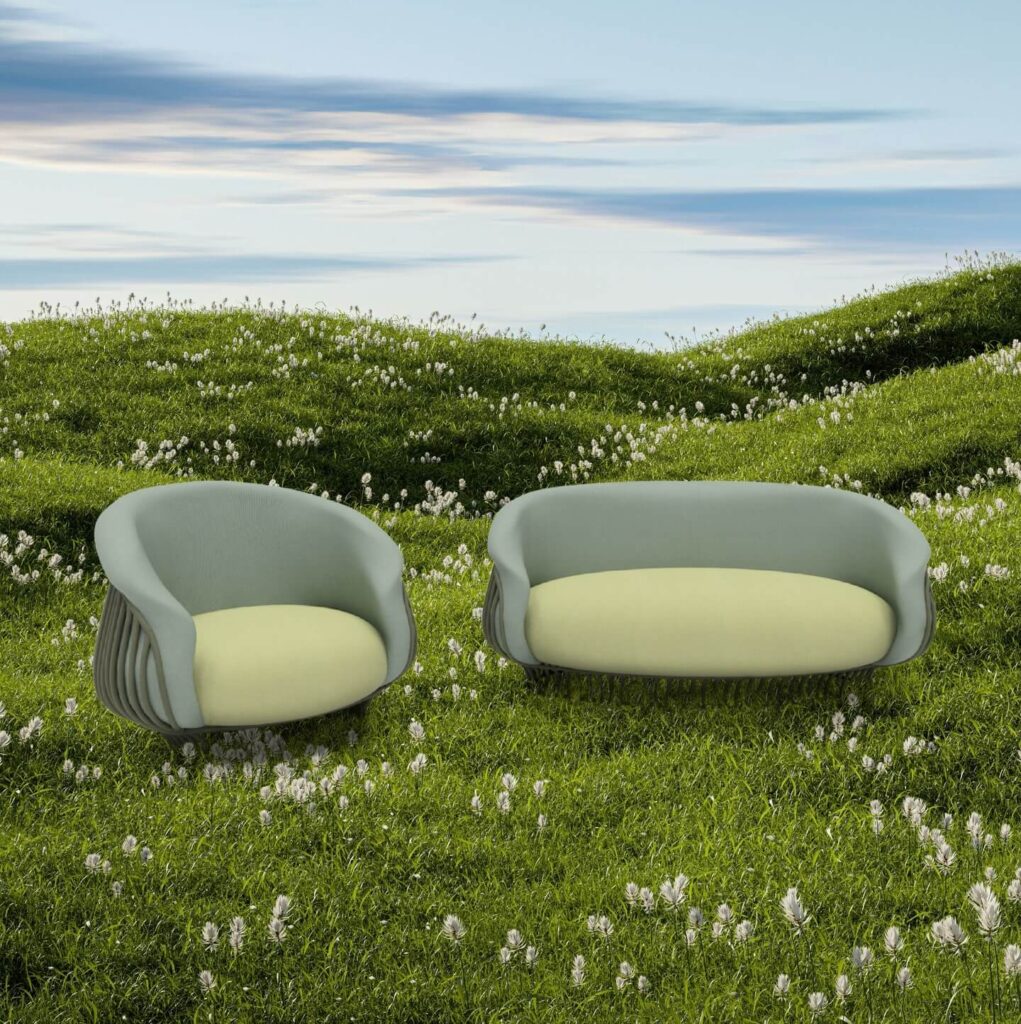
Moodism’s forms may feel soft and organic, but their creation is methodical. Different foam densities are layered to achieve comfort and resilience, upholstery is selected for performance. Outdoor versions use aluminum and specialized foam systems that replicate indoor comfort.
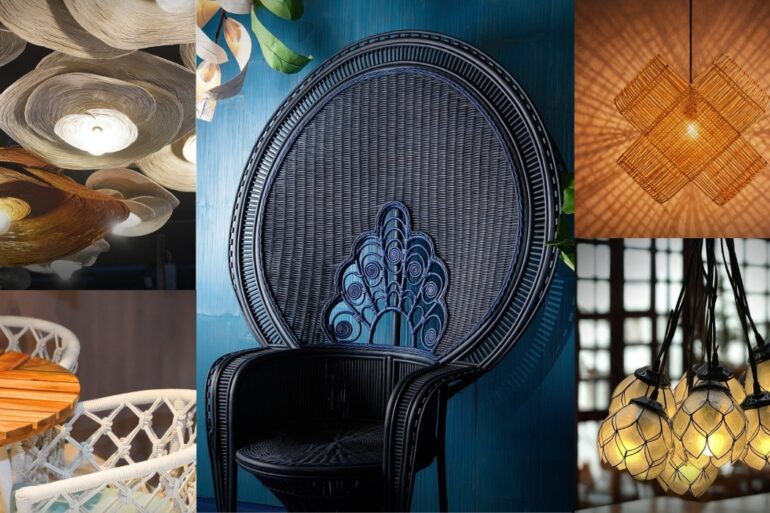
But beyond form, there is story. In recent collections, Michael incorporated woven textiles from the yakan weavers in Zamboanga and inabel weavers in Isabela, both known for nature-inspired geometric patterns, ensuring indigenous textiles are recontextualized for contemporary interiors.
Moodism’s lighting collaboration with designer Mark Wilson uses baliad shells from a lesser-known oyster species whose shells would otherwise be discarded.
Being at Ambiente is a way for Moodism—at only five years old—to benchmark itself against established manufacturers. Michael says the experience has been both humbling and affirming. “You see where you stand globally when you benchmark quality, pricing, design. But you also see that Philippine craftsmanship stands out.”
Unlike high-volume mass suppliers, Moodism positions itself on a higher tier. Its pricing reflects handcrafted production, originality, and identity. “We cannot compare ourselves to China or Vietnam. It’s not the same design language, it’s not the same craftsmanship. Ours is uniquely Filipino.”
A showroom in Manila
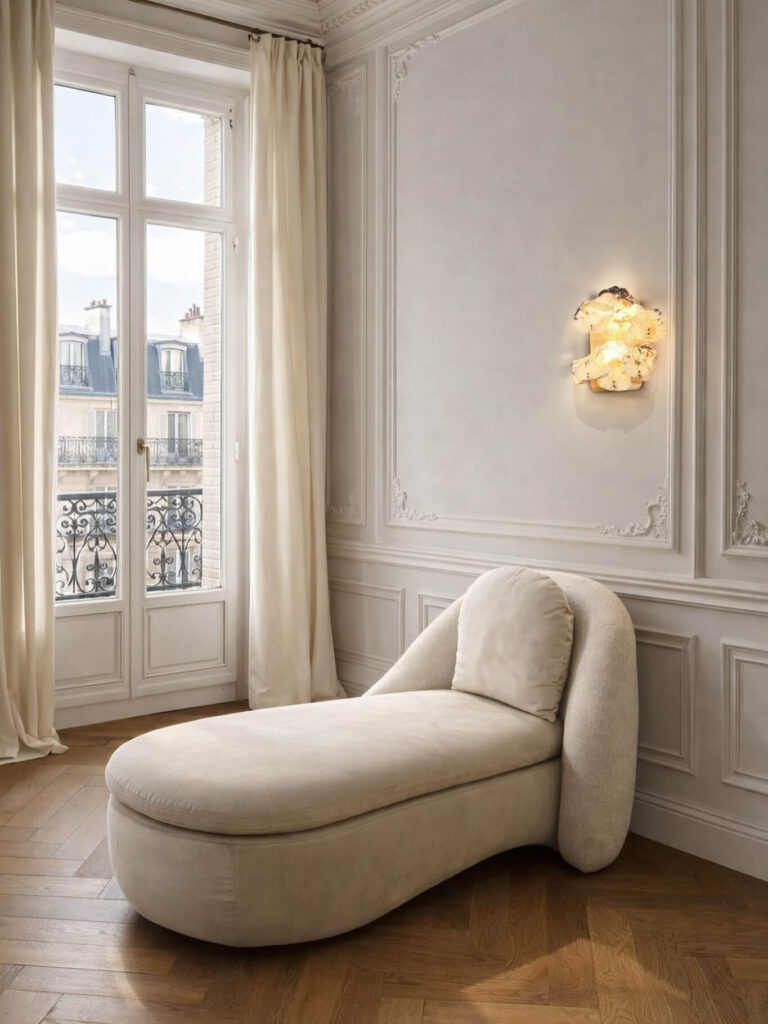
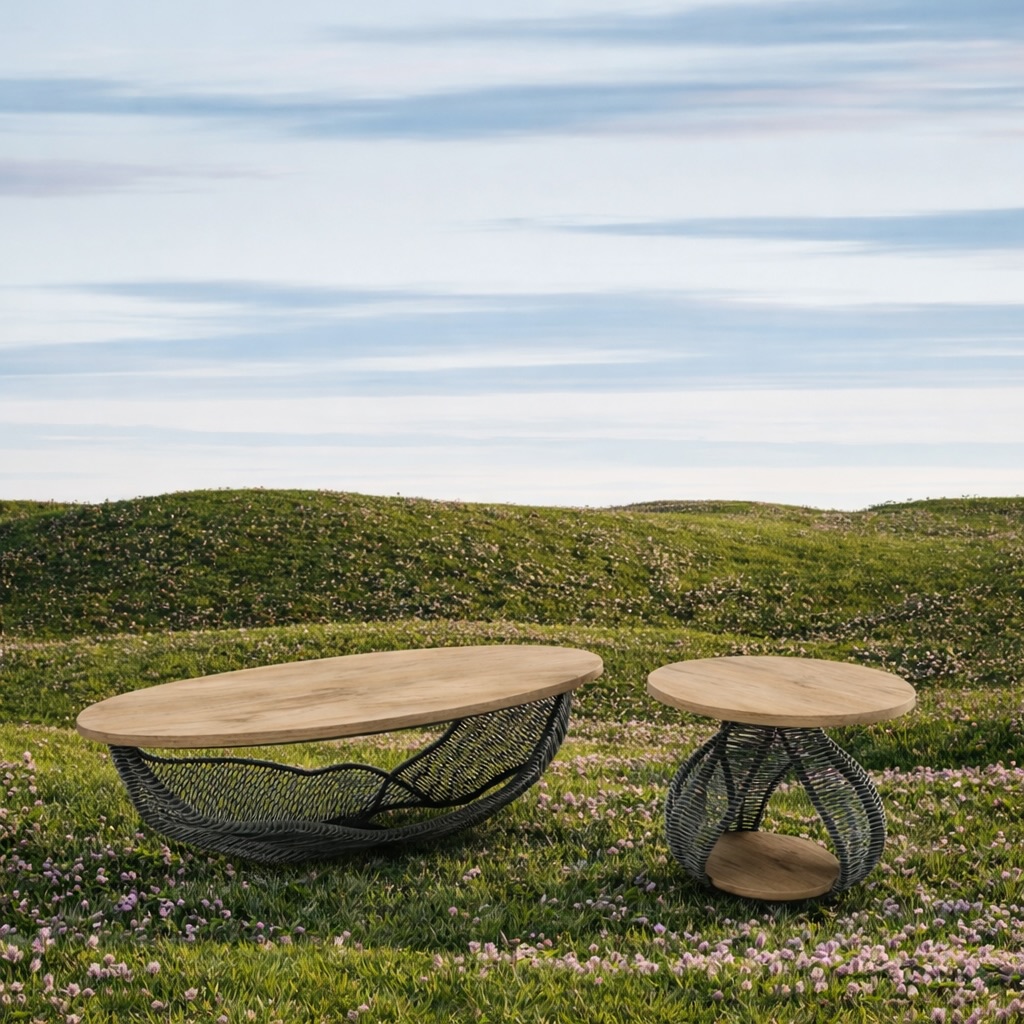
Back home, Moodism is preparing to open a 216-square-meter showroom in BGC. The space will house not only Moodism’s core collections, but also collaborations in lighting, ceramics, and objects that complement its organic forms.
More than a retail destination, the showroom is envisioned as spatial storytelling , an environment that feels immersive rather than merely assembled. “I love pieces that make you smile,” Michael says. “Life is serious enough. When you enter a space, it should make you feel something.”
That quiet confidence defines a new generation of Philippine design exporters, unapologetic about quality, clear about value, and proudly rooted in their Filipino identity.
Related story: Handcrafted for the world: Why the Philippines returns to Ambiente every year
Related story: Wilbert Novero: Three decades of championing Philippine design on the global stage
Related story: How Paolo Feliciano took a detour in photography—then embraced his manufacturing legacy