


Knowing these laws—from the right to financial freedom to fighting gender bias at work—is the first step to actually claiming them.
It’s 2026, and although the world can still feel male-dominated, Filipino women are no doubt more empowered and influential than ever before. Today, Filipinas are ruling several key sectors in the Philippines from politics and finance to education and healthcare. And women’s rights have been a driving force behind this change.
Over the past decades, the country has enacted numerous laws to encourage women to thrive in society, make choices about their lives, and protect them from discrimination or harm. This includes the Anti-Sexual Harassment Act of 1995, which penalizes sexual harassment in workplaces, education, and training environments; as well as the Anti-Rape Law of 1997, which reclassifies the act as a Crime Against Persons and expands its scope.
In 2004, the Anti-Violence Against Women and Their Children Act was officially adopted to protect them from physical, psychological, and economic abuse. Five years later, in 2009, the Magna Carta for Women was established, providing a comprehensive legal framework that further guarantees, protects, and promotes the rights of Filipinas.

While all these laws have been part of public conversation, there are still those that likewise protect women’s safety, autonomy, and well-being, yet remain under the radar. For women determined to maximize their potential, knowing these rights is the first step to claiming them. Here are five of the little-known rights Filipino women are entitled to.
Related story: From fun runs to festivals: 5 Women’s Month activities and events to attend in March
Related story: Girls only: 5 women-oriented gyms, sports, and fitness studios in Metro Manila
Protection against financial abuse
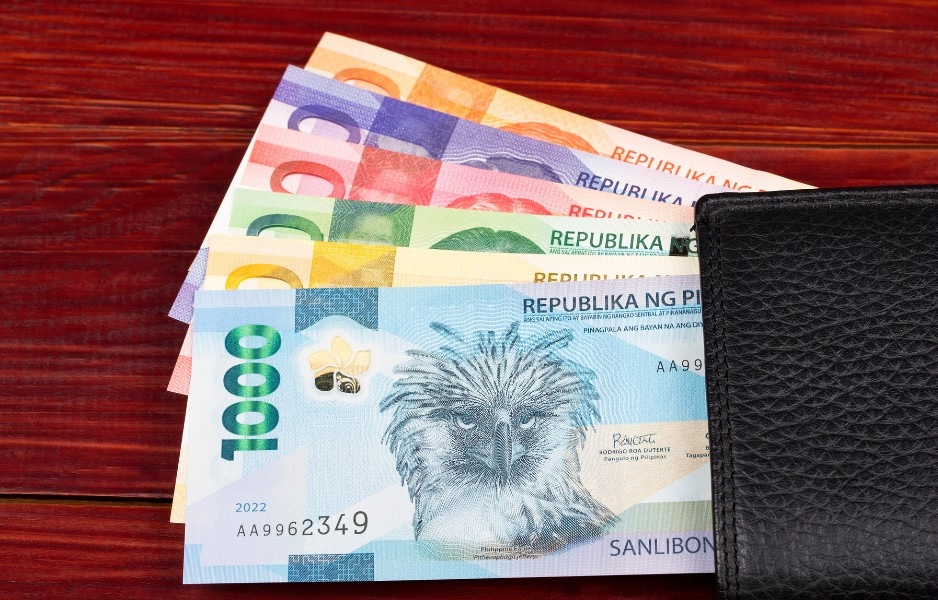
Let’s be honest: we all want a partner who makes us feel like a queen, spoiling us with every luxury handbag or international getaway we set our sights on. The thing is, if all that comes at the cost of your own financial freedom, then that’s not love—it’s control. And true love respects your freedom and boundaries.
Under the Anti-Violence Against Women and Their Children Act (Anti-VAWC or RA 9262), financial abuse is considered economic violence and is punishable by law. This includes controlling a woman’s money or property, taking full control of shared assets, destroying household items, stopping her from working, or using threats over child custody to force compliance.
To stop financial abuse, victims can secure a Barangay Protection Order (BPO), Temporary Protection Order (TPO), or Permanent Protection Order (PPO) at the regional or municipal trial courts where they are currently residing. Those proven guilty of the crime are penalized with imprisonment between one month and 20 years and a fine of P100,000 to P300,000 for moral damages.
Compensation for harm caused by cheating

Scroll through social media, and it’s obvious—infidelity has become increasingly common. Even if talking openly, building trust, and setting boundaries can’t prevent it from happening, the law has your back—through the Anti-VAWC Act. In case you still didn’t know, this law applies to both married and dating relationships.
Under the Anti-VAWC Act, a husband or boyfriend’s infidelity is considered psychological abuse and is punishable by law if it causes you severe mental or emotional pain, or even public humiliation. Victims who would like to file charges must provide strong evidence—such as photos, messages, or witness testimonies—to prove the infidelity and the resulting psychological harm.
Those who are married must first file a Complaint-Affidavit at the Office of the City Prosecutor where the infidelity took place before the case is brought to the Supreme Court. If found guilty, the husband may be punished with imprisonment ranging from 6 months and 1 day to a maximum of 4 years and 1 day.
If he is only your boyfriend and not married to you, you can file a civil suit for moral damages with the city prosecutor or the Regional Trial Court. If proven guilty, he may be obliged to pay a fee of P100,000 to P300,000 or compensate for the actual expenses you spent for psychological treatment.
Protection from gender bias at work

Aside from the daily commute, office politics, and all the usual work drama, many Filipinas also have to deal with gender discrimination in the office. In fact, a study published by LinkedIn in 2022 states that women in the Philippines earn only 78% of what men earn. The reason, according to the Philippine Statistics Authority’s 2019 study, is that women are often relegated to jobs that are seen as traditionally female, such as administrative and clerical work, while men dominate higher-paying jobs such as managers and executives.
Gender discrimination still occurs in many workplaces, but the law allows you to take action against it. The Magna Carta for Women (RA 9710) and the Prohibition on Discrimination Against Women (RA 6725) prohibit discrimination against women in employment, including promotion, training, or benefits, based solely on gender.

Women who would like to file a complaint can do so through their offices’ Human Resources Department, as mandated by law. If internal remedies fail, they can proceed to file the complaint at the Department of Labor and Employment (DOLE) or the National Labor Relations Commission (NLRC). Penalties depend on the severity of the act but include imprisonment of one to six months and a fine of P10,000 to P50,000, based on the Magna Carta for Women.
Right to choose surname

For many people, getting married is a lifelong dream—one that brings companionship, joy, and the kind of deep love we all hope for. But while it’s beautiful to spend the rest of your life with your favorite person, marriage doesn’t mean a woman has to lose her own identity. In legal terms, a woman isn’t obligated to take her husband’s surname after the wedding.
According to the Civil Code of the Philippines and the Magna Carta for Women, Filipinas have the right to choose how to use their surname after marriage. They can either keep her maiden name or take her husband’s surname. If she prefers to use both, she can do so by just hyphenating them.
Assistance for small-scale women entrepreneurs

Starting a business is never easy, but with the right support, any girl can turn her ideas into reality. If launching one is part of your plans, you can get support from the government under Republic Act No. 7882, also called the Act Providing Assistance to Women Engaging in Micro and Cottage Business Enterprises.
The law was created to help Filipino women who want to own and operate small businesses, such as food production, handicrafts, tailoring, or small retail ventures. It provides you with access to financing and credit, training and skills development needed for the business, as well as market opportunities to help you sell your goods.
When you’re ready to take the leap, financial support is available through the Department of Trade and Industry’s Small Business Corporation, the Department of Science and Techonology’s Council for Industry, Energy, and Emerging Technology Research and Development, and other private programs for women entrepreneurs.
Related story: Here’s how to make money outside the office: Millennial moms share their side hustles
Related story: Women have the power to change reality through their art