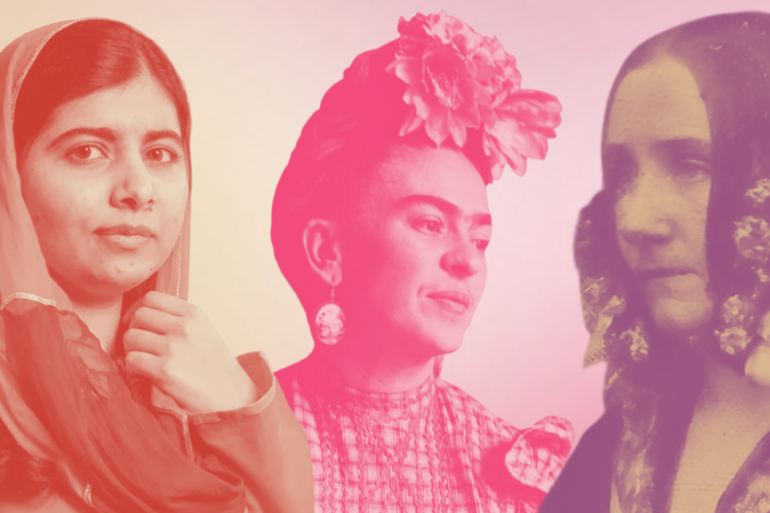


Gone are the days when women simply asked for a seat at the table; today, they are the power grid that keeps society illuminated.
Saturday at the mall usually means a search for the latest trends, but this past March 7, Robinsons Department Store Galleria traded its usual weekend retail hum for an interactive plenary session dedicated to women and allies.
Aligning with UN Women’s global theme of rights, justice, and action, the #Women2026: Ladies Who Lead forum brought together a vanguard who have spoken about how power structures, policies, and practices influence the lived realities of women and girls in the Philippines.
Related story: Women of genius: Thought leaders, trailblazers, and creators who changed the world for good
Related story: Beyond show business: Filipina celebrities who are also founders and CEOs

In a takeover of the atrium, students in denim sat alongside civil society organizations, members of the diplomatic corps, human rights advocates, and leaders, for an afternoon of empowerment platitudes and a deep-dive into the legal grit and creative ingenuity required to steer a society toward true equity.
With the panel circling around inspiring and empowered women across different fields, the forum provided a 360-degree view of what it means to lead.
Related story: The rise of the multi-hyphenate woman and why doing more than one thing is the future of work
Related story: 5 little-known rights Filipino women are legally entitled to
Leadership is a collective act
Quezon City Mayor Joy Belmonte didn’t shy away from the gritty reality of the status quo. While national legislation like the SOGIESC Equality Bill continues to stall in Congress, Mayor Joy highlighted how QC has taken deliberate steps forward. QC didn’t wait for national consensus to protect its citizens; it passed its landmark Bawal Bastos Ordinance in 2016, years before the National Safe Spaces Act.
The QC Mayor spoke with pride of the QC Protection Center, a centralized sanctuary for women, children, and the LGBTQ+ community, stating, “We built [it] so that a survivor of abuse does not have to retell the trauma across five different offices to have access to help.”
“Because women and girls are more vulnerable to sexual abuse and exploitation, we have also strengthened our efforts against these crimes, particularly on online sexual abuse and exploitation of children,” she added.
In the eyes of the QC Mayor, leadership runs beyond occupying a space as it’s about stripping down the “automatic” objectification that still plagues the halls of power. Unfurling a scathing critique of a recent congressional incident where a woman was reduced to an object of desire on the record, the Mayor laid down a gauntlet for the nation.
“‘Pag nakahanap siya ng halimbawa, hindi na nag-isip, basta ‘yan ang unang pumasok sa kanyang isip, [‘yun na ‘yon]. Nakakabahala ‘yan kasi ibig sabihin niyan, without thinking, matik ang babae ay object of desire ng mga kalalakihan.” she remarked on the inappropriate analogy.
Mayor Joy also pointed to a concept that should be the standard for every local government: the gender lens.
“Importante kasi lahat ng ginagawa natin, we do it through a gender lens. Kaya hindi hiwalay ang GAD (Gender and Development) or gender issues sa pangmalawakang issue ng mga lungsod,” she told The POST. Whether it is housing for single mothers, scholarships for girls in STEM, or climate justice, the data is gender-disaggregated.
She also addressed the “unseen” pillar of society: the unpaid domestic labor that limits women’s economic agency. Since 2020, the city has invested 1.3 billion pesos in livelihood and entrepreneurship programs, specifically targeting those whose work at home often goes uncompensated.
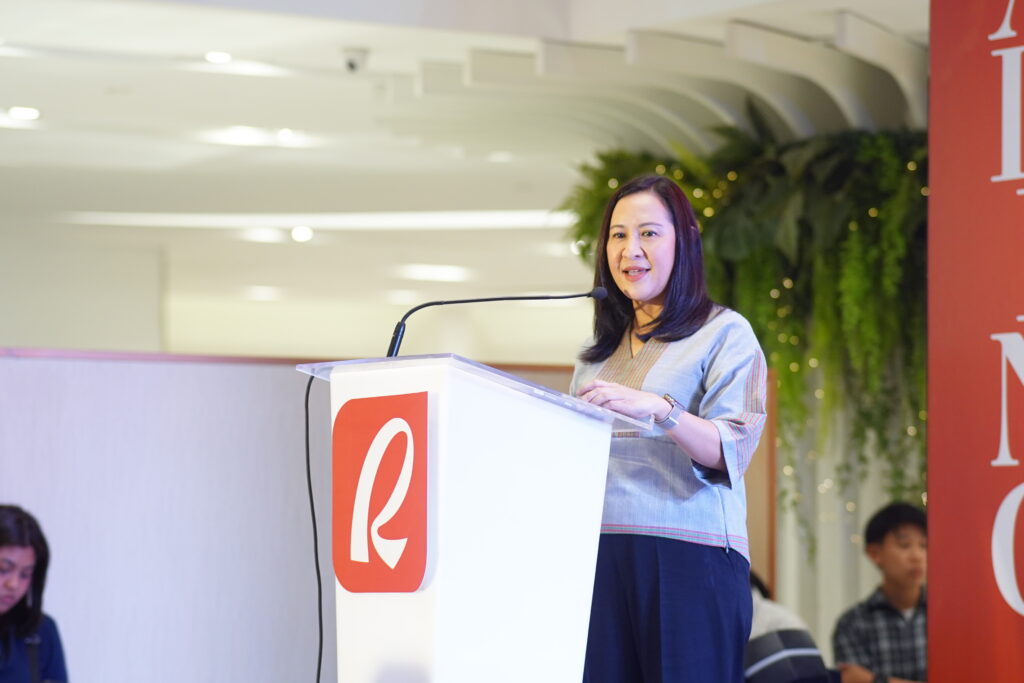
Leaving with a message for young women aspiring to enter public service, Mayor Joy offered a reality check that being a woman in power isn’t enough if one doesn’t use that position to lift the collective status of her sisters.
“My dream is half the leaders are women, and then these women leaders, dapat ang number one agenda nila ay i-angat ang antas ng kababaihan sa lipunan,” she put it.
Wellness is power and force multiplier
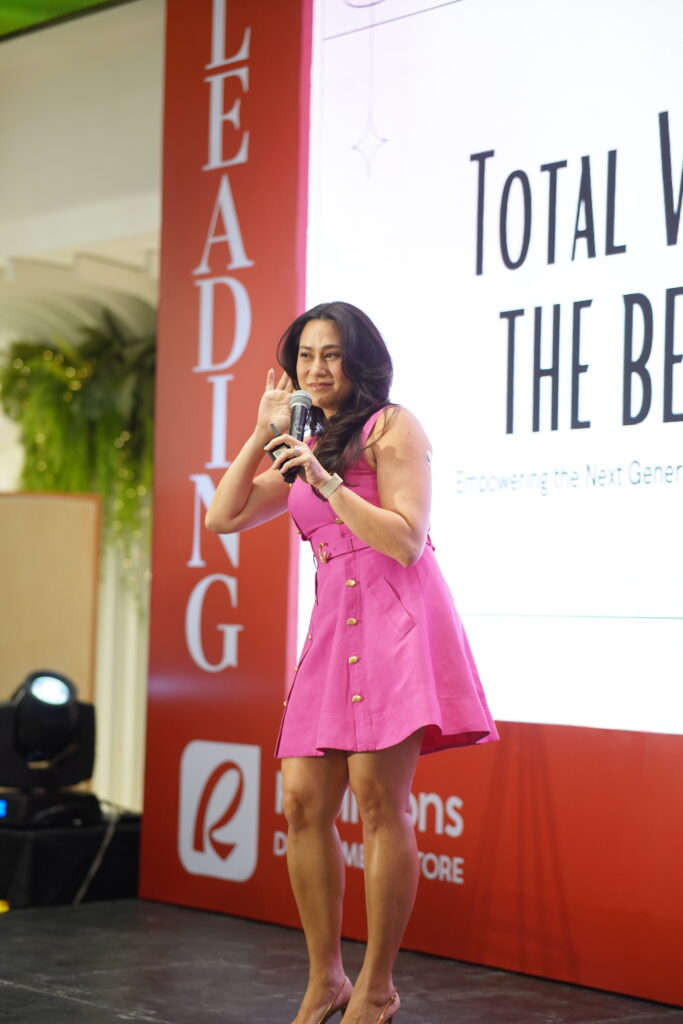
Reframing the beauty industry more than as a source of vanity but as an engine for women’s agency is Cristalle Belo-Pitt, the Managing Director of Belo Essentials.
While Cristalle dutifully tried to complete her science units for medical school (as requested by her mom), she genuinely found no joy in the process. Instead of forcing a fit into a lab coat, she just chose to rewire the brand for a much larger audience through Belo Essentials.
From then on, she took it upon herself to make her mother’s “other dream” come true: “I’m a daughter who’s not a doctor. But I still make sure na ‘yung gusto niya to make the Philippines beautiful, ginawa ko—and mas accessible sa lahat.” Because in her perspective, beauty and wellness should not only be seen as a luxury: “Kasi s’yempre, ‘yung beauty, ‘di lang naman dapat pang-mayaman ‘yun, ‘di ba? Dapat para sa lahat.”
Now that we’re in the age of digital saturation, Cristalle amplifies self-care as service where she also touches on the traditional martyr complex associated with the Filipina identity–-the woman who exhausts her energy on everyone else while leaving her own cup empty.
“A lot of people forget to take care of themselves, and yet they spend their lives taking care of their children, their siblings, their parents. Give yourself those moments, And I feel that when you take care of yourself, you have the power to take care of a full barangay,” Cristalle expressed.
“All it takes is just 3-5 minutes taking care of yourself, and it affects your mental health, your mind, your body, your biggest organ, which is your skin. So that’s why I advocate for that.”
When asked about the heavy pressure women feel to not age, Cristalle offered a non-judgmental, inclusive stance on aesthetic enhancements, “I don’t judge people who ‘give in’ to enhancements, If that makes them feel good and that makes them give more to the world, then why not? Tanggalin natin ‘yung societal pressure.”
Beyond the products, Cristalle sheds light on how the Belo Medical Group operates as a female-driven ecosystem. With over 800 employees, 90% of whom are women, the company is a case study in creating a workplace culture designed by and for women.
This empowerment extends into the community through high-impact social responsibility such as their Belo Smile Project where they help correct cleft lips and palates for children across the country and the Belo Scar Project for people with traumatic scars or birthmarks.
Justice is a structural requirement, not a privilege
Representation is meaningless if the systems behind it are broken, according to Department of Justice Undersecretary Margarita Gutierrez.
Usec. Margarita brought the reality of the Filipino legal system to the forefront, sharing heartbreaking stories of detainees who are already eligible for release yet remain in detention because they cannot navigate the bureaucracy or have been abandoned by counsel.
More than optics of a diversity poster, leadership is about the unglamorous work of processing paperwork, breaking stigmas, and ensuring the law moves for those it often forgets. “That is why access to justice matters. Because justice should not depend on whether someone has the resources or knowledge to claim it” pressed the DOJ Usec.
Bridging this gap, the DOJ Katarungan Caravan has assisted over 50,000 Filipinos since 2023, bringing legal services directly to the grassroots. Usec. Margarita further shared a chilling account from a barangay in Pangasinan where the caravan uncovered pervasive, incestuous rape cases that had been normalized by silence.
“When services are brought directly to communities, especially to women and other vulnerable sectors, the fear begins to diminish, your confidence grows, and access becomes real,” she stressed, adding how justice should not depend on geography, income, and connections. Thus, the reason why justice requires a structural response.
In one of the forum’s most striking moments, the DOJ Usec. challenged the audience to move past the superficial girl boss tropes often associated with Women’s Month. She called for a shift from performance to policy, and from visibility to decision-making power.
On leadership standards, her words were: “Hindi lang dapat sa boyfriend mataas ang standards. Dapat sa leaders din, tama? Women in governance are not here to fill quotas. We are here to ask difficult but necessary questions.”
“Because women understand structural barriers because tayo mismo, we navigated them ourselves. We know what it feels like to be underestimated. We know what it means to be held to higher standards simply because we are women,” she continued. “That is why we should not only aspire to be women who lead. We should be women who reform. Women who enforce. Women who deliver. And hopefully in the years to come, we will no longer need to repeat the same statistics.”
Related story: Where her paycheck lands: What women love to prioritize in their 30s
Related story: Homegrown highlights: 10 beauty brands founded by Filipinas
Learning is a superpower
During the session, Halia CEO Alexa Jocom proved that sometimes, the most radical thing a leader can do is admit they are still learning.

Not to take the stage and boast about corporate milestones, Alexa presented the beginner’s mind, framing her journey as the world’s longest-running internship. “A beginner’s mind is actually a young woman’s greatest competitive advantage. Even for the young men out there, a beginner’s mind is your greatest competitive advantage,” she stated. To her, the “how” of leadership is secondary to the “why” of the mission.
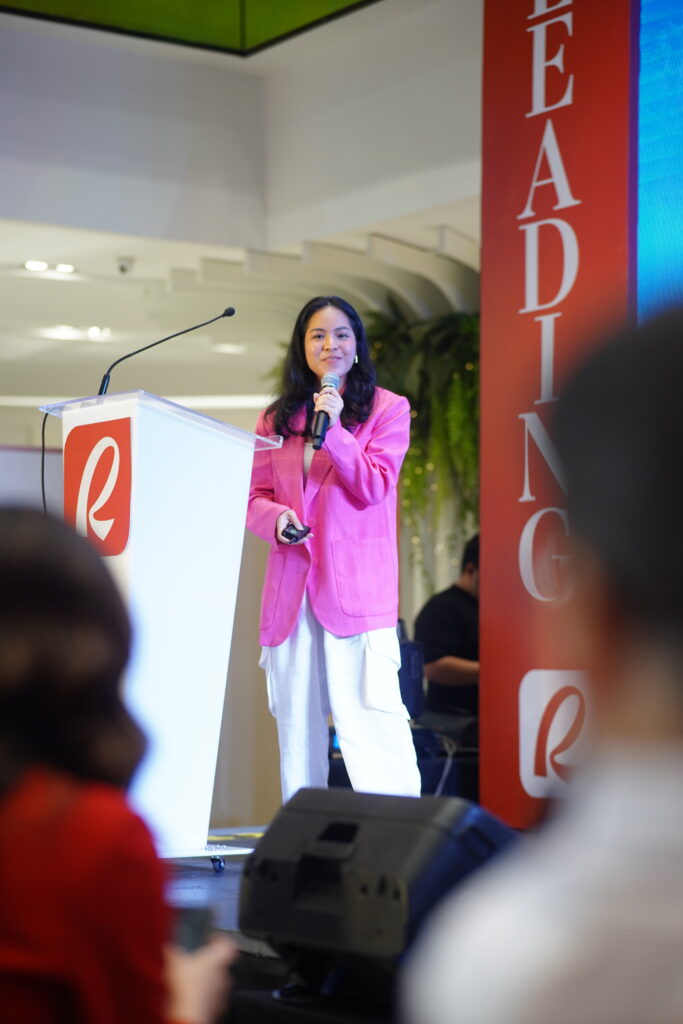
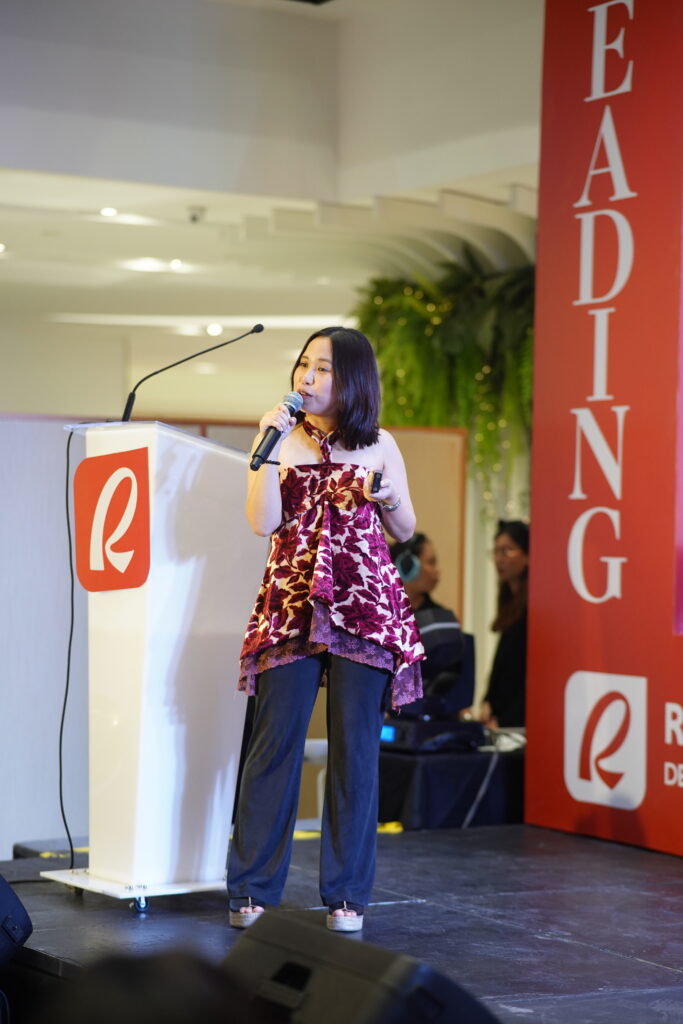

The idea of Halia wasn’t found in a boardroom, but in the gut-wrenching discomfort of a first-year college student. Frustrated by traditional plastic pads that were “itchy, unbreathable, and stuffy,” and horrified by the fact that a single pad takes 500 to 800 years to biodegrade, Alexa stopped waiting for the industry giants to sort it out.
She realized that in spaces like women’s health, harmful norms are often accepted simply because no one with experience thought to question them. “For months, I waited for a big company to fix the plastic bag problem. I waited for an expert to step in. But here’s the key. Those facets of yourself, your frustrations, your unique personality—brings me to lesson number three: the how is awarded to those who act.”
“I realized that I didn’t have to wait for these pieces to come to me. Or I didn’t have to wait until I got more experience, or when I felt more ready. You just do. You get to give yourself that validation. You get the how when you show up,” she divulged.
Perhaps the most remarkable part of her address was how she challenged the leaders in the room, not just to mentor, but to listen. As she argued, innovation comes from the “annoying five-year-old” within who never stopped asking why.
Being a guardian of the greens
Defending the environment is as much about policy as it is about planting trees. At the intersection of environmental justice and leadership is Billie Dumaliang of Masungi Georeserve.
Her connection to the landscape began early, accompanying her father, a civil engineer, into the terrains of Masungi—eventually evolving into long-term involvement in protecting a secondary forest that now supports over 800 species of flora and fauna.
In 2017, a meeting with the late Gina Lopez shifted the scope of Masungi’s work toward the Upper Marikina Watershed, a critical area that protects Metro Manila from flooding. However, despite being protected since colonial times, only 25% of its forest cover remains.
Billie shared, “What we’ve done in the past several years is to plant trees to secure the area against threats, to campaign against destructive activities, such that the forest is regenerating again.”
The Philippines remains one of the most dangerous countries in the world for environmental defenders. For Billie and her team, harassment is a daily reality. She also spoke about the gendered attacks women defenders face, from having their achievements reduced to relationships to being dismissed as attention-seeking or “too emotional.”
And each woman who speaks, each woman who breaks barriers, creates the space for other women to do so,”
“Sometimes, yung gains mo, are not credited to your merit. I’ve also been called ‘Magaling ka lang sa PR…’ many times,” Billie said. Despite this, she emphasized staying rooted in conviction despite the risks.
Reforestation, she said, is a refusal to accept barren landscapes as inevitable. “We believe that forests are not only places where you go, they are our life support system, protecting our forests can reduce flood water by 47%,” she explained.
Ending her talk with a nod to George Bernard Shaw, Billie embraced the idea of being “unreasonable.” As she frames it, “Sometimes, it’s reasonable to just stay silent. It’s reasonable to not fight for what you believe in. But we have to be unreasonable sometimes. We have to be stubborn because all progress of our society and the changes that we lead are inspired by that unreasonable act.”
“I cannot change society. I cannot change the system. It would probably take generations to make us a freer and more equal society. But I can try. Each day is a struggle. And each woman who speaks, each woman who breaks barriers, creates the space for other women to do so,” she remarked.
Related story: From ate to authority: How Filipina women lead within families and work
Related story: Girls only: 5 women-oriented gyms, sports, and fitness studios in Metro Manila