

Women are no longer following one path. They’re building several at once.
For the longest time, success followed a script. Study, get hired, move up, stay put. Repeat until retirement. But somewhere between burnout, the pandemic, and the quiet realization that one job can’t carry an entire life, that script started to fall apart. What replaced it is something far less linear and far more real.
Today, more women are building careers that don’t fit into a single title. They are writers and strategists. Founders and employees. Creatives and consultants. Sometimes all at once, sometimes in seasons, but rarely just one thing.
Related story: Here’s how to make money outside the office: Millennial moms share their side hustles
Related story: Your talent, your capital: 10 ways to start a business with nothing but your skills
What a multi-hyphenate career actually means today
A multi-hyphenate career is exactly what it sounds like. Instead of being defined by one role, a person operates across several identities at the same time. Think of someone who is both a corporate executive and a small business owner, or a creative who also teaches, consults, and manages digital projects.
A 2025 study by Chief, a private membership network for senior women leaders, together with The Harris Poll, a global research and analytics firm, found that the average senior woman leader now holds three professional identities at once. That number alone says a lot. What used to be considered “too much” is now the norm at the highest levels.
Even more telling is that this isn’t limited to freelancers or creatives. More than half of women in C-suite roles still maintain portfolio careers alongside their main positions. Leadership today is no longer tied to one lane. It’s built across several.
Related story: Get to know the seven Filipino execs who made it to Fortune’s list of 100 most powerful women in Asia
Related story: Forbes’ list of most powerful women of 2025 shows who’s shaping the next decade

Women are not less ambitious, they just want different things
According to the research, 86 percent of senior women leaders say they are more ambitious now than they were five years ago, and 92 percent say they are still actively thinking about how to grow or change their careers.
What’s changed is how ambition is defined. It is no longer just about climbing higher but more of having more control over time, work, and direction. It is about building something meaningful, not just impressive on paper.
Forbes points out that many women leaders are now intentionally creating what are called “portfolio careers,” combining corporate roles with entrepreneurship, advisory work, or creative pursuits. Growth, impact, and alignment now matter just as much as salary or job title.
Why doing more than one thing actually works
For years, nonlinear careers were seen as a red flag. Too many pivots meant instability. Career pauses were treated like gaps instead of choices.
But the way work functions today has exposed the limits of that thinking.
Careers that move across industries and roles build something traditional paths often don’t. Range. The ability to adapt, connect ideas, and lead across different contexts.
A Fast Company analysis notes that women who have navigated multiple roles bring a combination of resilience, emotional intelligence, and perspective that modern workplaces now require. These are the same skills that help leaders manage uncertainty, understand people, and make better decisions under pressure.
The creator economy made it normal
We’re used to seeing people do more than one thing. Someone starts as a content creator, then launches a brand, then turns that into a business, a course, or a community. It doesn’t feel unusual anymore because we see it every day.
According to another report by Forbes, more entrepreneurs are now building multi-hyphenate careers, taking on roles like founder, creator, and investor at the same time. Instead of focusing on just one path, they’re creating layered careers where each part supports the other.
What used to be labeled a side hustle has quietly become part of the main plan, especially as digital tools and platforms make it easier to build and grow multiple streams at once.
This shift is also happening at scale. A 2025 roundup of global entrepreneurship data from The Kaplan Group, drawing from sources like the Global Entrepreneurship Monitor and the U.S. Small Business Administration, estimates that between 582 million and 665 million people worldwide are now engaged in entrepreneurial activity.
And in a time where work feels less predictable, building more than one stream of income or identity doesn’t feel excessive anymore. It feels necessary.
Related story: Where her paycheck lands: What women love to prioritize in their 30s
Related story: From ate to authority: How Filipina women lead within families and work

From climbing the ladder to building a career that fits
The career ladder still exists. It just isn’t the only way up anymore.
More women are moving sideways, pausing when needed, switching industries, or building something alongside their main job. Instead of focusing only on upward movement, they are expanding outward. Learning new skills, exploring different spaces, and creating careers that actually match their lives.
This shift has been described as moving from a “ladder” to a “lattice,” where growth is not just vertical but multidirectional.
And for many women, this is not a new concept. It is something they have been doing for years, balancing responsibilities, adapting to change, and finding ways to make work fit into real life.

The difference now is that it is finally being recognized as valuable.
The role of community in making it work
Another thing that stands out in the research is how rarely this is done alone.
The Chief and Harris Poll study found that 94 percent of women say being around other ambitious women fuels their own ambition, while 93 percent believe women have the collective power to create new spaces of influence. That sense of shared growth is shaping how careers evolve.
Instead of competing for limited spots, more women are collaborating, mentoring, investing, and building networks that open doors for others. Career growth is no longer just individual. It is collective.
You can see this shift everywhere
In global boardrooms, where executives are also investors and advisors. In creative industries, where freelancers balance multiple clients across countries. And closer to home, in the Philippines, where more women are expanding beyond a single role.
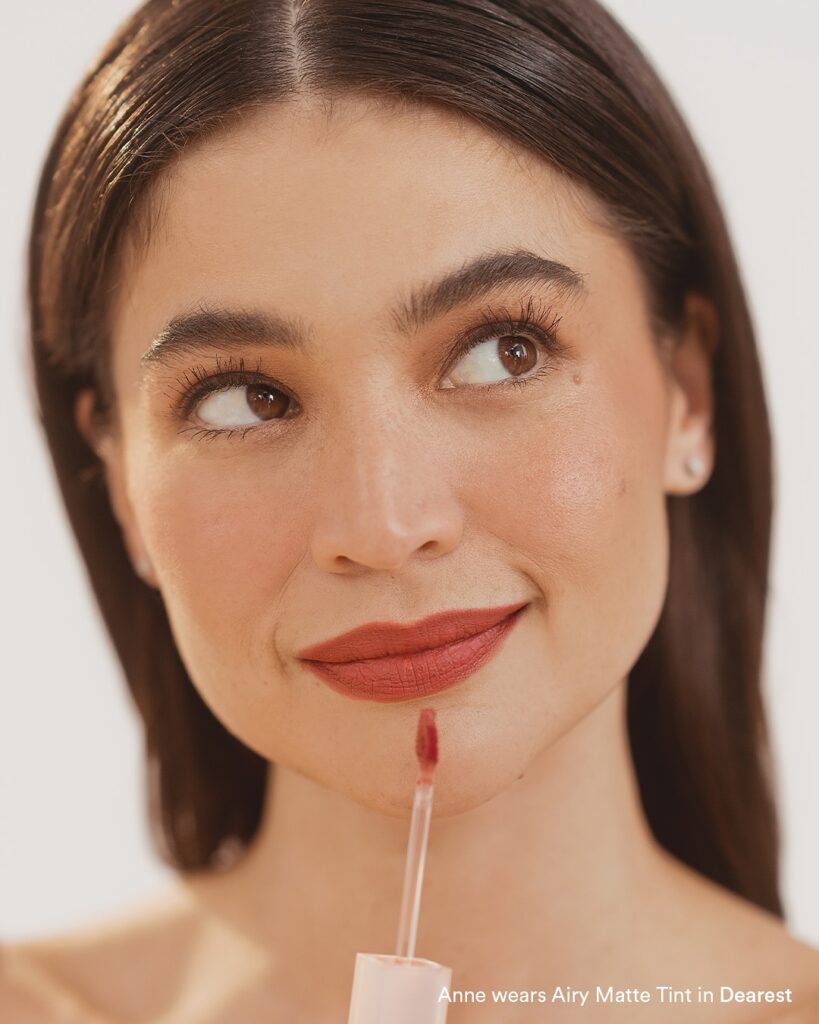

Filipina celebrities are no longer just faces on screen. Many are founders, CEOs, and brand builders. Professionals are teaching on the side, launching businesses, or taking on freelance work alongside corporate roles. Even among younger professionals, there is a clear shift toward building careers that feel sustainable, not just stable.
Related story: Beyond show business: Filipina celebrities who are also founders and CEOs
It is no longer unusual to be more than one thing. It is expected.
So what does success look like now?
For some, it still means growing within a company, but with better boundaries and flexibility. For others, it means building something of their own. And for many, it means combining different paths into one career that evolves over time.
The idea that there is only one “right” way to succeed is starting to feel outdated. Because the reality is, work has changed. Life has changed. And women are responding by building careers that reflect both.
The multi-hyphenate woman is not doing too much. She is doing what makes sense. And if the data says anything, it is this: The future of work is not choosing one path. It is having the freedom to create your own.