


Ongoing tensions in the Gulf are raising airfares, disrupting flight routes, and changing how Asian destinations attract visitors. Here’s what it means for the region.
Not long ago, booking an international trip felt relatively straightforward. Travelers could plan months ahead, compare routes with ease, and expect a certain level of predictability in prices and schedules. Today, that sense of certainty is harder to come by, as airlines reroute flights, avoid key airspace, and adjust operations in response to an evolving situation.
What’s emerging is not a slowdown in travel, but a shift in how people approach it. Trips are still happening—but with more thought, more flexibility, and a closer eye on costs.
The cost of getting around
One of the most immediate impacts of the conflict has been on flight routes. With parts of Middle Eastern airspace restricted or avoided, airlines are increasingly relying on alternative paths and non-Gulf carriers to maintain long-haul connections between Europe and Asia.
That workaround comes with trade-offs. Longer routes mean higher fuel consumption, extended flight times, and tighter aircraft availability—all of which contribute to rising ticket prices. Flights that once offered seamless stopovers in major Gulf hubs are now either rerouted or replaced with less direct alternatives, often at a premium.
For travelers, the change is subtle but noticeable. Fewer route options, longer travel times, and higher prices are becoming part of the new travel experience.
The numbers behind the surge
The increase in fares is hard to miss. Across Asia, airfare prices have been climbing as airlines respond to fuel volatility and operational constraints.
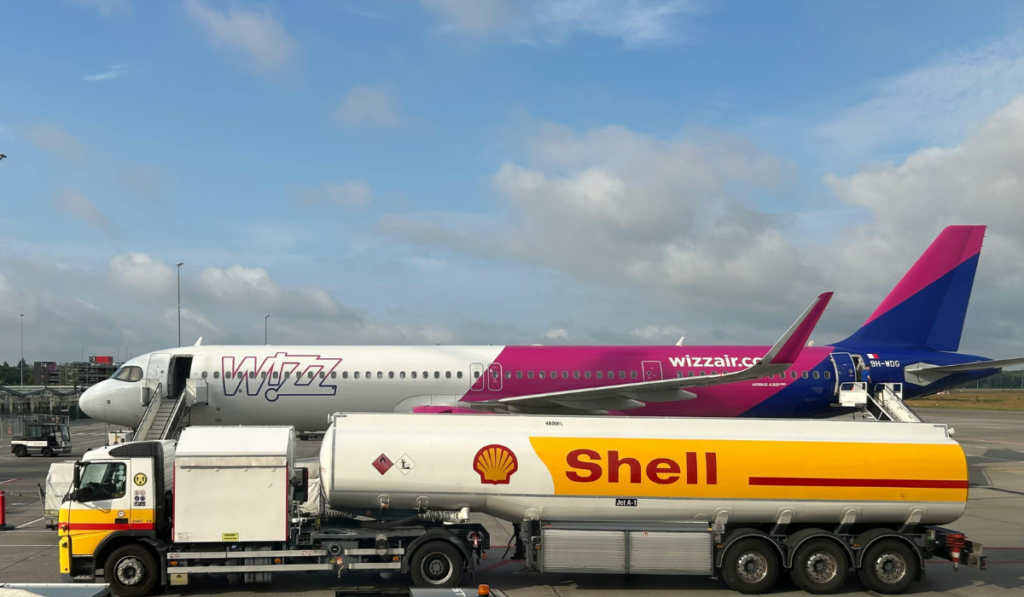
Budget carrier AirAsia X has increased fares by as much as 31% to 40% while also reducing capacity. In the Philippines, Cebu Pacific has raised average ticket prices by up to 26% and trimmed flight frequencies to manage rising costs. Other carriers across the region, including Thai Airways, have introduced fare hikes ranging from 10% to 15%.
Much of this comes down to fuel. Jet fuel prices have more than doubled compared to 2025 levels, putting immediate pressure on airline operations. Regulators have stepped in as well. In the Philippines, the Civil Aeronautics Board has approved higher fuel surcharges, with international passengers now paying anywhere from PHP 835 to over PHP 6,200 in additional fees, depending on the route.
It is not just about pricing. Airlines are also adjusting their networks. Philippine Airlines has temporarily suspended flights to key Middle Eastern hubs such as Dubai, Doha, and Riyadh, while thousands of flights across affected regions have been reduced or canceled.
Taken together, these changes point to a travel landscape that is becoming a little more expensive and a little less predictable, at least for now.
What travelers are saying

Beyond industry data, the shift is already being felt on a personal level. Across online forums, travelers are beginning to rethink plans, delay decisions, or reconsider destinations altogether.
One traveler planning a long-awaited return to the Philippines is now reconsidering the trip entirely:

In Thailand, the impact is already visible on the ground, with tourist activity showing early signs of decline:

For others, the concern goes beyond a single trip, extending into long-term travel plans across the region:
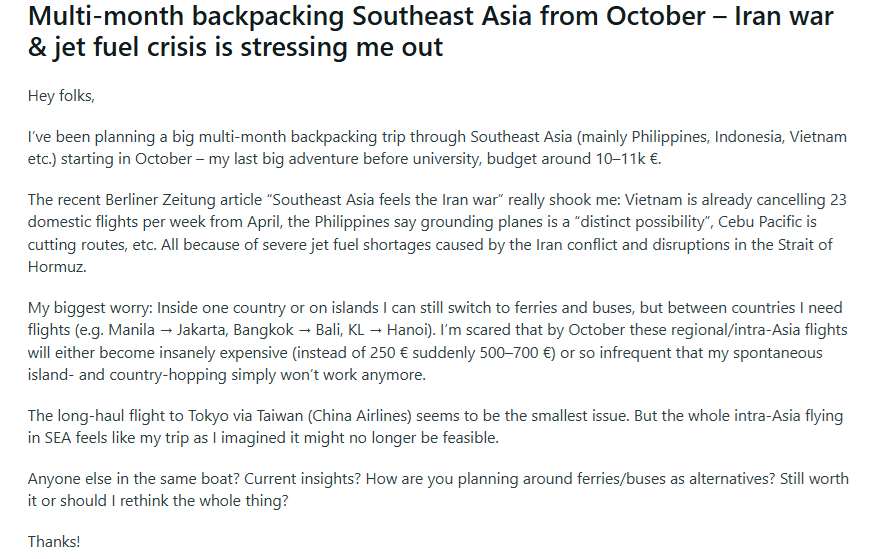
Taken together, these experiences reflect a broader shift. Travel is still very much on the table, but plans are becoming more cautious, more flexible, and, in some cases, more uncertain than before.
A shift toward nearer horizons

As long-haul travel becomes more complex, destinations across Asia are seeing a shift in where demand is coming from and how trips are being planned.
Countries like Thailand, Japan, and the Philippines remain popular, but tourism boards are starting to adapt. Instead of leaning heavily on long-haul visitors, there is a growing focus on regional travel within Asia.
Southeast Asia, in particular, is well positioned for this moment. Shorter flight times, fewer logistical hurdles, and relatively stable pricing make it an appealing option for travelers who still want to explore without taking on too much uncertainty.
Japan continues to attract visitors looking for a reliable and well-connected destination, while the Philippines is leaning into its strengths as both a domestic and regional getaway—offering experiences that are easier to reach and plan.

Flexibility becomes the new priority

If there is one clear takeaway from all of this, it is the importance of flexibility.
Travelers are no longer just asking where to go, but how easily plans can shift if needed. Flexible booking policies, refundable options, and adaptable itineraries are becoming part of the decision-making process.
Even those eager to travel are leaving more room for adjustments, keeping plans open-ended and avoiding commitments too far in advance.
Finding smarter ways to move

Even with rising costs, travel across Asia is far from out of reach. If anything, this moment is encouraging a more thoughtful approach to planning.
Shorter routes and regional destinations are becoming more appealing—not just because they are often more affordable, but because they are easier to navigate. Exploring closer to home can still offer something new, without the added complexity of long-haul travel.
Small adjustments can also make a difference. Traveling during off-peak periods, looking at alternative routes, or choosing shared and bundled options can help manage costs. For some, slowing down and focusing on fewer destinations is becoming part of the experience.
There is also a sense that opportunities may still emerge. Travel demand remains steady, and periods of disruption often open the door to better deals or new routes down the line.
For now, travel may take a bit more planning and a bit more patience. But the desire to explore has not changed. If anything, it is simply evolving into something more deliberate—and perhaps a little more meaningful.