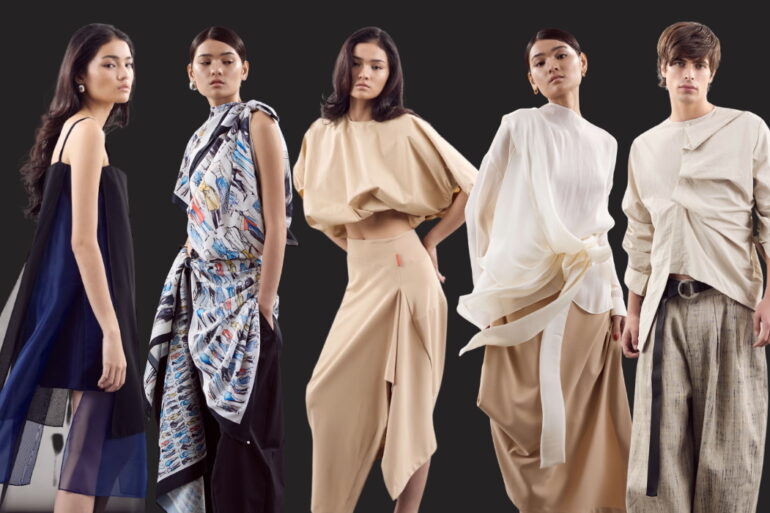

Laurel talks about his fourth collaboration with Casa Juan and why beautiful things should be accessible to a wider audience.
Owning a Rajo Laurel creation need not entail an appointment at his atelier or an occasion that calls for couture. For ₱1,500, one can now own a piece of the Filipino fashion designer’s creative repertoire—a fine bone china trinket dish bearing illustrations of his runway creations, destined for a dresser, bedside table, or a favorite corner of the home.
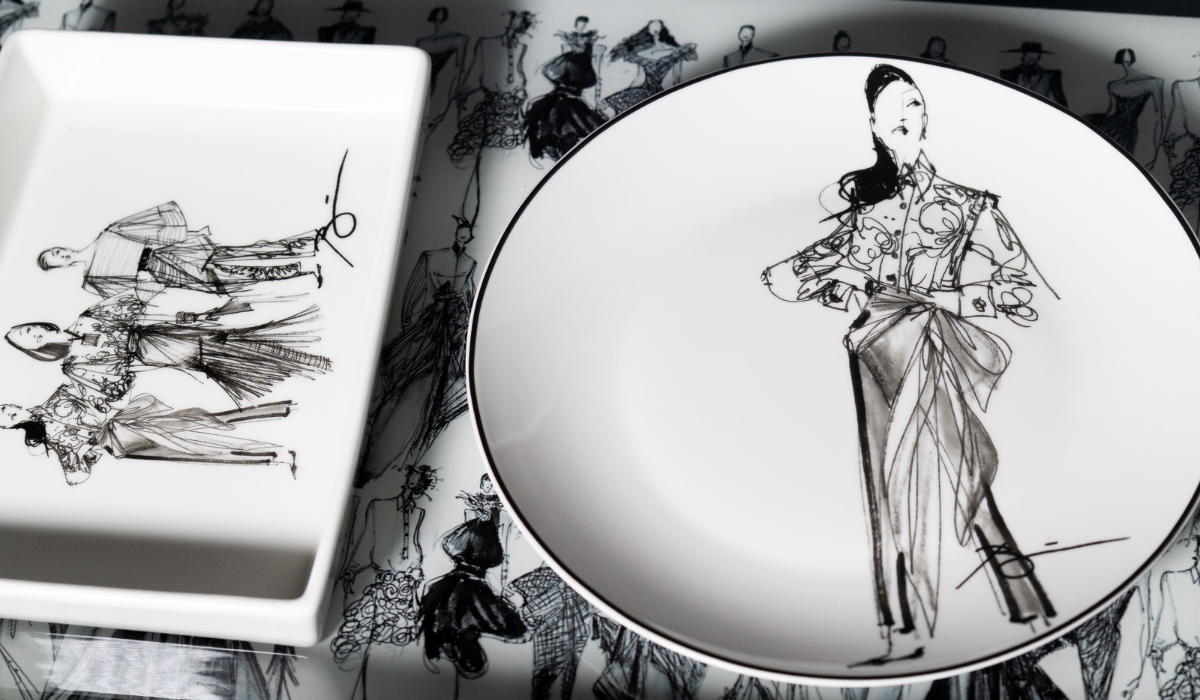
Laurel’s latest collaboration with Philippine homeware brand Casa Juan, the Lahi Collection, brings with it a proposition particularly close to the designer’s heart: luxury within reach. Unveiled on November 23, the limited-edition collection features his signature black-and-white fashion illustrations across salad plates, serving dishes, decorative trays, and catch-alls.
In an exclusive interview with The POST during the launch, Laurel spoke candidly about his desire to make good design accessible, even touching on the country’s economic disparities and the purchasing power of the Filipino middle class.
“I think luxury within reach is something that we need to really push,” Laurel says. “The other day, I had a conversation with a friend about our dreams for the Philippines. She said something very, very interesting. ‘We need to fatten up the middle class because there’s such a great divide in wealth.'”
For a designer whose name has become synonymous with Philippine high fashion, the opportunity to introduce his work to a different demographic is a particularly personal undertaking.
“The wealth gap is so big, and what I’m trying to do is to bridge the chic and affordable for the middle class. The A market will still want it, but I want to reach the B, C—people who aspire to make their lives better,” he muses.
From fashion archives to fine bone china
Now six years into their creative partnership, Laurel and Casa Juan founder Michelle Asence-Fontelera revisit the designer’s archival and contemporary works for their fourth collection, drawing inspiration from two of his fashion presentations in 2026.
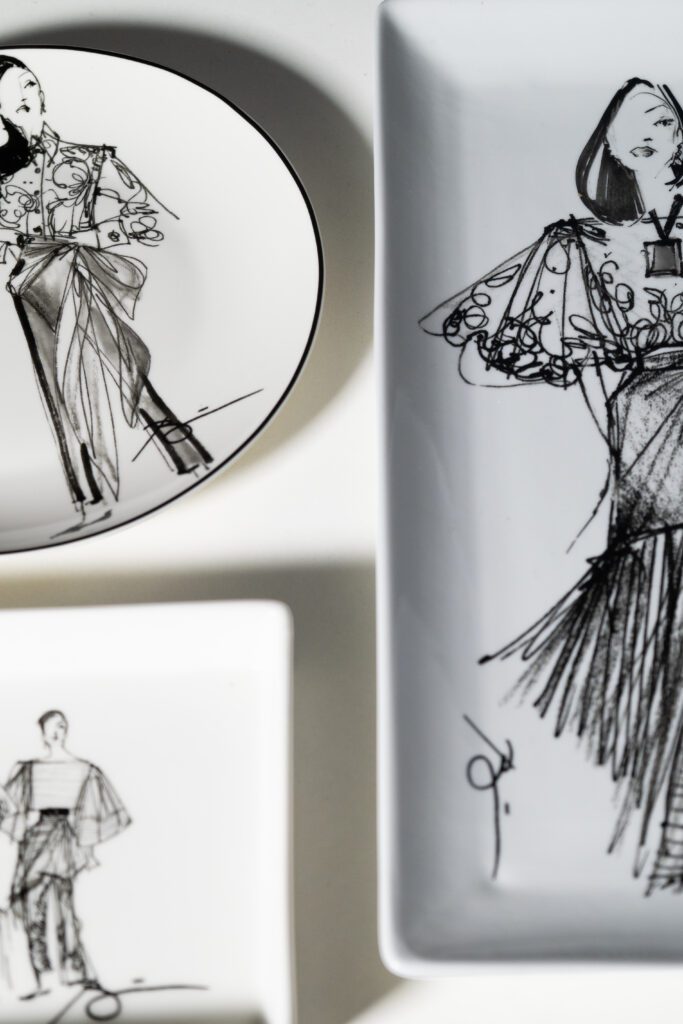
The illustrations retain the intricacies of Laurel’s original sketches—from sculptural sleeves and sweeping silhouettes to elaborate drapery and delicate embellishments. Rendered in monochrome, the designs lend themselves to both minimalist interiors and maximalist tablescapes.
“The inspiration for this fourth collection of Casa Juan, essentially, is we wanted to have a tangible memory of my last two collections,” Laurel tells The POST. “I did a collection in Thailand in January, and another recent collection called Archivo for Fashion Week Asia, and I wanted something to remember those experiences by. So these were designs that were part of the show.”
The collection also commemorates Laurel’s 33 years in fashion, preserving illustrations that might otherwise remain tucked away in his sketchbooks and archives.
“They are sketches that I did from the Lahi and archival collection that are made permanent. Unlike paper that is ephemeral, this is something that will last. It’s a memory. It’s an experience. It’s a tangible remembrance of the things we have done this year,” the designer shares in a press statement.
“It’s quite moving that people will have a piece of something we did with so much passion and dedication. And something to celebrate 33 years. It’s memory etched in fine bone china.”
Dressing the home like a wardrobe
The creative partnership between Laurel and Asence-Fontelera began during the pandemic, when social gatherings were put on hold and opportunities to dress up became scarce. Their solution was to bring fashion to the dining table through a concept they aptly christened DinnerWear.
“We launched at a time when people were stuck at home. They could not go out and wear their favorite clothes and gowns. So, we thought of putting fashion sketches on dinnerware. The idea was that if you can’t wear them, you can put them on your table,” Asence-Fontelera recalls in a press statement.
Their inaugural collection featured Laurel’s sketches on dinner plates, followed by salad plates and tea and coffee sets that quickly sold out. Requests to reproduce earlier collections came in, although the collaborators remained committed to their limited-edition production runs.
Instead, they developed succeeding collections with complementary pieces, allowing customers to gradually assemble their own assortment of designer homeware.
With Lahi, the collaboration ventures into living rooms, dressing areas, and entryways, giving collectors additional ways to incorporate Laurel’s illustrations into their everyday routines.
“This isn’t so different because we wanted to add to whatever the people already have. What makes this different is that we’ve moved out of the dining room space and really accessed other parts of the home that we’d like to spruce up and beautify,” Laurel explains.
“Of course, we still have our collectible salad plates, but we’ve added catch-alls, so you can put it in your dressers or in your hallways. And we also added trays, and we also added servers, something that you can actually serve when you’re having tea or merienda.”
Laurel also likens the process of collecting homeware to curating a wardrobe: investing in individual pieces that complement what one already owns, without having to replace an entire collection.
“So it’s moving out of the dining room to other parts of the home,” he continues. “That’s really the main difference. But other than that, this connects with anything that they already purchased before. So, dinadagdagan lang namin kung anong meron ka. Like a wardrobe. You enhance your wardrobe by adding key pieces. So, it’s still very, very fashion-oriented.”
The versatility of the monochromatic pieces was also demonstrated at the launch, where the collection was incorporated into thoughtfully arranged tablescapes.
“That’s why we had it here in Happy’s space, because Happy is such an incredible tablescape artist. So you can actually see it and how, you know, all of this can improve and make your life more beautiful,” Laurel adds.
A piece by Rajo Laurel, starting at ₱1,500
With prices ranging from ₱1,500 to ₱6,000, the Lahi Collection offers five product selections at different price points. Each comes in a customized black box with a lock, making the pieces particularly fitting for Christmas gifting, whether for fashion aficionados, avid hosts, or homeware collectors.
Here is a closer look at the collection:
Trinket dish (₱1,500)
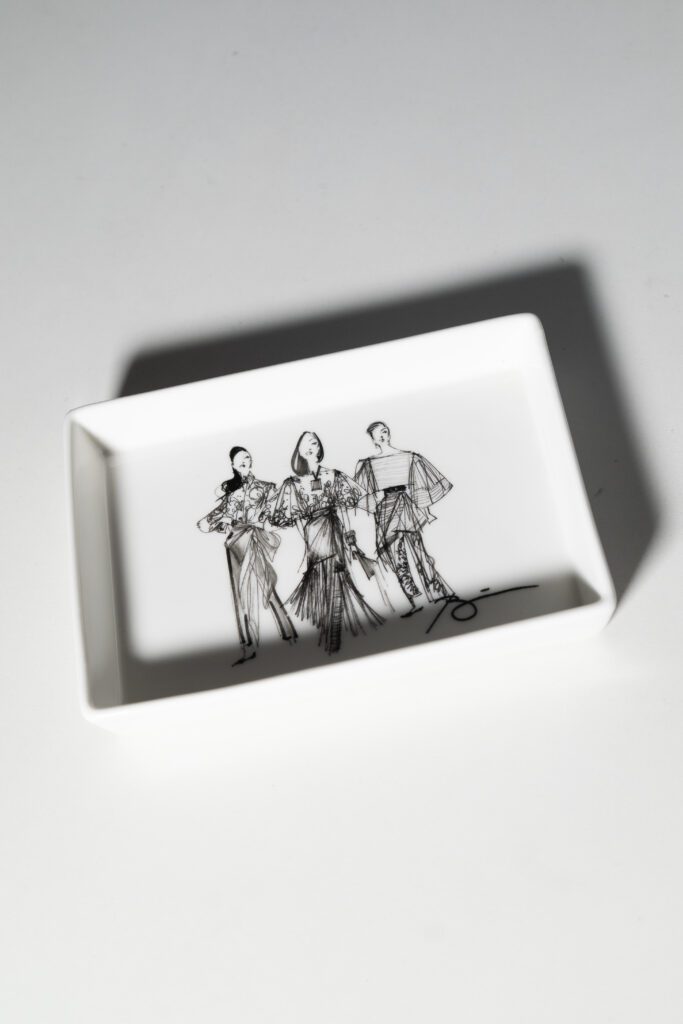
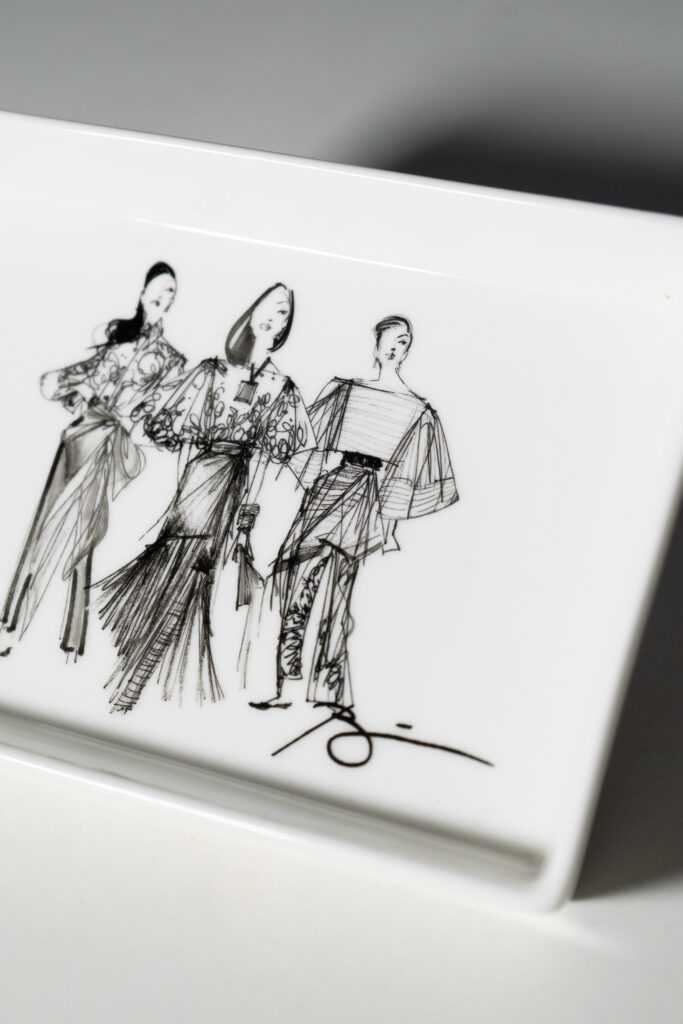
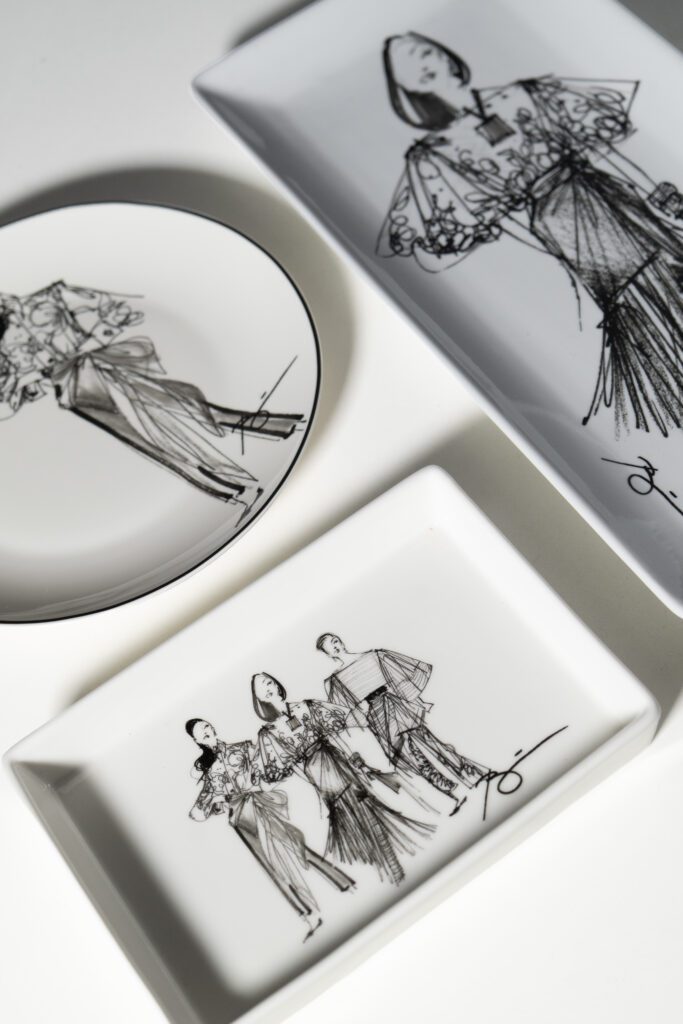
The most affordable piece in the collection, the 7-by-5-inch bone china trinket dish features three fashion illustrations against a pristine white surface. It is ideal for keeping jewelry, keys, watches, and other small personal belongings on a vanity or console table.
Production is limited to 1,000 pieces.
Small decorative tray (₱3,000)
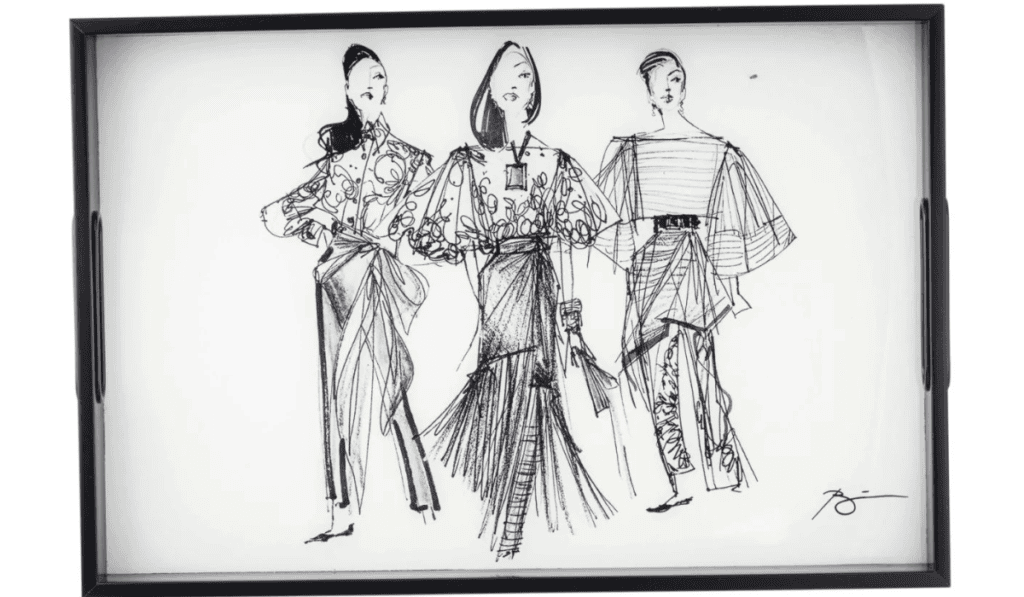
Three of Laurel’s fashion illustrations take center stage on this rectangular, black-framed decorative tray. Made of polystyrene and glass, it measures 40.3 × 25.5 × 4 centimeters and can be styled on a coffee table, dresser, or living room console.
Production is limited to 300 pieces.
Large decorative tray (₱4,000)
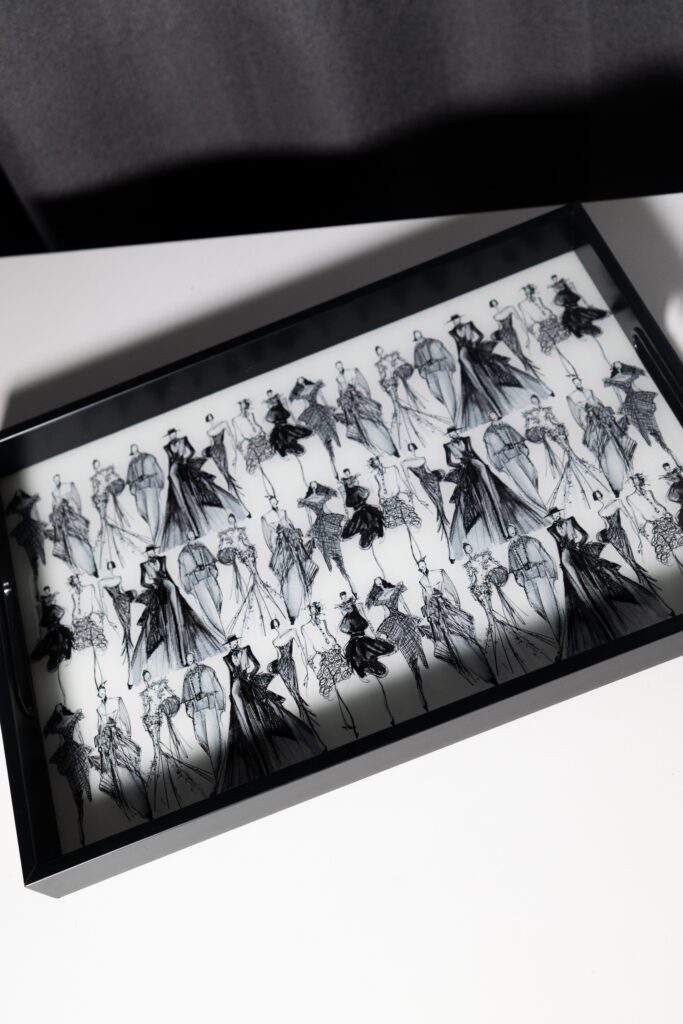
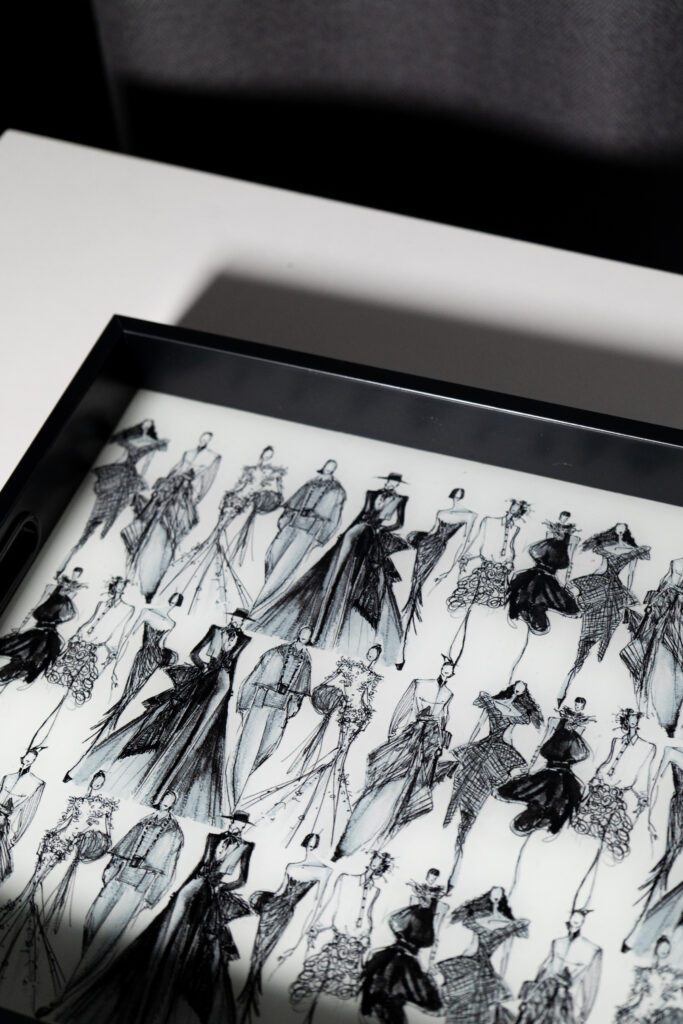
The larger decorative tray features a recurring arrangement of Laurel’s fashion sketches, resembling pages from a designer’s portfolio. Its densely illustrated surface makes it a striking decorative accent, particularly when paired with understated home accessories.
Made of polystyrene and glass, the tray measures 30 × 45 × 4.5 centimeters. It is the collection’s most exclusive product in terms of production quantity, with only 200 pieces available in the edition.
3-in-1 serving dish (₱5,000 per set)
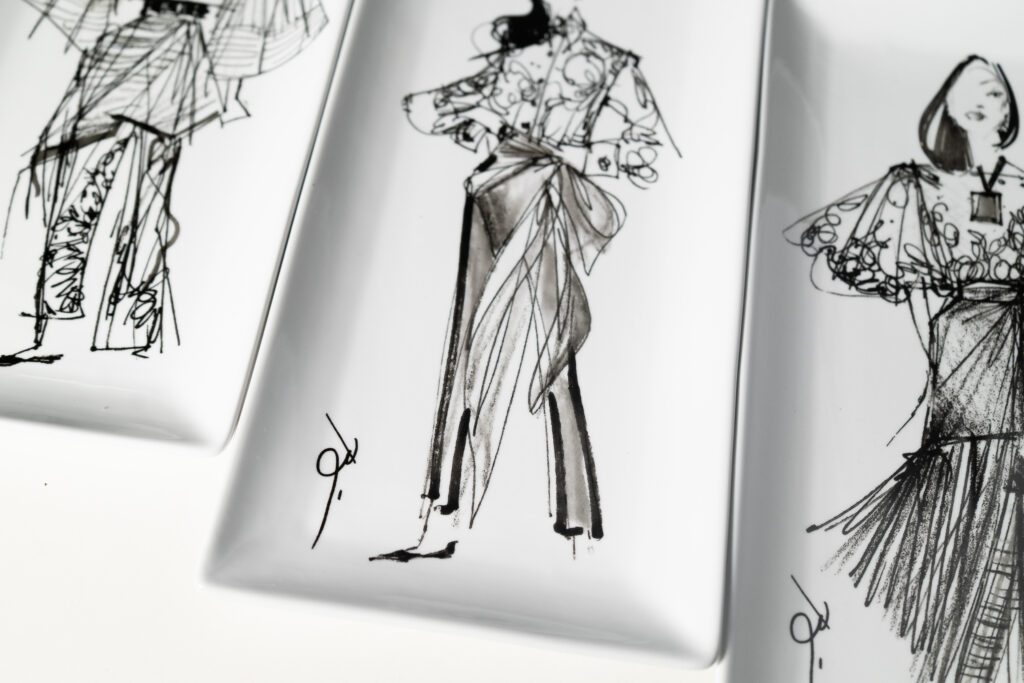
Designed for entertaining, the three-piece bone china serving set features individual fashion illustrations on rectangular dishes. The 13.5-inch serving dishes are suited to presenting hors d’oeuvres, pastries, sweets, and other small bites during afternoon tea or intimate gatherings.
Production is limited to 350 sets.
Salad plates (₱6,000 per set of six)
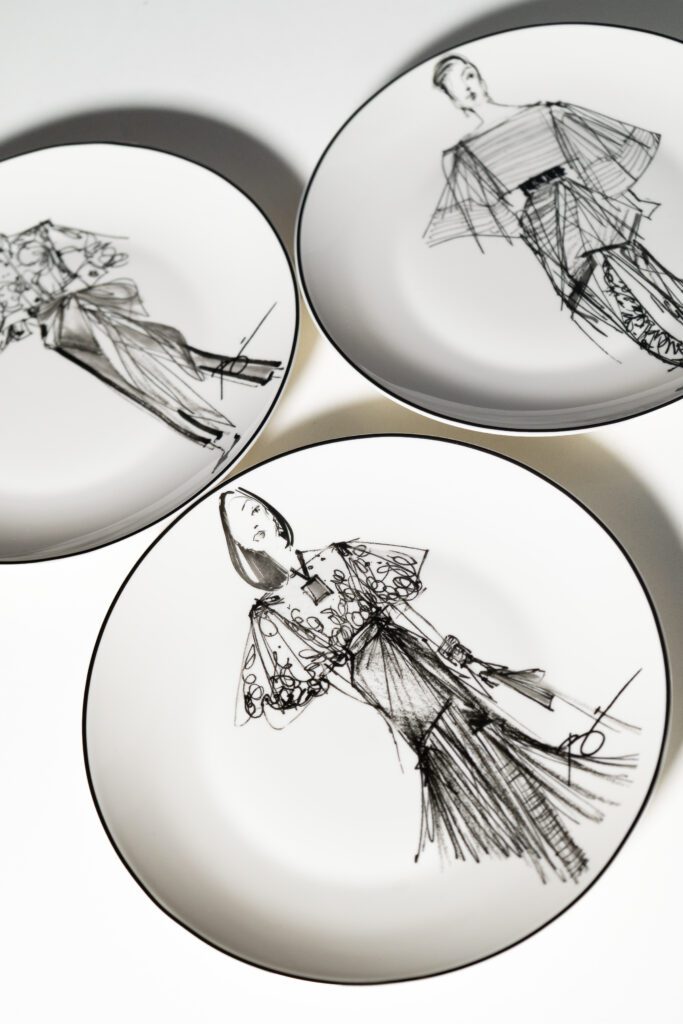
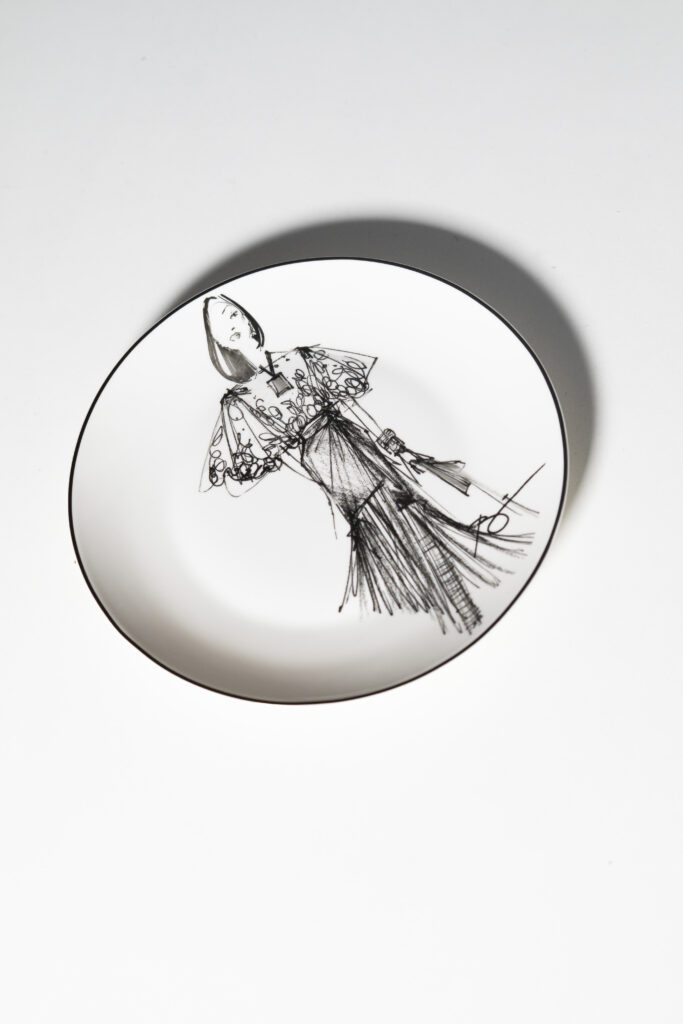
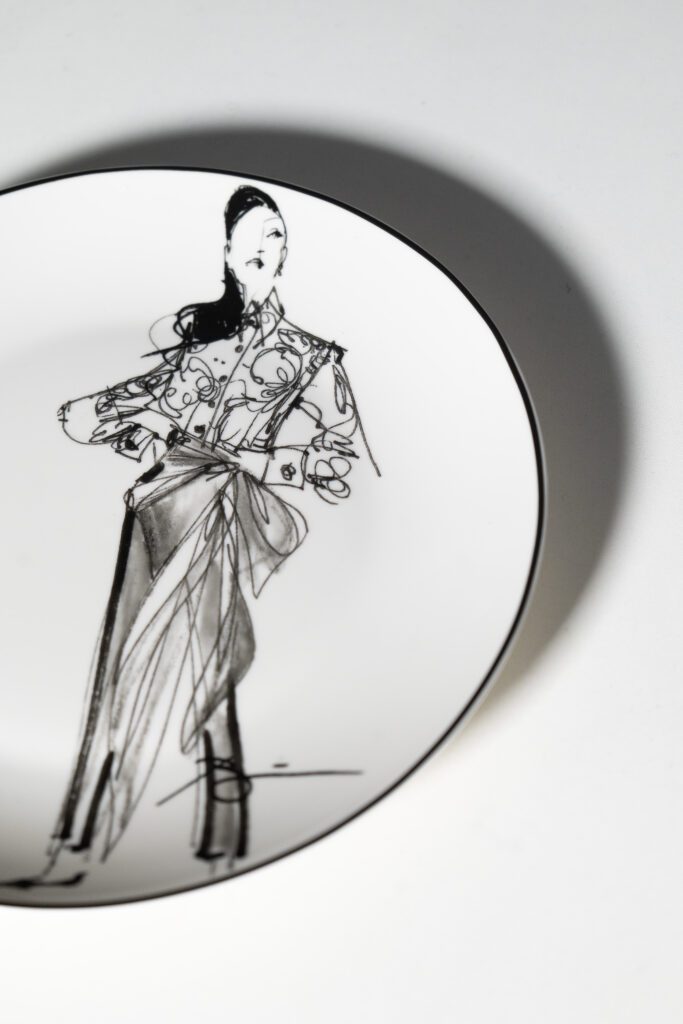
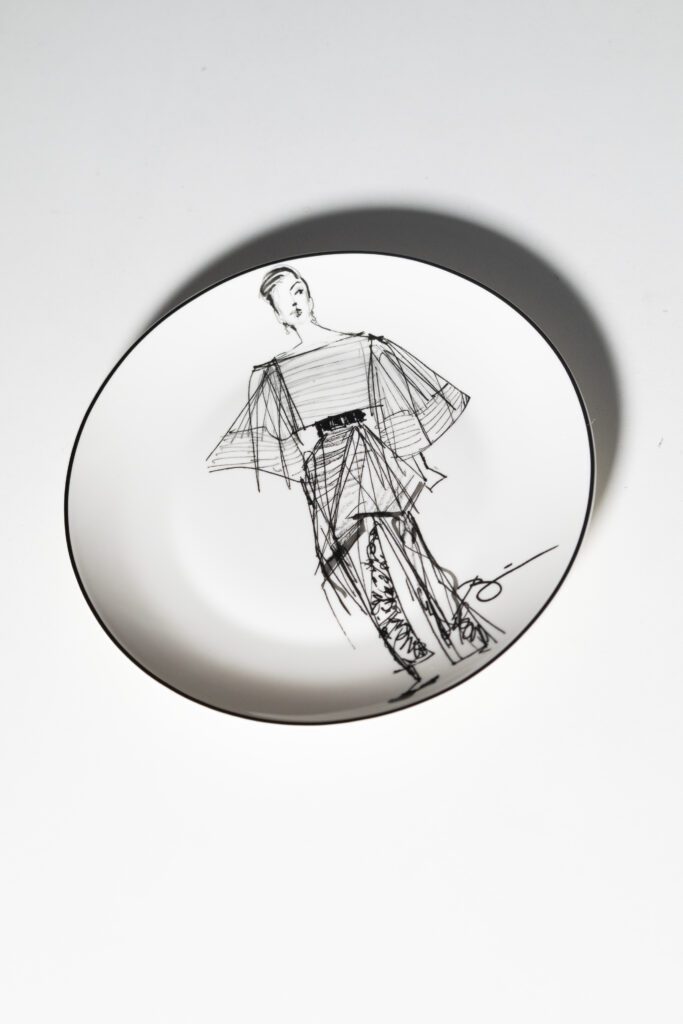
A continuation of the collaborators’ collectible dinnerware series, the eight-inch bone china salad plates feature Laurel’s fashion illustrations framed by slender black rims.
At ₱6,000 for six plates, each piece effectively costs ₱1,000, although the plates are sold as a set. Their monochromatic palette allows them to be paired with existing dinnerware, including pieces from the previous Casa Juan and Rajo Laurel collections.
Production is limited to 400 sets.
The everyday indulgence
For Asence-Fontelera, the collaboration is also an opportunity to champion Filipino design through an unconventional medium. Laurel’s illustrations are recognizable even when removed from the context of the runway, and their translation into functional homeware gives customers another way to appreciate his artistry.
“Usually, Rajo gives us his favorite designs and sketches, then we choose which ones we both like best. Our collectors love aesthetic and modern products—and of course they love fashion and Rajo’s designs,” she shares in a press statement.
The possibility of a fifth collection remains open, with both collaborators hinting that customer demand will help determine their next undertaking. Asence-Fontelera already has something in mind, although she is keeping the details under wraps.
For now, Laurel hopes that his creations will find their way into Filipino households, including those whose owners may never have commissioned a gown from him. A plate used for an ordinary weekday meal can offer its own small indulgence, as the designer puts it: “Kahit man lang kumain ka sa platong ‘to, gaganda ang buhay.“