
A focus on ease, movement, and detail signals how Chanel is evolving today.
Chanel is getting strong attention this season, and it is showing beyond the runway. In Paris, the brand’s boutiques have been unusually busy, with reports of editors, buyers, and models waiting just to shop the new pieces. Some items are already difficult to find, and certain bags are limited per customer. For a designer still early in his time at the house, the response has been immediate.
That same interest carried into the Fall 2026 ready-to-wear show at the Grand Palais.
A set that reflects a house in transition
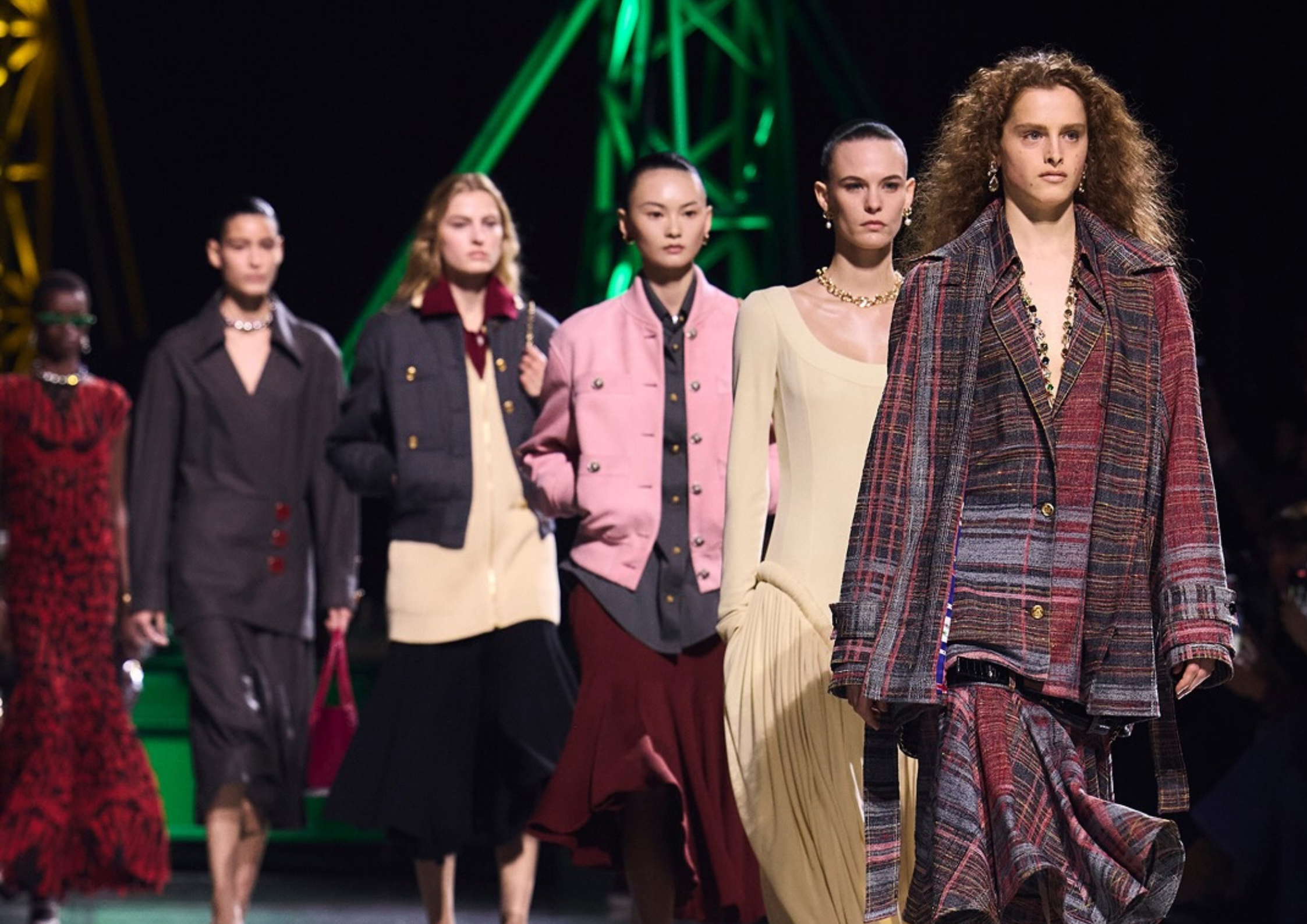
The space was designed like a construction site, with cranes in bright primary colors surrounding the runway. It looked unfinished on purpose. It conveys that Chanel is in the middle of building something new.
Blazy is not erasing the past. He is going back to the foundation and asking what still works today. Instead of focusing on nostalgia, he looked at what made Chanel important in the first place. Coco Chanel took everyday clothing and reframed it as something refined. That idea runs through the entire collection.
Related story: Matthieu Blazy’s first Haute Couture collection for Chanel explores transparency, flight, and freedom
Related story: Chanel Métiers d’Art 2026 show brings style and sophistication to the subway
Starting with the structure, then softening the silhouette
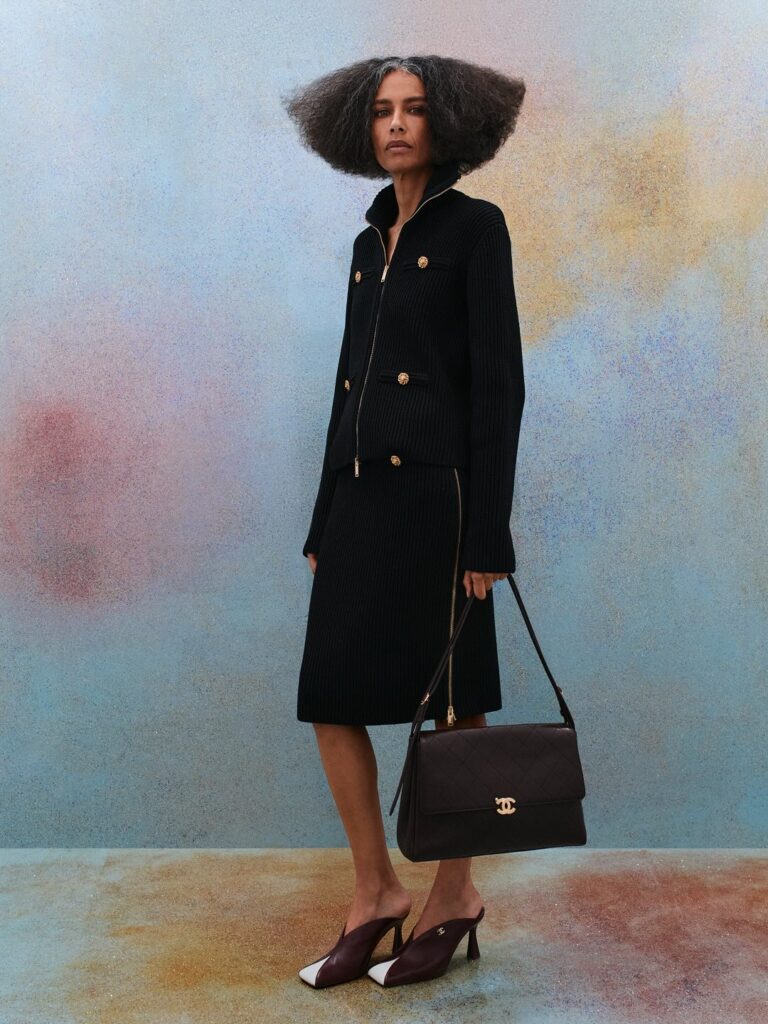
The opening looks were direct. Black skirt suits came in ribbed wool and silk blends, finished with gold buttons. A knit zip-up jacket kept things minimal, setting the tone for the first part of the collection.
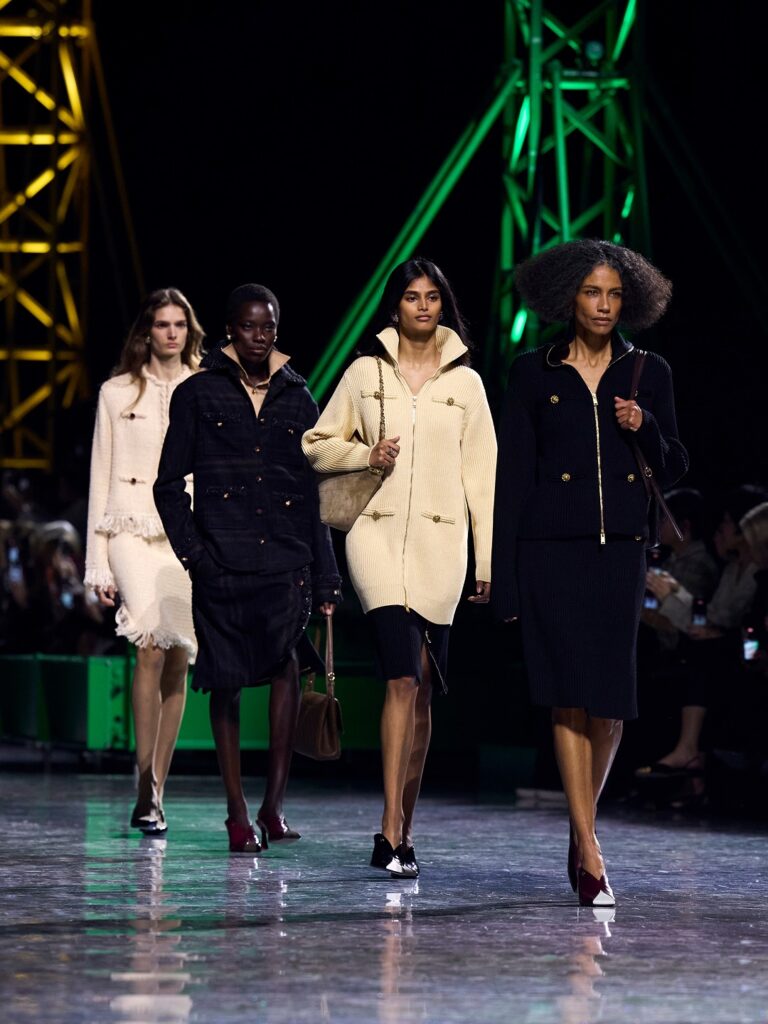
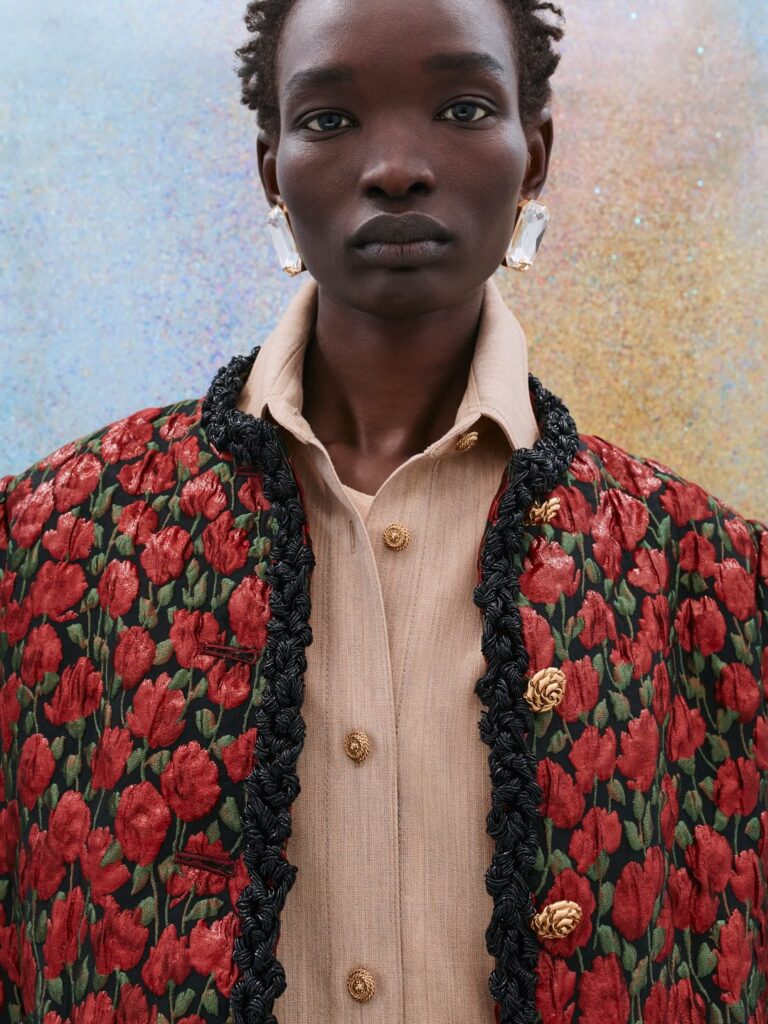
From there, Blazy introduced workwear references. Oversized shirts, blouson jackets, and tweed pieces were cut in looser shapes, sometimes styled with matching skirts but easy to imagine with jeans. These were some of the most wearable looks in the lineup.
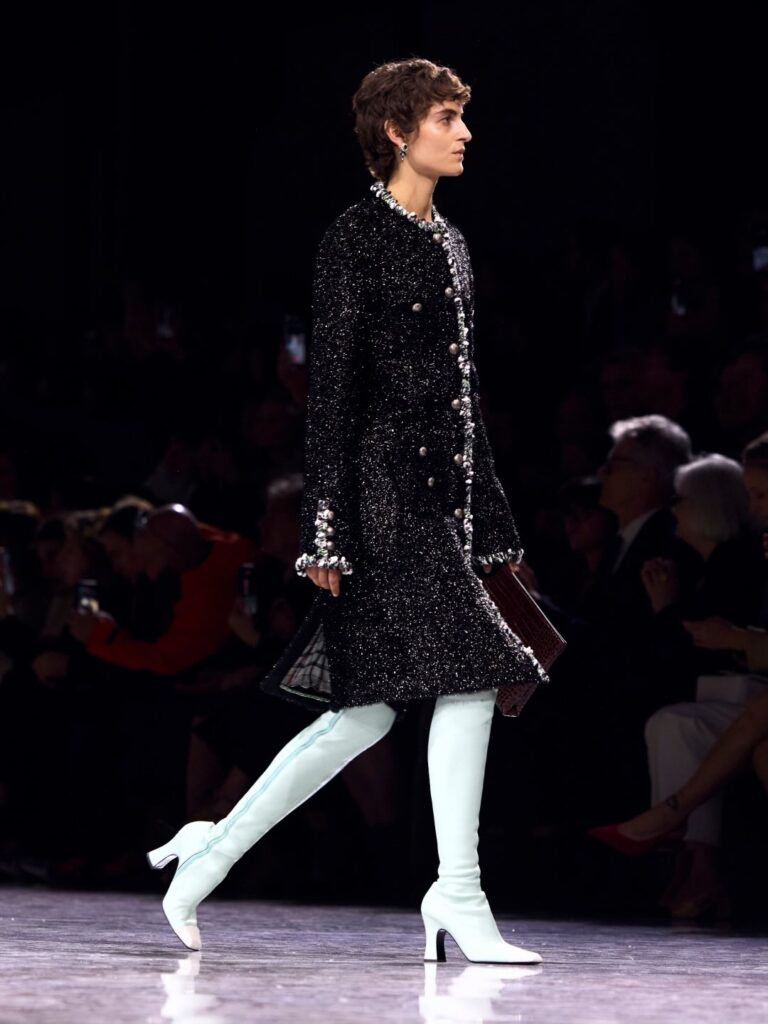
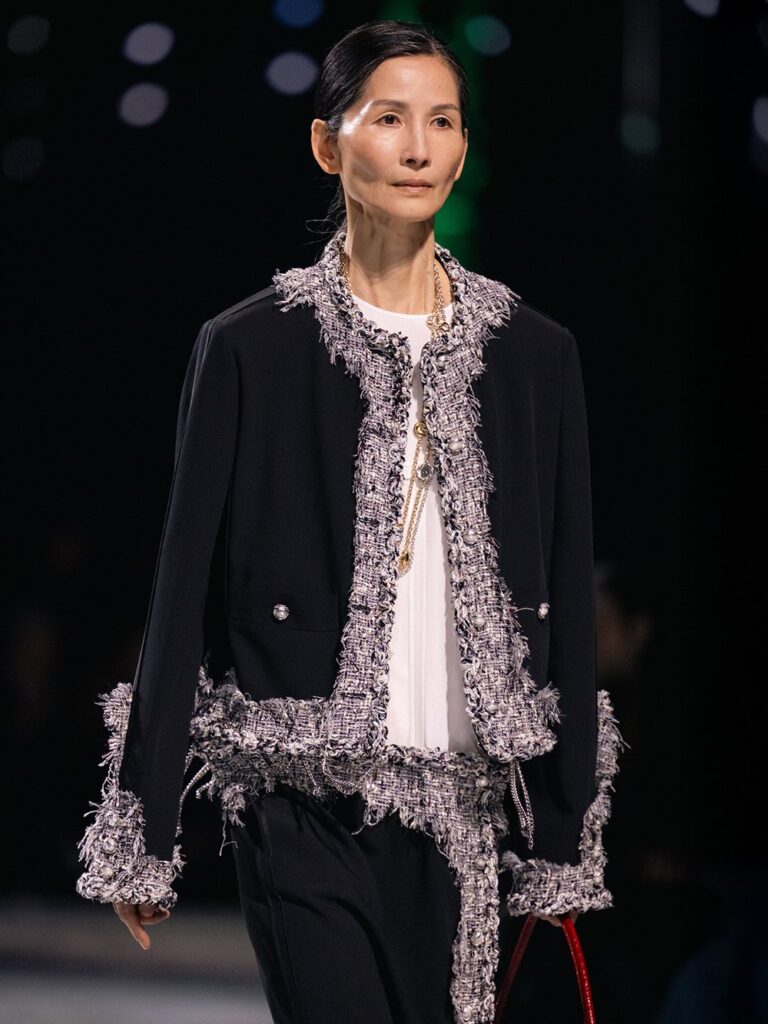
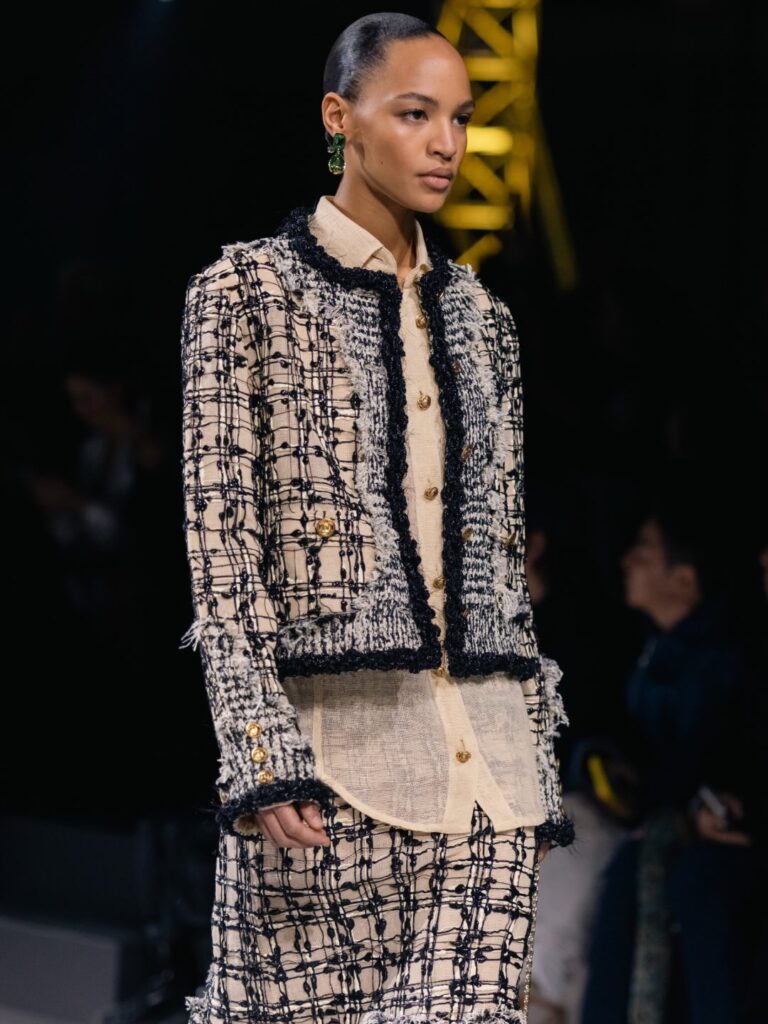
There was also a clear nod to the 1920s. Drop-waist silhouettes appeared in twinsets and pleated coats, creating a longer, more relaxed line through the body. Patchwork dresses with soft embroidery carried that same reference without feeling overly styled.
As the show moved forward, the materials became more expressive.
There were knits with bold, almost graphic patterns, and dresses with pleats that echoed soundwave-like lines. A fur coat came in a bright, painterly pattern, adding a stronger use of color into the mix.
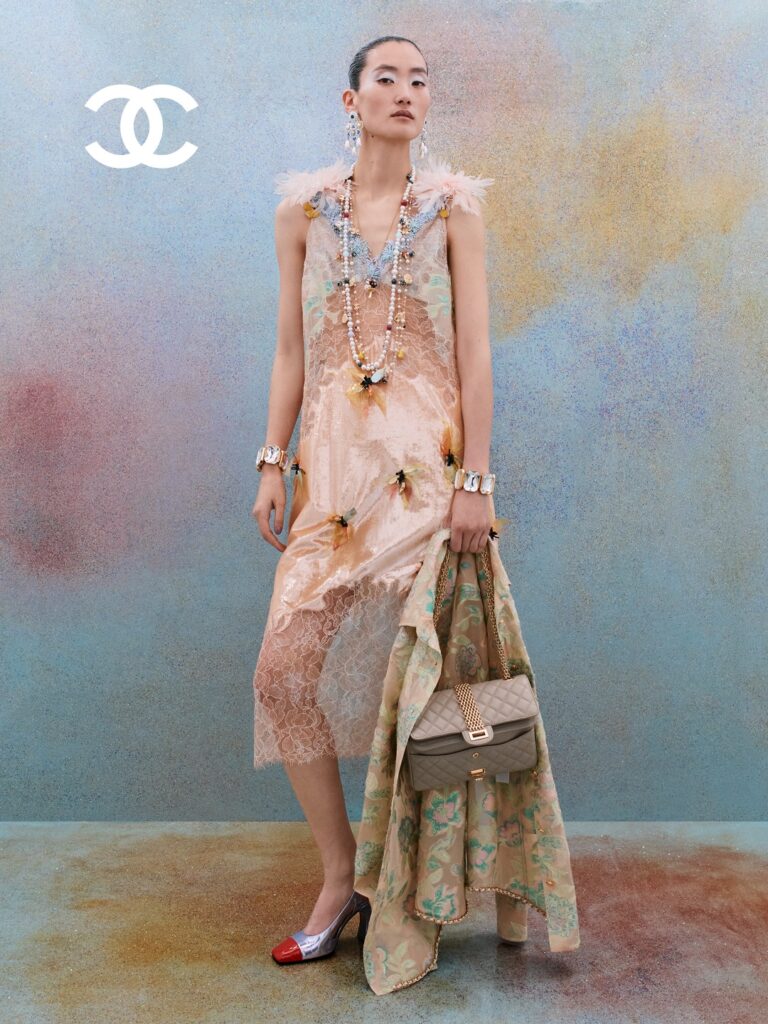
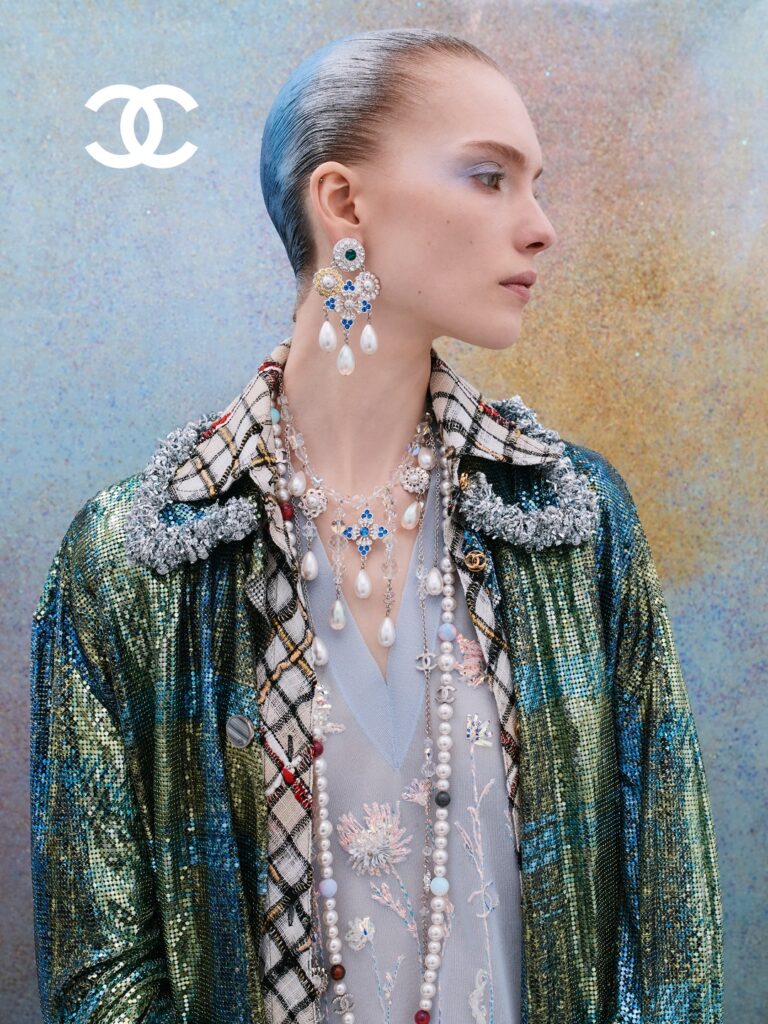
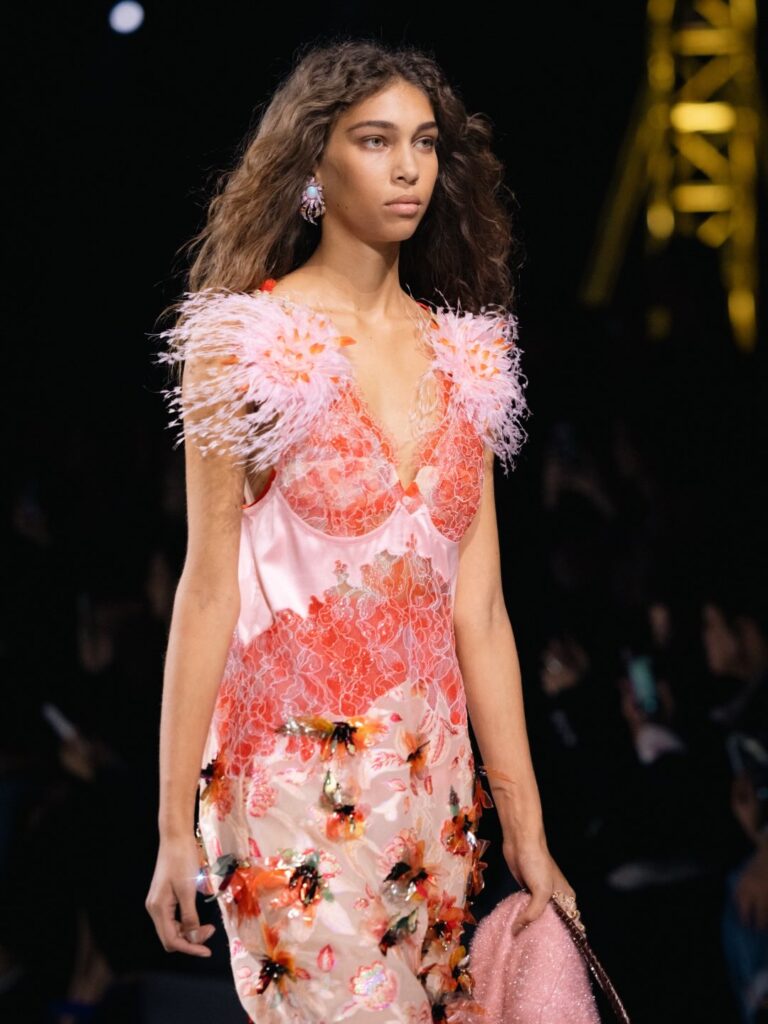
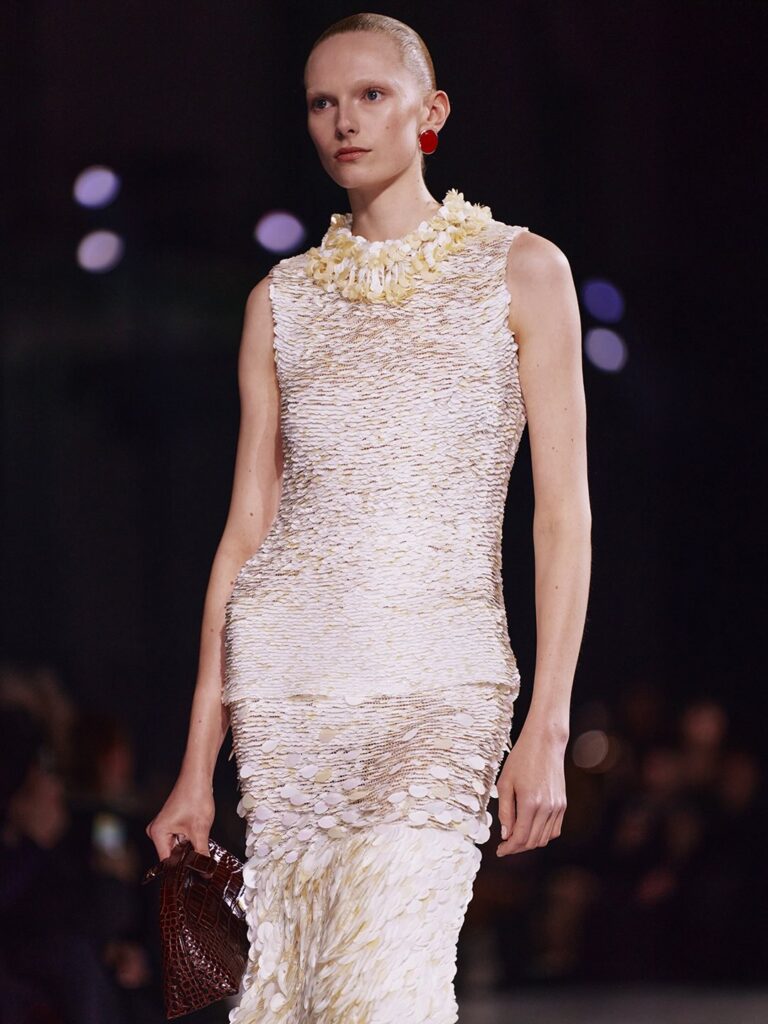
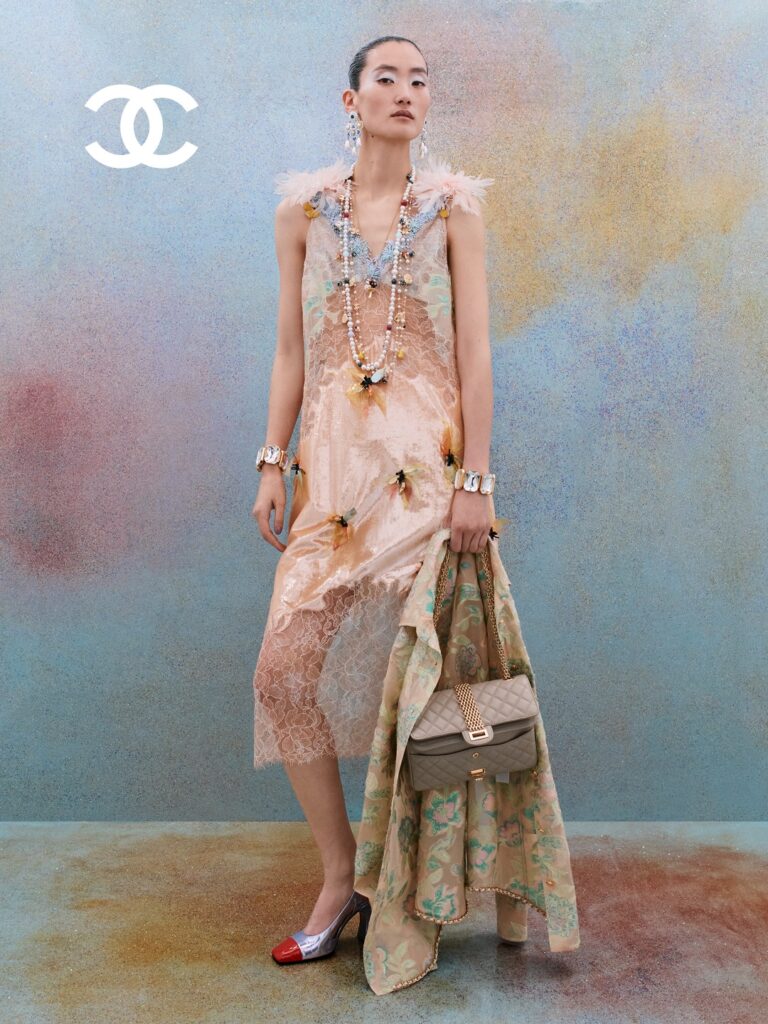
Then came the more detailed pieces. A sleeveless top and skirt set was knitted with mother-of-pearl paillettes. Some skirt suits featured stitching that felt almost hand-painted. A velvet slip dress carried fine embroidery that caught the light as the model moved.

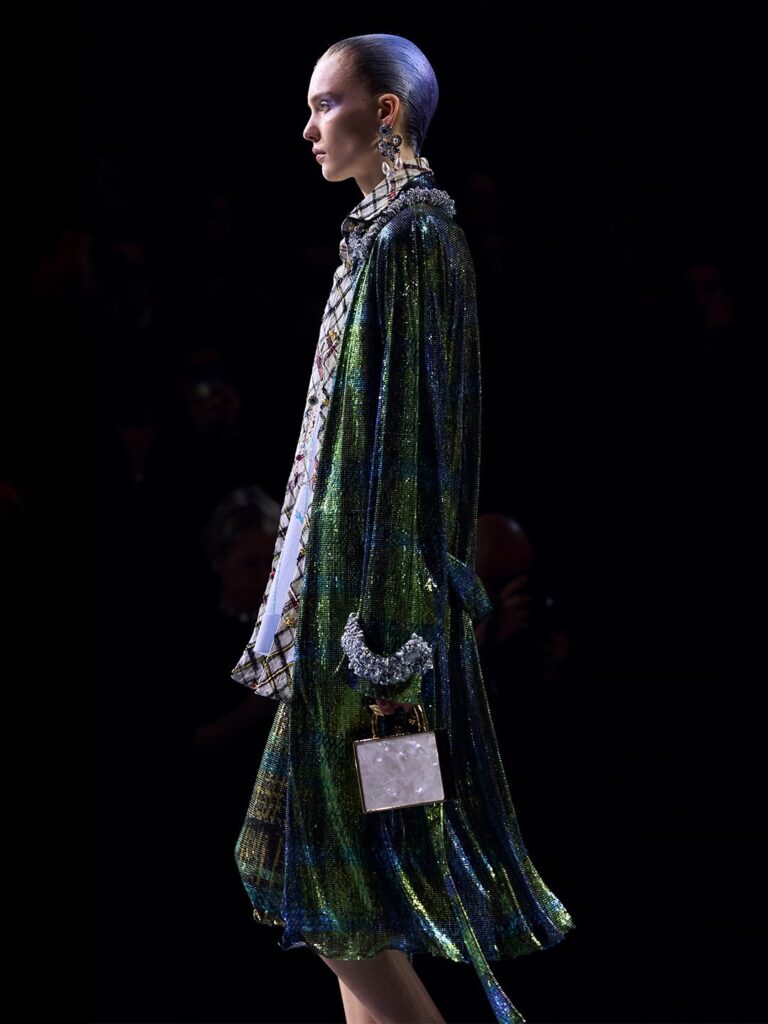
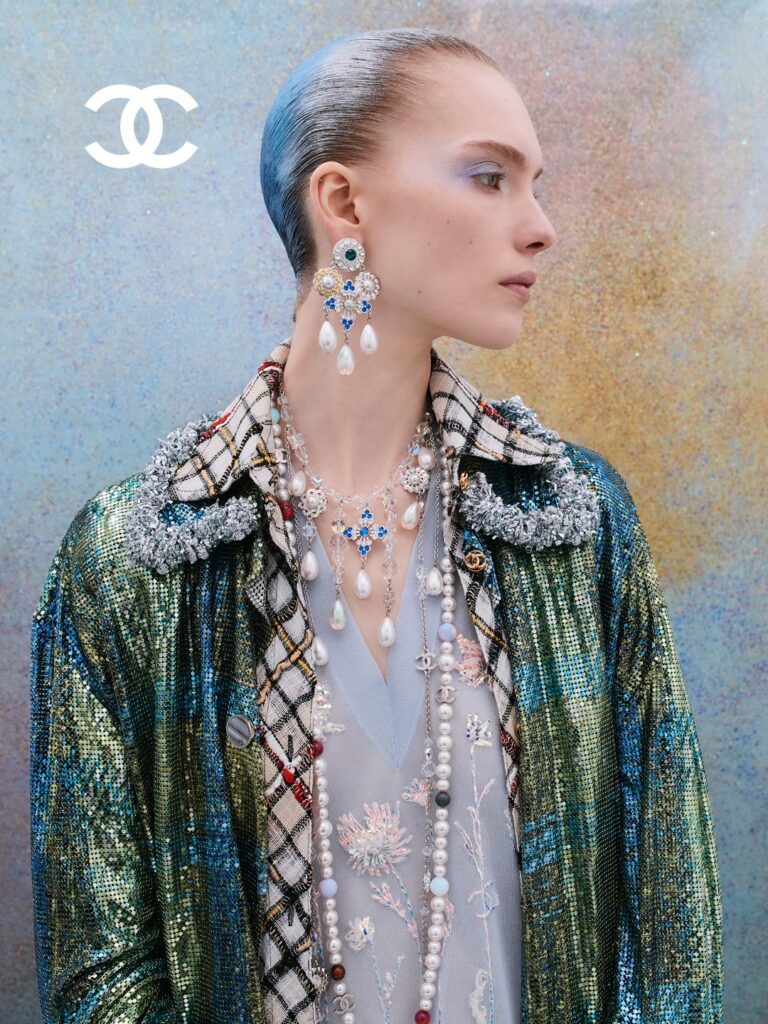
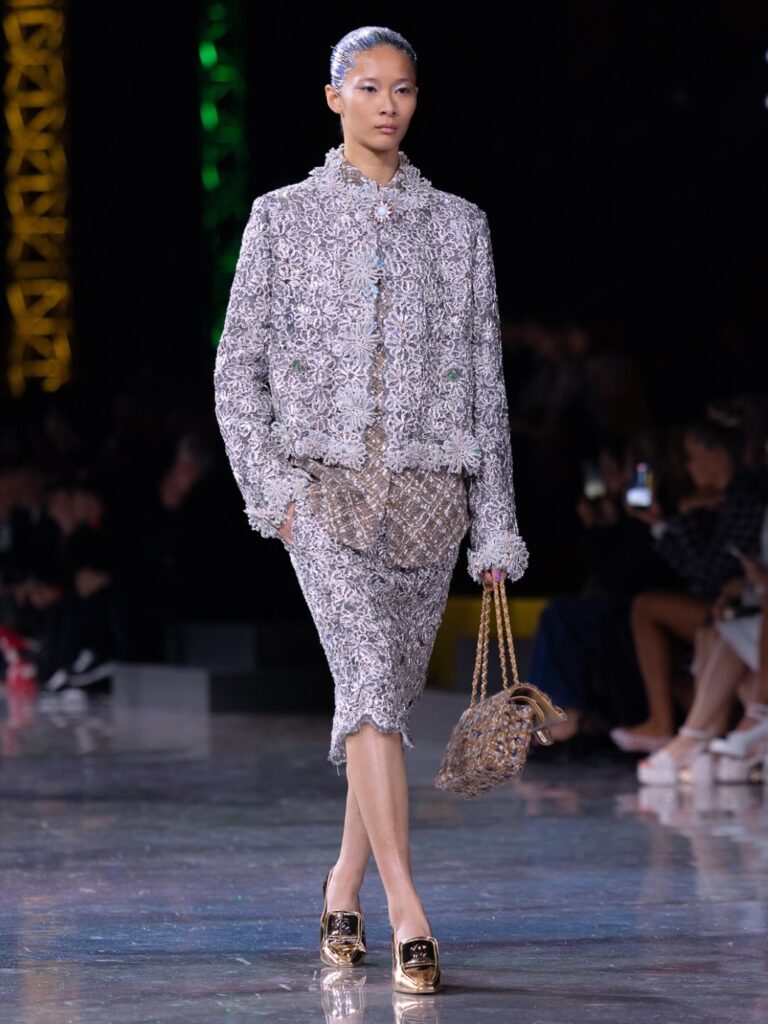
Some looks used metal mesh designed to resemble tweed. Others played with embellishment and even the more minimal pieces revealed more up close. Linings, finishes, and construction details showed the level of work behind each look.
Reworking the familiar
Blazy also revisited Chanel’s key pieces in a more relaxed way. The jacket appeared in softer constructions and updated proportions. Color was used carefully, adding variation without overpowering the collection. Nothing felt forced or overly styled. The changes were controlled, which made the overall direction clearer.
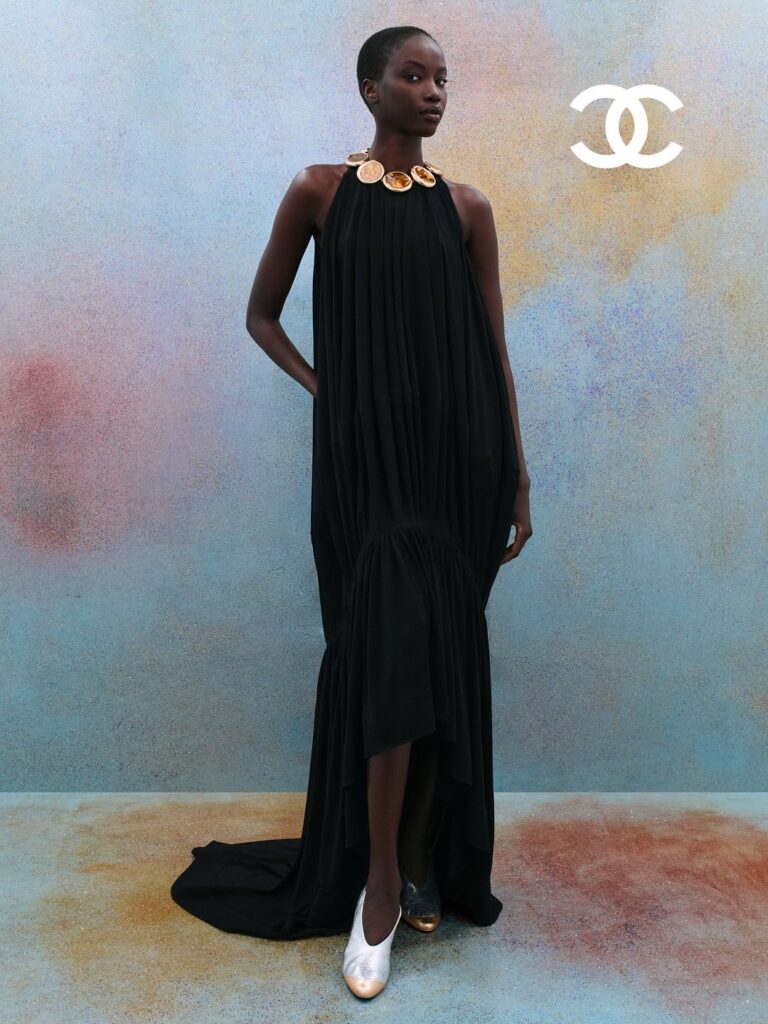
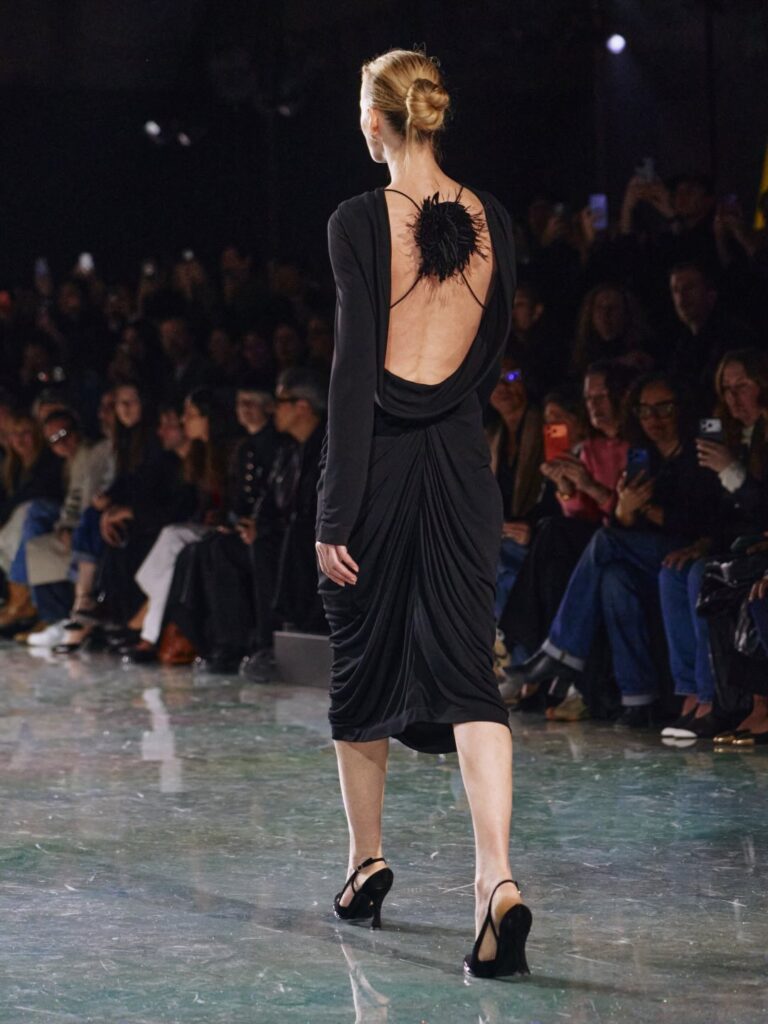
The show closed with a black dress, one of Chanel’s most recognizable ideas. It was minimal from the front, with a low back and a single camellia detail.
Related story: An inside look at mainland China’s first public library for contemporary art built by Chanel
Related story: Chanel drops anchor in Singapore with its reprised Cruise 2026 collection
Watch the full show below:
Related story: For his Chanel debut, Matthieu Blazy turns the Grand Palais into a celestial stage for Spring 2026
Related story: Chanel celebrates 100 years in UK with new arts and culture magazine