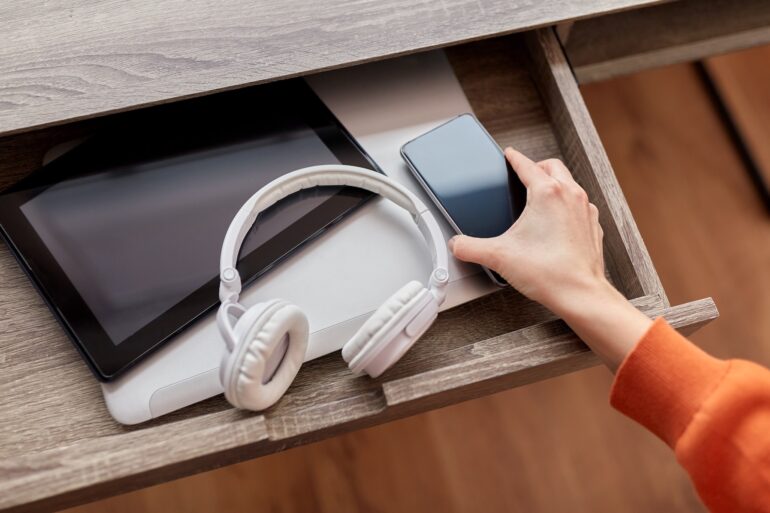


A tote filled with books, journals, pens, and small offline hobbies has become one of the most relatable wellness habits right now.
There is a new bag trend getting attention, and it has nothing to do with logos, limited drops, or designer labels.
Called the analog bag, it usually comes in the form of a simple tote or pouch filled with screen-free activities that give people something better to reach for than their phones. Its rise says a lot about how people are living now. Many of us are overstimulated, glued to our screens, and tired of filling every quiet moment with scrolling.
Related story: The best planners to start (and actually stick with) in 2026
Related story: Would you survive a month offline?
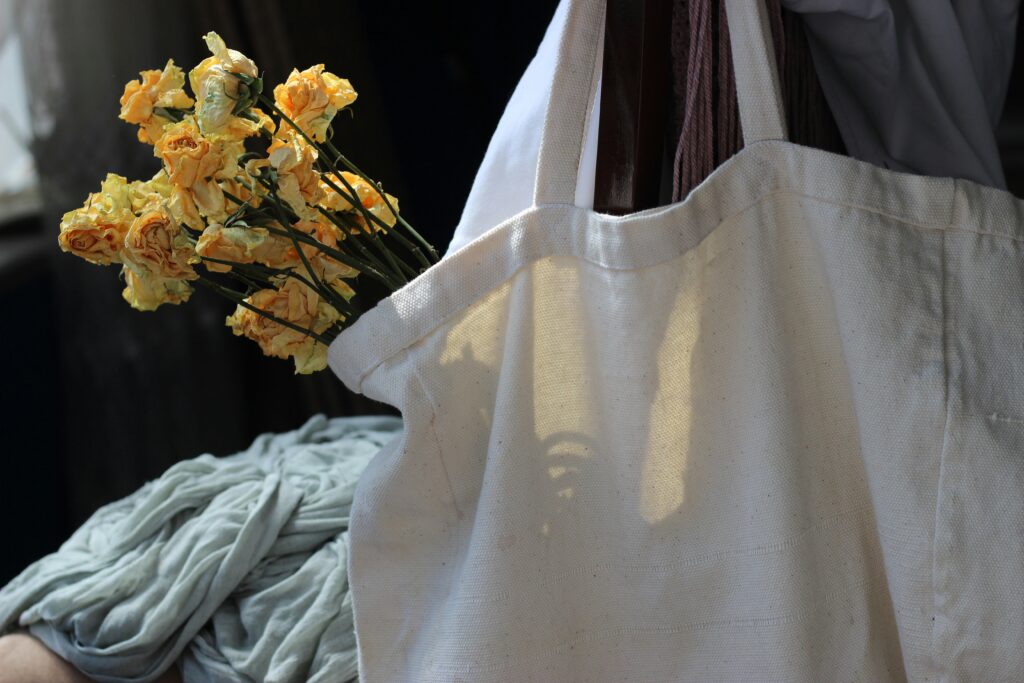
What an analog bag actually is
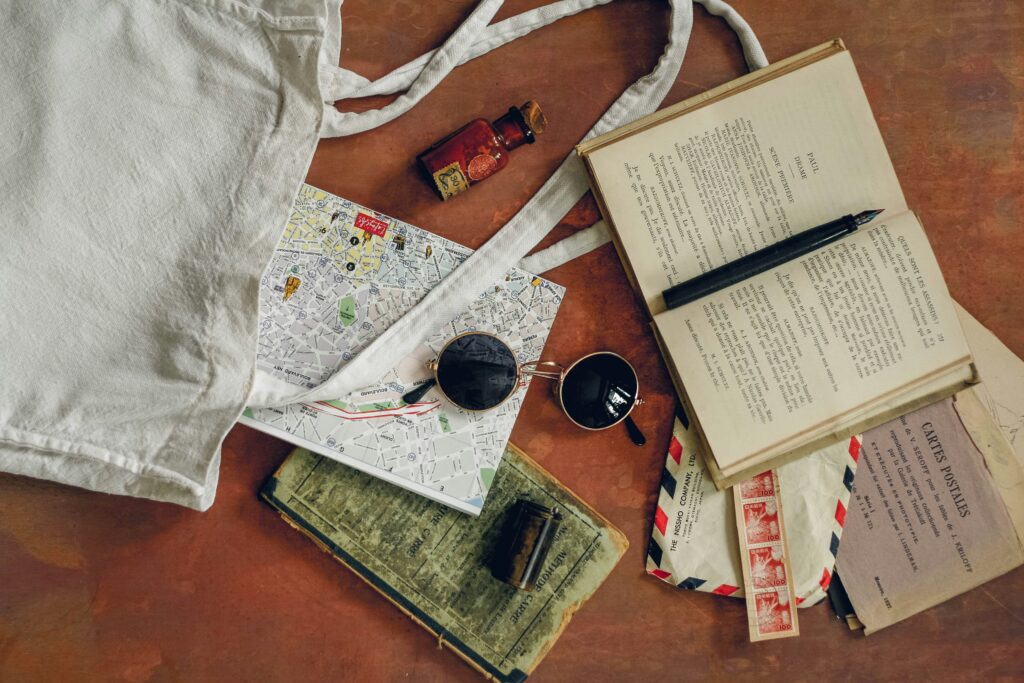
An analog bag is exactly what it sounds like. It is a bag filled with non-digital things you can use when you want to step away from your phone—a novel, a notebook, a crossword book, colored pens, knitting, or even a small sketch kit. It is not really about the bag itself. It is about what it helps you do with your time.
Some people bring one on long commutes, while others keep one in the car, by the couch, or beside their bed. Some pack one for a café afternoon, a beach trip, or a slow weekend. The setup changes depending on the person, but the goal stays the same, which is to stay occupied without opening another app.
Why people are drawn to it now
People are exhausted by constant content, constant updates, and the pressure to always be available. Even rest has started to feel noisy. Instead of actually unwinding, many of us end up switching between apps and calling it downtime. The analog bag pushes back against that. It brings back activities that feel slower, more tactile, and more personal.
That is likely why the trend has caught on with both millennials and Gen Z. These are groups who grew up online or came of age alongside digital overload. They know what it feels like to lose an hour to scrolling and somehow feel worse after.
Yes, a bag with offline activities may not fix everything, but it can interrupt that cycle.
The screen fatigue problem is real
This trend may look cute on TikTok, but the feeling behind it is backed by a bigger shift in how people talk about digital overload. In its 2025 Online Nation report, Ofcom found that adults in the UK spent an average of 4 hours and 30 minutes online each day on personal devices. Among adults aged 18 to 24, that figure rose to 6 hours and 20 minutes a day.
That amount of screen exposure does not automatically mean everyone is unwell, but concern around tech fatigue is no longer fringe. Deloitte’s 2023 connected consumer research found that 38% of respondents said they were struggling to limit screen time to a level they felt comfortable with. It also found that 39% worried device use could hurt their physical well-being, while one-third worried about the effect on emotional well-being.
Academic research points in a similar direction. A 2025 systematic review published in the International Journal of Environmental Research and Public Health found that while digital tools improve flexibility and efficiency, they can also increase workload, cognitive overload, stress, mental exhaustion, and sleep disturbance when use becomes excessive or constant.
Related story: Gen Z grew up online—now we’re tired of being perceived
Why this bag works better than a digital detox
Let’s all be real about this. Most people are not going to delete every app, ditch their phone, and disappear into the woods with a crossword book.
Writers and experts discussing the trend have pointed to habit change as a big reason it resonates. Instead of trying to remove a behavior with nothing in its place, the analog bag swaps one routine for another. That could mean reading a few pages while waiting in line, sketching during a long ride, or doing a puzzle instead of opening social media the second boredom appears.
It is part of a wider return to offline habits
The analog bag sits inside a broader return to physical, low-tech pleasures. Print magazines, film cameras, vinyl records, crochet, journaling, and other hobbies that ask for patience and actual attention all sit in the same cultural lane.
Recent coverage of the trend has linked it to a wider backlash against doomscrolling and algorithm-driven leisure. The bag simply packages that feeling into something portable. It gives people a way to carry their better habits with them, instead of hoping they will suddenly develop iron self-control in the middle of a boring afternoon.
There is also something appealing about carrying entertainment that does not need charging, updating, or an internet connection. In a culture obsessed with optimization, the analog bag feels almost rebellious in its simplicity.
Curate your analog bag
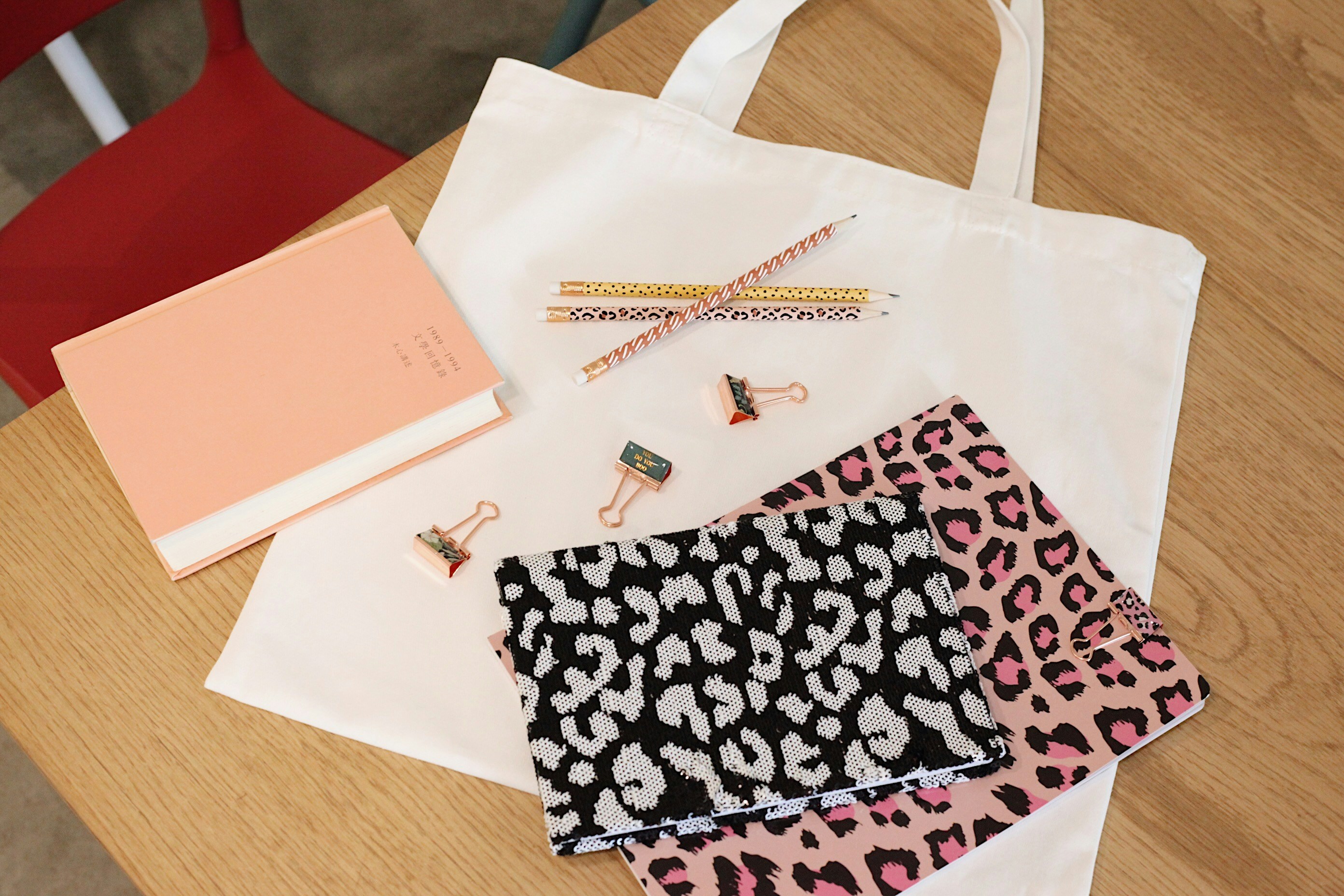
Start with items that feel easy, enjoyable, and comforting. A good bag usually has at least one thing to read, one thing to write on, and one thing to do with your hands. That might mean a novel, a small notebook, and colored pens. It might mean a puzzle book, a deck of cards, and a crochet set. It might mean a sketchpad and a disposable camera.

A few practical ideas include:
- A book you are genuinely excited to read
- A journal or notebook
- Pens, markers, or a highlighter
- A crossword, sudoku, or puzzle book
- A sketchpad or small watercolor kit, knitting or crochet supplies
- A deck of cards
- A print magazine
- Postcards or stationery
- A simple comfort item, like your favorite bag charm, a photocard of your idol, a lip balm etc.
The key is choosing things that fit your actual life. Not your fantasy life. If you never paint, do not suddenly build your whole personality around a watercolor set just because it looks good in a tote dump.
A note from my own analog bag
I’m glued to a screen most days. I work on a laptop, I have two phones, I own an iPad, and I even use an extra monitor, so there are days when my entire routine feels lit by a screen. Because of that, I try to pull back whenever I can, especially on freer days when I do not need to be as digitally present.
In my analog bag, I keep a coloring book and colored pencils in it because they are easy to reach for and surprisingly calming. I also carry a Tamagotchi, which is funny because yes, it’s still a device, but it doesn’t pull me into a bottomless feed or trap me for hours the way a game can. I feed it, clean it, check on it when it beeps, and that is usually enough. Five minutes and that’s it, I’m done.
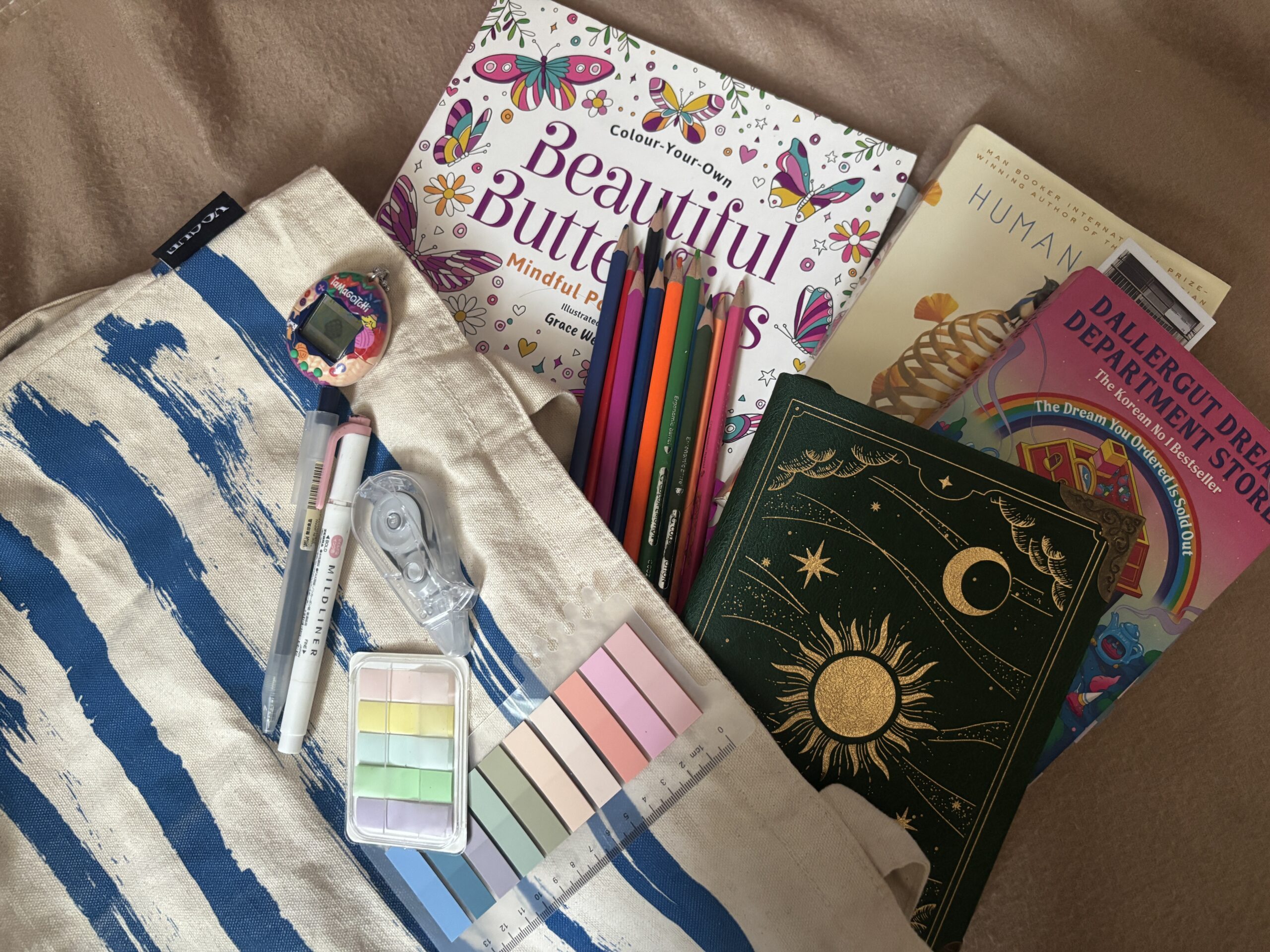
I also tend to bring two books with me. One is usually a heavier read, the other something lighter depending on my mood. I keep book tabs in my bag too. I am not an ultra-organized reader, but I like marking parts I want to remember.
There is always a journal, a pen, and a highlighter in there too. I’m not precious about brands. As long as they work and do not smudge, I’m happy. I do journal on my iPad sometimes with an Apple Pencil, but writing things down by hand still feels different as it gives my thoughts room to form properly.
What makes it a wellness habit
It’s not going to fix burnout on its own, but it can help build better routines by giving your eyes, mind, and attention a break from constant digital input. Instead of reaching for your phone by default, you have something slower and more grounding within reach, whether that is a book, a journal, or a small creative hobby.

It also feels especially fitting for summer, when beach days, cafe afternoons, train rides, and long waits leave more room for idle time that can easily disappear into scrolling. That is what gives the analog bag its charm. It is simple, useful, and easy to carry into everyday life. More than anything, it gives people a way to step back from the noise and spend their time a little more intentionally.
That is not exactly radical. But right now, it does feel refreshing.