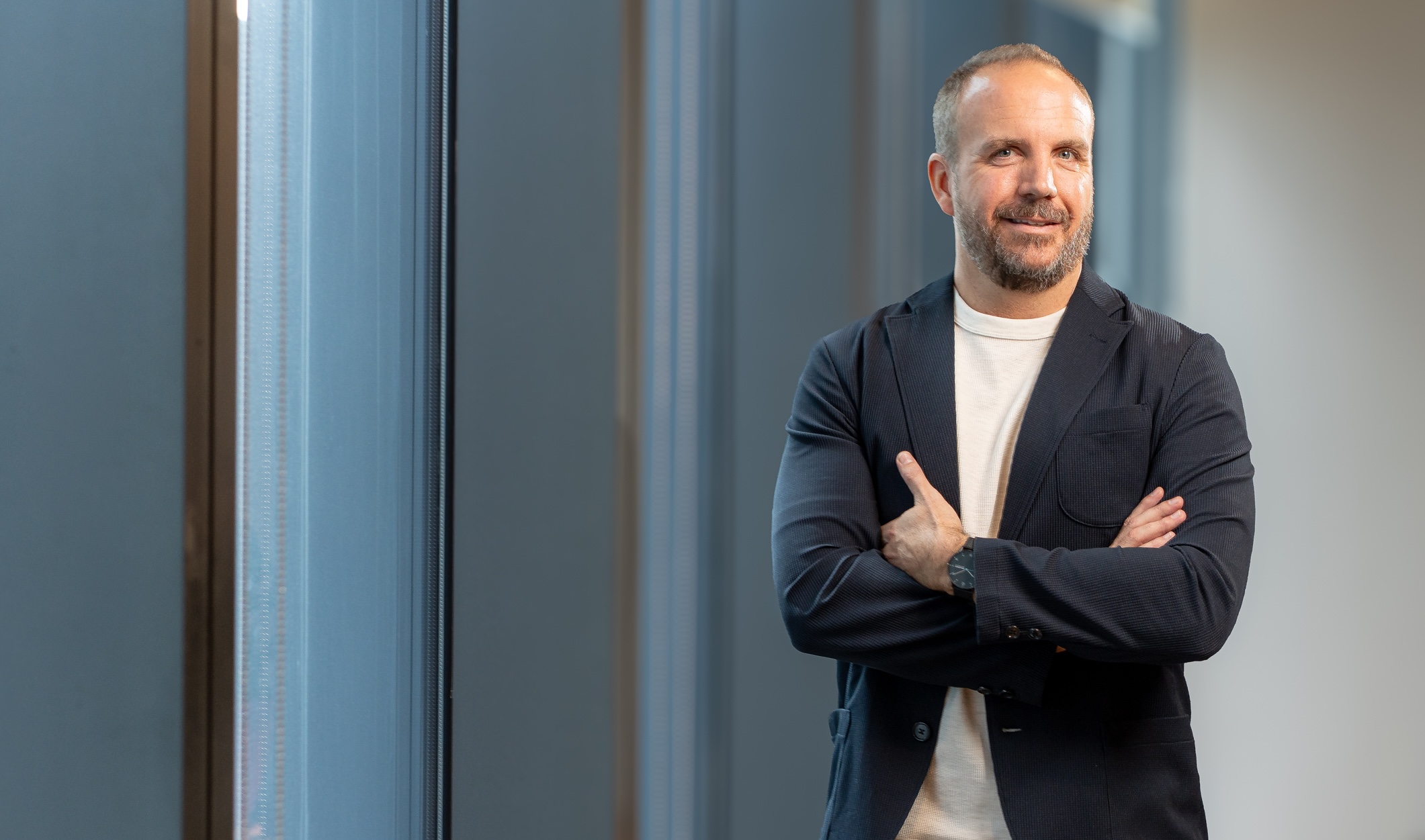

This entrepreneur seems to be everything, everywhere, all at once—except this is real life.
Over beers one night on the balcony of his BGC condo three years ago, entrepreneur John Avrett was asked a question that would launch an improbable fourth career.
“What’s your billion dollar idea?”
The question came from his friend Nate Clarke, founder of GoTyme Bank. Though born and raised in Nashville—a city that has produced country music superstars spanning eras—Avrett had his gaze fixed elsewhere since the beginning. Toward satellites, engineering, renewable energy, and eventually the wider world.
At the time, Avrett was still serving as a US diplomat in Manila. Before that, he was posted in Brazil and Jordan. Before that, he was an aerospace engineer designing power systems for satellites while serving as an active duty Air Force officer. Follow the timeline in reverse and it ends where all stories begin: with a curious child who had the intellect and desire to understand how the world worked.
“I was always interested in everything, but I also liked to excel in many different areas. That took me to the Air Force Academy, eventually to the military and diplomacy,” John Avrett says.
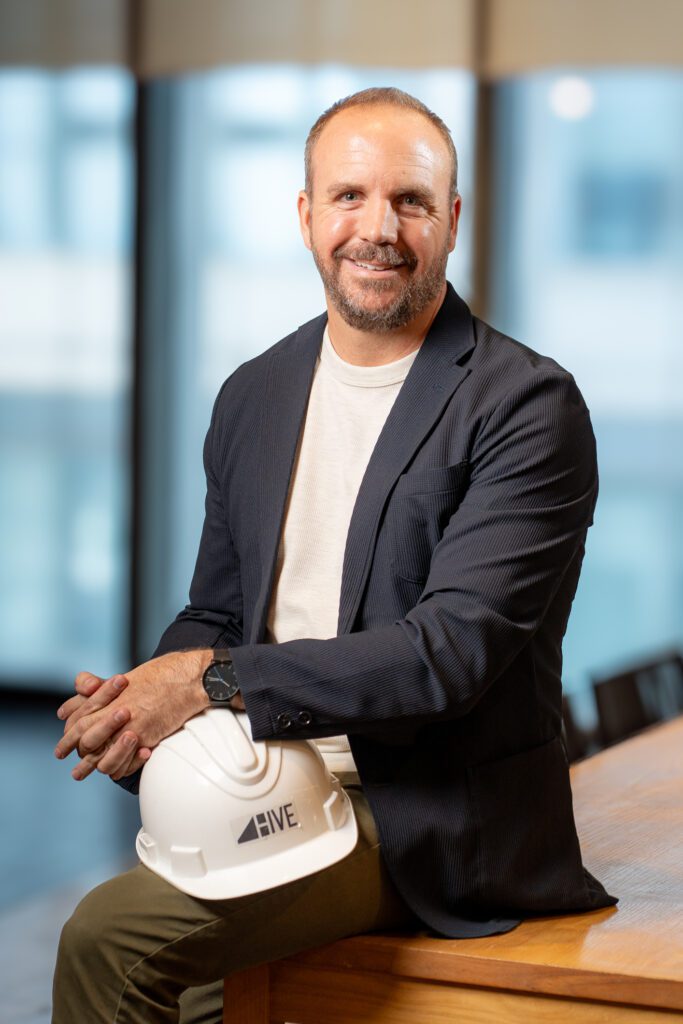
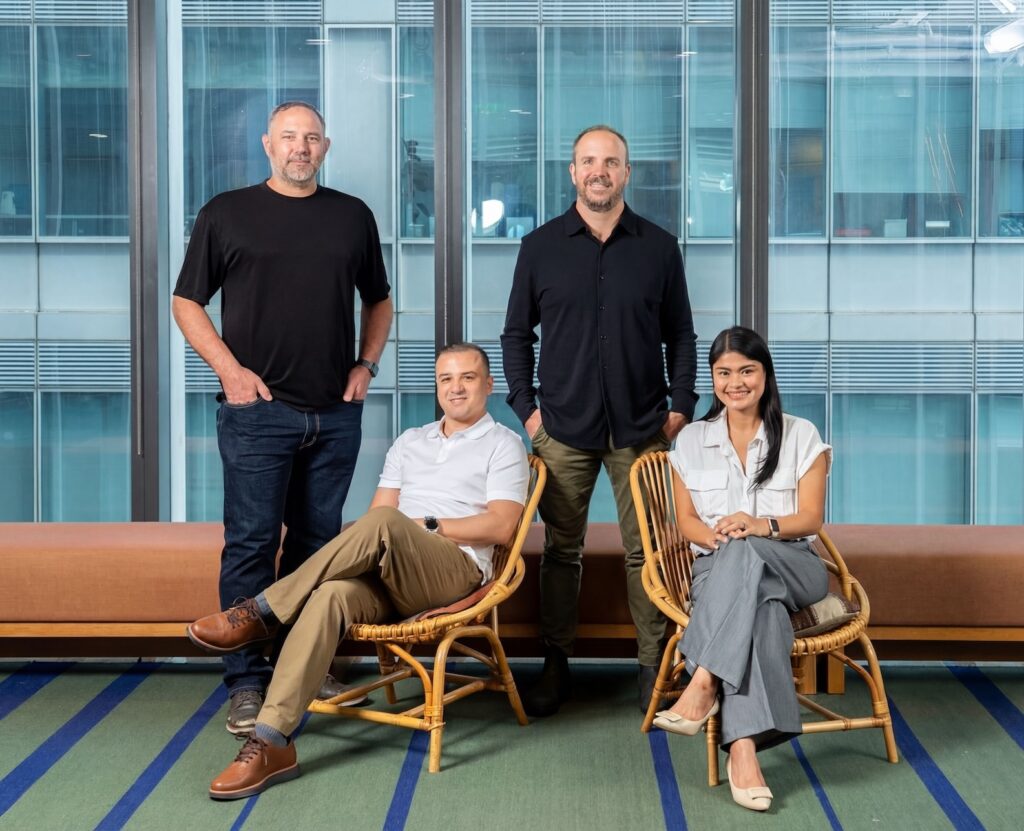
Entrepreneurship was not part of the plan—not just yet anyway. But eventualities in life are like a snowball rolling downhill. You can’t stop their momentum and it would be foolish to stand in the way. You can almost imagine Avrett stepping outside the expected—there you go, sir, I’ve cleared the path—because while most people have one profession in their lifetime, he is on his fourth as founder and CEO of Hive Modular, a company that builds modular homes and hospitality units for the world.
Each of the routes he has taken so far—engineering, military service, diplomacy, entrepreneurship—could have been a life’s work on its own. But not for Avrett.
As he recounts his journey, several movie titles float through my head. There’s Everything Everywhere All At Once, though there’s nothing surreal about his story. There’s Project Hail Mary, a fitting association for someone who once gazed at the Milky Way above Jordan’s Wadi Rum and spent years designing power systems for satellites. And perhaps there’s a bit of The Secret Life of Walter Mitty too because he kept saying yes to new things.
The son of an engineer, Avrett grew up in Nashville in a middle-class family. His father, a mechanical engineer, remains one of the biggest influences in his life. “We didn’t have a lot of money growing up, but my father really prioritized my getting a good education.”
While working as an engineer in Los Angeles, Avrett felt that he was at a crossroads in his career. “I had to decide whether I was going to pursue a PhD in engineering, then I started getting recruited by the State Department. Interestingly enough, around 2014 to 2015, they were trying to recruit people with STEM backgrounds (science, technology, engineering, and math). I always had this curiosity about the world and also a love for travel and this burning desire to help make the world a better place.”
Related story: Built with intention, delivered with immediacy: Hive Modular and the recalibration of construction
Related story: How Paolo Feliciano took a detour in photography—then embraced his manufacturing legacy
Related story: The house that imagination built
A larger mission
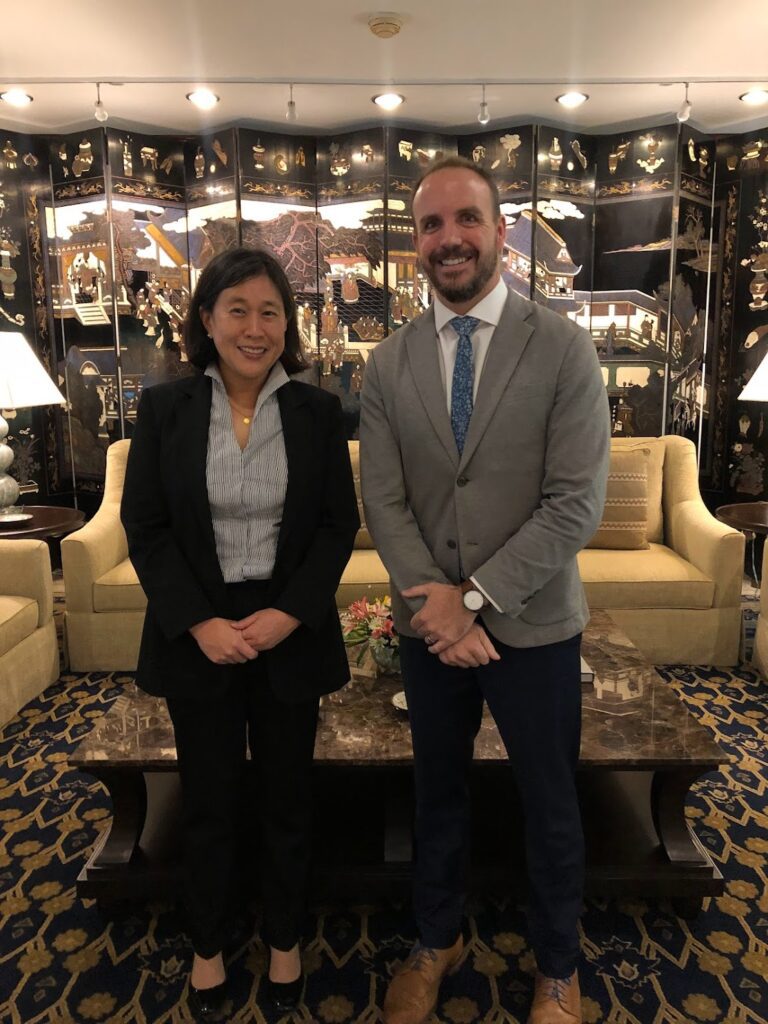
“I’ve always been motivated by just the simple idea that I can do good in the world and that I want to do the most good that I can. I think it probably comes from my upbringing, but I just like always had this burning desire to do good at scale and be a positive force in the world.”
Avrett admits that it sounds naïve but adds that he still has the idealism of when he was 17 years old. “The State Department told me that I could apply my engineering background and expertise to problems that are really important for the world, like climate change and energy crisis.”
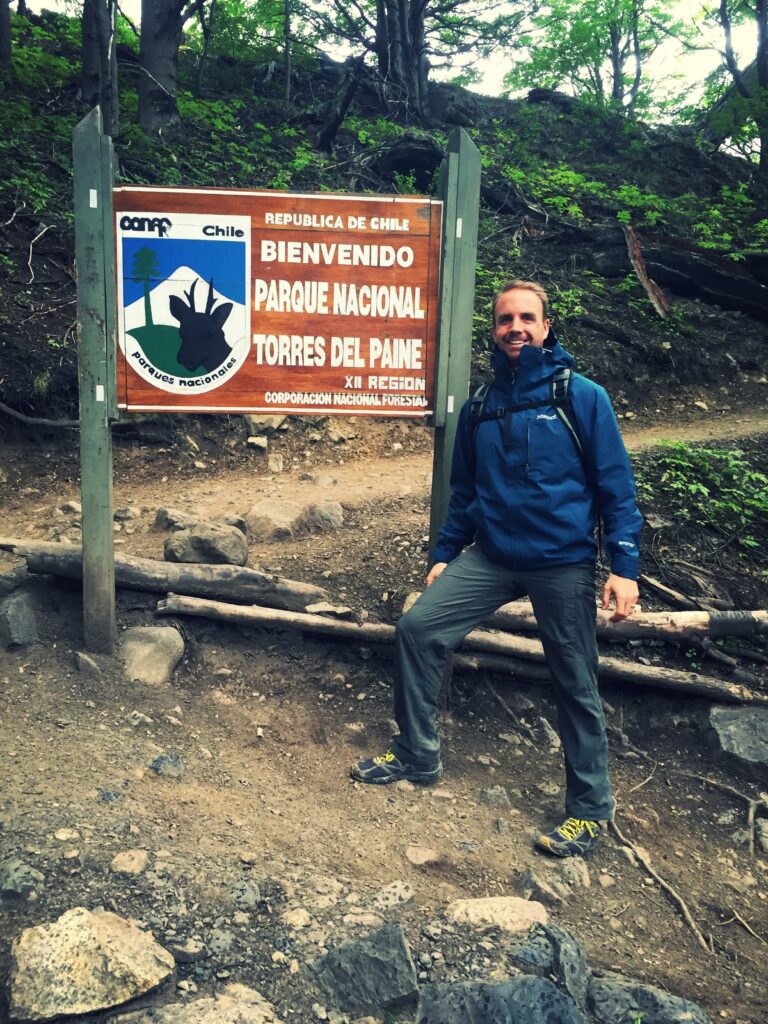
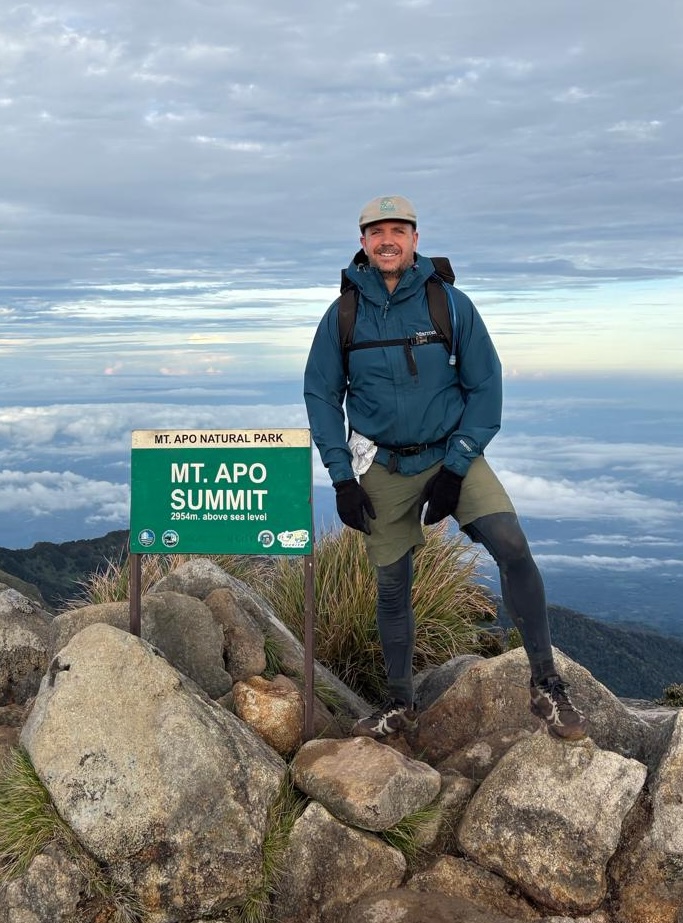
He learned Portuguese for his first post as a diplomat in Sao Paulo, Brazil in 2016, when the country was hosting both the Olympics and World Cup. Then it was on to Amman, Jordan. His third and final assignment was to the Philippines “In each country, I focused on economic diplomacy. In Brazil, it was renewable energy. In Jordan, trade relations, environmental policy, and labor issues.”
In the Philippines, Avrett headed the US Embassy’s Trade and Investment Office. “I love being in places that are dynamic and, shall we say, developing. These are the parts of the world that are the most interesting to me. I always knew that to be in the middle of the next wave of world-changing issues, Southeast Asia was where I wanted to be.”
Building for the future
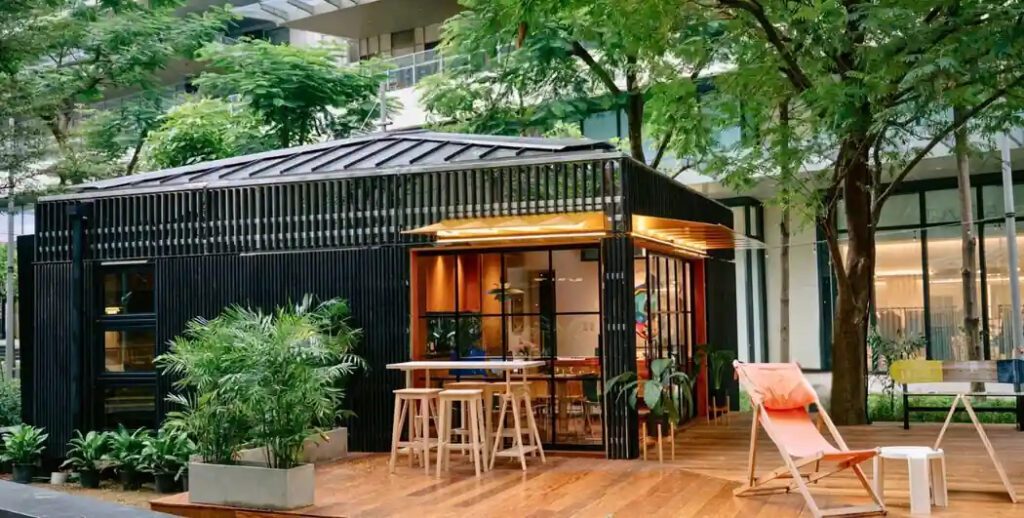
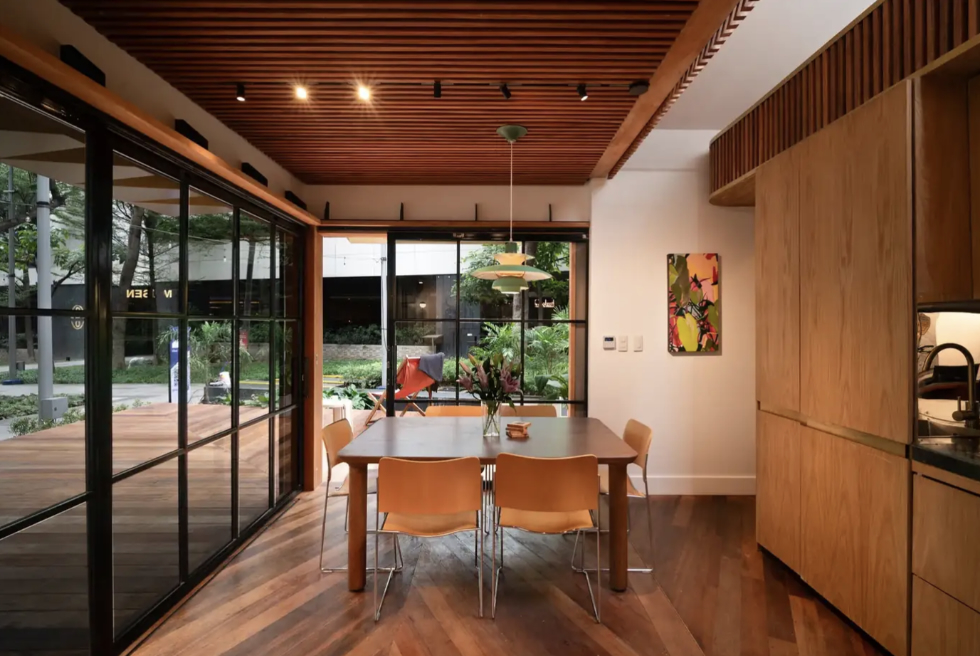
Then Avrett got the idea for Hive Modular, a business that could “potentially change the world in a very meaningful way and at the same time create a lot of good jobs and be good for the environment.”
That idea for modular homes leapt outside his mind on that night over beers. And we all know that for people like Avrett, once an idea is out there in the world, there’s no stopping it. Living in a country where construction timelines and budgets are, well, dictated by the whims of nature and man, the concept of constructing offsite and then becoming a turnkey home for buyers was just perfect.
Sweden and Japan lead the world in prefabricated and modular homes, with the former using prefabricated elements in 84 percent of its detached homes, while Japan has mastered what seems to be a dichotomy in the prefab industry: mass customization.
“I was intimately aware of some of the challenges with traditional construction, and had always been fascinated with the idea of applying some of the lessons from aerospace engineering to the process of construction,” Avrett says.
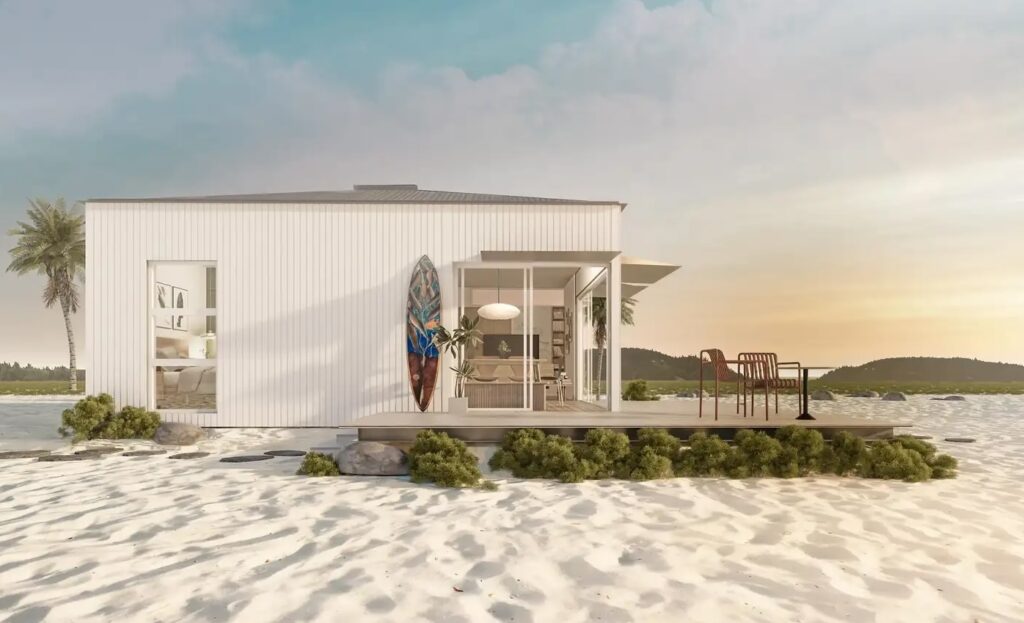
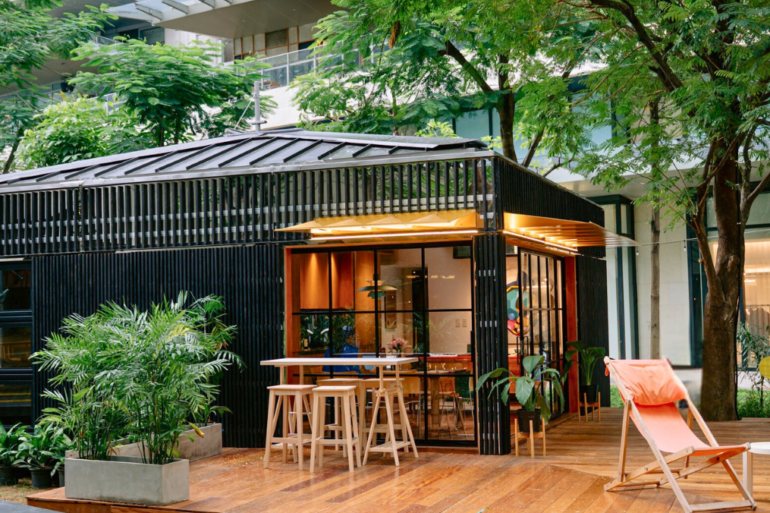
Hive features homes and two casita models to choose from starting at 60 sqm. for P5 million, but modular construction can go as high as 12 stories because they’re using structural steel.
How, exactly, will the home look like? Hive combines contemporary architecture with precision engineering starting with a steel frame for the house “because the material is great for typhoons, great for seismic conditions, and it’s more sustainable.”
Avrett adds that people don’t realize that most of the steel in the world is actually recycled. “I think something like 85 to 90 percent of the steel in the market is recycled into new products. Building in the Philippines and ultimately shipping around the world, steel is the only structural material that meets the requirement for being able to withstand the rigors of transportation and logistics.”
Hive has worked with some of the biggest hospitality developers in the Philippines, shortening their timelines to deliver upscale casitas for resorts. That’s the ultimate dream, Avrett says—to build in the Philippines and ship globally.

Raising third-culture kids
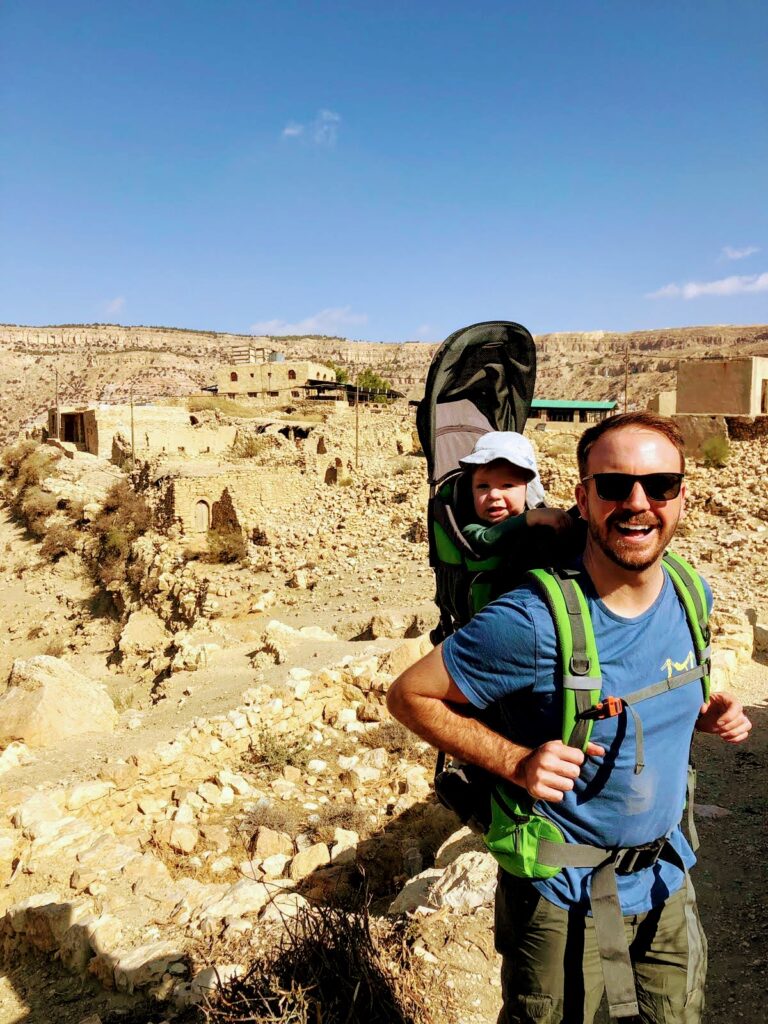
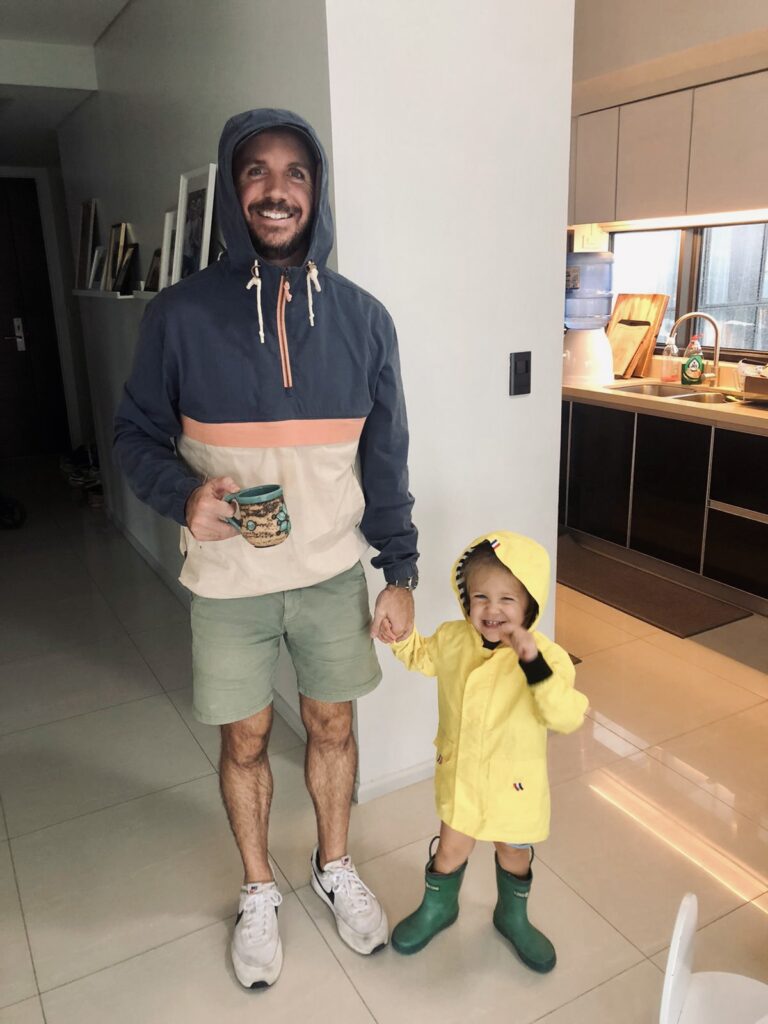
Stories of third-culture children are always fascinating. While they share the heritage of their parents, they are often shaped just as much by the countries they grow up in.
For Avrett’s daughter (the younger of two kids), that story began in Jordan during the spring of 2020, at the height of one of the world’s strictest COVID-19 lockdowns. With military checkpoints enforcing stay-at-home orders and streets eerily empty, Avrett and his wife briefly returned to the United States before moving back to Jordan. Just two weeks later, the country locked down again, and his wife went into labor. Reaching the hospital meant driving through a ghost town and negotiating military checkpoints in Arabic.
“It was one of the stranger nights of my life,” he recalls. “But we made it, the birth went fine, and my daughter arrived healthy—just with a better origin story than most.”
But even for diplomats, cultural differences can produce some of the best stories. How about standing in Sao Paolo trying to explain to students (in Portuguese, no less!) the significance of Thanksgiving to Americans?
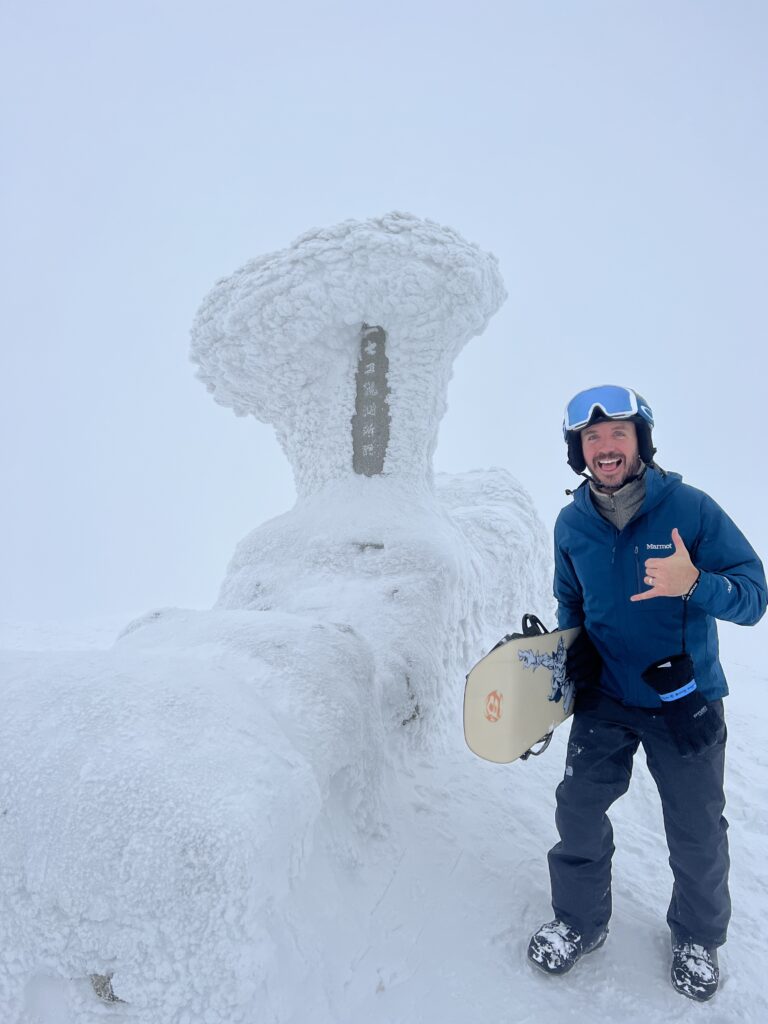
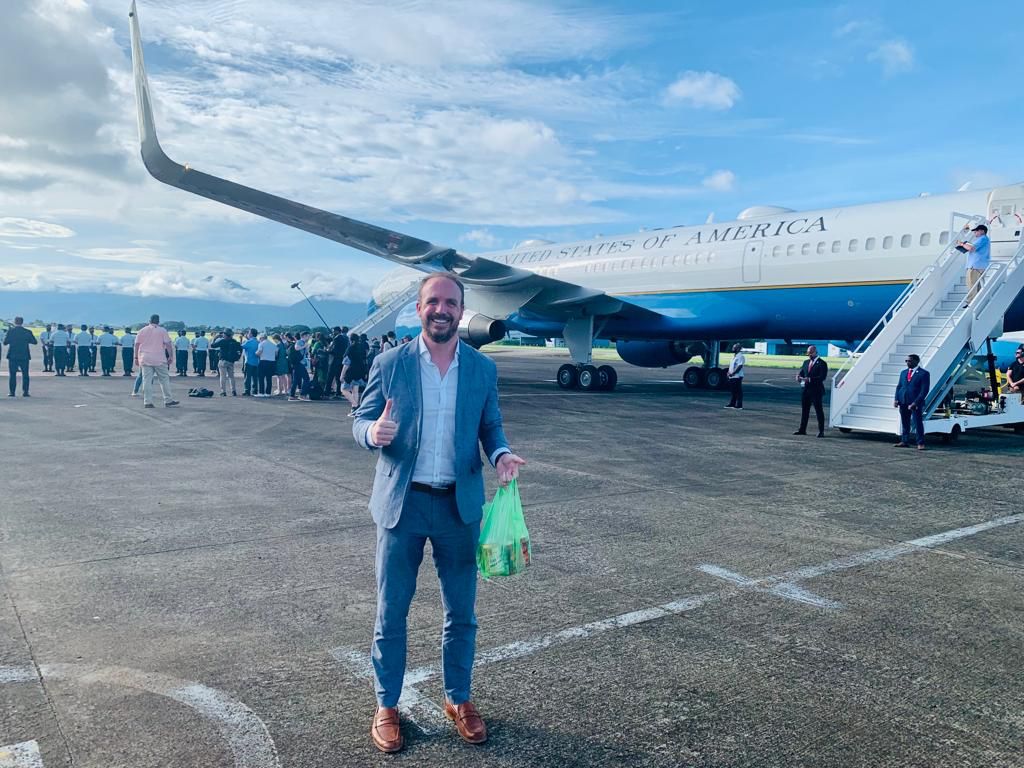
Or going on a beer run in Palawan for the convoy of then Vice President Kamala Harris? During Harris’s visit to Palawan, an unscheduled stop at a World War II memorial left the motorcade parked beside a sari-sari store. Assigned to the last vehicle, Avrett accepted a colleague’s challenge to find cold beer before the motorcade moved again. Wearing a suit, he sprinted through the village collecting bottles from nearby stores and returned just in time.
“I have a photo of myself on the tarmac in front of Air Force Two, a bag of beers in hand, in what I’m fairly confident is the first and only presidential motorcade beer run in history.”
It is exactly the kind of story that happens when you spend years immersing yourself in a place and the communities attached to them. For Avrett, one of those places is La Union, where he escapes whenever he can to surf, recharge, and spend time with a creative community he has come to admire.
“La Union is my favorite place,” he says. “I love that community. They’re so tight-knit, and creative. It’s inspiring for me to go up there.”
It’s tempting to view John Avrett’s life as a collection of unrelated careers, from aerospace engineer to Air Force officer, diplomat, and entrepreneur. But there’s one discernible pattern that emerges. The engineer wanted to solve problems; the diplomat wanted to strengthen relationships and create opportunities; the entrepreneur wants to reframe how homes are built while creating jobs and reducing waste.
Different professions stitched by the same impulse: to leave things better than he found them. The current story, the builder that wants to create more and leave less impact on the planet, is my favorite story. And it all started with a question over beers on his balcony in BGC.
Related story: The rise of quiet luxury in Philippine architecture
Related story: From architecture to accessories: How Royal Pineda shapes the vision of modern Filipino
Related story: The light language of JJ Acuña
Related story: Michael Villardo’s Moodism furniture turns sculptural design into a feel-good vibe