
Asia dominates this year’s prestigious ranking, with seven spectacular stays making the Top 10 and Hong Kong holding on to the coveted No. 1 spot.
A great hotel can make the destination feel almost secondary. This year’s World’s 50 Best Hotels certainly has a few that could tempt travelers to build an entire trip around the check-in.
The 2026 ranking was revealed in Paris on September 15, bringing together 50 properties across 22 destinations and six continents. More than 800 members of The World’s 50 Best Hotels Academy cast their votes, spanning hoteliers, travel journalists, educators, and experienced luxury travelers.
At No. 1, Rosewood Hong Kong keeps its crown for the second year running—but it’s hardly Asia’s only major showing. Seven of the Top 10 are in the region, including all three podium spots, while Bangkok alone lands three hotels in the coveted ten.
The list gets especially interesting beyond the numbers. A centuries-old villa on Lake Como sits alongside a vertical garden in São Paulo; an intimate collection of Beijing courtyard houses competes with Dubai-scale extravagance. Different destinations, different definitions of decadence—and 10 very good reasons to dream about your next check-in.
Asia owns much of the Top 10
Seven of this year’s Top 10 are in Asia, including the world’s top three. Hong Kong takes both first and eighth through Rosewood Hong Kong and Upper House Hong Kong, while Bangkok alone commands three places: Capella Bangkok at No. 2, Four Seasons Bangkok at Chao Phraya River at No. 3, and Mandarin Oriental Bangkok at No. 10. Beijing’s Mandarin Oriental Qianmen lands at No. 7, while Dubai’s Atlantis The Royal comes in fourth.
Beyond the Top 10, Asia’s presence runs deeper. The continent claims 18 of the 50 positions, with Japan alone placing four properties on the list, led by Aman Tokyo at No. 11. If this year’s ranking says anything about the geography of modern luxury, some of its most closely watched addresses are firmly rooted in this part of the world.
1. Rosewood Hong Kong, Hong Kong
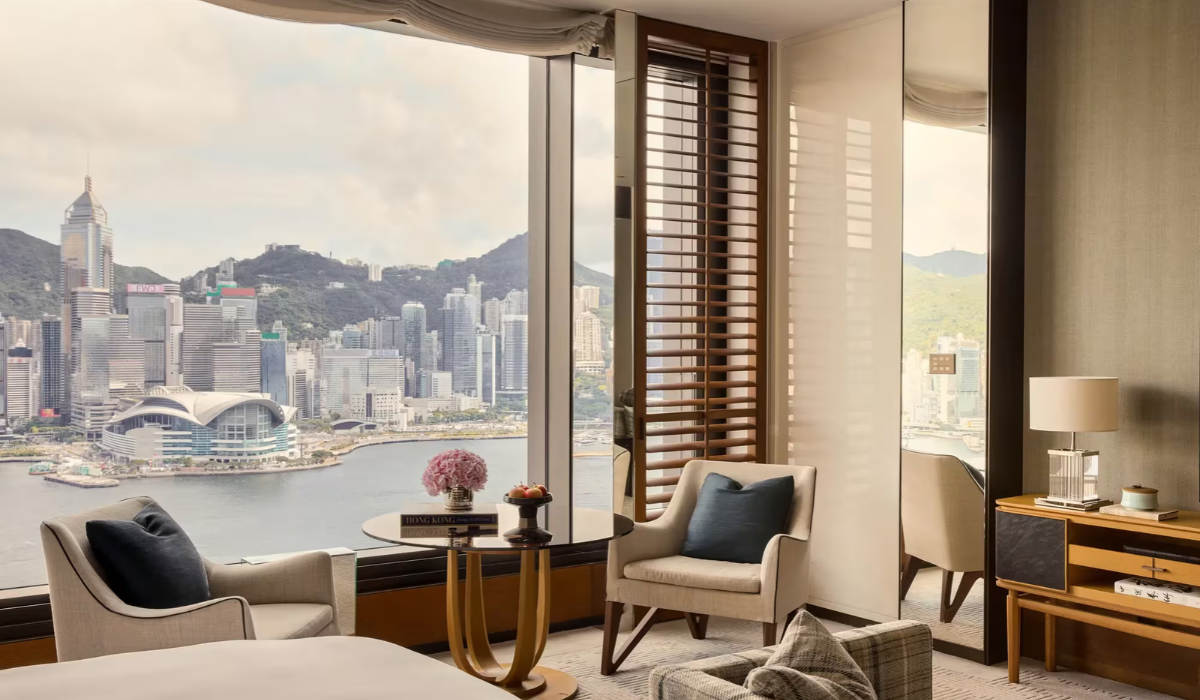
Rising above Victoria Harbour in Tsim Sha Tsui, Rosewood Hong Kong pairs the proportions of a soaring urban estate with interiors that feel decidedly residential. Rooms look toward the harbor and skyline, while the wider property moves between destination dining, art, and Asaya’s extensive wellness offerings. The hotel’s interiors are by Tony Chi, with an art collection featuring names including Damien Hirst, Lynn Chadwick, and Wang Keping. The result has clearly resonated: Rosewood Hong Kong is the World’s Best Hotel and Best Hotel in Asia for 2026, retaining the global No. 1 spot for a second straight year.
2. Capella Bangkok, Thailand
Capella Bangkok turns toward the Chao Phraya at practically every opportunity. Its 101 suites and villas are designed as low-rise, contemporary sanctuaries, all with river views and private outdoor spaces; seven villas sit directly at the water’s edge. Dining ranges from Thai family recipes at Phra Nakhon to the two-Michelin-starred Côte by Mauro Colagreco, while Auriga Wellness carries the property’s quiet, restorative sensibility into the spa. It’s a particularly intimate interpretation of Bangkok luxury—one shaped as much by the river as the city around it.
3. Four Seasons Bangkok at Chao Phraya River, Thailand
Also embracing the Chao Phraya is Four Seasons Bangkok, where contemporary architecture meets the calmer rhythms of a riverside resort. The property sits in Bangkok’s creative district and unfolds through green courtyards, river-facing rooms, two temperature-controlled infinity pools, and a 35-meter lap pool. Its Urban Wellness Centre combines spa treatments, fitness, and holistic therapies, while Michelin-recognized dining gives the hotel considerable culinary pull. It’s Bangkok at full volume just beyond the doors, with enough water, greenery, and open space inside to make the city feel momentarily distant.
4. Atlantis The Royal, Dubai
Subtlety isn’t really the assignment at Atlantis The Royal. The Palm Jumeirah resort builds its identity around spectacle, spanning statement-making rooms and suites, elevated pools, beachfront experiences, destination restaurants, and AWAKEN Wellness. Even its centerpiece is theatrical: the Skyblaze Fountain sends a fire-and-water performance 28 meters into the air. For travelers who want their five-star stay with a side of maximalism, the property is your best bet.
5. Passalacqua, Italy
Passalacqua’s version of luxury begins with history. The Lake Como retreat traces its origins to the 18th century, when the villa was conceived as a place for friends, leisure, long meals, and the particularly Italian pleasure of dolce far niente. Today, that spirit survives in an intimate five-star hotel in Moltrasio, where gardens and lake views provide the backdrop for deeply personalized hospitality.
6. Rosewood São Paulo, Brazil
Rosewood São Paulo occupies the Cidade Matarazzo cultural complex, where preserved early-20th-century architecture meets a vertical garden tower by Pritzker Prize-winning architect Jean Nouvel. Philippe Starck shaped the interiors, while Brazilian art, furniture, and cultural references run throughout the rooms and public spaces. Outside, a leafy seven-acre enclave softens the edges of one of the world’s biggest cities; inside are multiple restaurants and bars, two outdoor pools, and Asaya’s wellness program.

7. Mandarin Oriental Qianmen, China
Mandarin Oriental Qianmen takes the luxury-hotel formula and spreads it horizontally through one of Beijing’s traditional hutong neighborhoods. Instead of a conventional tower, the property comprises just 42 individual courtyard houses, creating a notably private proposition in the Chinese capital. Even its entry-level courtyard accommodations begin at a generous 110 square meters, with gardens, living rooms, and locally informed art incorporated into the experience. The concept makes its No. 7 placement particularly interesting: one of the world’s highest-ranked hotels is essentially an ode to Beijing’s historic courtyard way of living.
8. Upper House Hong Kong, Hong Kong
High above Pacific Place in Admiralty, Upper House Hong Kong approaches luxury with restraint. Architect André Fu conceived the property as a tranquil residential retreat, working with natural limestone, warm timber, and an understated palette rather than overt opulence. Generously proportioned rooms open onto Victoria Harbour or city views, while wellness treatments and residencies, quiet spaces, and Salisterra reinforce the sense that this is a house rather than simply a hotel. In a Top 10 filled with architectural statements, Upper House makes serenity itself part of the statement.
9. Chablé Yucatán, Mexico
Deep in the Yucatán landscape, Chablé Yucatán builds its identity around the relationship between nature, Mayan traditions, and contemporary wellness. Its spa journeys draw from ancestral techniques and are guided by Mayan healers and wellness practitioners, while the wider stay encourages everything from cycling through the property to simply retreating to a private pool. The restored hacienda setting and sacred cenote give that wellness philosophy a powerful sense of place.
10. Mandarin Oriental Bangkok, Thailand
Few hotels on this list can claim a relationship with their city stretching back more than 150 years. Mandarin Oriental Bangkok has long welcomed travelers along the Chao Phraya, combining that considerable history with river-facing rooms, resort-style spaces, and a dining collection spanning Thai, Cantonese, French, and international cuisines. Its Oriental Spa similarly draws on Asian wellness traditions, extending the hotel’s heritage beyond its architecture. At No. 10, the Bangkok institution closes a Top 10 that heavily favors the new and design-forward while proving there’s still considerable power in a grande dame that knows exactly who she is.
Related story: Europe sweeps all top 10 spots in World’s Best Countries 2026
Related story: Europe’s 10 most beautiful hotels—from an Irish castle to an Icelandic hideaway