
The Oscar-winning actress and humanitarian reflects on her connection to Cambodia, the importance of investing in vulnerable communities, and her hopes for a simpler life devoted to service.
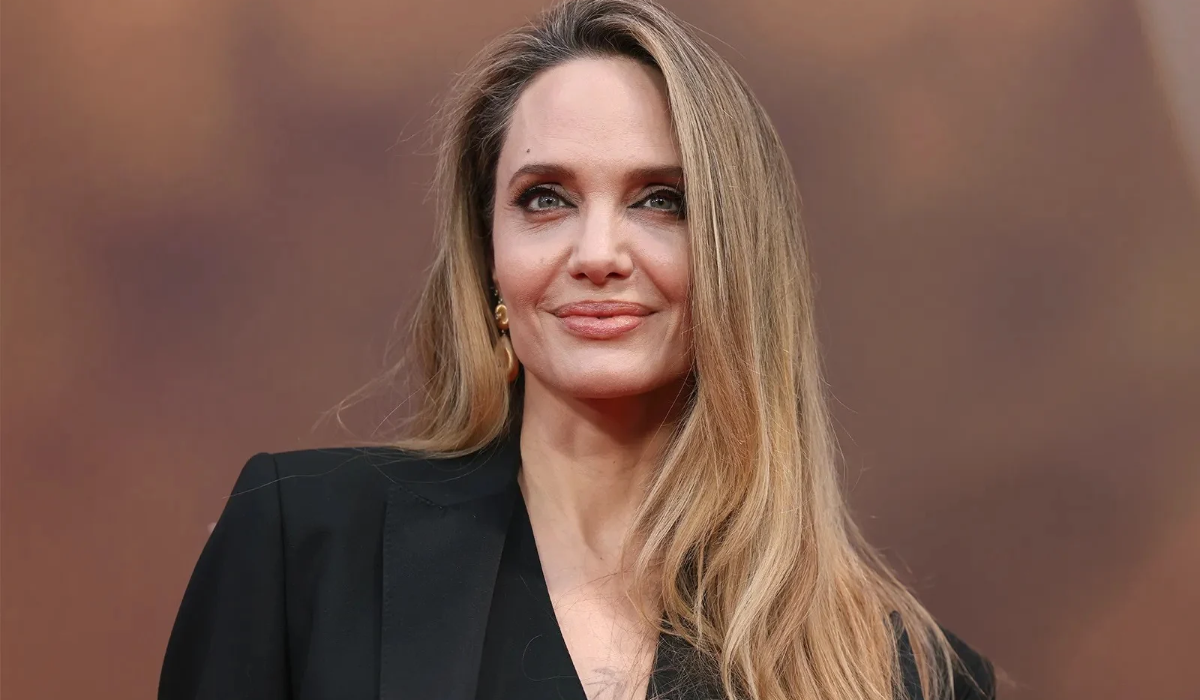
Hollywood actress, filmmaker, and humanitarian Angelina Jolie brought a powerful message of empowerment and economic independence to Manila, urging Southeast Asian leaders to invest in the people and communities whose potential often remains overlooked.
Speaking at the 2026 ASEAN Inclusive Growth Summit on November 11 at Shangri-La The Fort in Taguig, the Academy Award-winning actress emphasized the importance of creating sustainable opportunities for vulnerable populations, drawing on her longstanding humanitarian involvement in Cambodia.
Jolie challenged perceptions of developing nations as inherently disadvantaged, pointing instead to their abundant resources, cultural wealth, and capable communities. “These are not poor cultures. These are not poor countries,” she said, emphasizing the region’s strengths and the need for fairer economic opportunities. Her central argument was that meaningful humanitarian work should ultimately help communities achieve independence through education, employment, equitable trade, and access to resources.
Why Angelina Jolie was invited to the summit
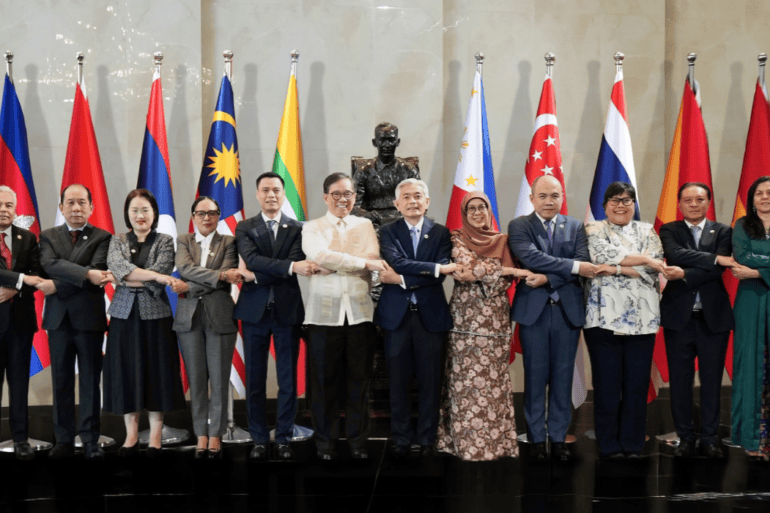
Jolie was among the featured speakers at the 2026 ASEAN Inclusive Growth Summit, organized by the Mastercard Center for Inclusive Growth in partnership with the ASEAN Business Advisory Council Philippines.
Held under the theme Resilient and Rising, the November 11 gathering brought together representatives from government, business, philanthropy, and civil society to examine how Southeast Asia can pursue economic growth that benefits communities across different income levels.
The event featured 58 speakers and 31 sessions covering financial inclusion, digital transformation, entrepreneurship, sustainable tourism, and the creative economy.
Jolie’s invitation reflected her extensive humanitarian experience, particularly her work with refugees, displaced families, and conflict-affected communities. She joined Cambodian filmmaker Rithy Panh for a closing conversation moderated by Shamina Singh, founder and president of the Mastercard Center for Inclusive Growth.
According to the summit’s official agenda, their discussion, titled Cambodia, Courage, and the Power of Staying, explored the importance of community-led recovery, long-term partnerships, and development efforts that respect local knowledge and leadership.
A personal and professional connection to Cambodia
Cambodia has occupied an important place in Jolie’s life since her early visits to the country in the 2000s. Her humanitarian work there developed alongside her filmmaking career and her personal connection to the country, where her eldest son, Maddox, was born.
Her collaboration with Rithy Panh culminated in the 2017 historical drama First They Killed My Father, which Jolie directed and Panh co-produced. Based on Loung Ung’s memoir, the film recounts a Cambodian child’s experiences during the Khmer Rouge regime. Panh, himself a survivor of the period, has dedicated much of his filmmaking career to documenting Cambodia’s history and preserving the accounts of its people.
At the Manila summit, their shared experiences provided a starting point for a broader discussion about the responsibilities of international organizations, investors, and humanitarian advocates. The official program emphasized that lasting development depends on listening to communities, respecting their priorities, and maintaining relationships beyond individual projects or funding cycles.
Moving beyond humanitarian assistance
A central theme of Jolie’s remarks was the need to reconsider how assistance reaches communities facing poverty, displacement, and economic exclusion. She argued that emergency relief, while essential during crises, should be accompanied by investments that allow people to sustain their own livelihoods.
Jolie also highlighted the importance of fair trade, access to education, and opportunities for communities to develop and use their skills. She also questioned economic arrangements that prevent capable populations from benefiting fully from their labor and resources.
Her comments reflected the summit’s broader emphasis on inclusive growth: ensuring that economic development reaches small businesses, women, families, and vulnerable communities, rather than concentrating its benefits among established institutions and wealthy populations.
In her own words: Angelina Jolie on empowerment and independence
During her conversation with Rithy Panh, Jolie spoke candidly about her humanitarian work, the economic potential of developing nations, and her hopes for the next generation. Reflecting on the communities she has encountered throughout her career, Jolie challenged the assumption that countries receiving international assistance lack resources or opportunities.
She also questioned the inequalities that prevent communities from becoming economically independent. “If they had been given the support and they could trade fairly and they could produce fairly, they wouldn’t need that much at all,” she explained.
For Jolie, humanitarian assistance should eventually give way to sustainable investment, allowing communities to support themselves through education, employment, and economic opportunities. “I really want to find a way where it goes from aid relief to really just investment,” she said, emphasizing the importance of investing in people’s independence.
The conversation also turned personal as Jolie reflected on motherhood, her connection to Cambodia, and her aspirations for the years ahead. She spoke about wanting a simpler life, continuing her humanitarian commitments, and witnessing younger generations build stronger international connections. “It’s not a sacrifice to live a life for others,” she said. “It’s a great joy.”
Her closing reflections brought the discussion back to the importance of cooperation and shared responsibility, expressing her hope for a future in which communities can connect, collaborate, and prosper together.
A humanitarian career spanning over two decades
Jolie’s advocacy extends across numerous countries and humanitarian emergencies. According to the United Nations High Commissioner for Refugees (UNHCR), she served as a Goodwill Ambassador from 2001 to 2012 and subsequently as Special Envoy from 2012 until December 2022.
During her association with the agency, she undertook over 60 field missions, meeting displaced families, visiting refugee settlements, and advocating for stronger international protection for people affected by conflict and persecution.

Her departure from the Special Envoy position in 2022 did not mark the end of her humanitarian work. In a joint statement with UNHCR, Jolie explained her intention to collaborate more directly with refugees, grassroots organizations, and local advocates while addressing a wider range of humanitarian concerns.
What else did Angelina Jolie do during her Philippine visit?
Jolie arrived in Manila on November 10, a day before her scheduled summit appearance. Her participation in the November 11 forum was the principal confirmed engagement of her Philippine visit. The summit’s official program placed her conversation with Panh toward the end of the afternoon proceedings, following discussions on economic integration, entrepreneurship, technology, and creative industries.
Other notable participants included Broadway star Lea Salonga, entrepreneur Kylie Verzosa, fashion designer Rajo Laurel, and business leaders from across Southeast Asia.
Her remarks offered a personal dimension to a discussion otherwise focused on economic policy and development, connecting the responsibilities of institutions with the everyday experiences of people they aim to serve.
Meanwhile, no additional Philippine charity visits, institutional meetings, or public engagements by Jolie could be independently confirmed through official sources as of November 13.
A message for Southeast Asia’s future
Jolie’s participation took place ahead of the 49th ASEAN Summit and Related Summits, scheduled for November 14 to 17 in Manila under the Philippines’ 2026 ASEAN Chairship.
The ASEAN Secretariat’s official announcement identifies peace, stability, regional cooperation, and future development as priorities of the leaders’ meetings. The November 11 Inclusive Growth Summit was a separate, business- and development-focused gathering held ahead of those proceedings.
For Jolie, the message was rooted in her experience working alongside communities recovering from conflict: economic progress must create opportunities for people to shape their own futures.
Her appearance brought international attention to a question that remains central to Southeast Asia’s development—how the region can translate economic growth into practical, lasting improvements in the lives of its people.
Related story: Manila on lockdown: How the Philippines is preparing for the ASEAN Summit
Related story: From Daniel Radcliffe to Angelina Jolie—these are the winners in this year’s 77th Tony Awards