
Questions surrounding its safety, legality, price, and practicality suggest it’s nothing more than a spectacle.
Elon Musk has finally delivered something that resembles a flying car. Whether the world needs one is another matter entirely.
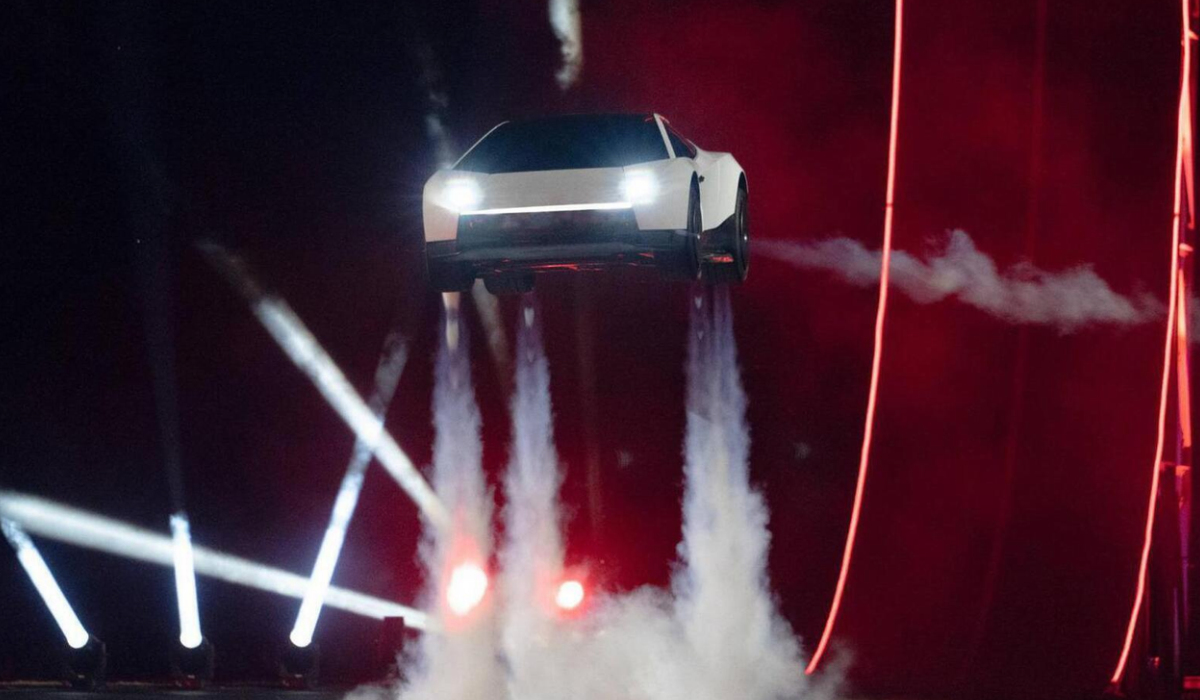
On October 15, 2026, Tesla unveiled its long-awaited second-generation Roadster at SpaceX’s testing facility in McGregor, Texas. The electric supercar performed a series of extraordinary stunts, including driving upside down, launching itself over other vehicles, and executing a midair rotation before landing.
The demonstration was undeniably impressive. Combining electric motors, powerful suction fans, and SpaceX-developed propulsion technology, the Roadster demonstrated capabilities rarely associated with conventional automobiles. According to Reuters, production is scheduled for 2028, nearly a decade after Tesla first introduced its next-generation Roadster concept in 2017.
Behind the theatrical unveiling, however, lies a less glamorous reality: the most extraordinary version isn’t approved for public roads, its final price remains undisclosed, and its commercial purpose is far from clear.
A flying car, or an elaborate engineering experiment?
Tesla’s new Roadster comes in three configurations: Performance, Thrust, and Rocket. Each represents a different degree of engineering ambition, although only the last offers the airborne capabilities that have dominated headlines.
The Performance variant features active aerodynamics and a fan-powered suction system designed to increase traction, effectively helping the vehicle grip the road. The Thrust adds rear-mounted propulsion units for extraordinary acceleration, while the Rocket incorporates additional thrusters that allow it to rise, rotate, and maneuver briefly through the air.
According to Car and Driver’s technical breakdown, these cold-gas thrusters operate using highly pressurized gas instead of conventional rocket fuel. The technology is sophisticated, but the resulting movement isn’t equivalent to sustained, practical flight.
The distinction matters. A vehicle capable of jumping over an obstacle or performing an airborne stunt isn’t necessarily equipped to transport passengers safely through the skies. The Smithsonian’s Roger Connor characterized the Roadster’s capabilities as closer to hopping than conventional flight.
Tesla has demonstrated an extraordinary feat of automotive engineering. It hasn’t demonstrated a practical alternative to ordinary road transportation.
The road to regulatory approval is far from clear
Technological capability, however, doesn’t automatically translate into regulatory clearance.
Tesla’s official Roadster website explicitly states that its Rocket variant is not approved for public road use. The company describes the Performance version as road-ready and the Thrust as race-ready, although those descriptions shouldn’t be mistaken for proof of regulatory certification in every market.
Musk himself acknowledged the uncertainty during the unveiling, telling attendees that he wasn’t sure the vehicle would be legal in all jurisdictions. He also described the Roadster as not necessarily designed with safety as its foremost priority.
The US National Highway Traffic Safety Administration subsequently emphasized that manufacturers must comply with applicable federal motor vehicle safety standards, regardless of how unconventional their vehicles might be. Meanwhile, the Federal Aviation Administration told Business Insider that the Roadster doesn’t meet its definition of an aircraft.
The regulatory ambiguity raises an obvious concern: if a vehicle can briefly leave the ground but cannot legally perform its defining maneuvers on public roads, where exactly does its revolutionary capability become useful?
For prospective buyers, the answer may be limited to controlled environments, private facilities, or specially permitted demonstrations.
A six-figure reservation for a car without a final price
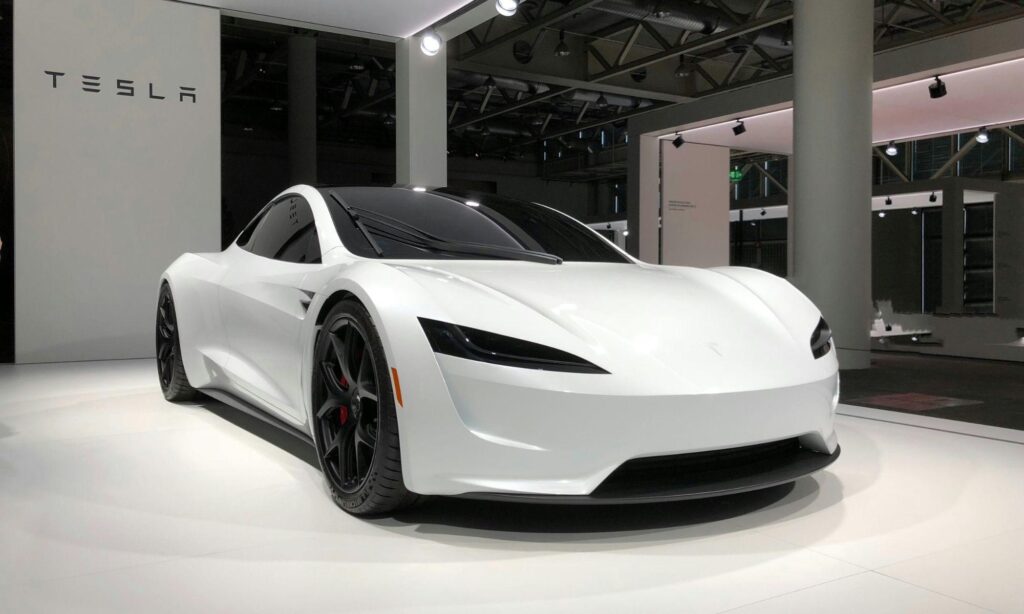
The Roadster’s financial proposition is equally extraordinary.
According to Reuters, Tesla is accepting reservations requiring $50,000 (around ₱3,100,000) for the Performance version and $250,000 (around ₱15,700,000) for the Thrust. The Rocket remains available by invitation only.
These figures are reservation deposits, not confirmed purchase prices. Tesla hasn’t disclosed the final cost of the new Roadster, although its 2017 concept originally carried an estimated $200,000 (around ₱12,600,000) starting price. Nor has the company provided a guaranteed delivery date or a model-specific development budget.
Potential customers would likely include wealthy automotive collectors, performance enthusiasts, and dedicated Tesla supporters willing to pay for exclusivity and experimental engineering. The commercial audience, however, appears considerably narrower than that of Tesla’s mainstream electric vehicles.
Even Musk has acknowledged the Roadster’s limited financial significance. As Reuters previously reported, he described the project as unlikely to materially influence Tesla’s financial performance.
In automotive terms, the Roadster is a halo car: a prestige product designed to showcase technological capabilities and strengthen a manufacturer’s reputation. Its success may ultimately depend more on the attention it attracts than the number of units it sells.
The Cybertruck offers a cautionary comparison
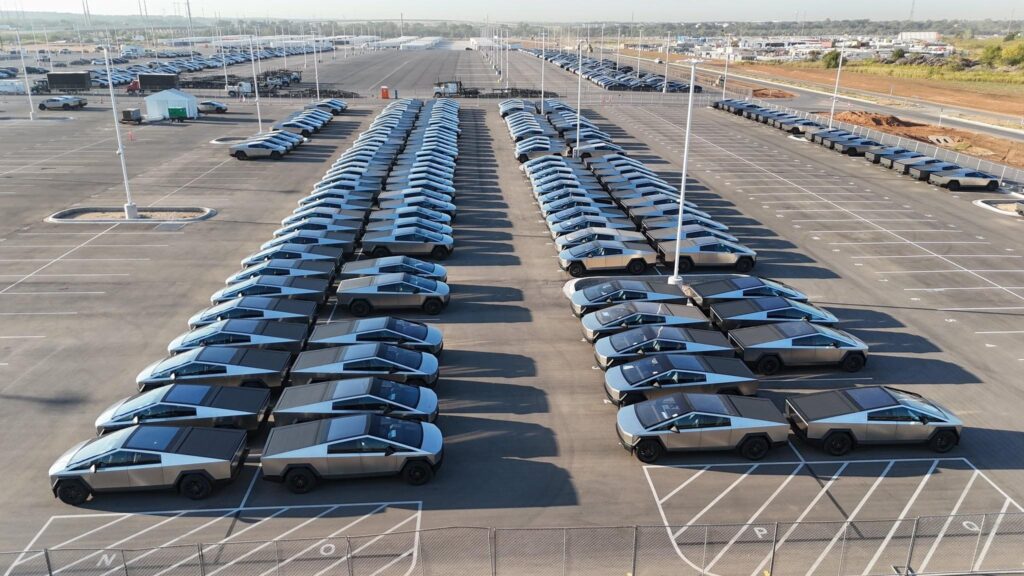
Tesla has already demonstrated how an unconventional vehicle can generate enormous attention without achieving its original commercial ambitions.
The Cybertruck, introduced in 2023 with its angular stainless-steel body, became one of the industry’s most recognizable designs. Yet the vehicle’s commercial performance has struggled to match the expectations surrounding its launch.

According to Electrek’s October 2026 analysis, Tesla delivered 8,295 vehicles in its combined Other Models category during the third quarter, a 48% year-on-year decline. The category includes the Cybertruck and other vehicles, meaning the figure cannot be treated as an exact Cybertruck sales total.
Industry estimates suggest Cybertruck deliveries remain substantially below Tesla’s earlier ambition of producing 250,000 annually.
The comparison isn’t evidence that the Roadster will fail. However, it demonstrates the commercial distance between a vehicle becoming a cultural phenomenon and establishing sustained consumer demand.
For Tesla, the question is whether another unconventional design can strengthen its brand without repeating the gap between ambitious projections and actual market performance.
Innovation is impressive. Is it indispensable?
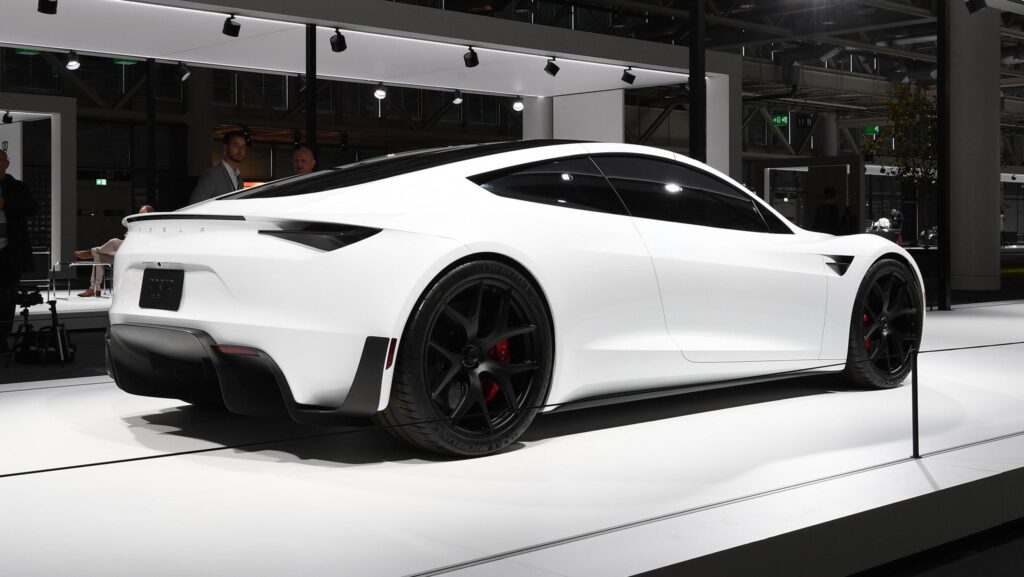
To dismiss the Roadster entirely would overlook the genuine engineering accomplishments behind its development.
The vehicle combines advanced electric propulsion, active aerodynamics, lightweight materials, and sophisticated control systems. Some of these technologies could eventually influence future performance vehicles, even if the Roadster’s most dramatic features never become commonplace.
Car and Driver has suggested that the redesigned vehicle’s underlying architecture appears credible as a future production model, although the publication remains cautious about whether its experimental propulsion features will survive the transition.
The larger question concerns the purpose of innovation itself. At a time when automakers are navigating affordability concerns, changing consumer demand, and the transition toward sustainable transportation, the Roadster represents a different set of priorities: extreme performance, engineering spectacle, and technological prestige.
There is room for ambitious experimentation in automotive design. History offers plenty of examples of technologies that initially appeared extravagant before finding practical applications. Although, an invention’s ability to astonish shouldn’t exempt it from questions about cost, safety, accessibility, and utility.
Tesla’s latest Roadster may eventually prove that cars can perform extraordinary feats once confined to science fiction. Whether those feats make transportation meaningfully better remains an entirely different proposition.
For now, Musk has demonstrated how far automotive technology can be pushed. He has yet to demonstrate why it needs to go there.
Related story: Elon Musk reclaims title as world’s richest, Manny Villar wealthiest in PH
Related story: Tesla is coming to the Philippines! Here’s what we know so far