

It promises no algorithm, no ads, just real-life connections.
A lot of people remember Friendster as their first social network. For many of us, it was also the first time the internet felt personal. At 14, making a Friendster profile meant I could finally mess with HTML and CSS, change my background color, and make my page look like my safe space and totally mine. It was simple and fun, and then one day it was just gone.
Now it’s back. And it works nothing like you’d expect.
What was Friendster?
Before Myspace. Before Facebook. Friendster came first.
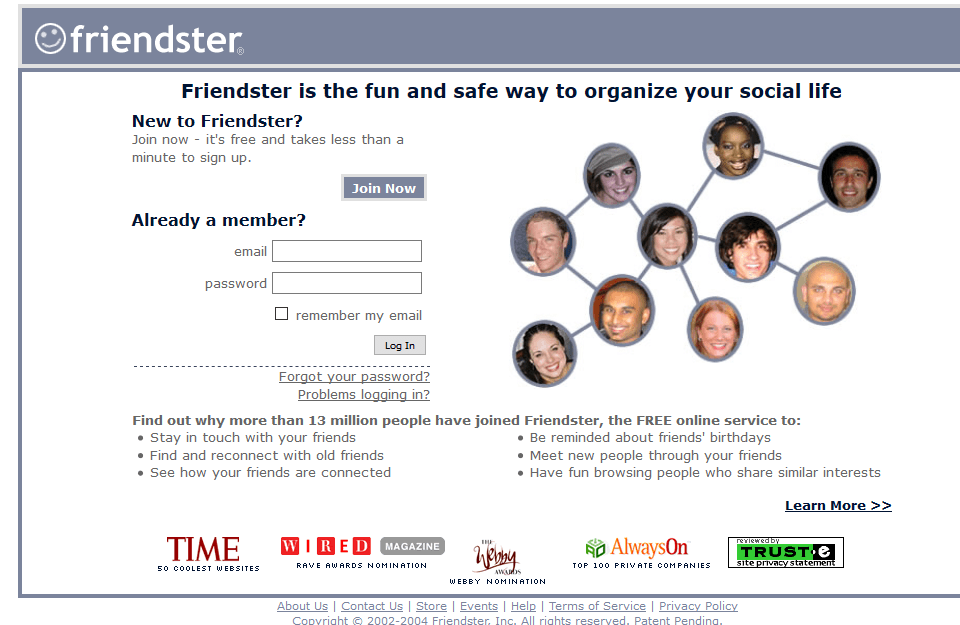
It launched in March 2002 and is widely considered the first major social network in the world. At its peak it had over 115 million users. While American users moved on quickly, Friendster stayed popular in Southeast Asia for years, with the Philippines, Indonesia, Malaysia, and Singapore among its most active markets.
But the platform was notoriously slow and struggled to keep up as it grew. By 2011, it pivoted to gaming. By 2015, it shut down completely.
Related story: 5 digital apps and diaries for women’s wellness in 2026
Related story: Would you survive a month offline?

How it came back
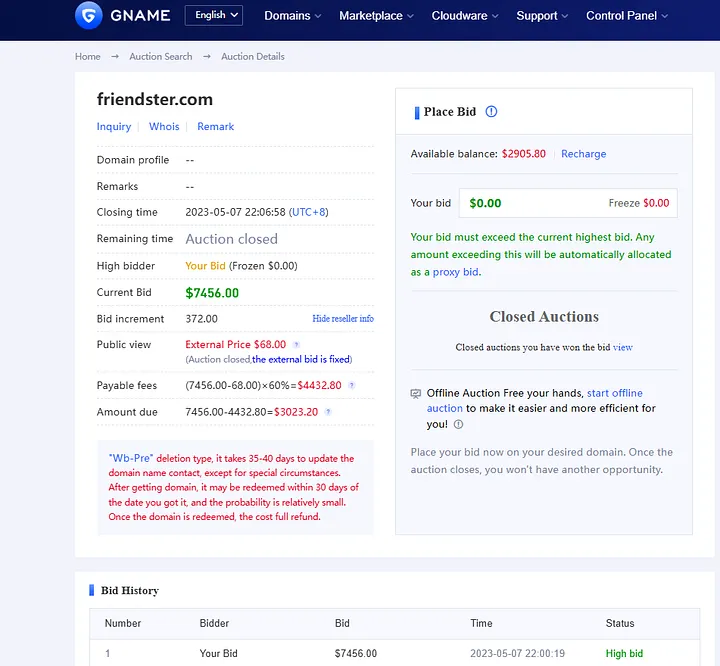
In 2023, entrepreneur Mike Carson noticed that the old Friendster website was back online but just full of pop-up ads. He found out that someone had bought the expired domain at an auction for just over $7,000. Carson reached out, made a deal, and eventually paid around $30,000 for both the domain and the Friendster trademark.
Related story: From SEO to GEO: How AI is changing the rules of web visibility
Related story: Is ChatGPT making our brains lazy?
He got nothing else from the original platform. No old accounts, no saved data, no photos. Everything in the new app was built from scratch. Only the name carried over.
Here is what makes this version of Friendster unlike any other social app right now
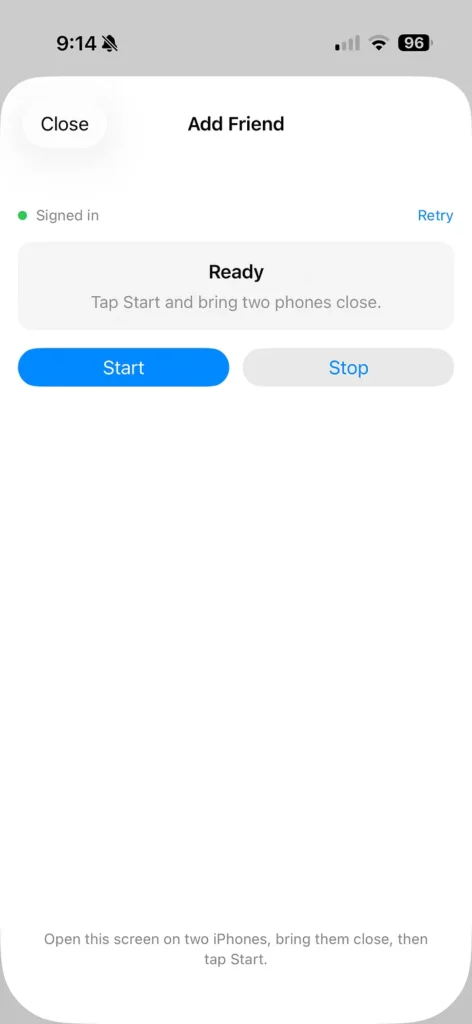
The only way to add a friend is to physically tap your phones together.
No searching for people. No recommendations. No “people you may know.” The app works similarly to Apple’s AirDrop feature where you tap two iPhones together and that is how you transfer photos, etc. If you have not been in the same room as someone, they simply do not exist on your Friendster.
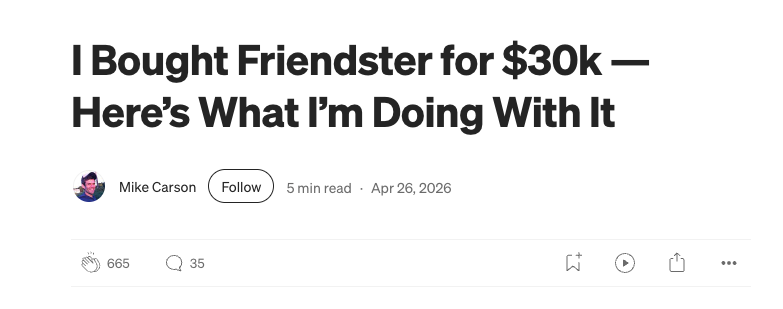
Carson explained his thinking in a Medium post: “The idea that the only way to connect as friends on Friendster is by tapping phones was fun because it would promote people meeting in person. It would also verify that you are connecting to real people, and people that you actually want to connect with.”

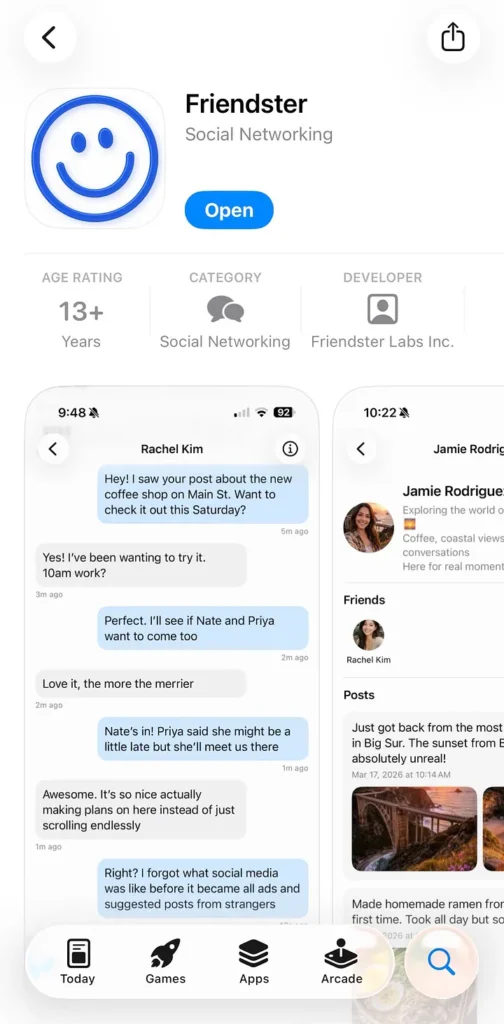
When you first open the app, your feed is completely empty. No posts, no suggestions, nothing to scroll. You have to go out, meet people, and tap phones before the app does anything at all. No ads, no algorithm, no data selling, no spam. It is iOS only for now with no Android version announced yet.
Features coming soon
In his Medium post, the founder outlined two features still in the works. Friends of Friends will let you connect with someone online if you share a mutual friend who has physically met both of you. Fading Connections will nudge you if you have not been physically around one of your Friendster friends in over a year. As Carson put it: “Not a punishment, a gentle nudge that real friendships are kept alive in person, not online.”
But can it actually last?
Getting downloads is easy. Keeping people is harder. You cannot invite someone with a link and your feed only comes alive if the people around you also have the app. Recent revivals like Digg, a once-popular social news site that was relaunched in 2024, showed that a familiar name alone does not guarantee a lasting community. Digg was already cutting its team and rethinking its strategy by early 2026.
But the frustration Friendster is responding to is real. For anyone who remembers what it felt like to use the original, that might be enough reason to give it a try
Friendster is available now as a free iOS app.
Related story: Is Google dying or evolving? Inside the tech giant’s race to stay relevant in the AI era
Related story: Revisiting a millennial obsession: 25 years of deleting pool ladders in The Sims
Related story: Meta is done with fact-checking: What this means for Filipino users