


Discover how Valentine’s Day is celebrated around the world—from Japan’s chocolate traditions to the Philippines’ mass weddings and Brazil’s Dia dos Namorados.
Across continents and cultures, Valentine’s Day is less about a single script and more about shifting scenes—chocolates in Tokyo, mass weddings in Manila, poetic puzzles in Denmark.
Love, it seems, speaks many languages, and every February, the world rewrites its own rhythm. Some countries celebrate February 14 with playful peculiarities and meaningful motions—beyond candlelit dinners and classic carnations.
Here are seven distinctive ways Valentine’s Day is observed across the globe—proof that affection adapts, and romance reinvents:
Brazil: June’s Dia dos Namorados

Brazil doesn’t celebrate Valentine’s in February. Instead, Dia dos Namorados falls on June 12, the eve of Saint Anthony’s Day (the patron saint of marriage). During this day, couples exchange gifts, dine lavishly, and even perform matchmaking rituals for singles. Love, here, waits for winter.
Denmark: Snowdrops and secret senders
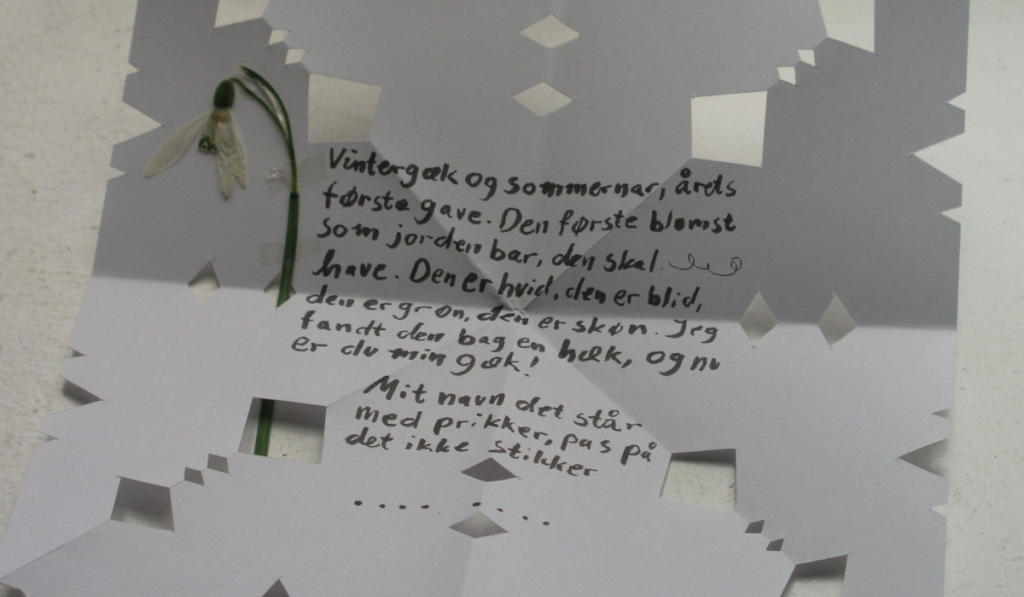
Danes exchange pressed white flowers, called snowdrops, instead of roses. They also send gaekkebrev, or anonymous rhyming letters with playful clues about the sender’s identity. If the recipient guesses correctly, they earn an Easter egg later in the year. Romance meets riddles, and mystery marries mischief.
Italy: Locking love in place
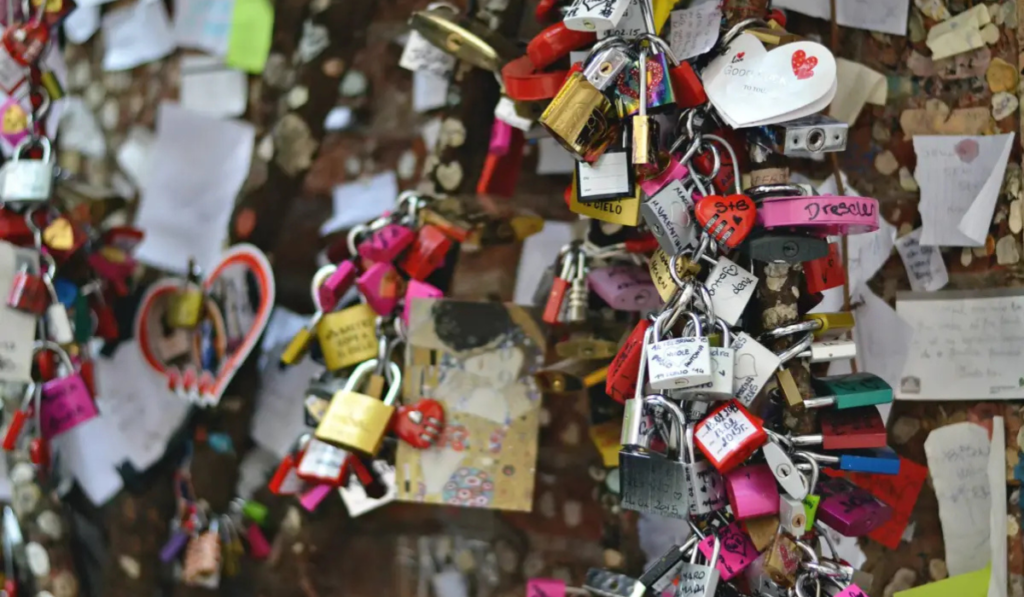
In some parts of Italy, romantic partners attach padlocks to bridges and throw away the key—a symbolic gesture sealing their devotion. Though some cities have removed locks for safety, the sentiment lingers: love as a literal bond, locked and lasting.
Japan: Chocolates, confessions, and a March makeover

In Japan, February 14 flips the formula. Women gift chocolates to men—honmei-choco (true love chocolates) for romantic interests and giri-choco (obligatory chocolates) for colleagues or friends. A month later, on White Day (March 14), men reciprocate with sweets or small gifts. This sweet swap system turns Valentine’s into a two-step celebration—structured, sentimental, and surprisingly strategic. Love is layered here, defined by intention and reciprocation.
South Korea: A three-month love marathon
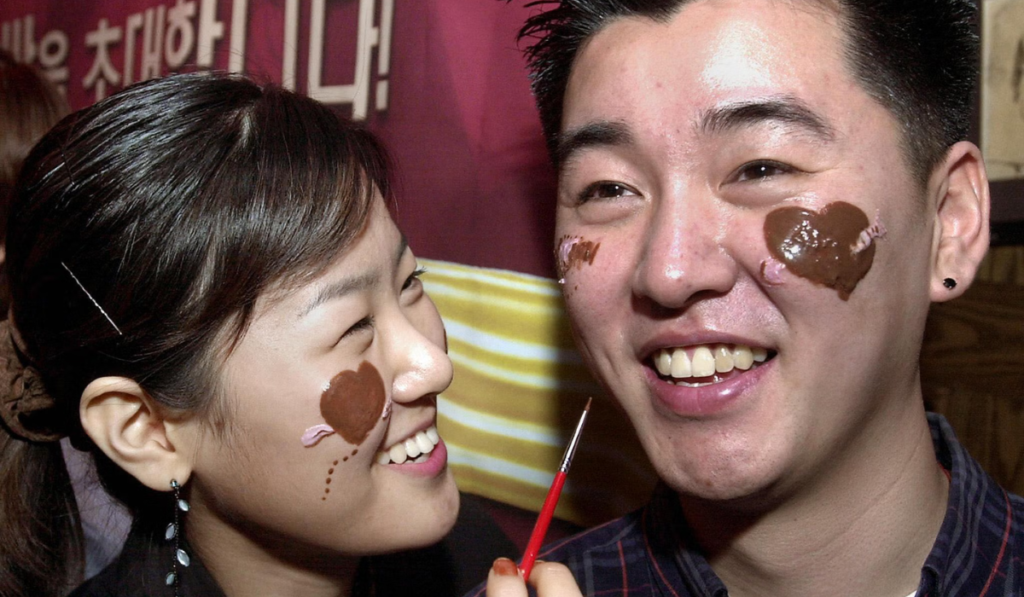
South Korea takes it further. Like Japan, women give chocolates on February 14 and men respond on White Day. But, there’s also Black Day on April 14, where singles gather to eat jajangmyeon (black bean noodles), bonding over being unattached. It’s playful yet poignant—a trilogy of tenderness that honors couples and singles alike.
Wales: Spoons and sentiment
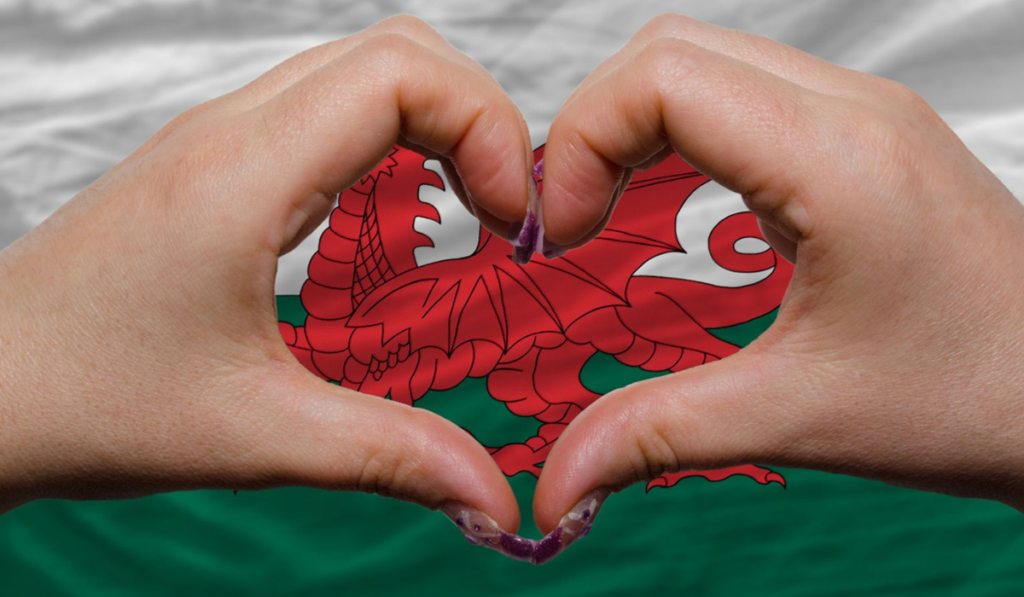

While not strictly on February 14, Wales celebrates love on January 25 (St. Dwynwen’s Day). Traditionally, men carve wooden “love spoons” adorned with symbols—hearts, keys, or anchors—each with coded meaning. It’s craftsmanship courting commitment—an heirloom instead of a headline.
Philippines: Mass weddings and public proposals
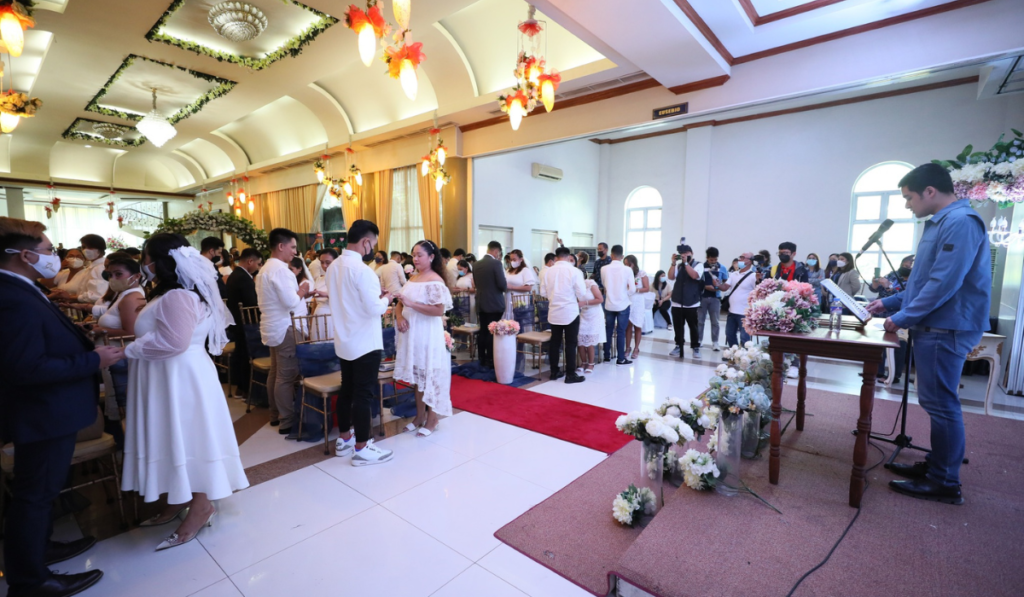
In the Philippines, Valentine’s Day often becomes a stage for scale. Local governments organize mass weddings, allowing dozens—sometimes hundreds—of couples to tie the knot in one shared ceremony. It’s communal commitment in its most cinematic form—proof that love, here, is best celebrated out loud.
From Tokyo’s tiered treats to Manila’s mass matrimony, Valentine’s Day proves that affection is adaptable. Each culture colors Cupid differently—some sweet, some symbolic, some spectacularly public.
Whether you’re gifting chocolates, carving spoons, or cracking codes, one thing stays steady: love evolves, but it endures. And every February—or June—it finds a way to flourish.
Related story: Chinatowns in different countries: Gates, gastronomy, and global grandeur
Related story: Solo dates for singles: What to do on Valentine’s Day