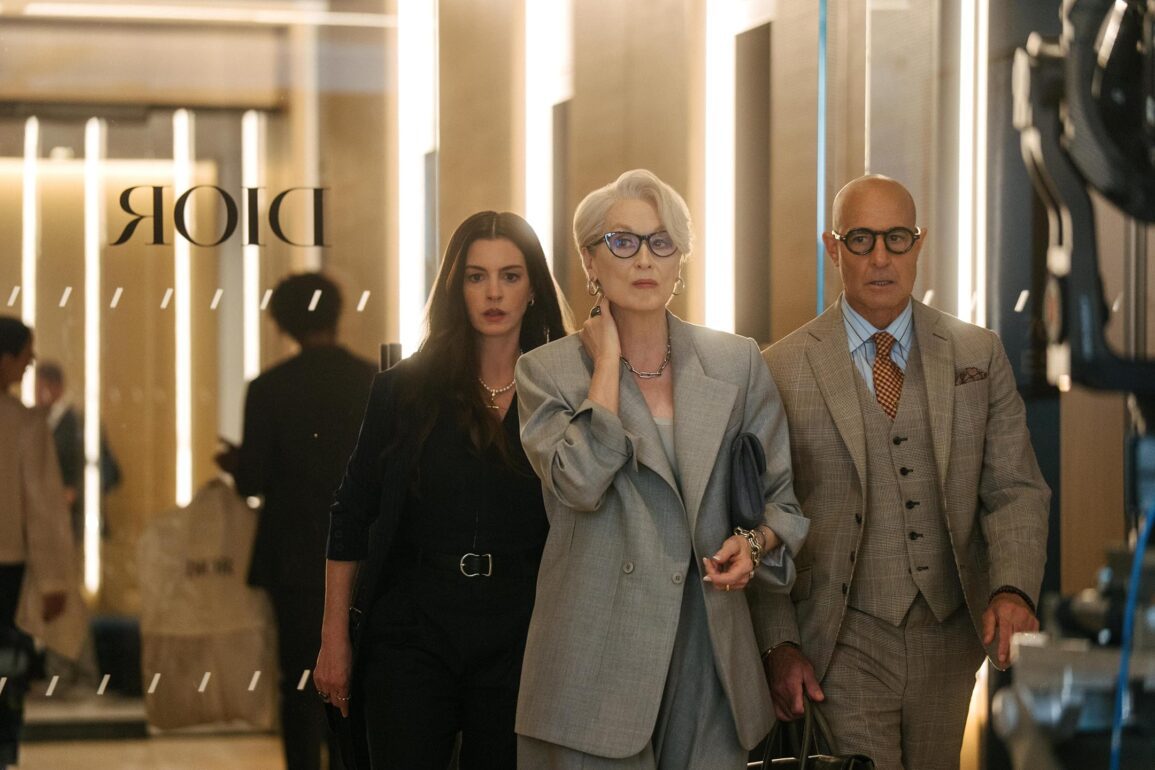

Almost twenty years later, Miranda is back — and so is everything we recognize about the world she runs
Heads up: this review contains spoilers for The Devil Wears Prada 2
I watched the first Devil Wears Prada as a teenager who didn’t really understand what publishing was, only that I wanted to be somewhere inside it. The clothes, the chaos, Miranda Priestly commanding a room without raising her voice. I didn’t understand all of it. I just knew I wanted that world.
Then I actually ended up working in it. News first, TV training, then lifestyle magazines, then digital. And somewhere in the middle of all that, the first film stopped feeling like a fantasy and started feeling like something I already knew.
So going into the sequel felt strange in the best way, not quite nostalgia or dread, but something in between. The feeling you get when you’re about to see a version of your own life on screen.
A quick look back before we get into it
When the original The Devil Wears Prada came out in 2006 — based on Lauren Weisberger‘s novel, widely understood to be drawn from her time as an assistant to Vogue’s Anna Wintour— it became something far bigger than a fashion film. It made $327 million worldwide and embedded itself into the culture in a way that few movies ever manage. The cerulean monologue alone became a kind of shorthand for how an entire industry thinks about itself.
The story follows Andy Sachs, a journalism graduate who lands a job as junior assistant to Miranda Priestly, the terrifying editor-in-chief of Runway magazine. Andy doesn’t care about fashion at first, and then spends the rest of the film figuring out what she’s actually made of. It’s a workplace story, a coming-of-age story, and somewhere underneath all the gorgeous clothes, a story about what it costs to be good at something you didn’t expect to love.
For years, a sequel felt impossible. Both Streep and Hathaway had publicly moved away from the idea. Then in July 2024, development quietly began, with director David Frankel and screenwriter Aline Brosh McKenna both returning, and the entire core cast — Meryl Streep, Anne Hathaway, Emily Blunt, and Stanley Tucci — signing on. Filming took place across New York City and Milan through the second half of 2025, and the film opened on April 28 here and on May 1 worldwide. Almost twenty years after the original.
Where the story picks up
The sequel finds everyone roughly where you’d expect them to be. Andy became the journalist she always wanted to be, spending years chasing stories around the world. Emily Charlton built a life in luxury retail. Nigel never left Miranda’s side. And Miranda is still Miranda — also, she has become something the original film couldn’t have imagined: a meme, an icon in the way that means you’ve also become a little bit of a punchline, someone the internet has decided belongs to them now.
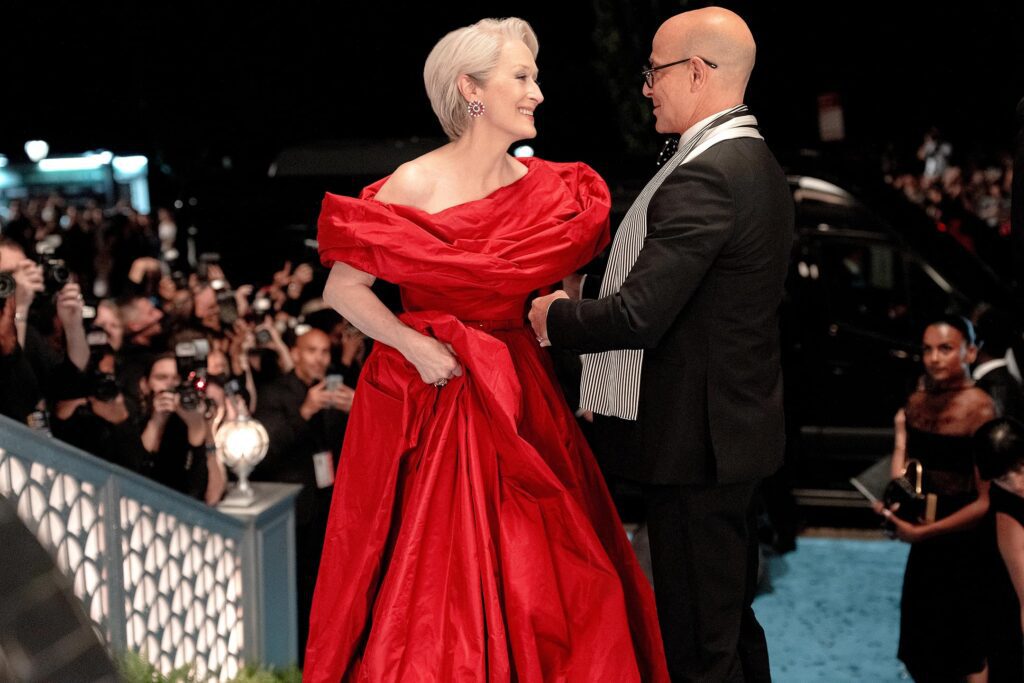
Meanwhile, Runway is in trouble. Print has folded. The magazine that once defined an industry is working hard to stay relevant in a digital landscape that moved fast and didn’t wait for anyone. Irv Ravitz, president of Elias-Clarke, brings Andy back to restore the editorial integrity that Miranda’s infamous candor once cost the brand, and the three of them — Andy, Nigel, Miranda — are forced to figure out how to work together again, and what Runway can still mean in this version of the world.
New faces include Kenneth Branagh as Miranda’s new husband, alongside Lucy Liu, Justin Theroux, and Simone Ashley, with cameos from Donatella Versace and Lady Gaga, who also has an original song in the film with Doechii.
The world it shows you
There’s a moment where Nigel talks about stories getting turned into snackable content, things people scroll past. And then there’s Andy, who has watched the industry acquire and downsize and restructure around her, but still believes that there is a soul in what we do. That it isn’t just glamorous pages and expensive shoots. That it tells stories, real ones, human ones.
Those two moments together are the heart of the film for me. Because the tension between them — between the pressure to keep the business running and the need to mean something — is exactly where publishing has been living for the past decade.
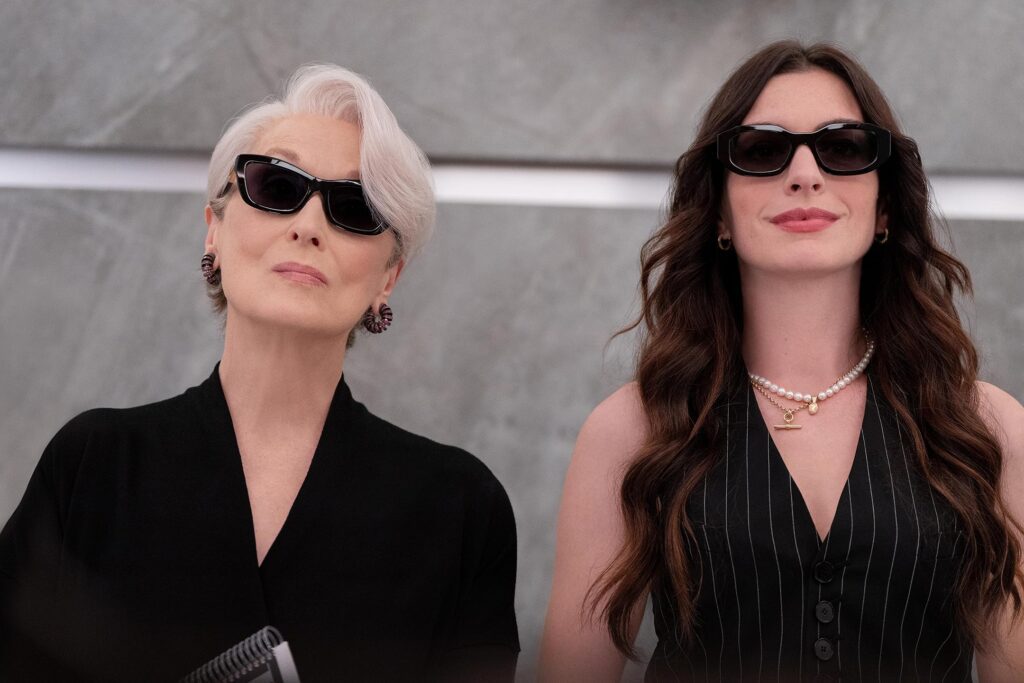
The film shows you how the industry has shifted: brands and editorial working more closely together, the conversation around reach and engagement and metrics sitting right alongside the conversation about story and voice. Issues moving from print runs to digital editions. Budgets tightening. Writers being let go. None of it is presented as villainous; it’s just the reality of keeping something alive when the ground keeps moving.
You hear words like traction and page views where you used to only hear readership and circulation. You see the decisions being made in real time. And if you’ve worked in publishing, you recognize every single room.
Why it got personal for me
I was there when we folded. I was in the room for the transition to digital, then to social media, and now I work on a digital platform. I’ve been laid off. I’ve been called back. I trained in TV news and moved into lifestyle and magazines and watched the expectations shift under my feet more times than I can easily count. I tried tech for a while. I spent time in academe and in corporate. But the writer in me never actually left; I was always still that editorial assistant who dreamed of working in fashion and beauty, and eventually I got to do it, maybe not the way Andy Sachs did, but close enough that watching her story feels like looking at a mirror.
So when the film moves through layoffs and the exhaustion of having to keep reinventing what you make and why you make it, it doesn’t read as commentary from the outside. That’s not something sequels usually manage. Most of them give you more of what you liked the first time. This one gives you something harder and more specific — the feeling of being a person who loves what they do, in an industry that keeps asking you to love it a little differently every few years.
The characters, and what they’ve become
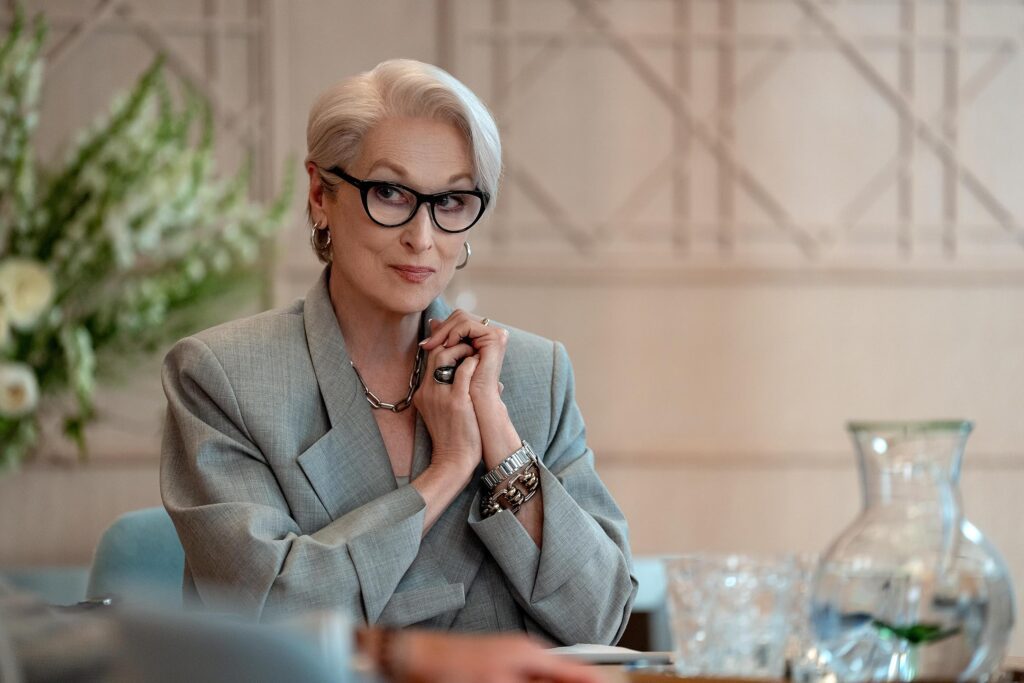
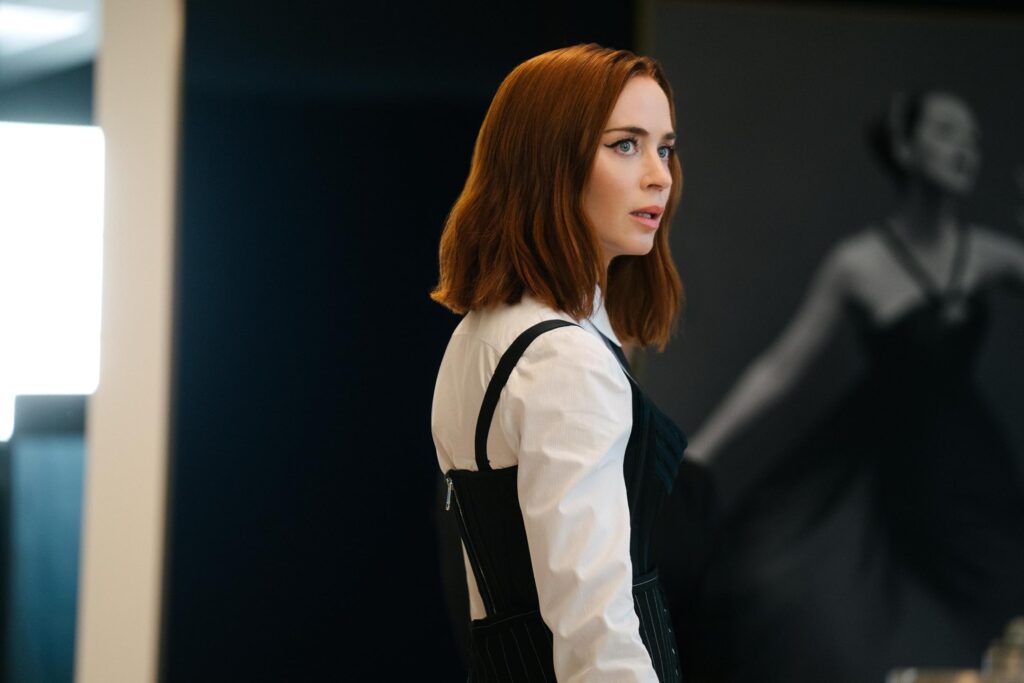
Meryl Streep hasn’t softened Miranda so much as deepened her. There’s something in this version of the character that goes past ice and authority — you begin to understand what it actually costs to be her, and the film is patient enough to let that come through. Anne Hathaway carries Andy with the groundedness of someone who became the writer she was always supposed to be, a little worn at the edges, entirely herself.
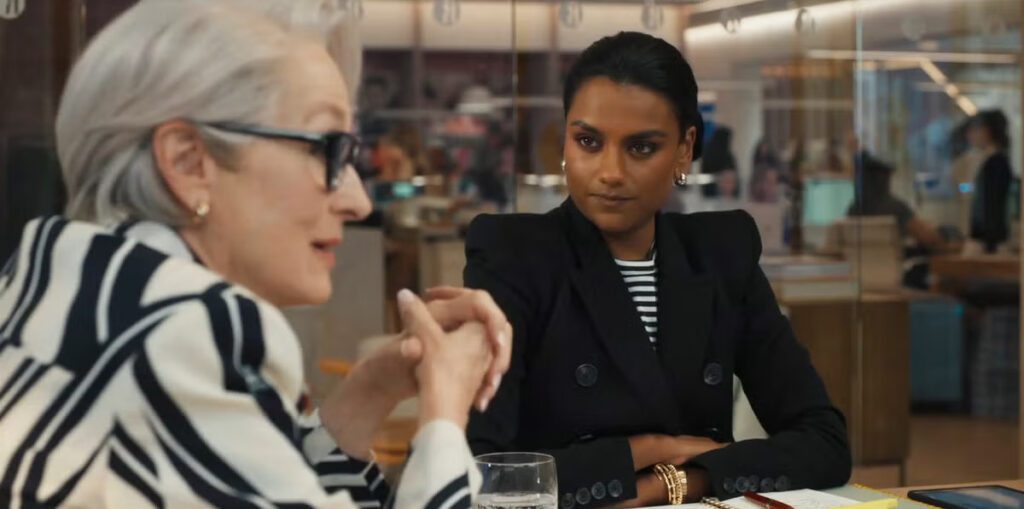
The addition worth paying attention to is Amarie (played by Simone Ashley), Miranda’s new assistant. She’s efficient, capable, good at the job in every visible way, but she has a spine. She knows where she stands and doesn’t let the role swallow her whole the way the old Andy and the old Emily did. The film doesn’t frame that as attitude or rebellion, just as how the next generation relates to work now. What they’ll give, what they won’t, what they expect in return. Seeing that dynamic play out inside Runway makes the whole environment feel genuinely of this moment.

What I took home from it
I didn’t go into this film expecting it to mean something to me personally. I expected good performances and a few sharp moments, and maybe a little nostalgia. I got all of that, but I also walked out with something I wasn’t prepared for — a reminder of why I stayed in this work in the first place.
Because the truth is, this industry is not easy to love consistently. It changes on you. The platforms shift, the metrics change, the word “content” has almost completely replaced the word “story” in most rooms I’ve been in. There are stretches where you genuinely wonder if what you’re making still carries the value you thought it had when you started.
Related story: ‘The Devil Wears Prada 2’: What Andy Sachs is wearing in 2025
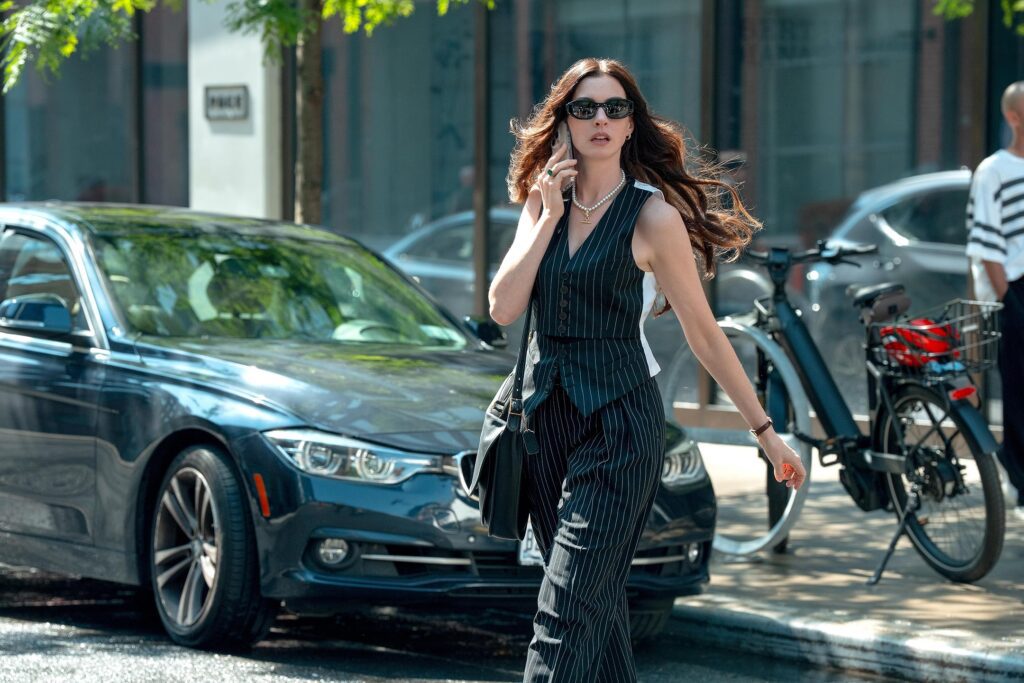
But Andy is right. There is a soul in what we do. In an age where everyone is consuming more and feeling less fed by it, the people who can tell real human stories — who know why a detail matters and how a sentence should breathe — are still necessary. Maybe more so now than ever.
Miranda is always going to be Miranda. Runway is still Runway, even now. And if you’ve spent any years at all working in publishing, in any form, at any level, you’ll find something of yourself somewhere in this film — in Andy’s refusal to let the work become less than it should be, in the exhaustion of keeping up, or maybe just in the simple fact that after everything, you’re still here, still doing it, still believing it matters.
That recognition, for me, was more than worth the price of admission.
Related story: When Miranda meets Anna: The elevator scene that blurred fiction and fashion power
Related story: Gird your loins: ‘The Devil Wears Prada 2’ press tour is already serving looks