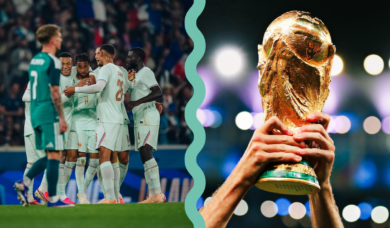

From fan fashion to stadium traditions, here’s what to know about football’s biggest tournament.
Football’s biggest celebration officially kicks off on June 11, but the 2026 FIFA World Cup has already begun long before the opening whistle. Airports across North America are filling with supporters draped in national colors, social media is buzzing with predictions and debates, and host cities are preparing for an unprecedented influx of fans. This year’s tournament is historic not only because it expands to 48 teams for the first time, but because it will be shared by three host nations—the United States, Canada, and Mexico—turning the World Cup into a continent-wide celebration of football and culture.
Fans will also notice a handful of new rule changes making their FIFA World Cup debut. Among the most significant is a stricter approach to goalkeepers holding onto the ball for too long. Instead of awarding an indirect free kick after six seconds—a rule that has rarely been enforced—referees will now give the opposing team a corner kick if a goalkeeper keeps possession for more than eight seconds. Officials will visibly count down the final five seconds to improve consistency. FIFA has also introduced additional adjustments involving assistant referees, dropped-ball procedures, and officiating protocols, all aimed at improving the flow of play and reducing time-wasting during matches.
For many supporters, the tournament starts the moment they pack their bags. Jerseys remain the centerpiece of every football wardrobe, but they’re far from the only statement piece. Vintage shirts from iconic World Cups, retro track jackets, scarves worn regardless of the weather, bucket hats, crossbody bags, and classic trainers have become staples of modern football fashion. Traveling fans are also dressing for three distinct experiences: Mexico’s colorful plazas, Canada’s cooler evenings, and the summer heat expected across several American host cities. Much like music festivals or Fashion Week, the World Cup has evolved into a global gathering where personal style and national pride often go hand in hand.
Every football nation has its own soundtrack, too. Before fans even spot a jersey, they often hear it. France’s supporters are among the sport’s loudest, regularly filling stadiums with chants like “Allez Les Bleus” and the bouncing chorus of “Qui ne saute pas n’est pas Français” (“Whoever isn’t jumping isn’t French”). Their synchronized singing has become one of international football’s most recognizable traditions, creating an atmosphere many neutral spectators consider unmatched.
Across the Atlantic, however, the United States has developed a very different reputation. The American rally cry “I Believe That We Will Win!” has become synonymous with U.S. soccer over the past decade. While beloved by American fans for its simplicity and energy, it has also become one of football’s most polarizing chants, frequently mocked online and by overseas supporters who compare it with Europe’s longer, song-like stadium traditions. Whether praised or ridiculed, both chants reflect one truth: football supporters carry their culture into every match.
The spectacle extends far beyond the stadium gates. Cities across the United States, Canada, and Mexico are expecting fan festivals, live screenings, concerts, food markets, and cultural showcases that celebrate both local identity and international visitors. FIFA has also stretched to a record of 1,248 players and 104 matches, making this the largest World Cup in history. For travelers with visas, it means following football across borders has never been easier—or more tempting.
Among the teams generating the most excitement is Norway, a nation returning to the men’s FIFA World Cup for the first time since 1998. Their qualification has become one of the feel-good stories heading into the tournament, fueled not only by elite talent but also by extraordinary public support back home.
Thousands of Norwegian fans lined the streets before the team’s departure, creating what many described as a Viking-style send-off. Motorcades, waving flags, and packed city squares transformed the farewell into a national celebration, illustrating how deeply football can unite a country that has waited nearly three decades for another appearance on the world’s biggest stage.
Much of Norway’s optimism centers on a new golden generation led by captain Martin Ødegaard and prolific striker Erling Haaland. After years of narrowly missing qualification, the squad enters the tournament carrying expectations rather than simply gratitude for participating. Many analysts believe Norway has the potential to become one of the competition’s surprise packages, with its blend of Premier League stars and emerging young talent.
Meanwhile, football followers are already debating which players could define this World Cup. Established stars remain obvious attractions, but every tournament also produces unexpected heroes whose names become part of football history overnight.

Not every pre-tournament story has been celebratory, though. Iran arrives in North America carrying significant uncertainty beyond football itself. Reports surrounding visa issues and travel restrictions have complicated preparations for some supporters hoping to follow their national team abroad. The developments have reignited discussions about politics, international travel, and how global sporting events increasingly intersect with diplomacy.
Despite those challenges, Iran remains one of Asia’s strongest football nations and enters the competition determined to ensure conversations eventually return to performances on the pitch rather than events surrounding it.
In Istanbul, Turkey hundreds of cars and motorcycles formed a massive convoy that escorted the team bus from its training base in Riva to Istanbul Airport. Roads were lined with supporters waving Turkish flags, honking horns, and cheering the players on their journey. V
What makes the FIFA World Cup unique has never been limited to goals or trophies. It is one of the few events where cultures collide as naturally as competition itself. A scarf purchased in Oslo might end up beside one from Buenos Aires on a crowded subway in New York. A Mexican mariachi performance can be followed by French supporters bouncing through the streets singing in unison, while American fans answer with chants of their own. Every host city becomes a temporary meeting point for languages, traditions, cuisines, and football philosophies from around the globe.
This year, that cultural exchange will unfold on an even larger scale. Host countries in trio, sixteen host cities, forty-eight nations, and millions of supporters promise a tournament that feels not only a single sporting event but also a month-long international festival. Sure, the matches will ultimately determine who lifts the trophy, but before the first goal is scored, another competition has already begun—the race to create the loudest chant, wear the most iconic jersey, and leave behind the memories that remind the world why the FIFA World Cup remains sport’s most awaited gathering.
Related story: Denmark’s men’s soccer team refuses raise till women get equal pay. A closer look at the gender gap in sports
Related story: A FIBA World Cup of many firsts
Related story: Alex Eala wins Birmingham Open, earns over ₱2 million ahead of Wimbledon
Related story: The thrill and agony of watching EJ Obiena chase his Olympic dream