
European Organic Day Philippines 2026 wants to make certified food more accessible. But farmers need stronger support, and shoppers need prices that fit their budgets.
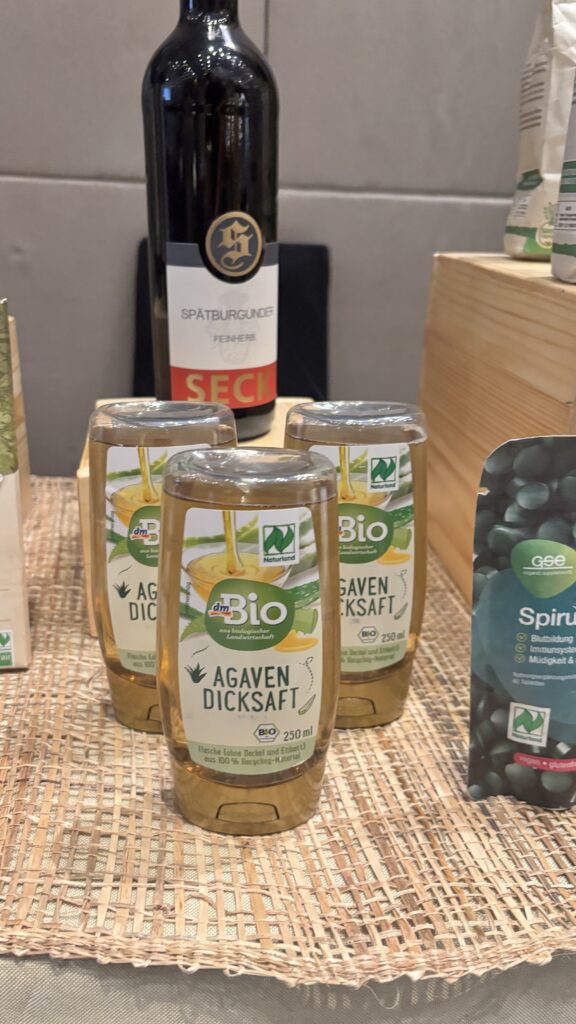
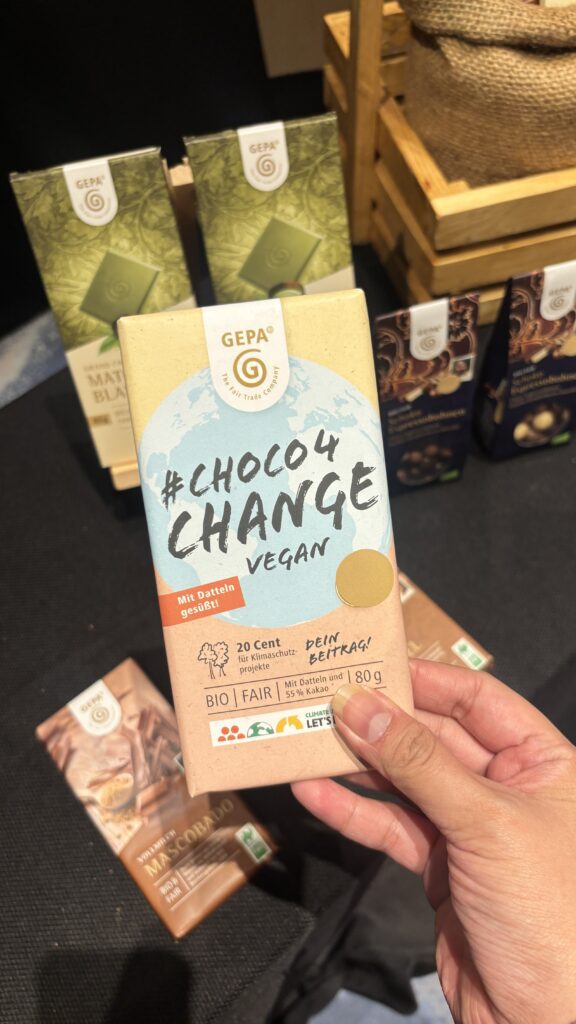
Organic food has clear benefits. It can support responsible farming, give consumers better information, and help build a food system that takes care of farmers and the environment.
But at the grocery store, the price can make it difficult to choose.
For many Filipino families, food decisions begin with what the weekly budget can cover. A product may have a trusted label and a good story behind it, but it can still stay on the shelf if it costs much more than the regular option. This raises a concern behind the push to bring organic food into the mainstream: If only a small group of shoppers can afford it, how mainstream can it really become?
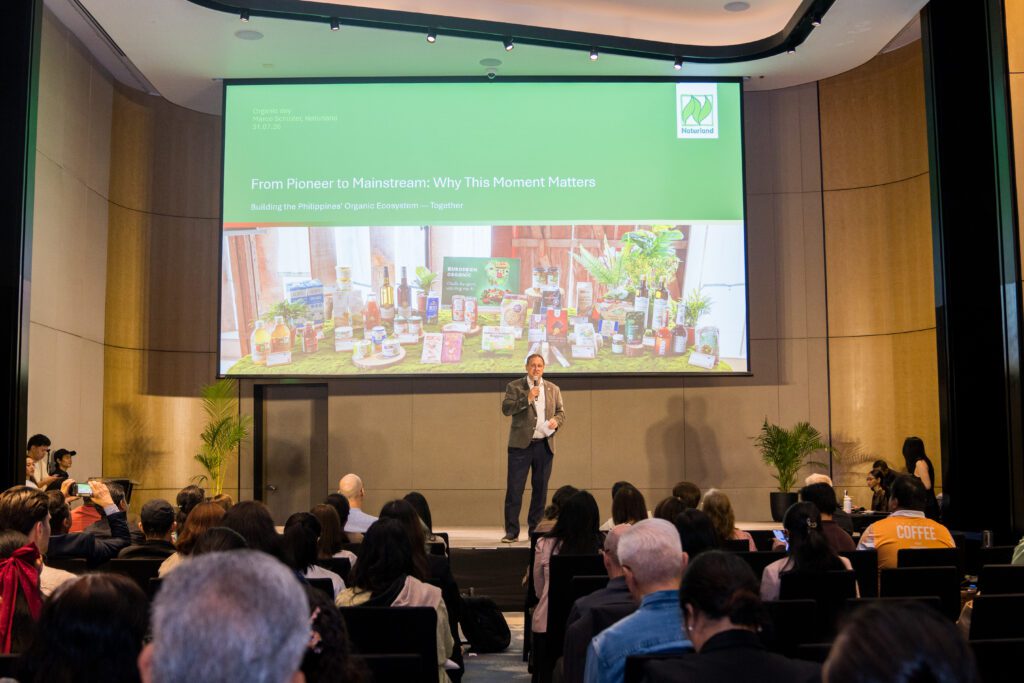
Bringing organic food into the mainstream
European Organic Day Philippines 2026 gathered more than 180 representatives from farmers’ groups, government, civil society, and the food industry at Conrad Manila on August 5. The event is part of “European Organic: Nurturing Every Juan,” a three-year campaign by Naturland and the European Union promoting certified organic agriculture. The German nonprofit has worked with Philippine farmers and food businesses since the 1990s.
“The world is going organic, and the Philippines is well placed to shape it,” said Marco Schlüter, Naturland’s managing director for International Affairs. He said organic farming could reduce dependence on costly imported farm inputs, strengthen food security, and help farming communities prosper.
Under the theme “From Pioneer to Mainstream,” the event explored how certification, partnerships, and consumer awareness could make organic products more accessible. But farmers also need enough support to produce them, while shoppers need prices they can afford.
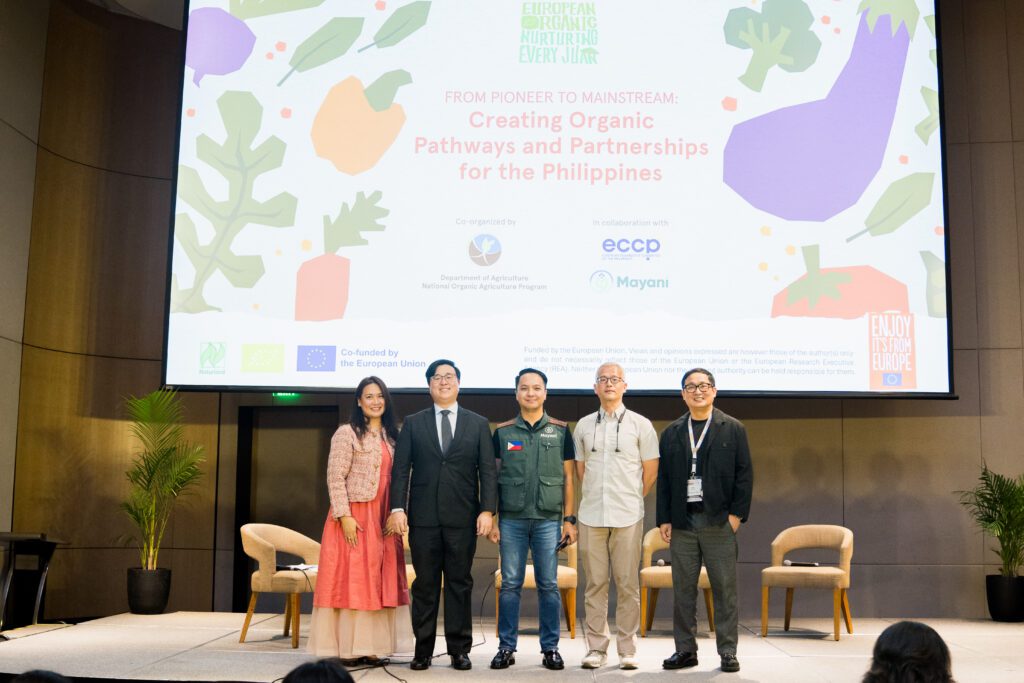
Julius Barcelona, co-chairperson for the Agriculture Committee, European Chamber of Commerce (ECCP); JT Solis, co-founder and chief executive officer, Mayani; Wejie Wang, founder, Hangzhou Joyish
Foodtech Co Ltd; Joel Pascual, president, PEPTarsus Corp
Farmers need more than certification
During the final panel, “Greening the Food Supply Chain: Turning Commitment into Scale,” speakers discussed what keeps organic agriculture from growing.
Farmers need training, suitable inputs, storage, transport, certification, and reliable buyers. Missing any of these can raise prices or leave farmers earning too little. Wejie Wang of Hangzhou Joyish Foodtech called farming techniques one of the biggest barriers. Producing organic food for a larger market requires skills, equipment, and support.
JT Solis, co-founder and CEO of Mayani, said even a promising idea can fail when producers do not trust or adopt it. “Sometimes the most innovative concepts still fail, not because they’re not innovative enough, but because they don’t get adopted,” Solis explained.
Farmers need to see that a method works before risking a harvest and their income. They also need to know someone will buy what they grow. Julius Barcelona of the European Chamber of Commerce of the Philippines also raised the difficulty of certification. Clear standards protect consumers, but complicated requirements can make it harder for small farmers to enter the market.
The tomato problem shows what needs to change
The panel did not discuss labels alone. It also looked at the system that moves food from farms to buyers. That matters because organic products depend on the same roads, storage facilities, processors, and markets as other local produce. One project discussed during the panel shows how fixing those connections can help.
Joel Pascual of PEPTarsus Corp. spoke about connecting farmers directly with restaurants, hotels, and food companies through Farm Forward Initiatives.
“We hate the term ‘rescue buy,’” Pascual said. “Because by the time you’re rescuing the farmer, lugi na ’yan.”
A recent FEATR documentary hosted by Erwan Heussaff follows the same project. It shows tomato farmers dealing with low prices, difficult transport, and harvests that sometimes go unsold. The documentary also features Tosen Foods, which works with farmer groups to turn local tomatoes into canned products. The company discusses orders, prices, and delivery schedules with farmers before the produce arrives. This gives farmers a buyer and helps restaurants rely less on imported canned tomatoes.
Chef Rhea SyCip of Flour Pot Bistro and Bakery appears in the documentary to explain why restaurants often use canned tomatoes. They are easier to store and use consistently. I saw another side of the problem when I visited Flour Pot in BGC. The restaurant served local cherry tomatoes because growers had an oversupply. They were sweet, crunchy, and perfectly good. The problem was not the product. Farmers simply needed more buyers.
These tomatoes were not presented as organic, but their story shows why certification alone is not enough. Organic farmers face the same problems with transport, processing, and steady demand, along with the added requirements of organic production. The panel also pointed to ube, coconut, coffee, and sugar as possible opportunities for Filipino farmers. But growing demand will help them only if they have training, reliable buyers, and a clear way to bring their products to market.

Related story: At Flour Pot in BGC, comfort food comes with plenty of local flavor
Related story: Erwan Heussaff unpacks the soul of Hong Kong’s food scene
Affordable should not mean paying farmers less
Making organic food more affordable should not mean forcing farmers to accept lower prices. It should mean reducing waste and fixing the system around them. Farmers need buyers before planting, not rescue purchases after harvest. They need training, storage, processing facilities, better transport, and practical ways to receive certification.
Restaurants, retailers, and food companies can help by building long-term relationships with local producers. Government and development partners can help farmers improve production without making them carry all the cost and risk. Consumers do not need to make their entire grocery basket organic, either. They can start with products that fit their needs and budgets.
European Organic Day Philippines 2026 wants organic food to move into the mainstream. For that to happen, farmers must earn enough to keep growing it, while Filipino families must be able to afford it.
The tomato project shows that solutions are possible. Flour Pot shows that restaurants can give local ingredients a place on the table. Interest in crops such as ube shows that people already want what Filipino farmers can produce.
The demand is there. Now the system has to catch up.
Related story: This restaurant proves organic doesn’t mean boring
Related story: Ube is having a moment, and the world is catching on