

Gal Gadot races against time across London in Prime Video’s The Runner, a breathless thriller whose relentless speed can’t quite summon suspense.
There’s running, and then there’s actually getting somewhere. The Runner, Prime Video’s new Gal Gadot thriller, spends 84 minutes doing plenty of the former and frustratingly little of the latter.
Director Kevin Macdonald drops Gadot into the role of Maia Marten, a high-powered London lawyer and single mother whose routine morning run is interrupted by a call from an unknown man. Her son, Noah, has been taken. If she wants him back alive, she must keep moving, follow instructions, and tell no one. What begins as exercise quickly mutates into a five-mile ordeal across London, with Maia given an hour to reach her destination while her caller demonstrates just how much control he has over her life.
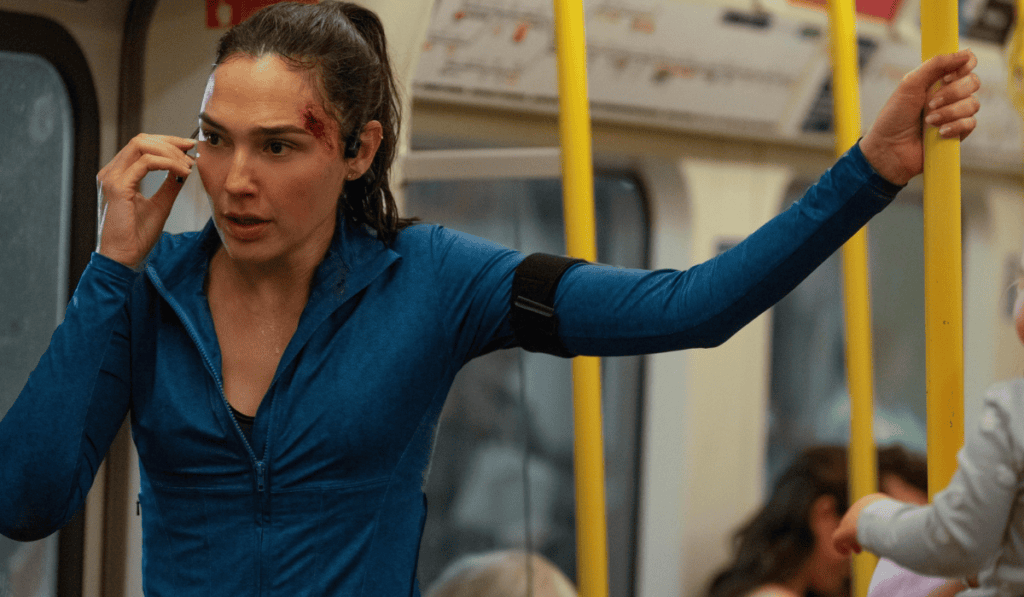
It’s an economical premise, almost ruthlessly so. One woman. One phone. One city. One hour. Strip a thriller down this far, and every decision should tighten the knot. Instead, The Runner keeps tugging at it until the tension starts coming loose.
Related story: REVIEW: Christopher Nolan’s ‘The Odyssey’ is dark, gripping, but surprisingly tender
Related story: REVIEW: ‘Obsession’ shows love can be more terrifying than monsters
Plenty of motion, precious little momentum
Macdonald certainly makes the movie move. London blurs behind Maia as she cuts through streets, crowds and stations; the camera pursues her with the same urgency as the voice on her phone. Gadot commits just as completely to the physical demand. By the time Maia is gasping for air, there’s little need to manufacture her exhaustion. Only, exhaustion isn’t suspense.
A ticking clock works when the audience becomes conscious of every second disappearing. Here, the countdown often feels like another accessory to the action. Macdonald throws restless camerawork, aggressive cuts and an insistent score at Maia’s predicament, but all that audiovisual agitation has the curious effect of making the film feel busier instead of more dangerous. The Guardian similarly took issue with the movie’s cheap-looking action and frantic visual flourishes, suggesting that Macdonald’s determination to keep stimulating the viewer ultimately weakens the immersion he needs.

The critical response has been punishing. As of September 16, The Runner sits at 10% on Rotten Tomatoes from 52 critic reviews, while its audience Popcornmeter stands at 30% from more than 500 ratings. The site’s critical consensus points toward the same contradiction sitting at the center of the movie: plenty of frantic activity, but very little dramatic payoff.
A very modern nightmare with very convenient technology
There’s a sharper movie buried somewhere inside The Runner, particularly in its ideas about technology. Maia isn’t being hunted in the conventional sense. She’s being controlled remotely, trapped inside an ecosystem of smartphones, surveillance, artificial intelligence, and connected devices that can turn ordinary conveniences into points of vulnerability.
The frightening proposition isn’t simply that someone is watching Maia; it’s that her life has become sufficiently networked for another person to manipulate it from afar. Her phone becomes a leash. Information becomes ammunition. Even technology designed to protect can suddenly be weaponized against her.

The trouble begins when technology stops functioning as a source of fear and starts functioning as a screenwriter’s shortcut. The caller’s reach expands whenever the story needs another complication, and the boundaries of what he can see, access or manipulate become elastic. Suspense depends partly on understanding the rules of danger. If the antagonist can conveniently acquire another capability whenever Maia approaches an escape route, ingenuity starts looking suspiciously like convenience.
The Runner also belongs to a well-established strain of thrillers in which an unseen voice dictates the protagonist’s next move. Critics have pointed to films including Nick of Time, Red Eye, Eagle Eye, Carry-On, and Drop as obvious relatives. Familiarity isn’t fatal to genre filmmaking; sometimes, knowing the rules makes watching someone cleverly break them even more satisfying. The Runner simply doesn’t find enough new ways to complicate them.
Gadot runs hard; the character remains harder to reach
The Runner leaves Gadot carrying an unusually exposed performance. Maia spends large portions of the movie essentially alone, with a disembodied voice as her scene partner and London itself providing the obstacle course. There’s nowhere for the performance to hide.
On the physical front, Gadot is persuasive. She looks depleted when Maia should be depleted, and her action-star credibility makes the film’s athletic demands easy enough to accept. The harder assignment is convincing us that something equally strenuous is happening beneath the surface.
Maia should be processing several horrors simultaneously: terror for her child, suspicion toward her captor, responsibility for strangers pulled into the game, and the growing realization that following instructions offers no guarantee of safety. Those emotional calculations should continually rewrite the way she runs, reacts, and reasons. Too often, they don’t.
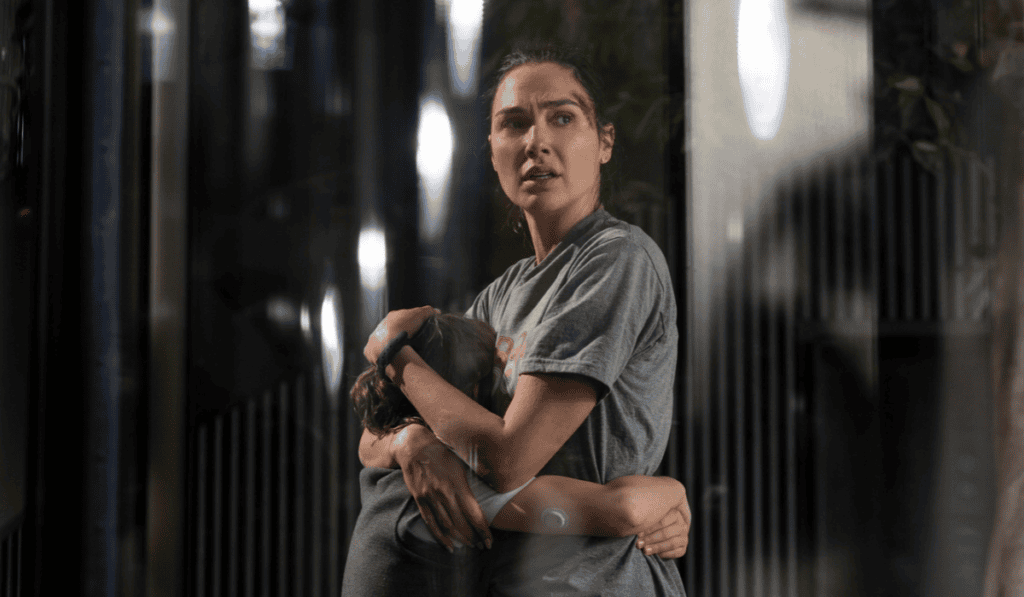
Macdonald keeps the camera physically close to Gadot, but proximity isn’t intimacy. We see Maia frightened. We see her furious. We see her exhausted. What’s missing is the accumulation between those states—the psychological wear that should make each successive demand harder than the last. The screenplay moves Maia efficiently from crisis to crisis while leaving surprisingly little room for those crises to meaningfully change her.
There are dissenting voices among the overwhelmingly negative reviews. The Hollywood Reporter, for example, landed on the positive side of Rotten Tomatoes, finding enough propulsion in Macdonald’s direction to keep the film’s implausibilities from becoming fatal while it’s in motion. Perhaps that’s the most generous way to approach The Runner: keep pace, don’t inspect the machinery too closely, and let 84 minutes disappear.

Thrillers this stripped-down live or die on precision, too. Every obstacle has to sharpen the danger. Every revelation has to rearrange what came before. Every mile should make the finish line feel both more necessary and more impossible.
The Runner has the clock, the chase, and a star willing to sweat for both. What it can’t quite locate is the pulse beneath all that propulsion.
Gal Gadot keeps running. The movie never quite catches up.