
The 64-year-old artist turns his attention to the craft of timekeeping with Takashi Murakami Time Objects.
For over three decades, Takashi Murakami has infused the world with joyful energy. One look at his multicolored, smiling flowers or his anime- and manga-inspired Superflat art is enough to brighten anyone’s mood.
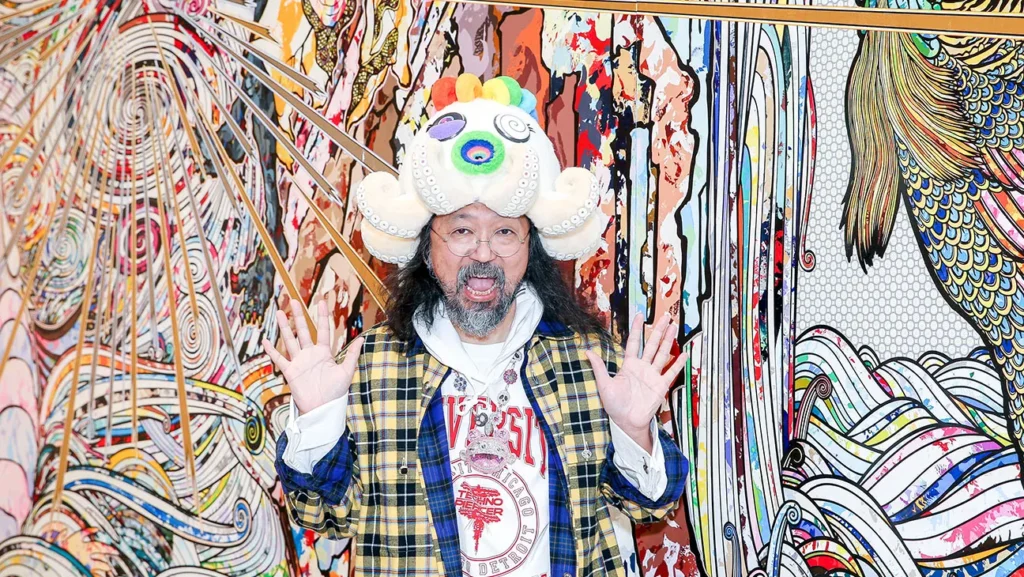
Today, Murakami’s works are among the most recognizable in contemporary art, blooming across museums, galleries, and luxury goods—most notably his iconic collaborations with Louis Vuitton.
Now, the 64-year-old artist turns his attention to the craft of timekeeping—long a medium for some of the world’s greatest creators—with his independent brand, Takashi Murakami Time Objects.
Related story: Louis Vuitton and Takashi Murakami are back with a quirky collaboration on the Capucines
Related story: Must-have pieces from Louis Vuitton and Takashi Murakami’s playful 2025 collection
A career marked by collabs
Born in Tokyo in 1962, Murakami trained in the traditional Japanese painting style of Nihonga before turning to the loud, glossy, and vibrant world of pop culture. This transition saw him become the face of Superflat, a movement he founded that blends Japan’s flat art traditions with pop culture, manga, anime, and otaku subculture.
Murakami’s fame rests on a cheerful cast of characters: his smiling kawaii flowers that bloom across canvases, sculptures and tote bags; the shape-shifting Mr. DOB; and the dazzling, near-hypnotic landscapes of his larger works.
Behind the candy colors, however, sits a quieter seriousness, with recurring themes of mortality, anxiety, and Japan’s postwar identity.
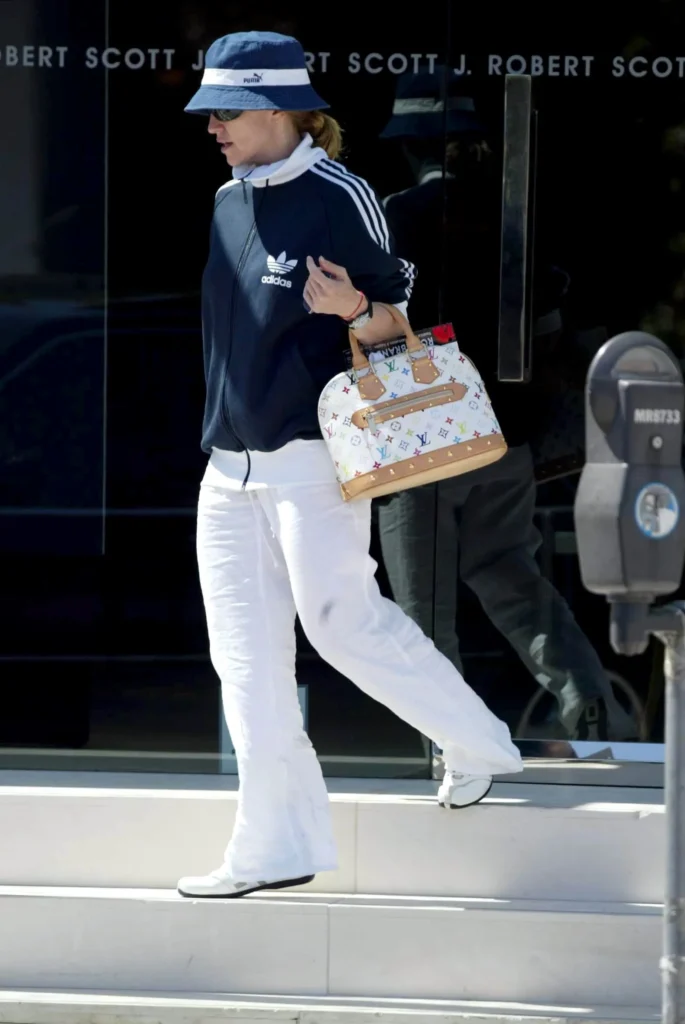
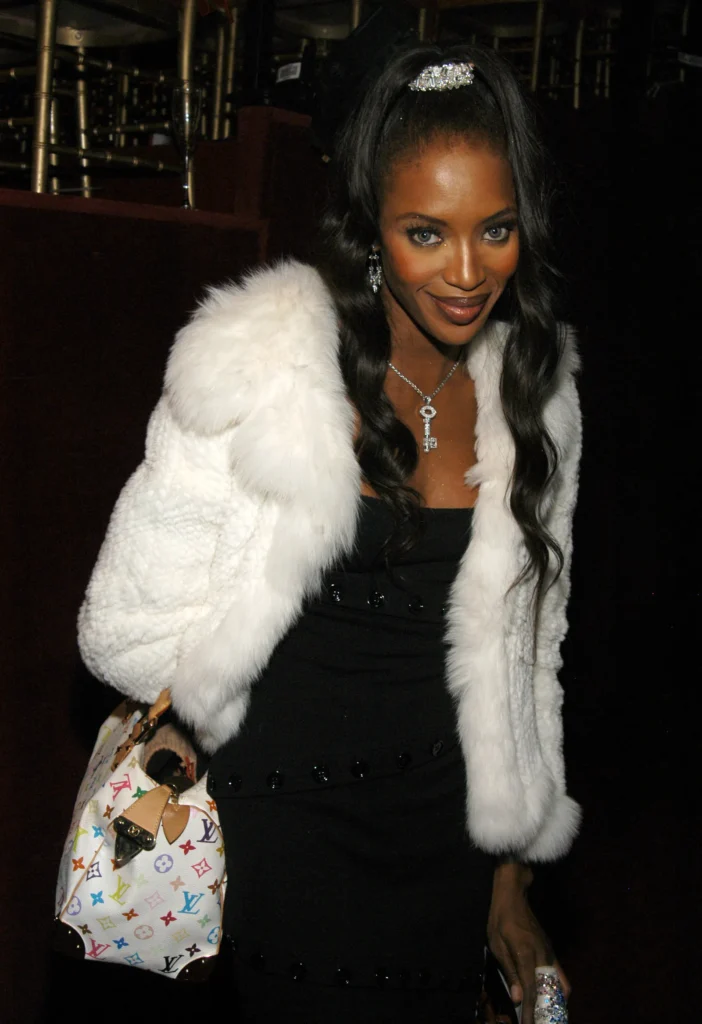
Murakami’s collaborations have arguably done as much for his name as his gallery shows. The Louis Vuitton x Murakami Speedy bag, for example, stands out as a (or the, as many fashion observers put it) defining accessory of the early 2000s.
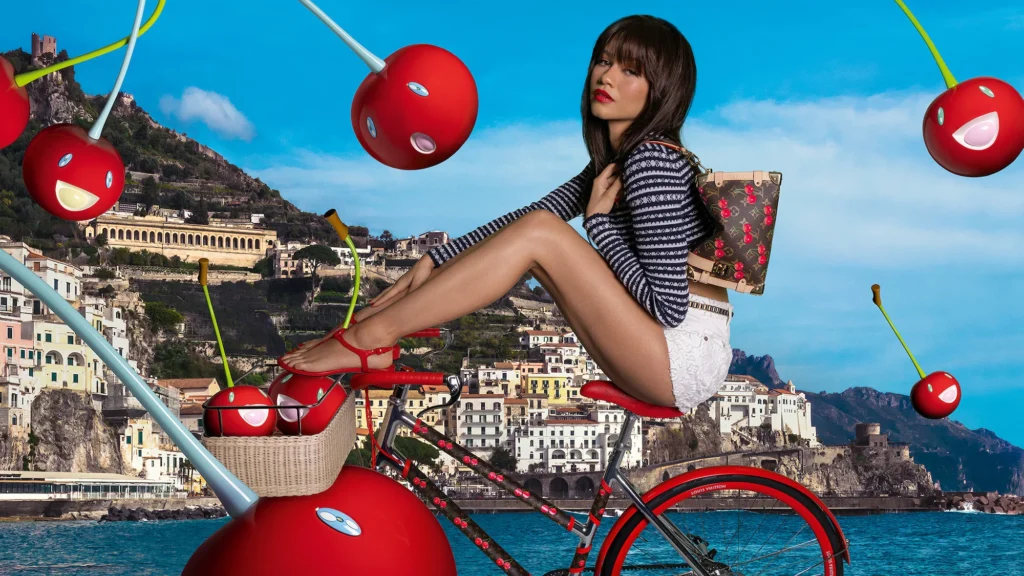
Reinterpreting the house’s signature monogram canvas, Murakami created a cultural phenomenon that reigned as the most sought-after “it-bags” of 2003, beloved by celebrities such as Madonna, Paris Hilton, Naomi Campbell, Lindsay Lohan, and Jessica Simpson. The pairing made a successful comeback in 2025, with Zendaya as the face of the collab.
Murakami also designed the cover of Kanye West’s “Graduation” album in 2007 and has worked with musicians and streetwear labels.
Related story: Takashi Murakami brings back playful elegance to Louis Vuitton with 2025 collab
Related story: Fashion collaborations that made 2025 fun, fierce, and full of flair
A love affair with Swiss watchmaking
Timekeeping is no unfamiliar territory for Murakami. His foray into horology started in February 2021 with Hublot.
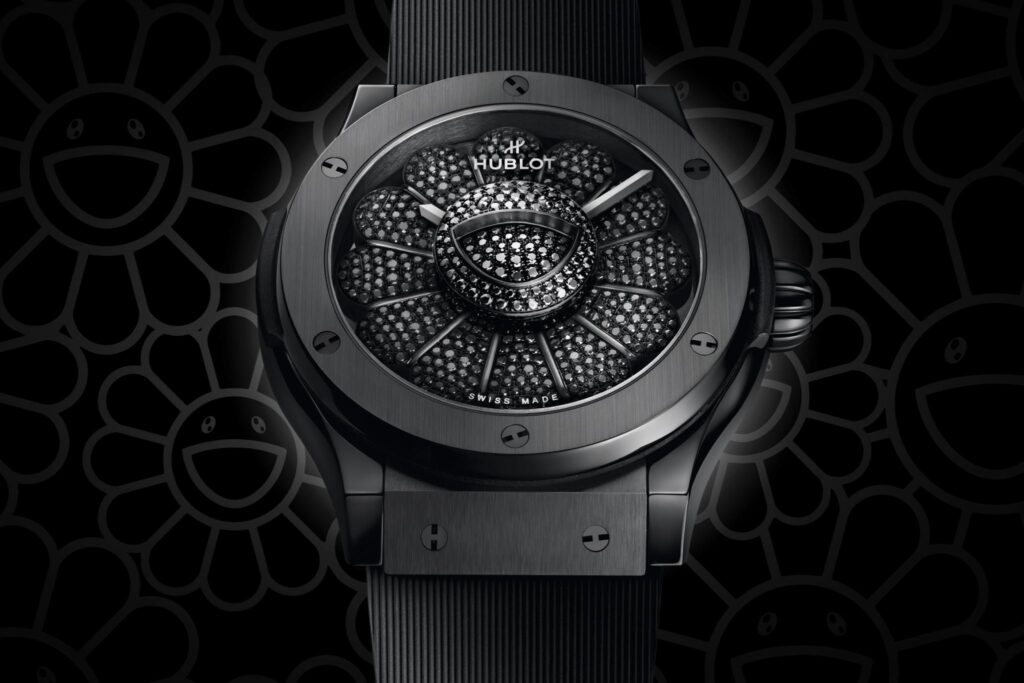
A New York Times article said the first watch in the collaboration was conceived a year earlier, when Murakami visited Hublot’s headquarters in Nyon, Switzerland, just before Europe began closing its borders due to the pandemic. He said that during the visit, he began “understanding that it was possible to make something original.”
Murakami said he would collaborate only if he could be fully involved, and the Swiss luxury watchmaker obliged. The collab’s first watch, the Classic Fusion Takashi Murakami All Black, sent collectors into a frenzy. A Sapphire Rainbow edition followed in 2022, then a ceramic series paired with NFTs.
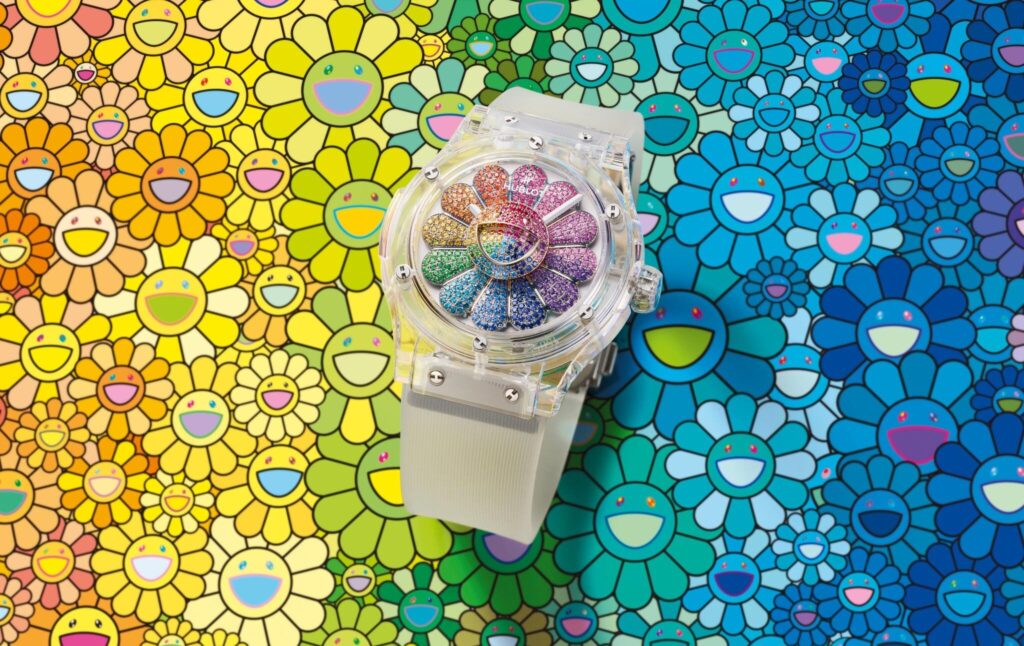
His fourth release with Hublot was also his most ambitious: the MP-15 tourbillon. Limited to 50 pieces and priced at US$316,000 at launch, it rendered Murakami’s happy flower in clear sapphire.
Enter Takashi Murakami Time Objects
After his three-year love affair with Swiss watchmaking, it seemed inevitable for Murakami to launch his own brand, Takashi Murakami Time Objects. It debuted at the Iamwatch independent watch fair in Singapore, held from November 12 to 15.
According to an article in the Singapore daily The Straits Times, Murakami reportedly felt the Hublot designs did not fully express his artistic voice, saying, “I still couldn’t call the watch my own.”
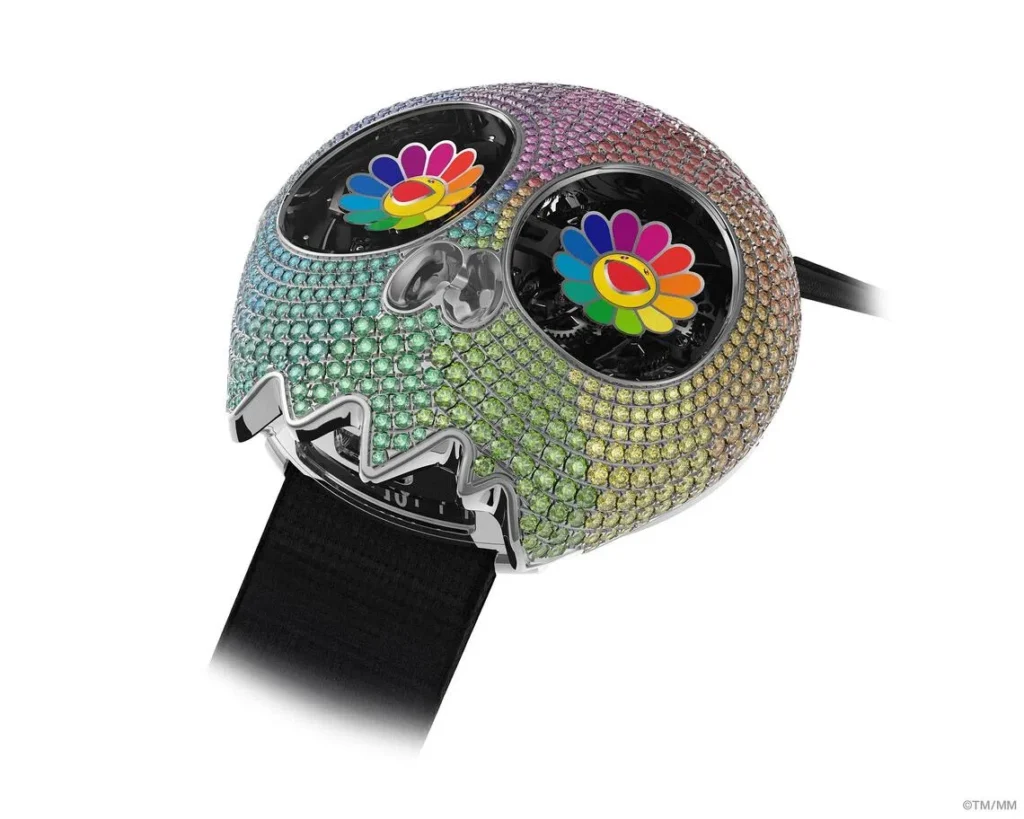
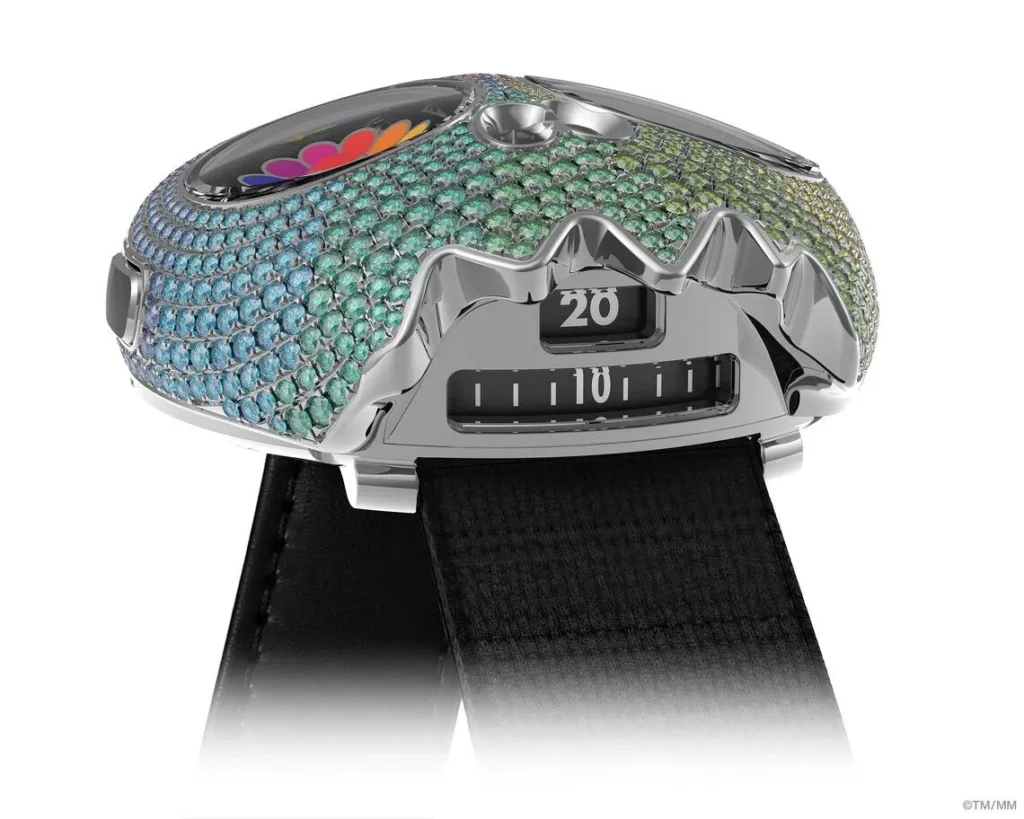
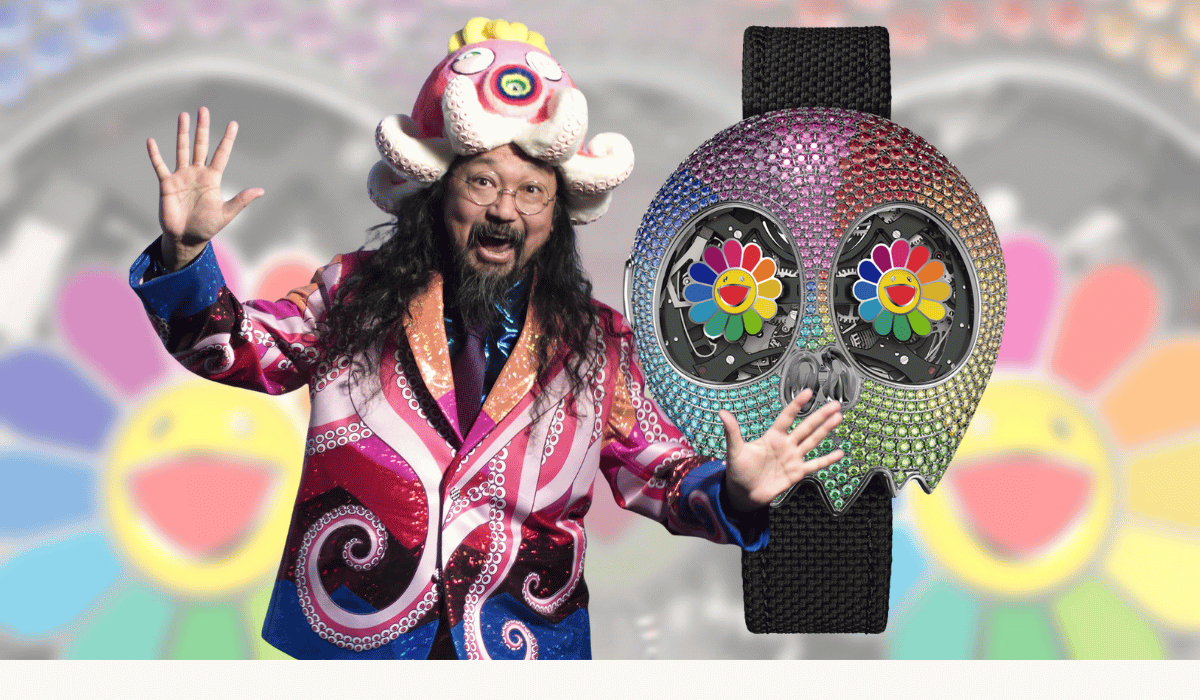
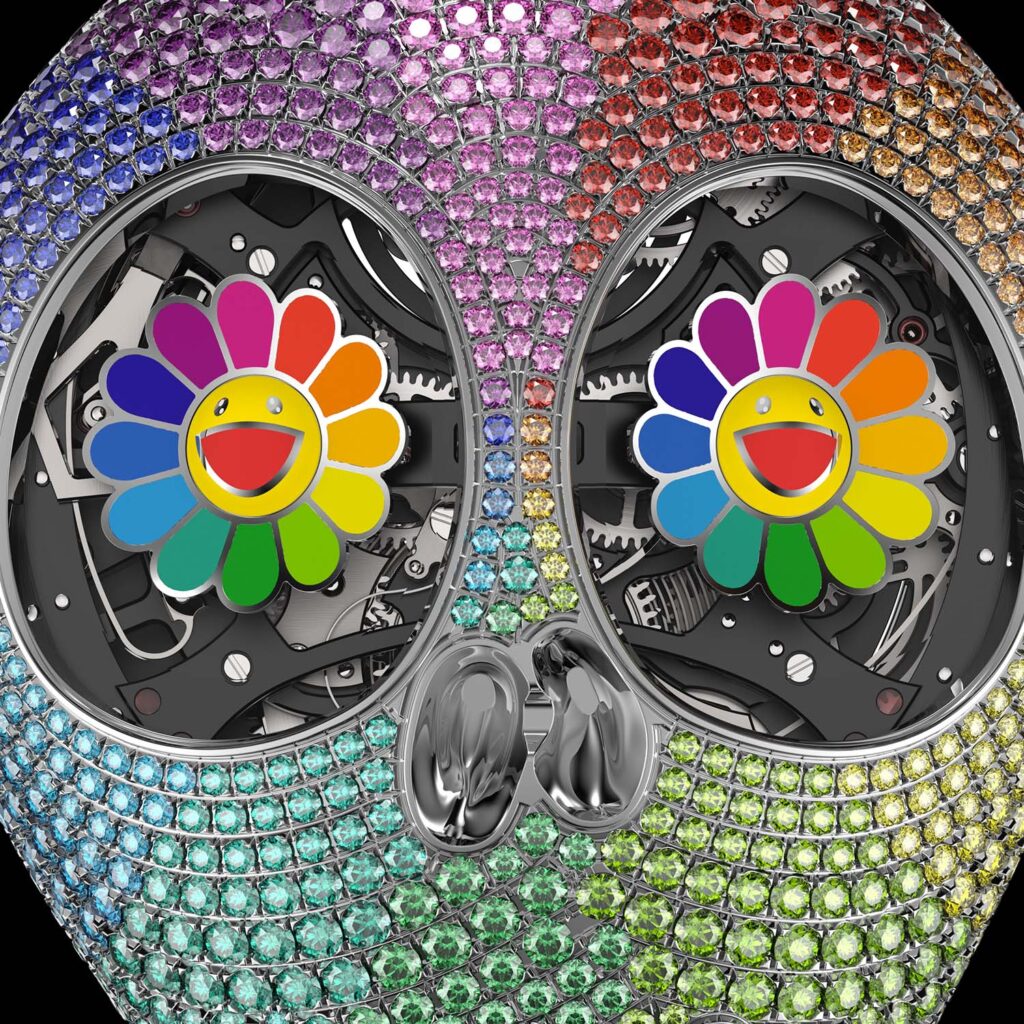
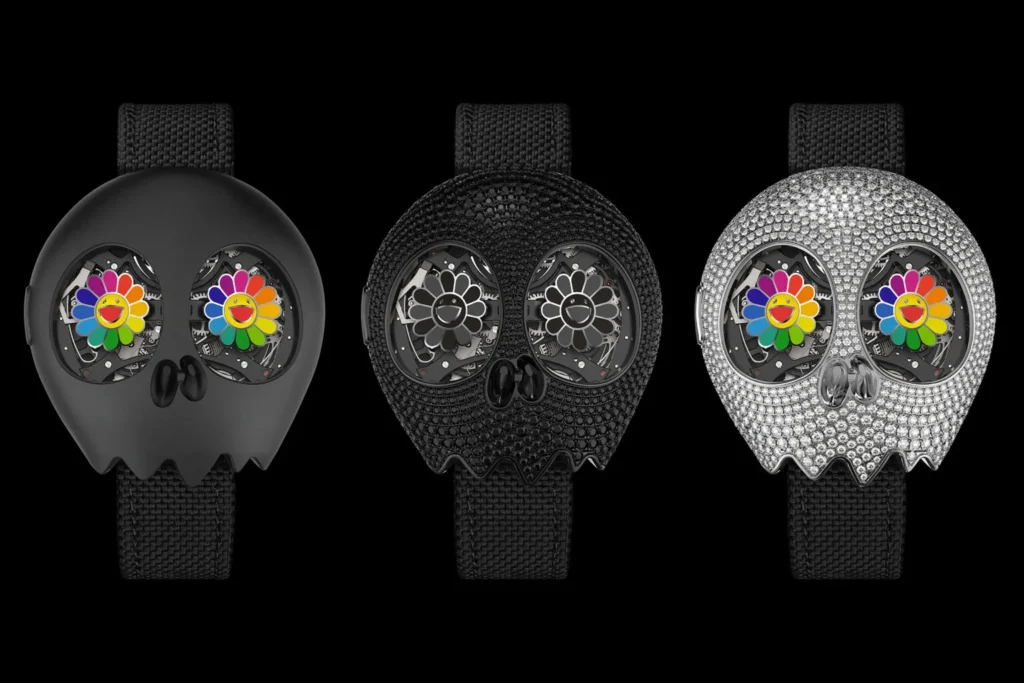
Indeed, his debut collection for his own brand, the Skull Flowers Cylindrical Jumping-Hour Tourbillon, is unmistakably Murakami. The collection includes five watches with skull-shaped titanium cases, a microblasted finish, black DLC coating, and rotating flowers in the eye sockets. The flowers are said to spin on ball bearings with wrist movement, so even a casual glance at the time becomes a small performance. Water resistance is 30 m.

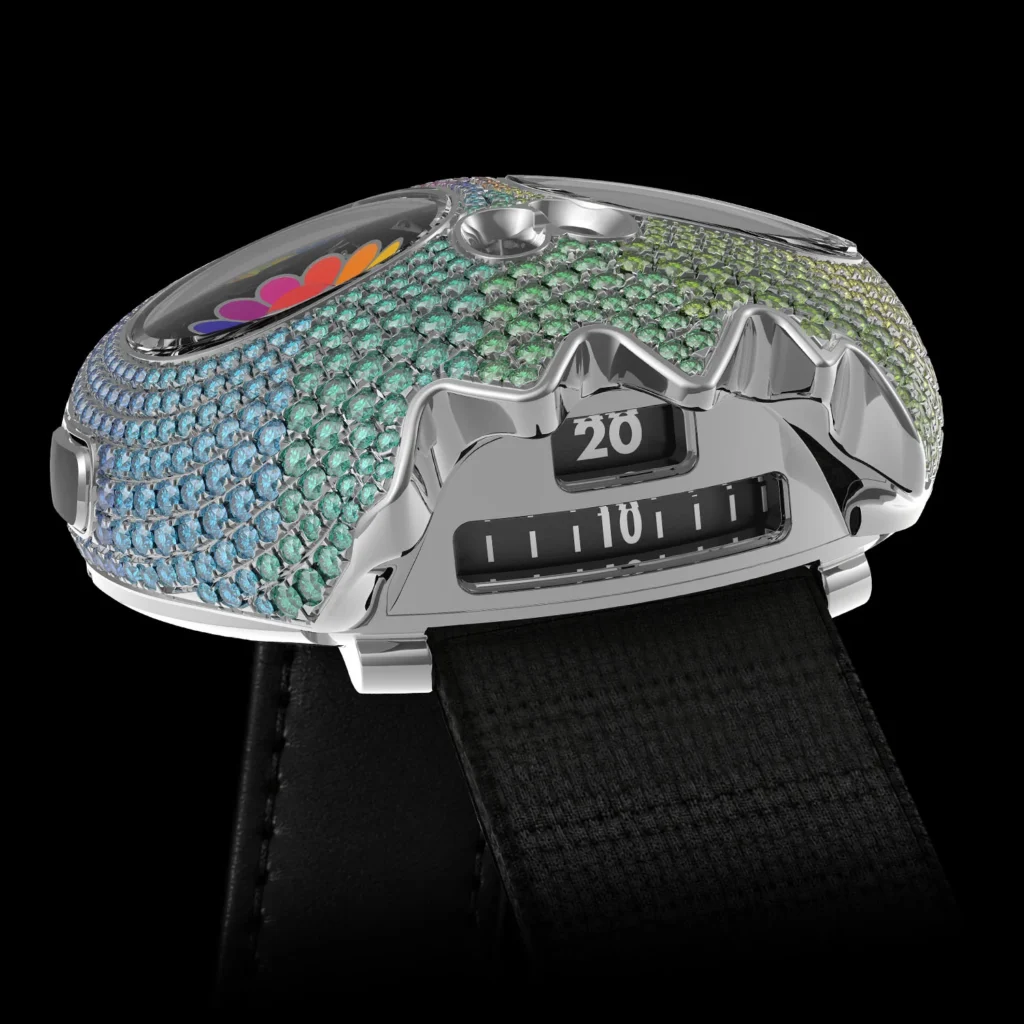
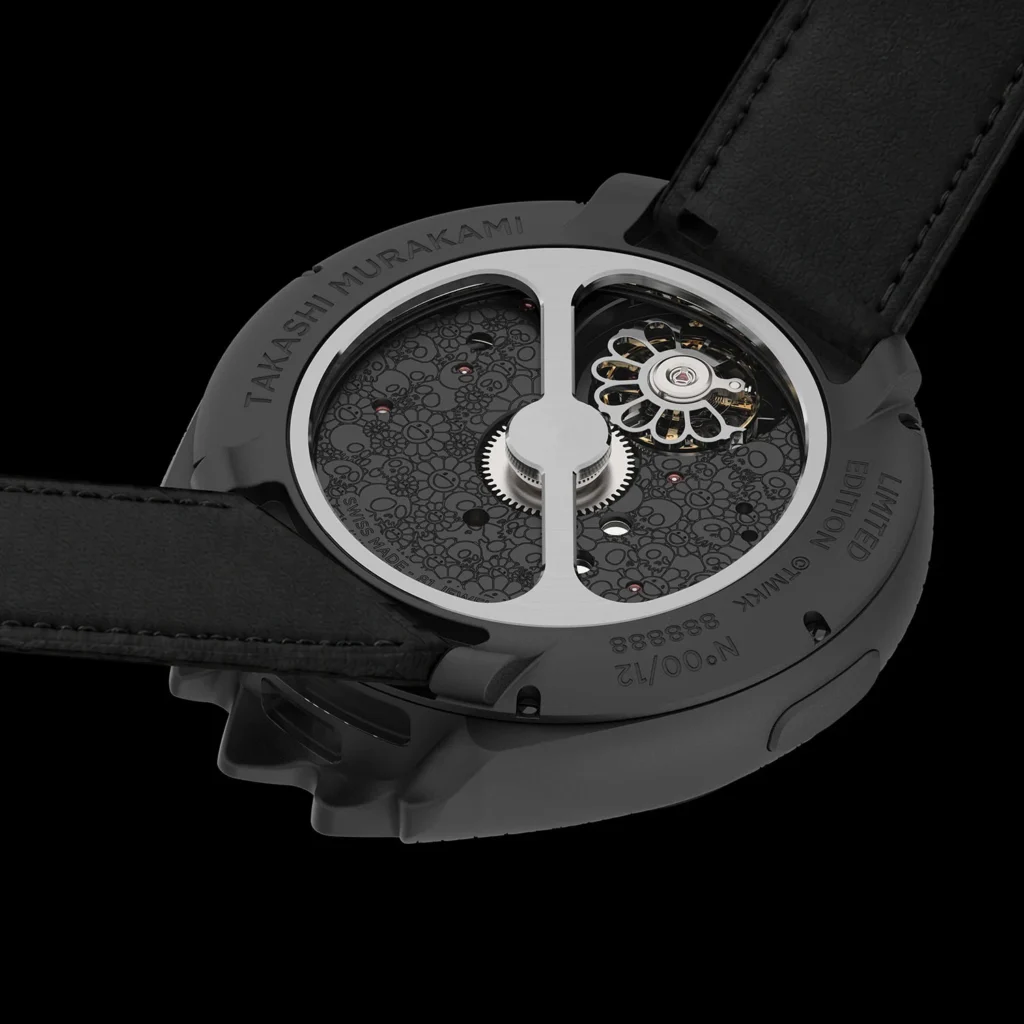
Serious engineering (and a bit of magic, if I may say) lies beneath all the whimsy. A side-mounted cylindrical display shows the jumping hour, with a flying tourbillon visible through the sapphire caseback. The case measures nearly 44 mm across and 18.4 mm at its thickest, quite an eye-catching timepiece that is not for the reserved.
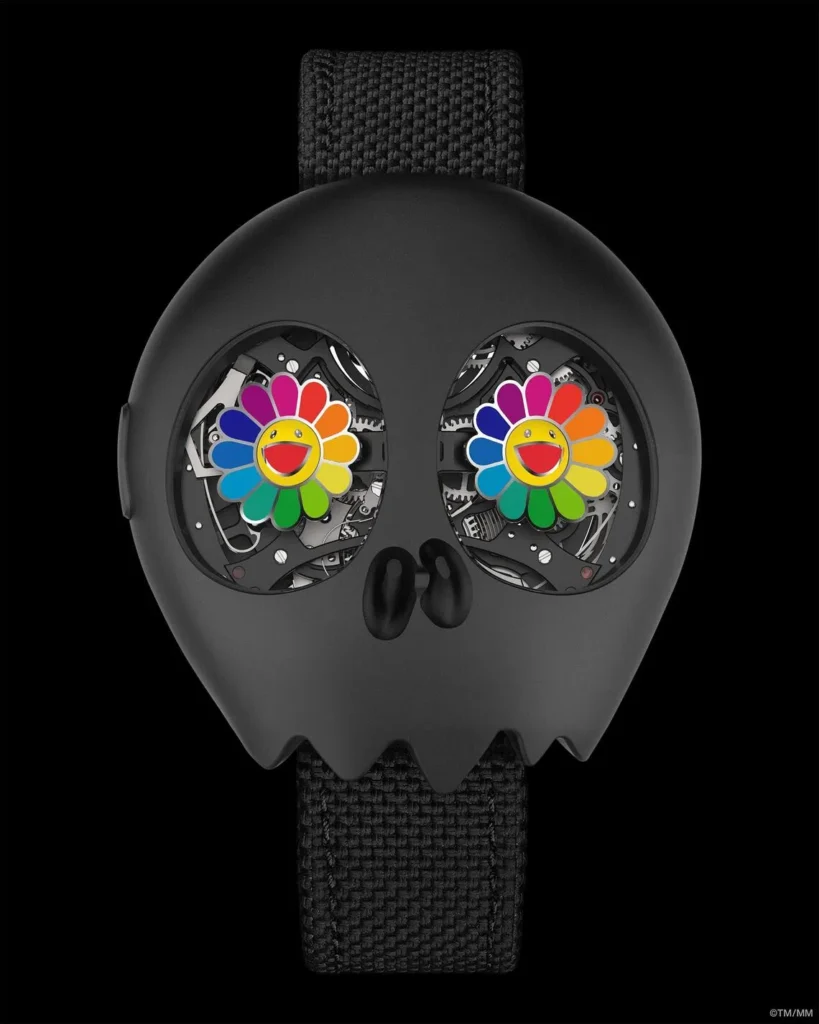
The engineering is still very much Swiss. Swiss-Italian watch designer and engineer Marco Tedeschi oversaw the mechanics. Joining Hublot in 2007, Tedeschi helped develop the brand’s in-house manufacture, contributing to both cases and movements. He later served as CEO of Romain Jérôme before founding Kross Studio in 2020. In 2026, he launched his eponymous watchmaking label, with Kross Studio continuing to serve as its creative and collaborative hub.
Related story: This limited-edition Louis Vuitton bag is only available in the Philippines
Related story: Gyoza pouches and lobster bags are the newest flavors at Louis Vuitton
Life, death, and the passage of time
Pairing a skull with flowers may befuddle some, but it is pure Murakami. The brand’s guiding idea, The Chronos Paradox, sets life against death and fleeting moments against eternity.
The flowers celebrate life’s beauty, while the skull gently reminds the wearer that the clock is always running. It is a memento mori with a playful wink, and a most fitting motif for an object designed to tell time.
According to the same The Straits Times article, this theme is deeply personal for Murakami, whose father had Alzheimer’s disease. The illness began when his father was 70, and he lived with it for more than a decade before passing away at 82—leaving the younger Murakami to wonder whether he had inherited the condition.
The price of eternity
Eternity, naturally, is not cheap. The pieces are priced between CHF 85,000 (US$101,079) and CHF 148,000 (US$175,997), placing them firmly in collector territory and well beyond the artist’s earlier collaborations.
Whether buyers see a watch, an artwork, or both, Murakami seems unbothered by the distinction. As he once said of collaborating with watchmakers, both art and watches can last a hundred years or more—a philosophy of longevity and permanence that sits at the heart of his horological projects.
And surely, he’s just as happy as his flowers to be telling time on his own terms.