
If there’s only one book you’ll read this year, let it be Yang Shuang-zi’s deeply affecting ode to her motherland.
The scourge of colonialism manifests in manifold ways.
History has no shortage of examples, from the ruthlessness of the British Empire to our own country’s harrowing experiences under three colonial powers. While “formal empires” have mostly ceased to exist, we do not live in a truly postcolonial world. Its legacy persists in systemic exploitation, cultural suppression, political domination, and economic coercion by hegemonic powers.
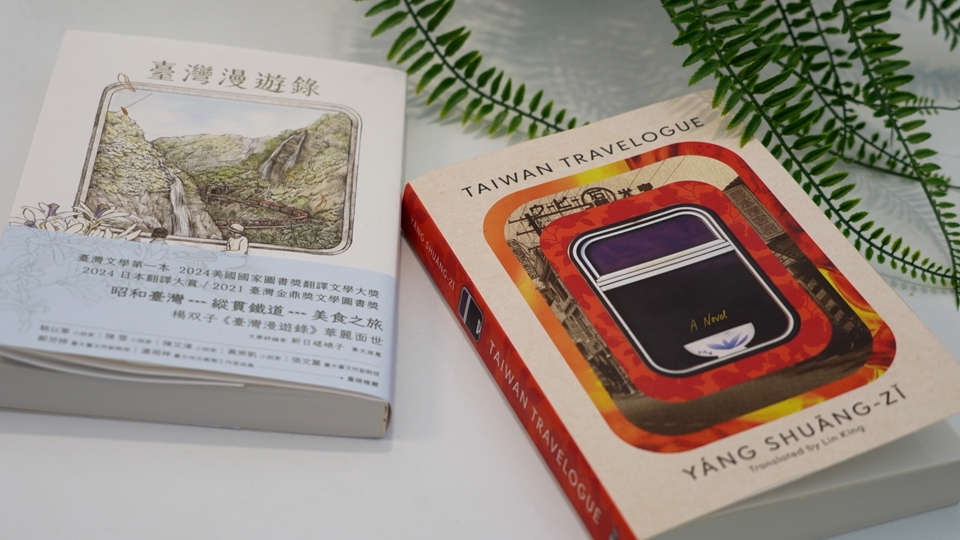
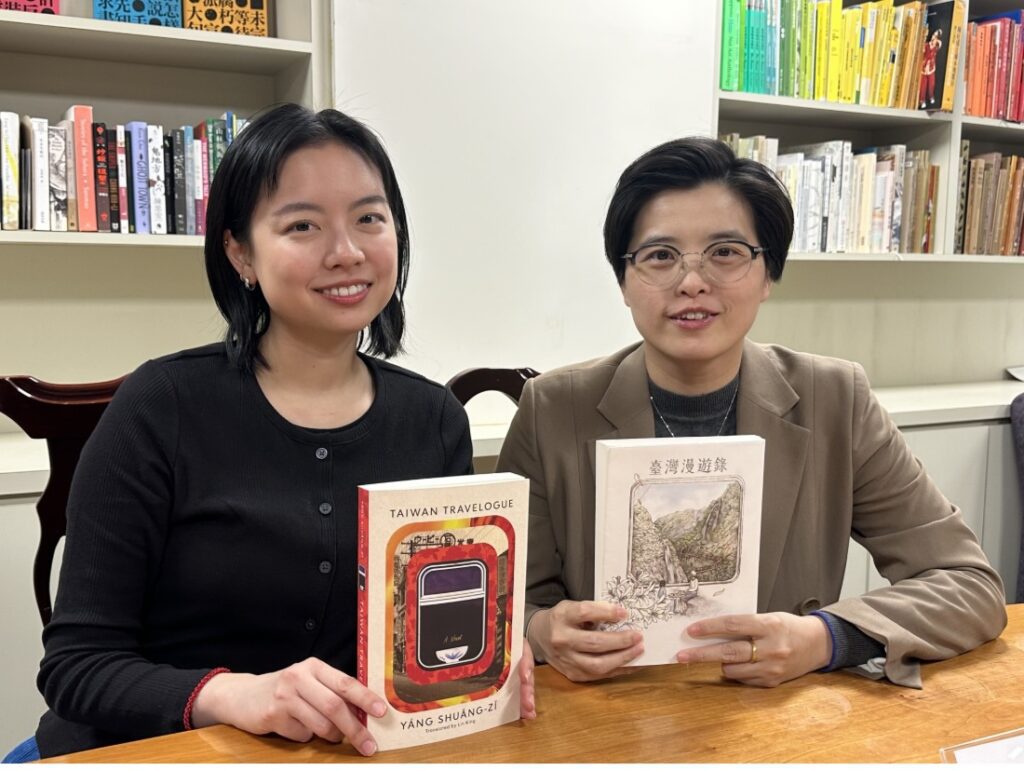
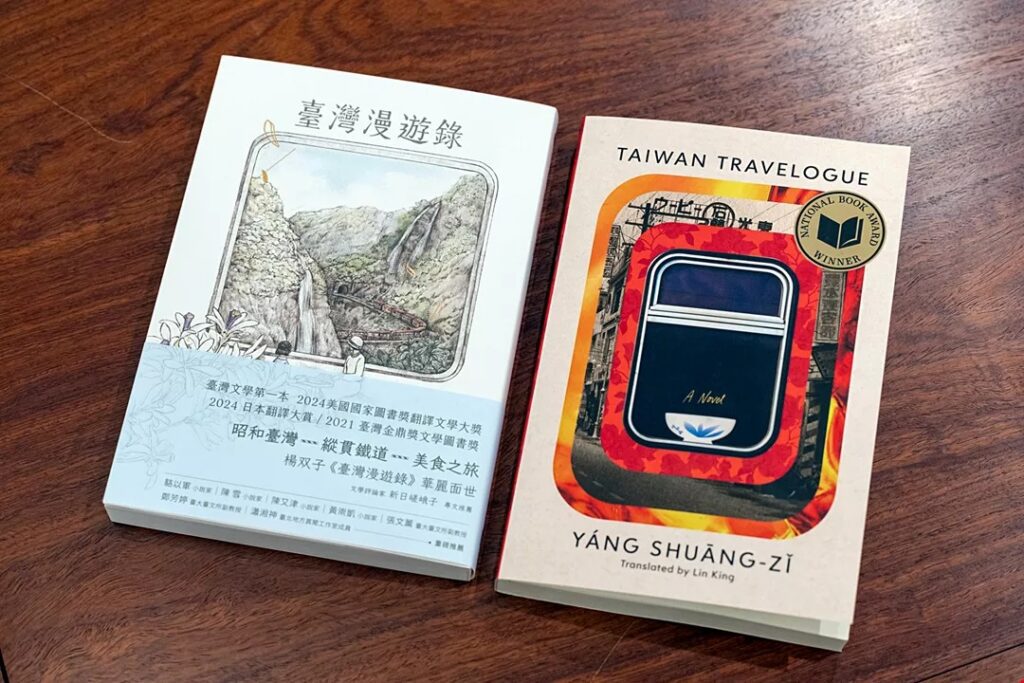
At times, however, the colonial scourge is more muted, but no less devastating. Such is the case in this year’s International Booker Prize-winning novel, Taiwan Travelogue, written by Taiwanese writer Yang Shuang-zi, with an exquisite translation by Lin King.
Related story: Are we losing the ability to read books?
Related story: To read or not to read…in public
A quick note
Before we dive into Yang’s captivating work, it’s worth mentioning to avoid confusion that the novel is structured as a real rediscovered travelogue, replete with an introduction, footnotes, an afterword, and even translator’s notes. This format stirred some controversy when it was first released in 2020.
With the original cover and marketing materials presenting the Japanese author as a real historical figure, there were some who thought it was a work of nonfiction. This left many readers feeling deceived, leading to allegations of literary fraud. To address this, Yang and the publisher clarified that the work was “fiction by the name of another.” Later editions added clear editor’s notes which emphasize the book’s entirely fictional nature.
A compelling dissection of power underneath lush prose
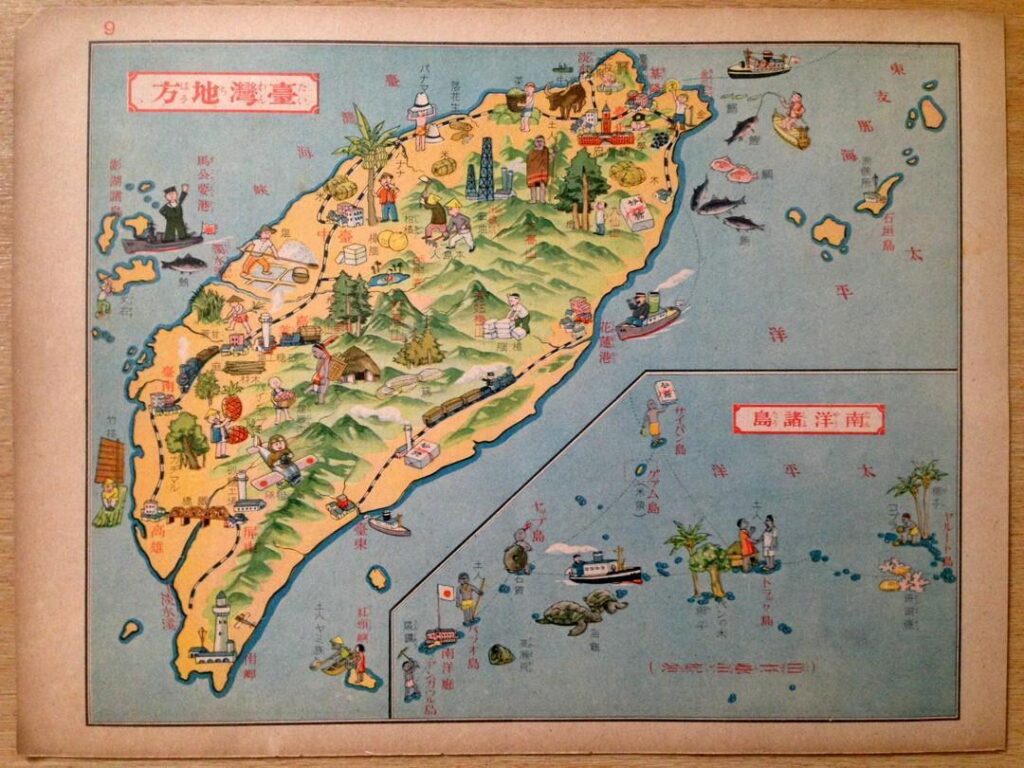
The novel opens in 1938 Taiwan, which at the time was already under Japanese colonial rule, which would last for 43 more years. It follows Aoyama Chizuko, a Japanese novelist, who receives an invitation to conduct a lecture series, paid for by the Imperial government. Aoyama, who has no intention to propagate her country’s “Southern Expansion Doctrine,” intends to spend a full year on the island writing travel articles for Japanese publications, while also tasting the colony’s myriad delicacies in between lectures.
There she is accompanied by O Chizuru, a brilliant translator with a profound knowledge of her homeland’s history and culture. Chi-chan (as Aoyama fondly calls her) also happens to be quite a gifted cook, a perfect match for Aoyama, who is known for her insatiable appetite as much as she is for her literary prowess. They bond over their shared love of good food and literature, and before long, the Japanese writer finds herself smitten by her dimpled Taiwanese translator.
Does Chi-chan feel the same way for Aoyama? We actually will never know, but this is the question upon which the crux of the story rests. Don’t let Yang’s lush and evocative prose—the food descriptions alone would make you want to book a flight to Taiwan pronto—distract you from how this novel is not merely a benign travelogue. Rather, it is a compelling dissection of power, specifically the one wielded by a colonizer, and how this power is so encompassing that it seeps into even the most intimate spaces.
It does not talk about genocide, slavery, or other physical manifestations of colonization’s many evils. Rather, it delves into the quieter yet equally crushing impact of power imbalance on personal relationships. Can the “colonizer” Aoyama and the “colonized” Chi-chan ever be truly friends—or even lovers, as the former so desperately hoped? Is it possible for a Mainlander and an Islander to be really equals? Both women are intellectually gifted, but is a real “equal” relationship between them possible?
Moreover, despite Aoyama’s sincerity and genuine enthusiasm for Taiwan, its culture, and natural beauty, I cannot help but feel that she has fallen into the trap of exoticization. Mishima, the city official who took over Chi-chan’s translation duties after her resignation, called Aoyama out on this, saying: “The way you talk about the Island’s flavors doesn’t sound like you’re appreciating them for being delicious but rather for their exoticism—like one might marvel at a rare animal.”
Further complicating their story, and what could be the final nail in the coffin, is that they are both women. Then, and even until now, same-sex love is considered taboo by many. In the case of Aoyama and Chi-chan, it’s a most unfortunate double-whammy: sapphic love between colonizer and colonized.
Making matters worse is that Chi-chan is already betrothed to a Taiwanese who grew up in Japan, then considered a prized fiancé. This incensed Aoyama, who suggested they elope to her hometown of Nagasaki. Much to Aoyama’s chagrin, Chi-chan had already made peace with her fate, saying, “But practically speaking, it is much easier to accept the fate of such arrangements than to resist…For women, marriage is always a division between her past life and the rest of her life.”
Even in this gender conundrum, our main characters’ colonizer-subaltern imbalance is striking. Aoyama’s offer of “freedom” begs the question of whether or not she is forcing her own idea of independence on Chi-chan. Even her persistent offers of friendship can be seen as too stifling and overbearing; her gift of a luxurious kimono for an Islander to wear bordered on insensitive and offensive. I see Chi-chan’s repeated rejection of Aoyama’s offer of friendship and “freedom” (through elopement) as her assertion of her agency, given that most aspects of her life are beyond her control.
This is Aoyama’s biggest flaw: her inability to see things from a non-colonizer lens. Despite distancing herself from her motherland’s imperialist ambitions, she can’t help but attribute Taiwan’s supposed progress to its colonizer and even goes as far as praising the Empire’s policies.
Mishima, the replacement translator, has the strongest words for Aoyama, “Whether you choose to criticize or support these policies has little to do with whether the Empire has caused harm or done good—it has more to do with your personal preferences.”
And preferences (and choices) are the privilege of the powerful.
It is only after this confrontation with Mishima, which happens amid an agonizing separation from Chi-chan, that Aoyama realizes this fatal folly. I could not say, though, that this epiphany came too late, because I believe their relationship, even on a platonic level, was doomed from the very start. The colonizer and the colonized cannot be true friends after all.
Here lies the genius of Yang Shuang-zi. She delivers this harsh truth not through scenes of carnage and devastation, but in between near-poetic descriptions of food and scenery. Taiwan Travelogue is a reflection of—and on—colonization, where shiny markers of progress conceal deep-seated exploitation, and where benevolence shackles instead of emancipates.
Related story: Beyond bestsellers: How celebrity book clubs and pop culture led me to unexpected literary gems
Related story: REVIEW: ‘Conclave’ is a compulsive, thought-provoking page-turner
Taiwan is the Taiwan of the Taiwanese
While it has been 81 years since the Japanese colonial rule of Taiwan ended, the island formerly known as Formosa continues to fight for its sovereignty and right to self-determination. This struggle has become even more pronounced in recent years, as the threat of a Chinese invasion becomes more of a possibility with China growing more confident in its status as a rising superpower.
Before winning this year’s prestigious Booker Prize, the first time for a novel written originally in Mandarin Chinese, Taiwan Travelogue also won the 2024 National Book Award for Translated Literature. In her acceptance speech for that award, Yang, who is outspoken about Taiwan’s geopolitical predicament, said, “A hundred years ago, Taiwanese people already said, ‘Taiwan is the Taiwan of the Taiwanese.’ A hundred years later, today’s Taiwanese people still say the same thing, but the people to whom we’re speaking has changed. A hundred years ago, we said it to the Japanese; today, we say it to the Chinese.”
She continued, “I write to answer the question: Who are the Taiwanese? And I continue to write about the past to move towards a better future.” The novel is not currently published in China, which claims Taiwan, a democratically-ruled island, as its territory.

In her Booker Prize acceptance speech (a must-watch!), meanwhile, Yang more explicitly touched on Taiwan’s existential crisis, saying: “Some people believe that art and literature must be kept far from politics, but I believe that literature cannot be separated from the soil in which it has grown.”
“In this sense, literature, on a fundamental level, cannot disentangle itself from politics. When surveying the modern history of Taiwan’s literature, it is apparent that we writers have been asking the same question for the past century: What kind of future do the people of Taiwan want?”
“Taiwan’s people have endured multiple colonial regimes and faced threats of invasion. When confronted with geopolitical forces so much greater than our own, what use do we have for literature?” she asked. “But I, at least, have always believed that literature wields power. Literature appears slow, but it acts with steady resolve. It is often quiet, but manages to spread ideas far and wide…I believe in literature’s power, because in the life of the mind, literature has never ceded ground, nor given up on dialogue between people,” Yang continued.
She ended her speech (I was already crying at this point) by saying: “Finally, I would like to dedicate these closing words to my homeland, Taiwan. The century-old inquiries in Taiwan’s literature are, in fact, the century-old pursuit of freedom and equality by Taiwan’s people. I feel very fortunate to have been born Taiwanese. I feel very proud to stand before you today as a writer from Taiwan. Thank you.”
May Taiwan always be a Taiwan for the Taiwanese.
Taiwan Travelogue is still a bit difficult to find in local bookstores. You can place an order or reserve a copy through the local online bookstore Page 394 Books.
Related story: From pepper buns to boba: Eight eats for a true taste of Taipei