
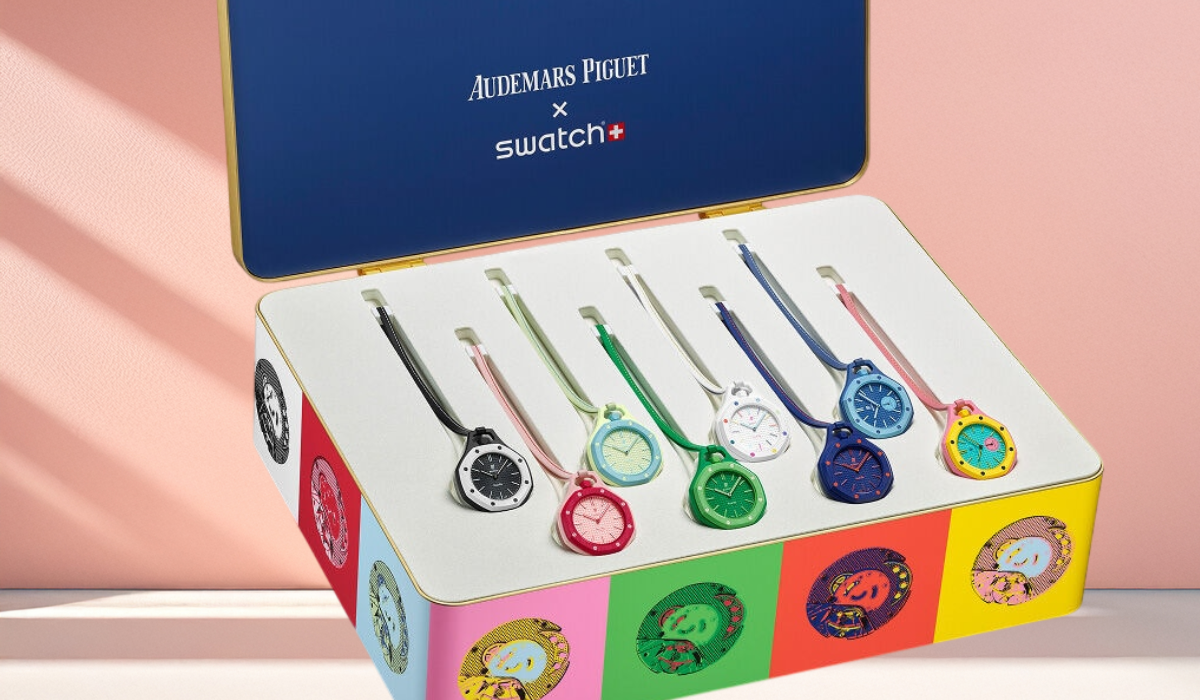

Swatch and Audemars Piguet’s viral Royal Pop collaboration sparked massive crowds, police intervention, boutique shutdowns, and resale mania.
Owning an Audemars Piguet timepiece dwells within a world of waitlists, wealth, and watchmaking stature. The Swiss horology house—best known for its beloved Royal Oak—has long occupied a largely untouchable space in luxury, where steel sports units can command tens of thousands of dollars. Availability is also deliberately elusive, fueling exclusivity even further. Then came Swatch, the playful disruptor that defined its presence through colorful accessibility and collectible appeal.
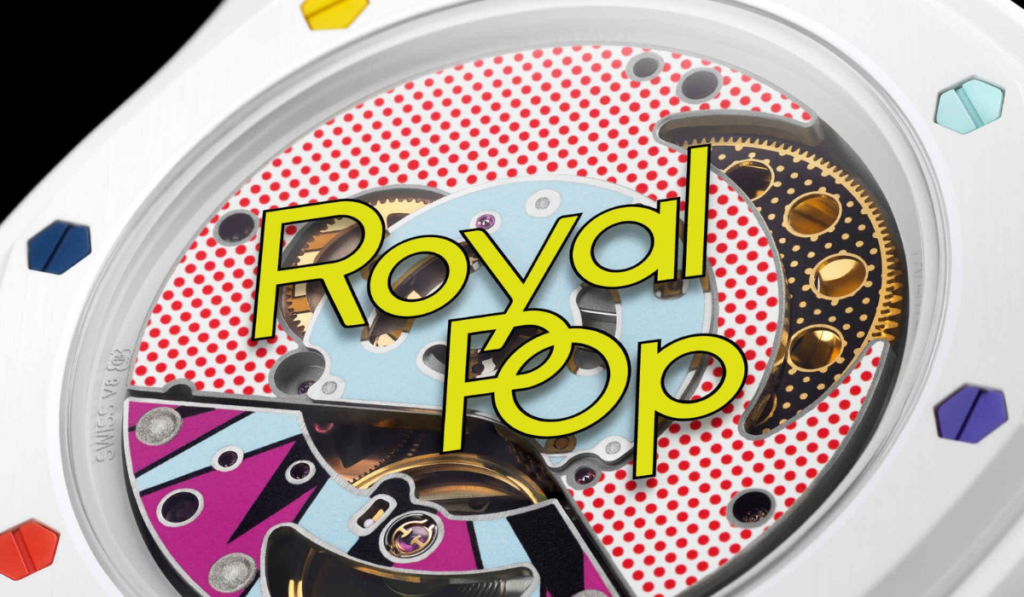
Yesterday, May 16, the two watchmakers launched the Royal Pop collection, an eccentric eight-piece pocket watch collaboration that converged Audemars Piguet’s iconic Royal Oak identity with Swatch’s nostalgic POP novelty from the 1980s.
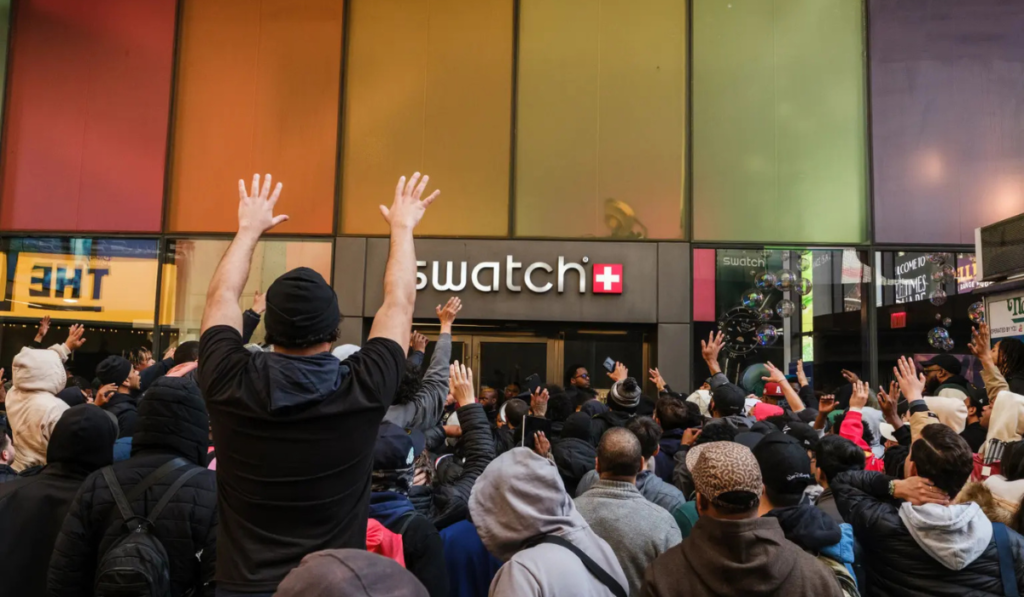
What followed was a global frenzy—in malls, boutiques, or standalone stores. Crowds surged, stores closed, police pressed in, and social feeds spiraled into footage of intense shoving, screaming, and stampedes.
The ordeal became one of the watch world’s most chaotic contemporary moments—a collision between craftsmanship and buzz, hype and heritage, as well as aspiration and widespread affordability. It also exposed how luxury nowadays no longer thrives solely on tradition and exclusivity, but also on broader visibility, virality, and cultural connectivity. Once reserved for the rich, AP suddenly pivoted into a public space propelled by price and popularity, creating a collective obsession.
The collection that cracked luxury wide open
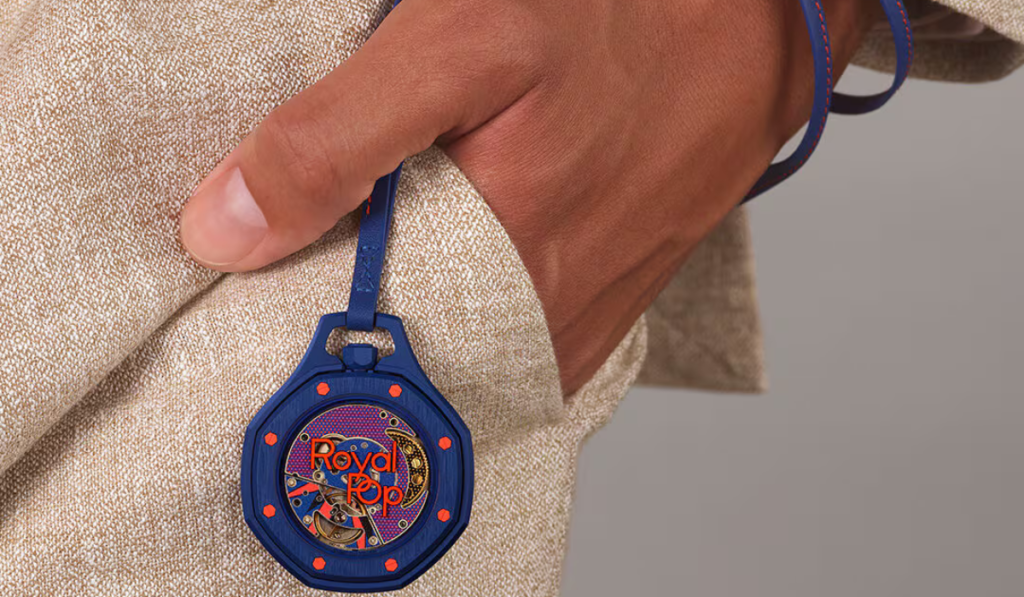
The Swatch x Audemars Piguet Royal Pop collection features eight brightly colored Bioceramic pocket watches inspired by the Royal Oak silhouette and Swatch’s archival POP line. Instead of traditional wristwatches, they are wearable timepieces complete with lanyards, removable stands, and modular styling options.
The watches retail between roughly $400 and $420 USD (₱27,000 and ₱29,000). On paper, that still sounds expensive for a Swatch. Yet within the world of Audemars Piguet, it radically rewrites the rules of entry.
A regular Audemars Piguet Royal Oak, after all, typically starts around $25,000 to $30,000 USD—and often far higher on the resale market. Meanwhile, a standard Swatch is approachable at $70 to $300. That gap is precisely what made Royal Pop explosive.
For the first time, one of luxury horology’s most recognizable aesthetics suddenly entered a dramatically lower price bracket. To collectors, it felt controversial; to younger consumers, it felt thrilling; to resellers, it looked profitable; To the internet, finally, it became irresistible.
From boutique launch to mayhem
What started as a fashion-forward watch release quickly transformed into a public hubbub. Across cities including New York, London, Dubai, Toronto, Milan, Mumbai, and Manila, shoppers camped outside Swatch boutiques for days before the launch. Videos circulating online showed aggressive crowds surging, barricade pushing, police involvement, and overwhelmed security teams. In some locations, stores shut down entirely due to safety concerns.
In Long Island, police deployed pepper spray amid escalating crowds. In Cardiff, arrests were made after hundreds attempted to force entry into a shopping center. Dubai reportedly canceled sales altogether over public safety fears.
Swatch eventually closed multiple boutiques worldwide in response to the mounting disorder. The visuals themselves felt startlingly contradictory: a luxury-inspired timepiece launch unfolding less like a refined retail rollout and more like a sneaker drop, concert crush, or viral streetwear release. Perhaps, that contradiction mirrors the fascination. In today’s culture economy, scarcity no longer simply signals prestige—it sparks performance, participation, and public spectacle.
The democratization dilemma
The uproar surrounding Royal Pop exposes a deeper cultural tension simmering beneath luxury fashion and watchmaking today: what happens when exclusivity becomes accessible?
Luxury has always relied on distance. Scarcity sustains desire. Limited availability reinforces prestige. In the case of Audemars Piguet, scarcity is practically part of the brand identity itself. Certain Royal Oak models are notoriously difficult to secure even for affluent buyers. The Swatch partnership disrupted that narrative overnight.
Suddenly, younger consumers, first-time collectors, and aspirational shoppers could participate in the visual language of Audemars Piguet without entering the six-figure income bracket traditionally associated with the brand. That accessibility simultaneously expanded the audience and unsettled purists.
Online watch communities immediately fractured into opposing camps. Some collectors criticized the collaboration as brand dilution, arguing that lowering the barrier to entry weakens AP’s exclusivity. Others viewed it as smart contemporary marketing—one capable of introducing an entirely new generation to luxury horology.
In truth, though, both perspectives hold weight. Royal Pop, after all, was never simply about telling time. It was about proximity to prestige.
The resale machine behind the madness
Fueling the frenzy further was the now-familiar machinery of hype culture: resale economics. Almost immediately after launch, listings for Royal Pop pieces appeared online at dramatically bloated prices, with some resellers reportedly asking thousands of dollars above retail.
That secondary-market potential transformed the watches from collectible accessories into speculative commodities.
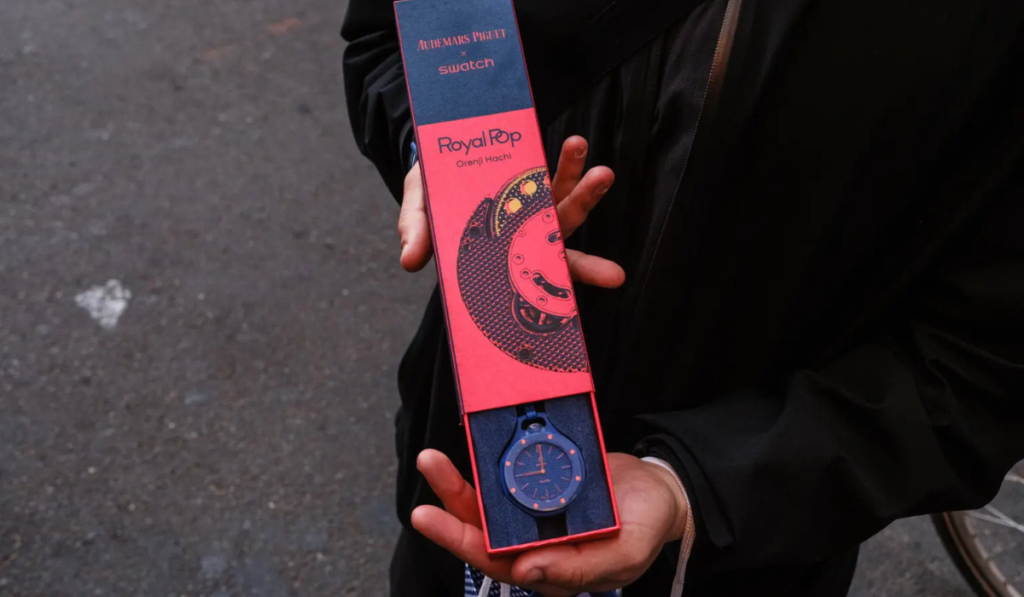
For many shoppers, lining up was not purely emotional—it mirrored the broader evolution of luxury consumption. For younger consumers, limited products increasingly operate as social currency, investment objects, and internet flexes all.
Fashion, sneakers, toys, and watches now move through the same ecosystem of scarcity-driven desirability. Within that ecosystem, virality becomes value.
Why the collaboration resonated with millennials and Gen Z
Beyond hype alone, Royal Pop surfaced at an era where younger luxury consumers are reshaping the definition of aspiration itself. Traditional luxury once centered on legacy and old-money restraint. Today’s younger buyers, however, gravitate toward collaborations, nostalgia, and cultural crossover. They are less concerned with rigid industry rules and more interested in storytelling, visibility, and participation.
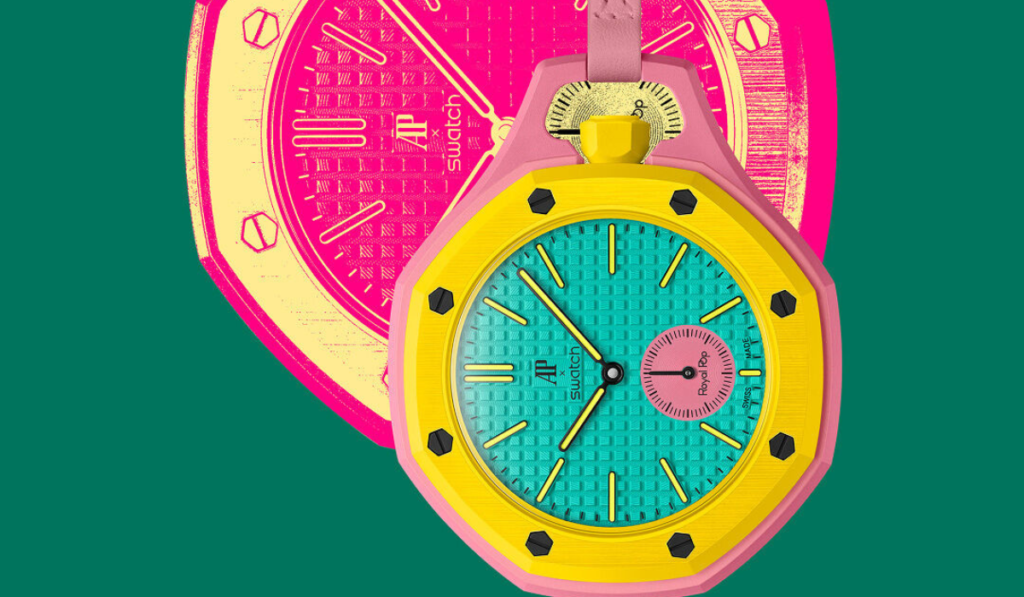
Royal Pop delivered all of that at once. It fused archival watchmaking with collectible culture, and borrowed from fashion drops, internet virality, and retro design language—translating a historically serious luxury category into something socially shareable. Most importantly, it gave younger audiences temporary access to a world that often feels financially and culturally sealed off.
Other luxury collaborations that triggered similar phenomena
Royal Pop is hardly the first collaboration to send consumers spiraling into lines, lotteries, and large-scale frenzy. Over the past decade, fashion and luxury brands have repeatedly discovered that accessibility—when combined with scarcity—creates commercial uproar.

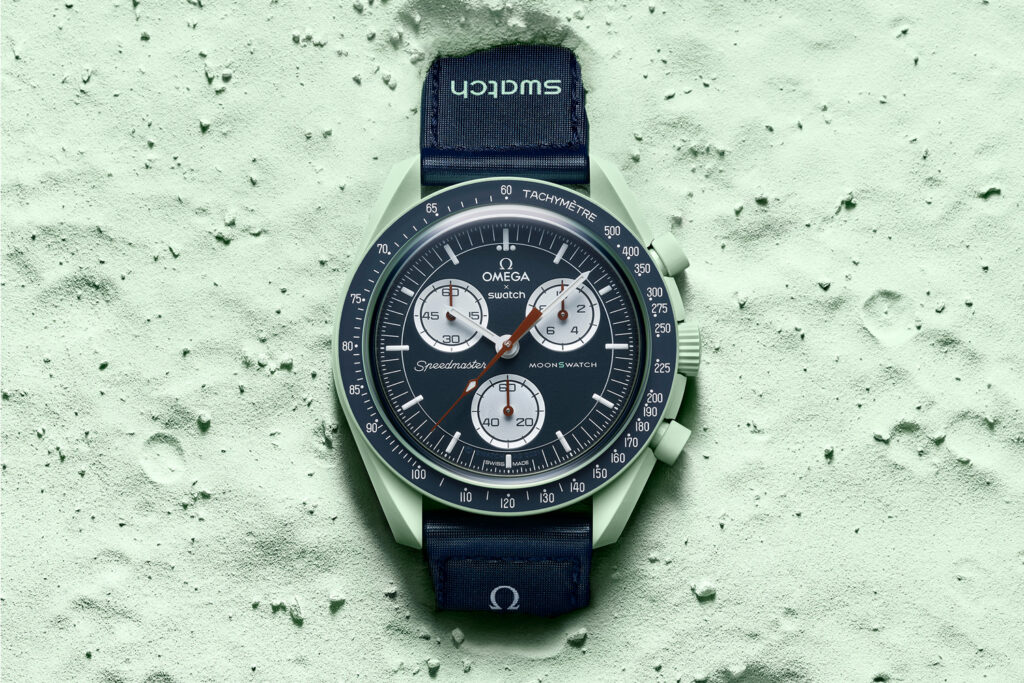
One instance, perhaps, was Royal Pop’s clearest predecessor: the MoonSwatch collaboration reimagined Omega’s legendary Speedmaster through Swatch’s colorful Bioceramic format. Retailing at a fraction of the original Speedmaster’s price, the 2022 launch triggered enormous queues worldwide, viral resale markups, and store overcrowding. This stemmed from the fact that consumers suddenly gained access to the visual identity of an iconic luxury watch without the traditional financial barrier.
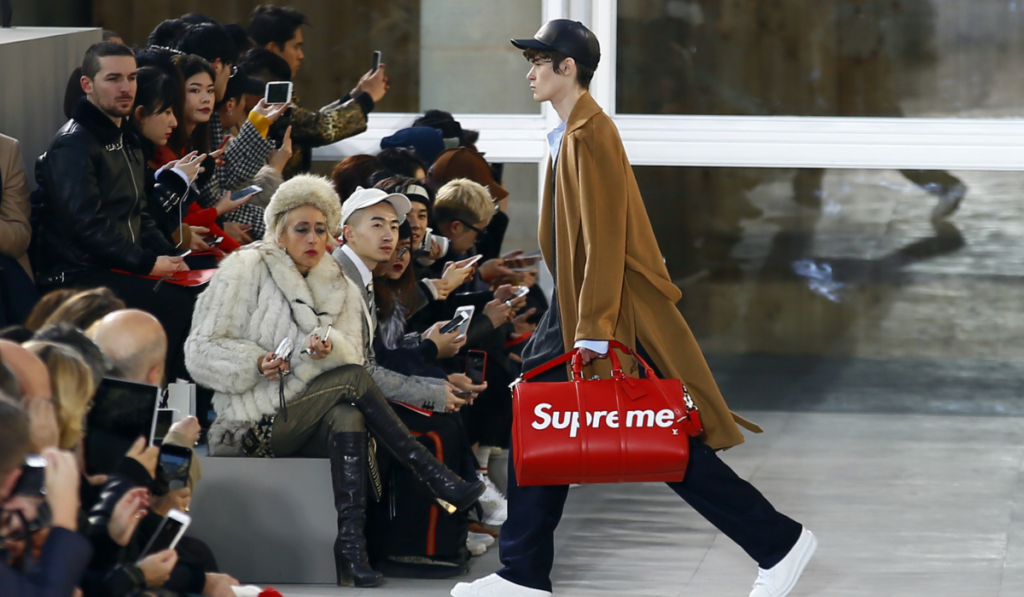
When streetwear heavyweight Supreme collaborated with Louis Vuitton in 2017, on the other hand, fashion queues wrapped around city blocks worldwide. The release blurred the line between skate culture and heritage luxury in a way that felt culturally seismic at the time. In this case, the partnership merged two seemingly opposite worlds—streetwear rebellion and old-guard luxury prestige—creating a status symbol for both fashion insiders and younger consumers.
Ultimately, the Swatch x Audemars Piguet chaos says less about watches alone and more about the state of contemporary desire. Today’s consumers do not merely want luxury—they want access, affiliation, and visibility.
When luxury becomes louder
Today’s consumers do not merely want luxury; they want access, affiliation, and visibility. They want products that signal taste without demanding traditional gatekeeping. They crave the language of prestige but on flexible, internet-shaped terms. Royal Pop tapped directly into that tension. In doing so, the collaboration transformed a pocket watch into a public phenomenon—one where heritage meets hype, exclusivity meets accessibility, and luxury itself momentarily loses control of the crowd.
Related story: EXPLAINER: What is the Anti-Ticket Scalping Act and how can concertgoers benefit from it?
Related story: The legend of Joey Reyes: How long would you queue for a new iPhone?