
A closer look at why Filipinos drive the way they do—and what it says about life in a country where public order rarely feels guaranteed.
A cousin of mine, born in the United States but largely raised in the Philippines before returning to America as an adult, recently came home to explore the idea of early retirement here. He worked at Bank of America for years and wanted to see where he and his wife could build a slower, more financially sustainable life without sacrificing healthcare, fresh food, and quality of life.
They were weighing two options: the Philippines or Spain. Spain appealed to them because of its universal healthcare, healthier food culture, and relatively easy residency pathways available to Filipinos because of the two countries’ shared colonial history.
Their priorities in the Philippines were simple: privacy, fresh whole foods, accessible golf courses, and nature just within reach. He and his wife talked about downsizing into a bungalow somewhere in Nuvali, Laguna; Greenfields, Calamba; or Lipa, Batangas—places with bigger yards, quieter surroundings, and easier access to outdoor activities.
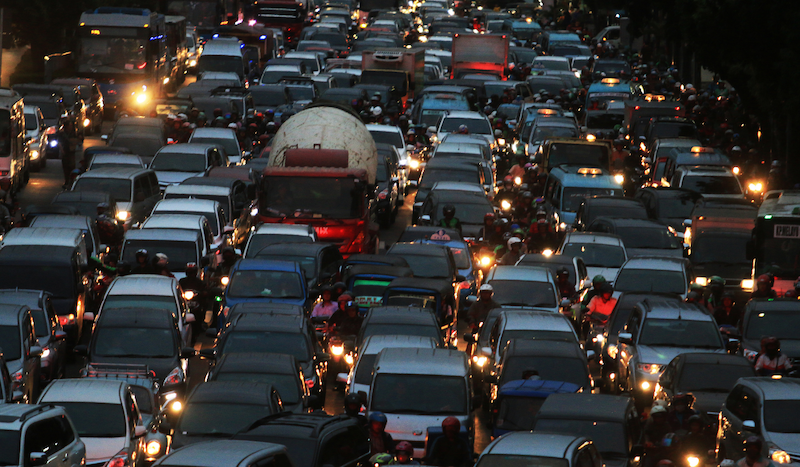
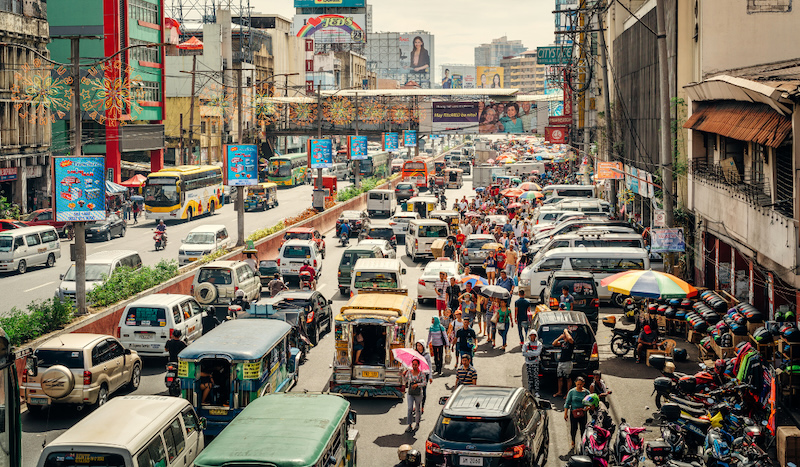
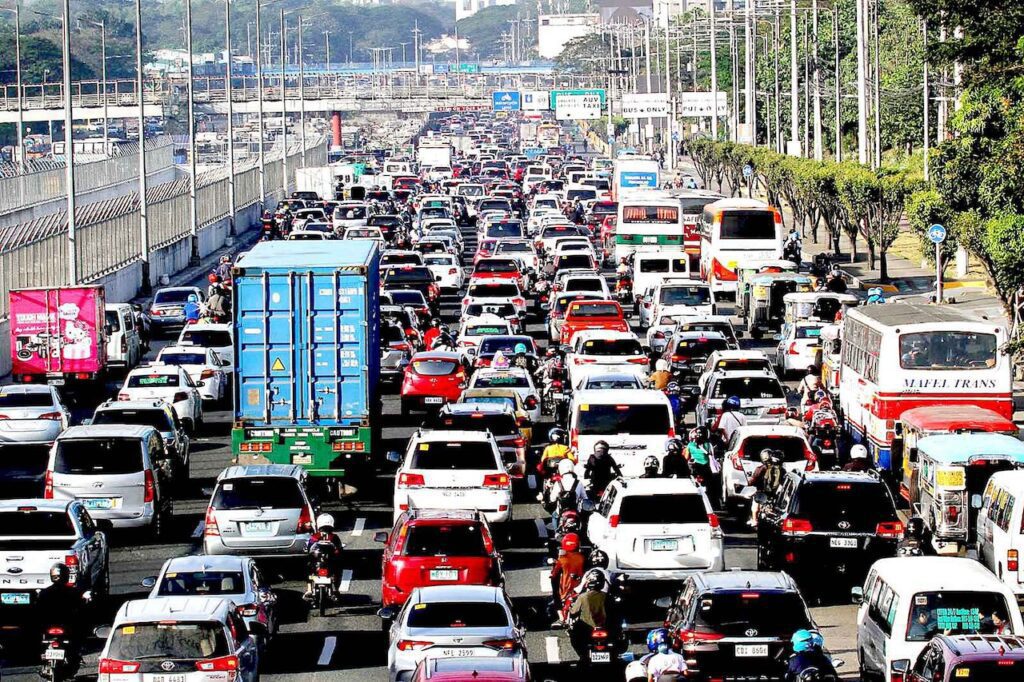
We teased him after he borrowed a car. I said the driving alone might send him back to America. This was before rising fuel costs began thinning traffic across Metro Manila. The endless congestion. Motorcycles slipping through impossible gaps. Instinctive lane merging. Drivers cutting each other off on perfectly straight roads as if every few feet were a life-or-death situation. Illegally parked cars adding another layer of excitement to our obstacle course-like streets.
Related story: Notes from the Gen X–millennial border
Related story: An ode to Cubao—and the day it hosted boxing’s greatest, most brutal fight
Related story: The white-collar migration of Filipino millennials
Micro-negotiations on the road
Three weeks later, we met for lunch and he surprised me. “I actually enjoy driving here,” he said. “As long as it’s not rush hour.”
Then he explained why. “If you want to drive successfully in the Philippines, think of yourself as a fish.” I laughed because it sounded absurd at first, but the longer he explained it, the more accurate it became.
“You’re part of a school of fish,” he said. “Everybody is moving toward a destination. You watch each other. You adjust. You flow around obstacles. You sense openings. But you also need to be pushy because nobody will fully stop for you. If you hesitate too long, you either won’t move or somebody else takes the space.”
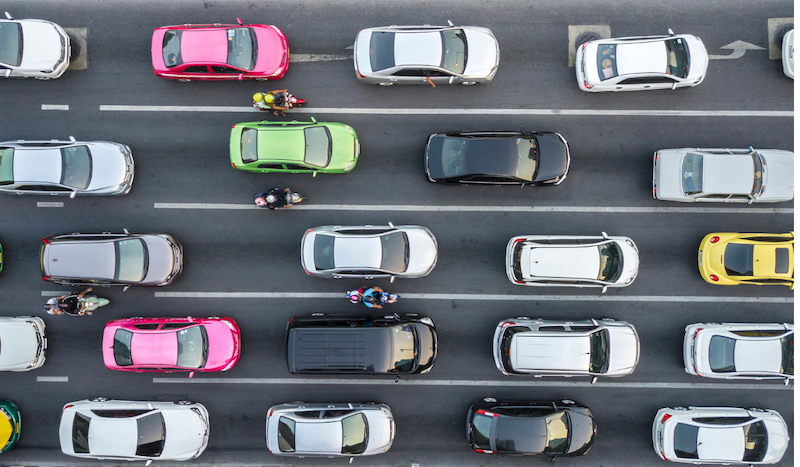
What he described sounded chaotic, but anyone who drives daily in Metro Manila immediately understands it. Filipino driving operates through pakiramdaman. Through eye contact at intersections—not first to stop, first to go. Through subtle revving and calibrated aggression. Through micro-negotiations of halogen light flashing or even incessant honking.
We slowly unlearn bigayan and internalize gulangan. We often romanticize this as resilience or diskarte. But adaptability is not always a virtue freely chosen.
To drivers from rule-oriented societies, Philippine roads can look irrational. Yet locally, traffic often functions through a collective understanding of movement and adjustment. Drivers anticipate human behavior more than they rely on painted lines or institutional order. I dare you to use your turning signal and I guarantee you that instead of slowing down, the vehicle on the lane you’ll turn or merge into will pedal to the floor and attempt to overtake you. Don’t use the turning signal and just merge into the lane, you’re guaranteed safe passage.
In countries like Germany or Japan, lanes function as promises. Systems are trusted to hold and penalties are extremely expensive. Drivers assume rules will be followed consistently. And commuters are guaranteed that no manhole is open so there is faith in the infrastructure, the traffic lights are working, speed limits and minimums are obeyed. And when rules are broken, penalties are dispensed and charged efficiently and equally—no negotiations, exceptions, and paki-usap would happen.
In the Philippines, many drivers assume the opposite. You move defensively because enforcement is inconsistent and infrastructure is strained, full of holes literally. The number of vehicles has long outpaced road infrastructure, drainage systems, and urban planning. The road is a mirror of overpopulated city centers and the fight for dignified living space. The result is not disciplined order but adaptive compromise.
We drive like fish in a crowded river, responding to currents, pressure, openings, trash, and threat.The sad part is how naturally many Filipinos relearn this behavior.
Rules vs. improvised behavior
Months later, my cousin left for Spain with his wife to explore apartment options there. Eventually, they returned to the United States because they still had a few more working years ahead of them before retirement. Earlier this year, his older sister came home for a longer stay to spend time with their aging mother while she was still healthy enough to travel around locally and enjoy family visits outside Metro Manila.
I offered her the spare car for errands and reunions.
She refused immediately. “I’d rather just use Grab,” she said.
I shared her brother’s fish theory, and she paused for a moment before answering.
“That’s sad,” she said. “Imagine thinking you need to slither ahead of somebody else just to get to where you need to be.”

Her comment stayed with me because beneath the humor of Filipino driving habits is a deeper social lesson many of us absorb early: if you wait politely, you remain stuck. If you follow the queue too rigidly, somebody cuts ahead. If you do not inch forward, nobody makes space for you.
We slowly unlearn bigayan and internalize gulangan. We often romanticize this as resilience or diskarte. Filipinos are praised for adaptability, flexibility, and the ability to strictly follow the rules abroad but freely break them back home. But adaptability is not always a virtue freely chosen. Sometimes it develops because people no longer expect the rule of law and institutions to function consistently for everyone.
Even basic road education reflects this reality. Traffic signs are rarely taught seriously in schools. Public service campaigns about road behavior are sporadic if any. Traffic rules are in English and I hardly see materials in the vernacular. Many people learn driving informally from relatives, drivers, or observation rather than through deeply internalized road culture.
So behavior becomes improvised instead of rule-based.
This is not unique to the Philippines. Many Southeast Asian cities move similarly. The flow of Bangkok, Jakarta, Ho Chi Minh City, and Manila often depends less on strict compliance and more on collective negotiation.
Part of this may also come from colonial history. For centuries, Filipinos learned to navigate systems imposed from above rather than systems built organically with public trust. Rules became associated with power, inconsistency, and exceptions. Relationships often mattered more than formal order. Adaptability became a civic skill.
Which may explain why many Filipinos can drive abroad after adjustment, but can instantly return to local driving instincts the moment they come home.
Like fish returning to familiar waters.
And perhaps that is the real danger of learning to drive like fish for too long: how much of our daily behavior has been shaped by environments where getting to where you need to be depends on tactical selfishness to advance ahead before somebody else does, until pushing ahead stops feeling rude and starts feeling necessary?
Related story: Gen Z grew up online—now we’re tired of being perceived
Related story: A millennial’s guide to streamlining your style for a timeless wardrobe
Related story: Did millennials follow their dreams after all?