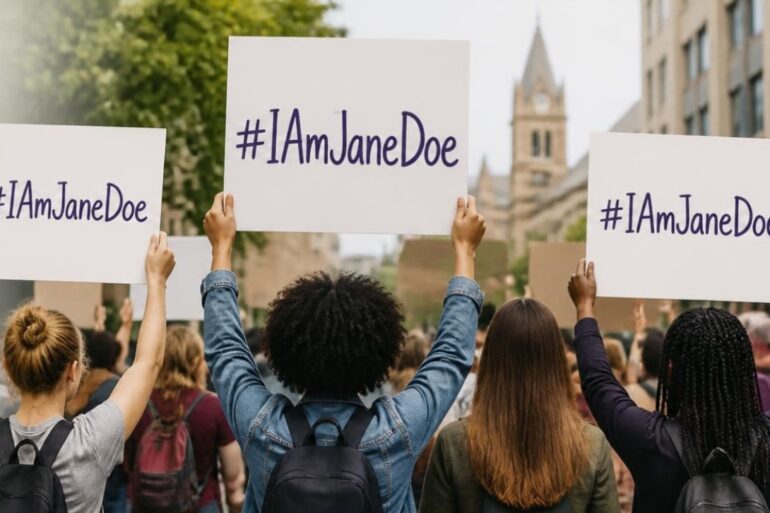


The answer should be simple: the woman herself. But in a pronatalist society, her body is often treated as public property—debated, regulated, and claimed by others.
In the Philippines, few topics are as awkward or as socially charged as reproductive health. Menstrual cramps, abnormal bleeding, pelvic pain, dyspareunia (pain during sex): these are experiences many women silently internalize, rarely shared outside whispers among close friends, all too often masked with humor. Visiting an OB-GYN feels inherently intimate, layered with embarrassment, shame, and inescapable vulnerability.
This discomfort begins early.
The first Lesson: shame
When I was around twelve, my mom accompanied me to our town OB-GYN for a vaginal fungal infection. In small towns, the gynecologist knows everyone with a vagina, their families, their rumors, their cycles. She was already elderly then, a woman who had likely lived through the war years, her authority shaped by a different era of medicine and morality. Instead of clear medical guidance, I was chastised. I was told my yeast infection likely came from swimming without showering afterward. She knew I was on the swim team. True. After training, I was too lazy and tired to shower and change into clean, dry clothes, so I would simply put my uniform over my damp swimsuit and go home. I would bathe, of course, but that was an hour’s drive from school.
When I timidly asked how to use a tampon because I had heard the big girls (the high schoolers) used them and competed without fear during their periods, I was told, bluntly, that tampons were “dangerous” for virgins. I could die from Toxic Shock Syndrome (TSS). She even looked at my mother incredulously, since my mom hadn’t dissuaded me.
So I didn’t use one until I was seventeen, alone in my condo, curious and bored. I bought a box from Rustan’s Supermarket or Cash & Carry. Tampons weren’t widely available then and, in many places, still aren’t. I wasted around five pieces before it stopped hurting, and the tampon finally felt properly placed. The moment it worked was a revelation: freedom from bulky pads that felt like diapers. I had successfully secured my mobility and independence during my period. It was my first act of reclaiming my body from shame and misinformation. Thankfully, I did not die from TSS.
I told my mom the good news. She expressed genuine gladness. She admitted she had tried using tampons in the 1970s, but they were expensive and mostly unavailable.
The sharp pain that changed everything
For years after, my periods were regular. In my late thirties, something shifted. Days before my period, I could hardly stand without feeling excruciating hooks inside my lower abdomen pulling me down. My bleeding became heavy enough to make me anemic. Simple tasks taxed my body.
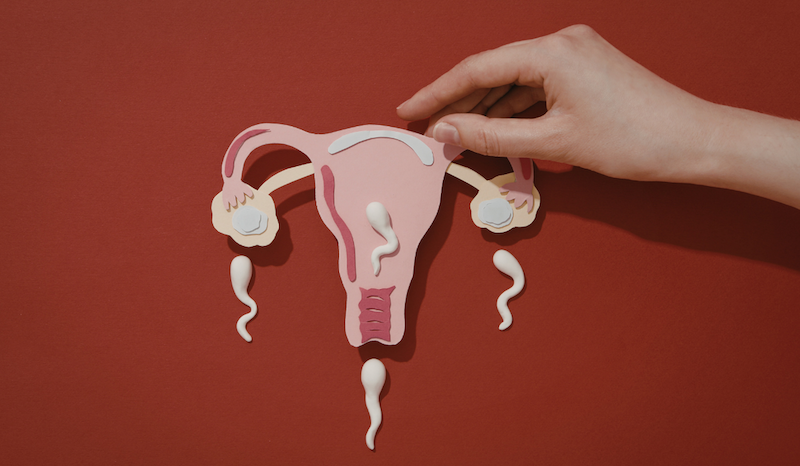
Eventually, I went to Capitol Medical Center, where I found a doctor who genuinely listened. Dr. Shierly del Rosario ordered imaging and discovered what many women quietly endure: multiple uterine myomas, or fibroids. Medically speaking, fibroids are benign smooth muscle tumors of the uterus that can cause heavy bleeding, pressure symptoms, pain, and urinary frequency when large or numerous. They are extremely common. Studies estimate that up to roughly 50% of women develop fibroids by age 50, and many experience clinically significant symptoms.
Some Filipino health advisories even highlight uterine fibroids as one of the most common gynecological diseases among women of reproductive age.
Despite their prevalence, fibroids rarely make it into public discourse, especially in a cultural landscape where motherhood remains tied to identity and worth.
Fibroids are not rare. Neither are endometriosis, adenomyosis, polycystic ovary syndrome, urinary incontinence, or perimenopausal symptoms that fog the brain and disrupt sleep. Painful periods that cause girls to faint in school bathrooms. Bleeding so heavily that it requires planning life around the nearest restroom. Facial hair from hormonal imbalance that becomes a source of humiliation, perceived or real. Leaking urine after childbirth that women normalize as “ganun talaga.”
Pain during intercourse that is endured in silence because marriage is expected to absorb discomfort. These are not fringe conditions; they are ordinary gynecological realities. And yet in many Filipino households, they are not talked about, as though biology were indecent, as though suffering were a private moral obligation rather than a clinical concern worthy of care and relief.
Relief, delay, and the financial reality
Surgery terrified me, so we started with expensive medication: GnRH agonist injections intended to shrink fibroids and reduce bleeding. They worked. The largest fibroid shrank dramatically, my cramps eased, and my periods stopped altogether. But relief breeds complacency. My life went back to normal, and showing up for routine follow-ups was the last thing on my mind or on my list of priorities.
That is also a Filipino tendency: endure, work around symptoms, and relegate reproductive health to the back burner.
Yet the condition progressed. By 2019, surgery was clearly indicated. We scheduled a myomectomy, a uterus-sparing operation, but then the pandemic hit. I postponed the procedure, convinced I should not occupy a hospital bed amid the crisis.
By 2023, delay was no longer an option. In our final pre-op conversation, my doctor described a meticulous plan to remove fibroids while preserving my uterus. I asked then, “What if we do a hysterectomy instead?” She paused, considered it, and told me it would technically be simpler. But she wanted to preserve the possibility of children if I ever chose that path. That was what allyship in medicine felt like. She did not push her preference; she fully informed and prepared me for reality. She promised to preserve my ovaries so I would not be pushed into immediate postoperative menopause.
Let me be clear: the suggestion was not made lightly. I understood its permanence. A hysterectomy is not the removal of a cyst; it carries long-term physiological, hormonal, and psychological consequences. I was, and still am, younger than the natural age of menopause. The thought of entering menopause overnight was deeply unsettling. I arrived at that question only after years of pain, progressive disease, financial strain, and the reckoning that preserving possibility is not always the same as preserving health. It was not romantic bravery. I was terrified. It was a difficult decision and, ultimately, an acceptance of what was medically sound for my well-being.
What happened in the operating room, however, was different. The fibroids had distorted my anatomy so extensively that both ovaries had twisted on their supporting ligaments, compromising blood supply. A myomectomy was no longer feasible. I underwent a total hysterectomy with bilateral oophorectomy.
The postoperative histopathological examination of the excised tissues revealed a significant mass. It was benign, but the report noted features that warranted concern for potential progression had I not undergone the operation. The surgery had addressed more than pain; it had removed something that did not belong there and might have evolved into something far more serious: cancer.
Related story: What women really want from life: We asked 5 ladies across different ages to tell their truths
Related story: 5 little-known rights Filipino women are legally entitled to
A cruel system that fails women
Recovery was an exercise in humility and gratitude. For two months, I chose not to work and availed myself of the 60-day leave. I learned that the world keeps turning without me, even if I once feared it would not.
Yet this physical surrender came alongside another form of systemic cruelty. Despite years of contributions to the Social Security System (SSS), I was reimbursed for only two days of hospital confinement, even though the surgery and recovery were as intensive as childbirth. This is not hyperbole. Major abdominal surgery requires weeks of restricted movement, monitoring, and follow-up. The financial impact is staggering.
It exposed how antiquated and unsupportive our policies are, a system that fails to meaningfully assist even contributing members when they are most vulnerable. While PhilHealth provides case rates for procedures like myomectomy or hysterectomy, coverage often falls far short of actual hospital costs, pushing many women toward loans, savings depletion, or financial distress.

Who designs these policies? Who are they truly for, if not for the very workers who fund them?
I am deeply grateful that I have friends and family, a social support system that took care of me. An aunt accompanied me in the hospital room. Friends sent financial gifts and food while I recovered. Neighbors visited. I am fortunate.
But what of working-class Filipinas? What of working mothers? What of women who care for ill relatives? What of women who cannot afford extended leave?
The pronatalist culture that pollutes bodily autonomy
In the Philippines, pronatalism, the assumption that all women should want to bear children, is deeply embedded in cultural narratives, family expectations, and even policy priorities. A uterus is often treated as a shared asset, something to be preserved for potential children, for lineage, for continuity.
For single women like me, this gaze can still be intrusive: “What if you meet someone?” “Sayang.” “Baka magbago isip mo.”
For married women, I wonder if the question becomes even more convoluted, bargaining between personal relief and perceived duty to a partner’s desire for children. And for women living with parents, their bodies become part of a family’s collective expectations: “Mag-pray muna.” “Bata ka pa.” “May iba pang paraan.” “Sasama din yang myoma pag nanganak ka,” which is untrue and can even lead to dangerous bleeding complications during pregnancy.
In a society where motherhood is valorized, agency over one’s reproductive system can feel threatening, even selfish. What these reactions reveal is not loving concern alone—it is anxiety about losing cultural narratives that tie a woman’s worth to her biological capacity. Sometimes, it is also control, veiled carefully as concern.
Who owns a woman’s body?
The answer is simple in theory: the woman herself. In practice, agency competes with culture, familial expectations, marital dynamics, and inadequate public health support. When women are taught to endure pain silently, to negotiate medical decisions with partners or elders, and to navigate systems that undervalue their suffering, reproductive healthcare becomes less about choice and more about helpless resignation.
I openly share my story for clarity: to disrupt the silence around reproductive health, to challenge structures that gatekeep agency, and to insist that a woman’s body and her choice of treatment belong to her, no one else.
Taking agency over reproductive health is not a selfish act. It is respect. It is liberation. It is a basic right.
Related story: Where her paycheck lands: What women love to prioritize in their 30s
Related story: Women of genius: Thought leaders, trailblazers, and creators who changed the world for good