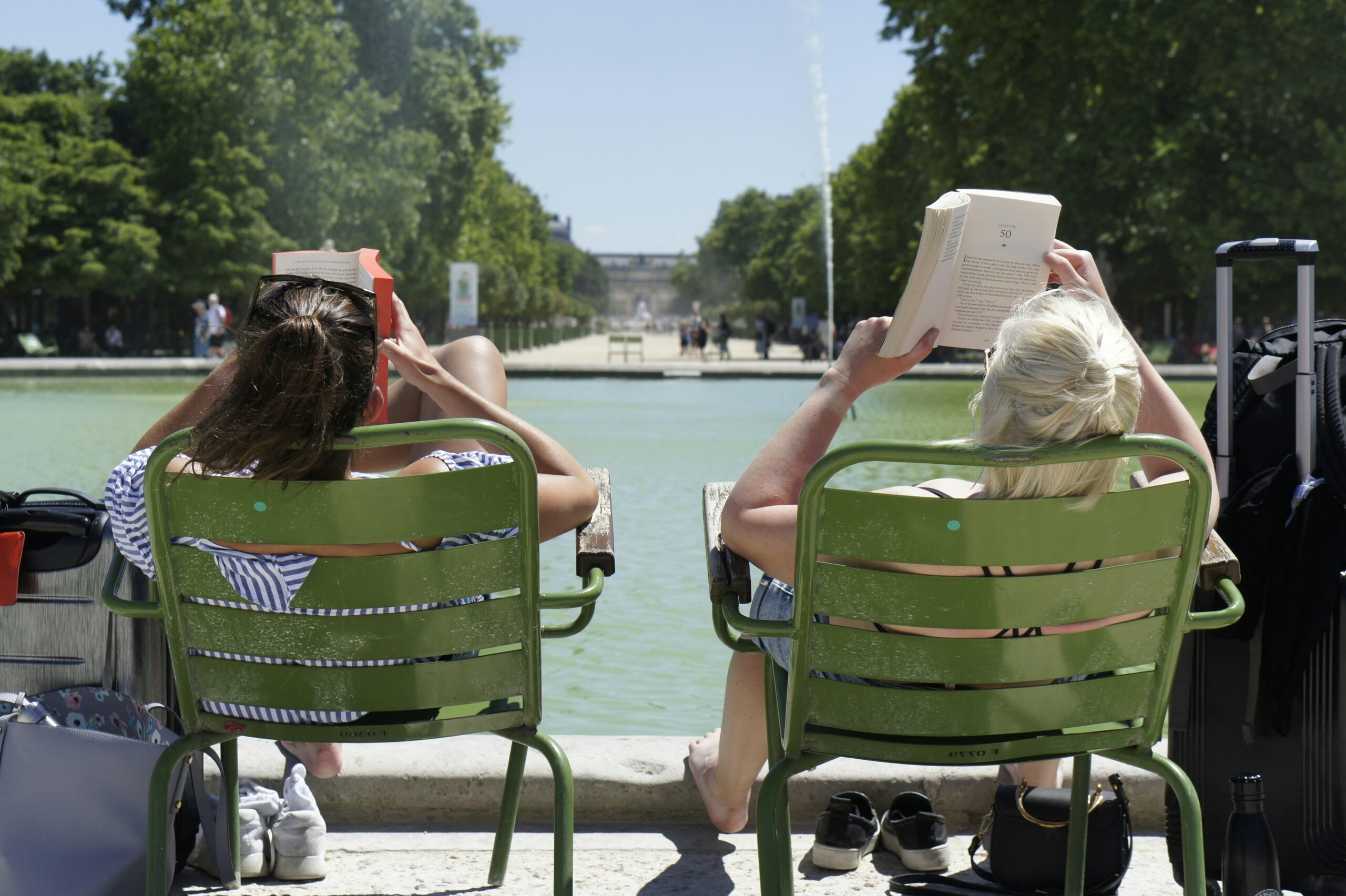

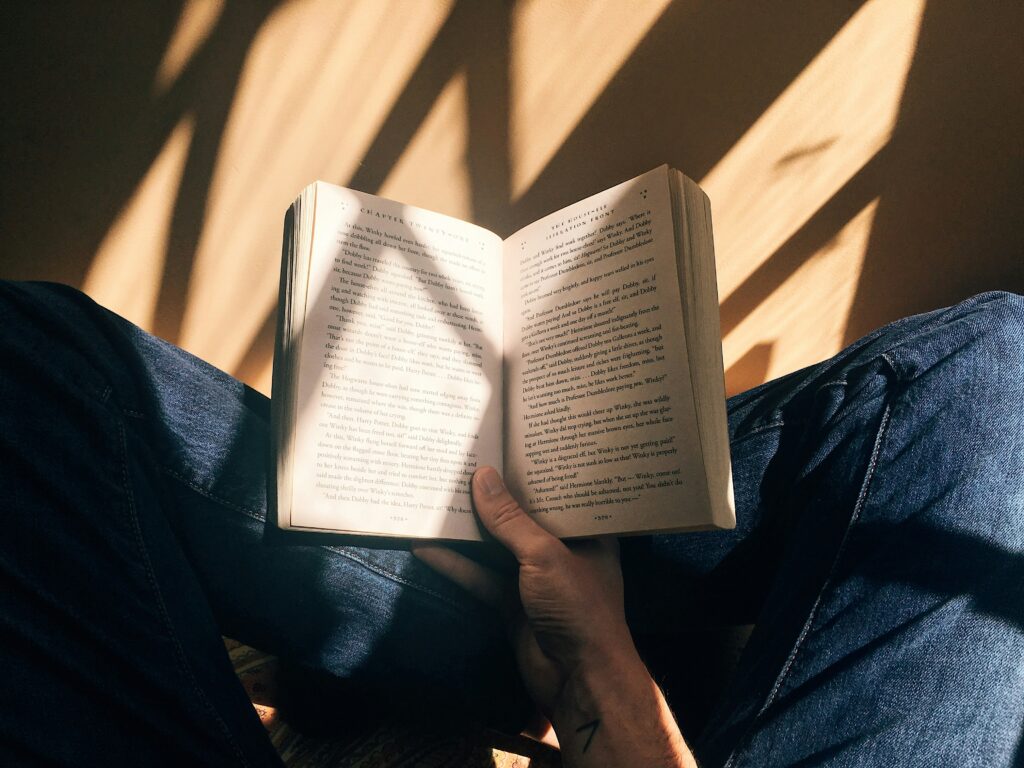
Nowadays, indulging to leaf through a physical book in cafes, public transport, and other spaces is seemingly viewed as performative reading or doing it for show.
This month marks the 139th anniversary of Noli Me Tangere, which was published in Berlin, Germany, circa March 1887. After the book reached the Philippines, the mere sight of carrying it in public was a political hand grenade, as described by historian Anderson Benedict. It got so bad that Fray Salvador Font, the cura of Tondo and chairman of the Permanent Commission of Censorship, ordered the book banned from circulation by the end of the year, citing heresy, treason, and subversion against its author, Jose Rizal.
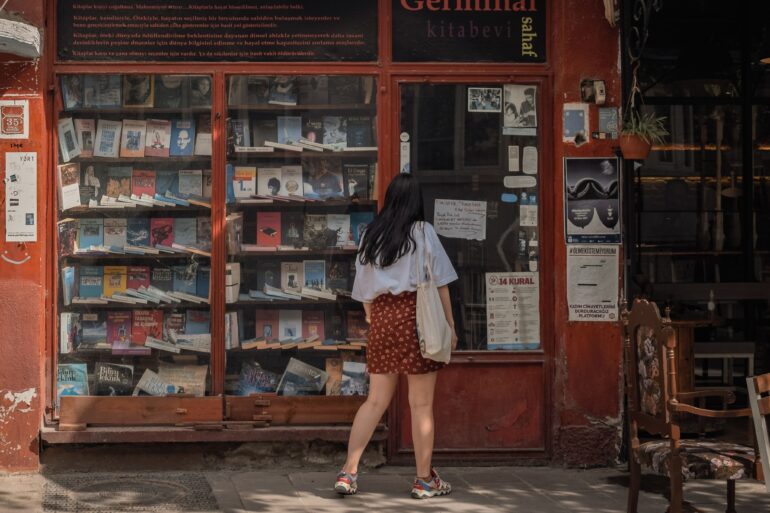
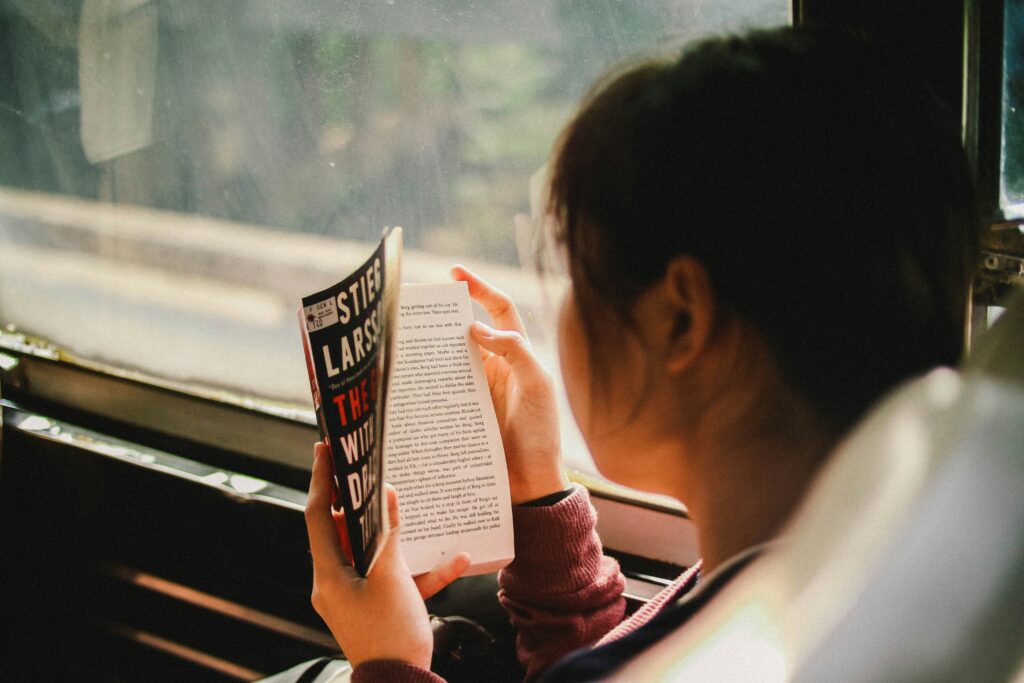
Nowadays, reading in public has been getting a bad reputation. Indulging to leaf through a physical book in cafes, public transport, and other spaces is seemingly viewed as performative reading or doing it for show.
Related story: 12 cozy, clever, and BookTok-favorite titles for bibliophiles this season
Related story: The books you’ll want to read before they hit the screen
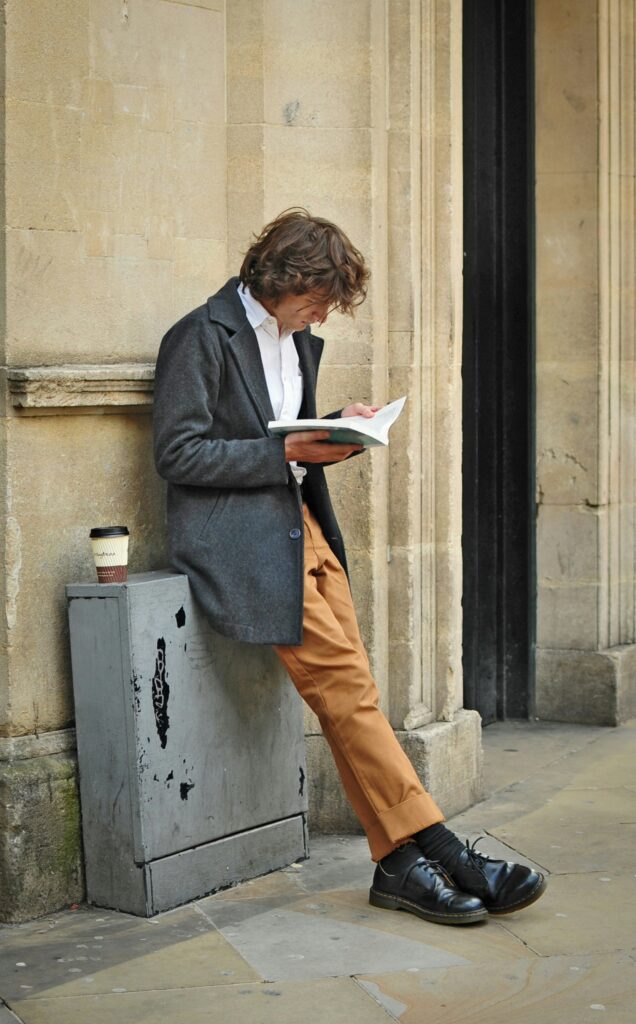
Performative in a sense, as society perceives, someone who insists on outwardly announcing their intelligence or cultural pedigree through an insincere display of ‘reading.’ The imagery in question is usually a 20-something year old male, in loose clothing, matcha drink on one hand and a tote bag in the other, while touting a copy of universally acclaimed books such as J.D. Salinger’s The Catcher in the Rye (1951). Or perhaps something flashier, presumably handpicked from the bestseller pile or featured by some influencer online.
Such individuals reading in public have drawn the ire of the younger generation, turning these encounters into memes, often by the same group of people who ironically read far fewer books than ever. In its recent National Readership Survey, the National Book Development Board (NBDB) noted the decline of non-school required readership among Filipinos at only 42% for adults and 47% for children who read regularly.
It’s bad enough that many Filipinos are not generally fond of reading; access to books can also prove to be a challenge for others. Not to mention the perennial issue of anti-intellectualism among some Filipinos rearing its head in the most casual of conversations. Almost anyone has been on the receiving end of the sentiment, “Nosebleed!” if you utter the correct English in a conversation. On the even more jarring side of that coin, you also get the label of “Wow, makata! (Poet or someone extremely learned) when you speak in perfect Tagalog.
Luckily for others, the issue is less complicated in practice.
Sam, 28, a financial analyst and avid reader, finds the notion of performative readers amusing. She shared that reading was a big part of her life growing up. When I asked about her thoughts on the stigma of reading in public, she found it more humorous than concerning.
“It shouldn’t mean anything as long as it’s not harming anyone,” she said. Plus, there are fairly limited situations where reading can be seen as inappropriate anyway. “I see all these jokes about the matcha-drinking, tote bag, feminist literature-personas on my timeline. I find it funny.”
The sentiment is relatable, but I remember not too long ago when reading in public is actually celebrated and even a desirable trait to have. In an interview with actress Sophia Bush (One Tree Hill) on Jimmy Fallon in 2018, The Incredibles 2 star, and a proud book nerd, said in jest that she had been seeing a lot of ‘hot guys reading’ on the New York City subway. She even mentioned the Instagram account @HotDudesReading, which is a collection of candid photos of attractive gentlemen reading books on public transportation, mostly in New York.
Where did this appreciation go? In less than a decade, the celebration of reading in public is now draped in hushed undertones and mistakenly categorized as ‘being brave’ or having the confidence to step out of the norm of being glued to our phones.
“Reading is a beautiful hobby,” said Zandra, 33, a lifestyle copywriter based in the Philippines. “It’s a habit that nourishes the mind and it’s sad that it’s being tainted with the performative label.”
What does performative even mean?
The performative label isn’t entirely new. Back in my day, we simply called those people posers. Remember that one emo friend who always carried a guitar, dressed all in black, wore mismatched Chuck Taylors, had hair parted to one side, and sported a shirt featuring Paramore’s first album art? Yeah, that person.
The word itself has undergone a transformative evolution from its sociological connotation defined by renowned English philosopher of language John Langshaw Austin, who argued that some words are understood as a kind of action or ‘speech acts’ in his book How to Do Things with Words. Speech acts such as “I now pronounce you husband and wife,” and a judge sentencing someone are considered performative.
It was during the COVID-19 pandemic that the word became increasingly attached to activism amid the Black Lives Matter protests and the George Floyd incident, wherein some groups called out the authenticity of those people who showed support for the cause, but did not actually care about the injustices and only aligned themselves to appear moral. So much so, that Merriam Webster’s website saw an avalanche of search queries for the word, skyrocketing by 1,240 percent on June 2 year over year. It also ranked number four on the dictionary’s 2025 word of the year.
Last year, the term “performative” has gotten so widespread across social media that it has turned the weight of the word into this meta performance of self-awareness when a group of organizers held the “Performative Male Contest’ at Cal Anderson Park in Capitol Hill, Seattle.
“I somewhat agree that reading in public can be perceived as performative,” Zea, 22, a visual artist, said of the idea of performative reading. “In our generation, there is a need or collective desire to be seen and recognized. To an extent where anything we do in public, be it for ourselves or for the eyes of others, is a “performance.”
Related story: Beyond bestsellers: How celebrity book clubs and pop culture led me to unexpected literary gems
Across the globe, certain book titles now instantly mark someone as a “performative” reader. In the US, David Foster Wallace’s Infinite Jest fits that bill. Maybe because of its behemoth size of over 1,000 pages or its bright-colored jacket featuring a blue sky and clouds that beckon anyone in public reading it to be ridiculed for reading it. In the UK, the label often pertains to anything published under Fitzcarraldo Editions, a London-based publisher specialising in contemporary fiction and long-form essays. What makes it coveted is its appeal to a very specific niche of readers, who prioritize aesthetic and branding.

Fitzcarraldo, which took its namesake from the 1982 adventure-drama film directed by Werner Herzog provides a roster of books, wrapped in International Klein Blue. Literally: every single of its book covers is in this particular shade of blue with white lettering.
For the Philippines, there isn’t a specific book that suffers the same fate. Possibly because literacy here is facing a silent crippling crisis. According to the Second Congressional Commission on Education (EDCOM 2), functionally illiterate Filipinos have nearly doubled to 24.8 million in 2024, from 14.5 million in 1993. In the same report, it also showed that 88% or nearly nine out of 10 students entering grade 7 are struggling to read at that level.
“I find it odd that they would think that, I read when I feel like doing so. It doesn’t matter to me where I am. I could be in a restaurant or in the toilet for all I care.”
Considering this long-term problem in our education system, latching on to this belief of performative reading can prove to be profoundly harmful in the long run.
“I find it odd that they would think that,” Allan, 50, a former magazine editor-in-chief and current screenwriter, said when asked about performative reading. “I read when I feel like doing so. It doesn’t matter to me where I am. I could be in a restaurant or in the toilet for all I care. The toilet, by the way, is one of the best places to get some reading done, as any devoted bathroom reader will tell you.”
And I wholeheartedly agree, as I harken back my good old days of devouring Haruki Murakami’s three-volume set work 1Q84 in the bathroom.
Related story: 5 translated books that deserve a spot on your shelf
Kidding aside, it’s quite fitting that Infinite Jest received the undeserved flak of the de facto book for performative readers. The irony is how it addresses addiction and its many faces, but ultimately how people fixate on quick dopamine fixes like drugs, entertainment, sex, etc., while subconsciously in pursuit of real human connection.
As for myself I will continue to read in public because reading is everything to me. My principles, though partly acquired through life experiences, are grounded by the ability to understand context, subtext, and the value of empathy through language imparted by all the written work I’ve consumed over the years.
I owe my career to books. And I learned to write by reading.