

As more people rely on bite-sized information, the discipline of reading books may be turning into one of the most important skills to protect.
“Reading is difficult. People just aren’t meant to read anymore. We’re in a post-literate age,” says Lenny Abramov, the main character from Gary Shteyngart’s novel, Super Sad True Love Story (2010).
The often satirical yet painstakingly plausible near-dystopian future set in New York City features the lovable but awkward protagonist. Lenny is an old-fashioned book lover navigating the backdrop of a world wherein the United States is facing a crippling financial crisis, while everyone is self-absorbed in keeping track of their social status from net worth to ‘hotness’ (or as the novel puts it explicitly, ‘fuckability’) through their ‘apparati’ devices, which sounds eerily close to today’s smartphones.
Those fictional neck-worn devices stay close to their faces to ensure all the information from the ongoing US financial crisis, the most recent pop culture phenomenon, and their messaging apps is updated in real time.
If you think that sounds familiar, we can talk about the US-Iran conflict, the global energy crisis and the performers at the recent Coachella in a separate story.
In the book, the narrative is presented in two ways: through the diary entries of Lenny, which reads like a conventional novel, and from the overtly unapologetic fictional platform called GlobalTeens, featuring Twitter-esque posts exploring the vulnerability of his love interest Eunice.
Sixteen years later, we’re living a version of Shteyngart’s fictionalized deterioration of the information age.
Related story: PH students rank sixth worst in reading. Publishing house steps in with tools to help them improve
Related story: To read or not to read…in public

One of the most challenging realities of our time right now is our overreliance on algorithmic learning. When we choose to consume information through summaries and bulleted data points, we subconsciously drop the most important factor in education: context.
Reading, whether literary classics, fiction or non-fiction, or even marketing brochures of internet providers haphazardly posted on your doors, may not necessarily equate to profound knowledge, but at the very least, it widens your context.
The quality of our reading is critical in all of this. Think of it like a learning search radius. As you consume more books on varying topics, the range of it expands. In doing so, when you need to draw inferences or form opinions, your worldview is supported by this swathe of interconnections leading to a unique perspective.
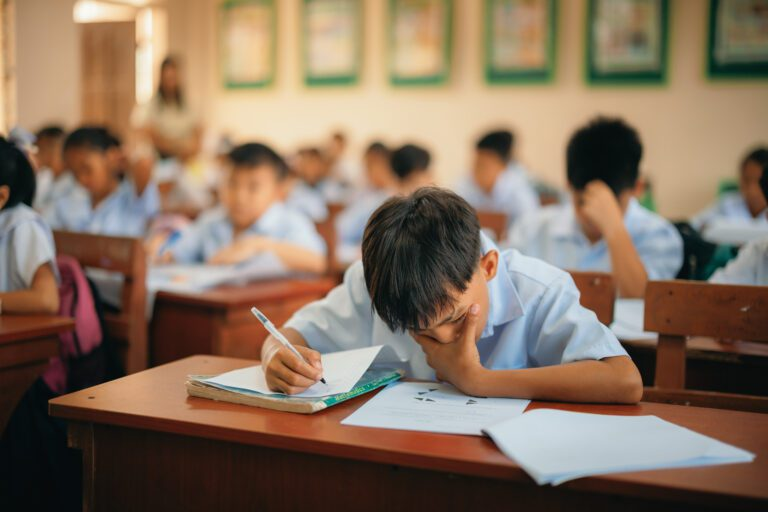
Easier said than done, especially here in the Philippines, when the proficiency rate among Filipino learners is, to put it lightly, concerning. According to a report published earlier this year by the Department of Education (DepEd), despite a favorable 93% basic literacy rate, students suffer a steep decline in proficiency. In the same study, Filipino schoolchildren went from a 30.52% proficiency level in Grade 3, to an alarming 0.47% when they reached Grade 12.
These proficiencies include struggling with foundational skills such as recognizing letters and sounds, reading common words, understanding short passages, counting on their own, or doing simple numerical problem-solving.
Beyond their schooling, the younger generation faces another obstacle when they enter the workforce, as more companies rely on generative artificial intelligence to do their regular functions. In a poll conducted by SEEK’s Decoding Global Talent Report 2024, 46% Filipinos reported using GenAI in both their work and personal lives.
The advancement of technology isn’t the enemy here. We’ve all seen it before in different faces, from the advent of online search engines to the convenience of Wikipedia for surface-level knowledge. But when convenience starts to replace comprehension, we render literacy as a mere motor skill and not a cognitive function.

Entering a Post-literate age
Lenny’s thoughts on a post-literate society are based on the idea that we now live in a world in which people no longer read, write, or communicate, instead preferring to consume newer forms of multimedia.
The first attribution of the term is from Marshall McLuhan’s The Gutenberg Galaxy: The Making of Typographic Man (1962), although it primarily featured a positive definition showcasing how humanity has achieved literacy and therefore, continuously reinvents learning mediums to further mentally develop.
Its contemporary use is popularized by Times columnist James Marriott in his essay The Dawn of the Post-Literate Society, published in September 2025. He argued that we are entering a counter-revolution against the Age of Print in the 15th century, which led to the boom of readers during the 1700s. This was a time when “people read everything they could get their hands on: newspapers, journals, history, philosophy, science, theology, and literature.”
A number of different studies across the globe report the same narrative: reading is in a sharp decline. Researchers from the University of Florida and University College London have reported that the number of Americans who read daily for pleasure has fallen by 40% over the last 20 years.
Perhaps Super Sad True Love Story predicted all of this in 2010. For one thing, German data gathering platform Statista recorded a significant jump in smartphone sales from 172 million units sold worldwide in 2009 to 296 million units sold in 2010.
The widespread availability of smartphones in 2010 has also been noted in the reports of the Program for International Student Assessment (PISA), one of the most famous international measures of student ability, which marked a significant drop in reading ability since the 2010s, with students noting their difficulty to ‘think, learn, and concentrate.’
Back home, the Philippines ranked 76th out of 81 countries in reading comprehension, mathematics and science in 2023. In a statement, the government acknowledged that the poor performance indicates the current state of the country’s education system, which is five to six years behind in learning competencies.
Related story: Beyond bestsellers: How celebrity book clubs and pop culture led me to unexpected literary gems

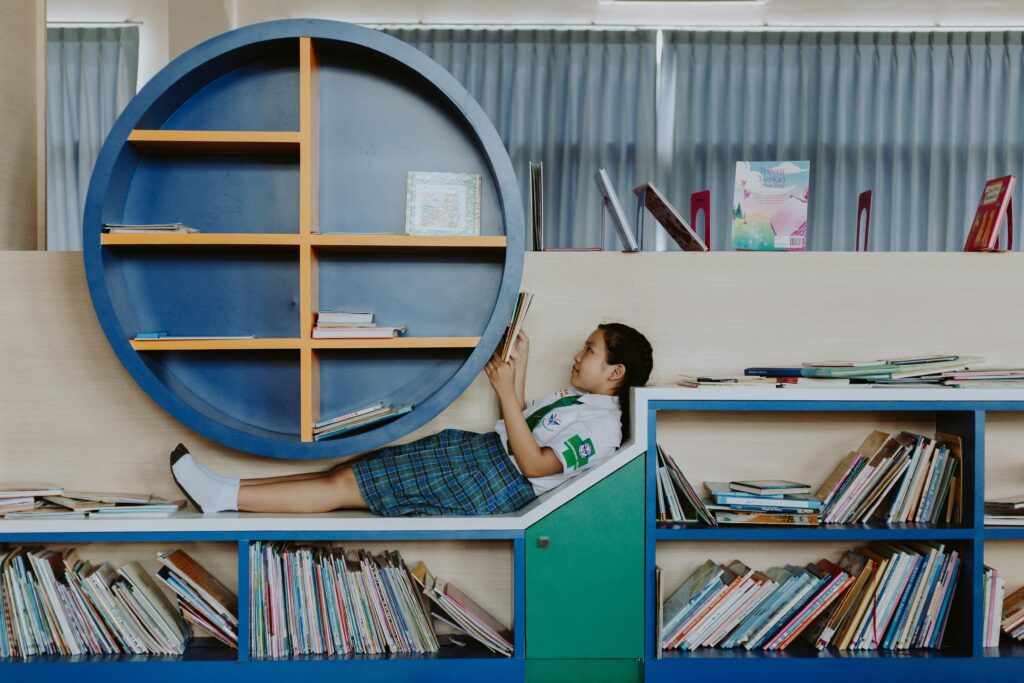
What do we read from here?
As much as I want to avoid the cliché of writing this during the celebration of National Literature Month, it’s a hard reality to celebrate the impact of the written word in our society when increasingly fewer people are hardly reading any of it anymore.
My opening line, borrowing from Shteyngart’s Lenny’s quote, actually continues further, “We’re in a post-literate age. You know, a visual age. How many years after the fall of Rome did it take for a Dante to appear? Many, many years.”
This line, I believe, is a direct critique of succeeding generations’ unconscious role in the erosion of our willingness to read. This skill, which we typically learn at the age of five, is the bedrock of creativity and innovation throughout history.
To unravel Lenny’s quote, the fall of the Roman Empire occurred in the 5th century and his allusion to the creation of Dante Aligheri’s Divine Comedy takes us way into the 1300s. Some would even argue that it is the catalyst or the precursor of the Renaissance movement in Europe.

Without reading, I wouldn’t be able to draw from all of these resources that I’ve been fortunate enough to come across over the course of my schooling and the guidance of my professors, mentors, and, of course, my older brother, who made me fall in love with books.
I have my Kuya to thank for recommending titles by Jostein Gaarder or Douglas Adams (reading those books proved to be a challenge at the time), in between my exploits of devouring Pokémon chapter books from Scholastic or flicking through the pages of Dav Pikey’s The Adventures of Captain Underpants (1997).
As the only medium of literature underrepresented in this piece, I would end with a short poem of Emily Dickinson, There is no Frigate like a Book:
There is no Frigate like a Book
To take us Lands away
Nor any Coursers like a Page
Of prancing Poetry –
This Traverse may the poorest take
Without oppress of Toll –
How frugal is the Chariot
That bears the Human Soul –
There is no ship like a book that can ferry us in faraway adventures, nor horses (Coursers) as strong as a page-turning literary piece of art that can transport someone to another world.
Related story: What’s an analog bag? The low-tech trend taking over totes
Related story: 12 cozy, clever, and BookTok-favorite titles for bibliophiles this season