

On what the new Academy rules actually mean for the people who make the movies we love and what they leave out entirely.
There is an AI actress named Tilly Norwood. She is not real. She has never been in a movie. She was built by production company Particle6 to prove a point about what technology can do now. And earlier this year, she posted on Instagram that she couldn’t wait to go to the Oscars.
This is the world we are in right now. And the entertainment industry, like a lot of industries built on human creativity, is still figuring out how to respond to it.
Related story: Oscars 2026: highlights, major winners, and our favorite red carpet fashion
Related story: The Oscars is moving to YouTube in 2029, marking the end of a long TV era
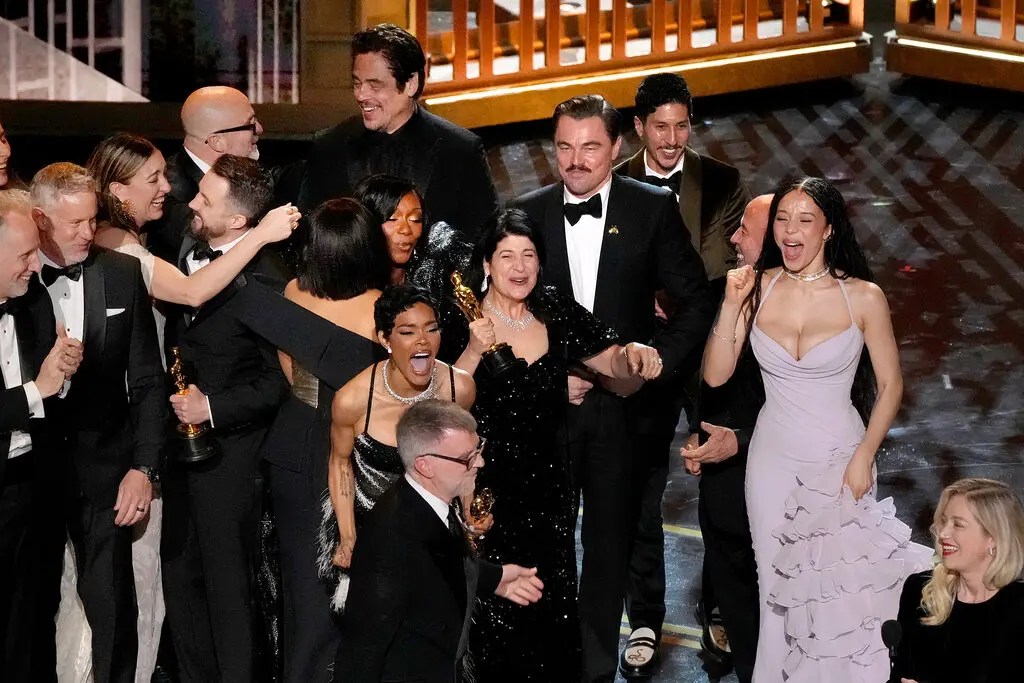
A few days ago, the Academy of Motion Picture Arts and Sciences made its most direct statement yet. New rules for the 2027 Oscars say that only performances “demonstrably performed by humans with their consent” can compete for acting awards. Screenplays have to be human-written to qualify. The Academy also said it reserves the right to investigate any film and ask about how much of it was made by a real person.
Academy President Lynette Howell Taylor said, “Humans have to be at the center of the creative process.” It’s the right thing to say. It needed to be said. But the more you look at what’s happening in Hollywood right now, the more you realize this ruling only covers part of the problem.
The award is protected. The jobs are another story.
Just last April, Disney laid off over a thousand employees. Among them was the visual development team at Marvel Studios — the artists who spent years designing the characters, the costumes, the entire visual world that turned the MCU into one of the most recognized franchises we know.
And Andy Park was one of them. He had been Marvel’s director of visual development for 16 years. More than 40 films. He announced his layoff on social media and wrote that he couldn’t be prouder of the history they had made.
Marvel Studios Visual Development: 2010–2026
— Andy Park (@andyparkart) April 20, 2026
End of an era. I was there at the start of a team that broke the mold. 16 years, 40+ films, and 15 films led as Director of Visual Development, I couldn’t be prouder of the history we made.
My journey continues…#Marvel #AndyPark pic.twitter.com/GiWBD37M5D
Evangeline Lilly, who played the Wasp in films that Andy Park helped bring to life, posted a video about it on Instagram. She said she reached out to him to ask if it was true, and he confirmed it. “I can’t quite believe that Disney has let go of the artists who brought the Marvel Universe to life through their genius,” she said. “Shame on you for turning your back on the people who built the power you are now using to throw them away.”
That’s the gap. The new Oscar rules protect acting and writing categories. They say nothing about visual effects, concept art, production design, original score, all the places where AI is already quietly doing work that used to belong to real people. Over 40,000 entertainment jobs have disappeared from Los Angeles in the past three years. Probably a quarter of the city’s entertainment workforce, gone.
Then there’s Val Kilmer
If Tilly Norwood is the easy case, obviously not a real person, no human performance at all — then Val Kilmer is where things get genuinely complicated.
Kilmer was cast in an indie film called As Deep as the Grave before his death in 2025. He never made it to the set but rather than recast, the filmmakers used generative AI and archival material to reconstruct him for the role, with the blessing of his family. His daughter Mercedes said her father had always looked at technology as a way to expand what storytelling could do. Kilmer appears in the finished film for about 77 minutes.

Is that a performance? It’s built from the life and craft of a real person who spent decades becoming exactly the actor he was. But he never stood in front of a camera for this film. Not once.
“Human-authored” is harder to verify than it sounds.
The screenplay rules come with a different challenge, which is that they’re almost impossible to enforce.
Writers are already using AI tools. To outline. To break through a block. To draft something at midnight when the deadline is the next morning. If a writer uses an AI tool to get a rough scene down, then rewrites it completely over the next two days, is that script human-authored? Most people would say yes. But there is no way to test it. There’s no mark in a sentence that proves a person wrote it. The Academy says it can investigate, but the creative process isn’t something you can audit like receipts.
This doesn’t mean the rule is useless. It means it depends heavily on honesty, and honesty is not always a given when there’s a gold statuette involved.
Why this goes further than film
I think about this beyond Hollywood because the same question is sitting in every creative industry right now. Journalism. Music. Design. Advertising. Any field where the work was built on human skill and voice and instinct is having this conversation, or about to have it.
What counts as human work? Who gets credit? Who gets paid? Who gets replaced?
The Academy’s new rules are not nothing. They send a real message about what the industry believes human creativity is worth. But the bigger fight, the one about whether the people who have spent their careers building these worlds will still have work in ten years, isn’t settled by an eligibility rule. It’s barely touched by one.
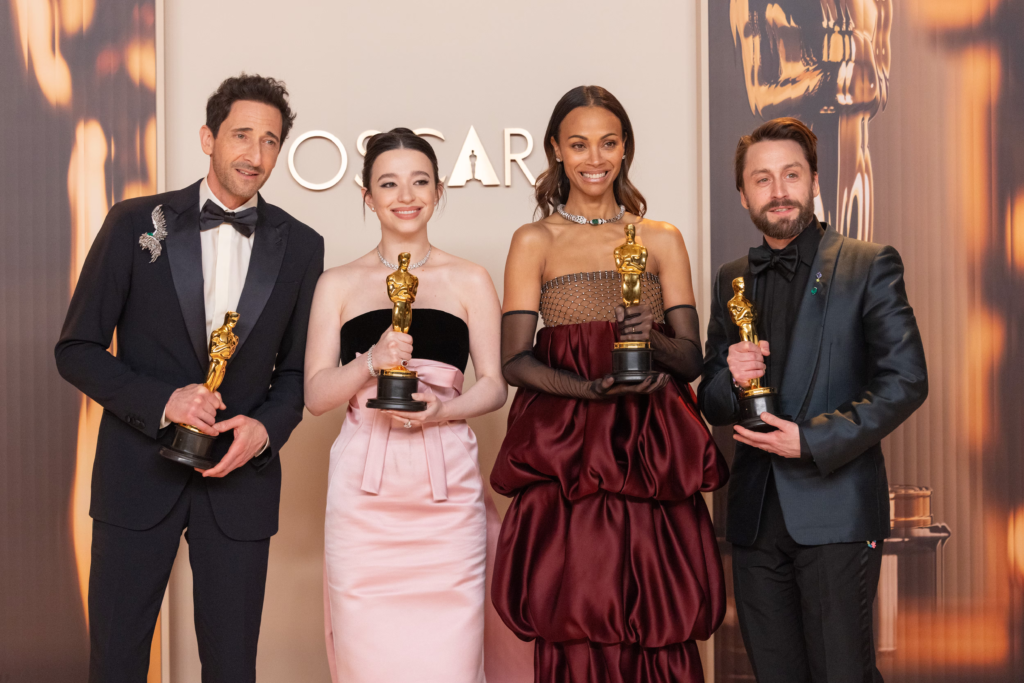
Tilly Norwood is not going to the Oscars. But the world that made her possible is already here, already operating, already changing things faster than any rulebook can keep up with.
The trophy may be safe. But at what point does protecting the award stop mattering if there’s no one left to make the thing worth awarding in the first place?