
Experts say clearer phone cameras and AI image tools could make it possible to recover fingerprint details from close-up photos.
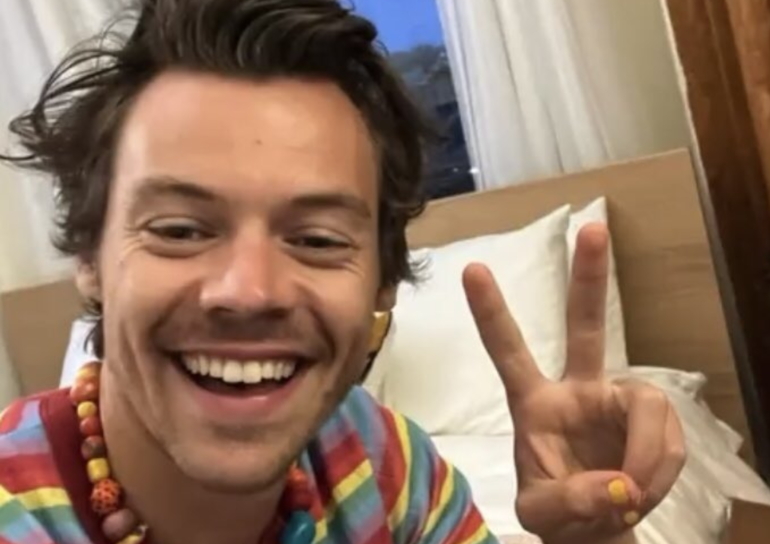
At this point, the peace sign is practically muscle memory. Someone points a camera at you, and before you can even decide what to do with your face, your hand is already up: two fingers, slight tilt, smile!
It’s harmless. It’s cute. It works in group photos, travel selfies, mirror shots, airport pictures, cafe dumps, and the occasional proof-of-life post.
But now, security experts are saying that the same pose could carry a small privacy risk. Not because the V-sign is suddenly dangerous on its own, but because today’s phone cameras are sharper, and AI image tools are getting better at pulling detail from photos we thought were too casual to matter.
Related story: Gucci and Google’s smart glasses could be luxury fashion’s next big tech move
Related story: Is Google dying or evolving? Inside the tech giant’s race to stay relevant in the AI era

So, what is the issue with V-sign selfies?
The concern is that when your fingers face the camera clearly, a high-quality photo may capture parts of your fingerprint.
A Chinese television program recently demonstrated how fingerprint ridges could be recovered from a celebrity selfie using photo-editing software and AI enhancement tools. Financial expert Li Chang, who appeared on the show, said fingerprints could potentially be extracted from photos taken within about 1.5 meters if the fingers are facing the camera directly. Even at around 1.5 to 3 meters, some hand details may still be visible, depending on the image.
That does not mean every selfie is a security threat. The risk increases when the photo is sharp, well-lit, close to the camera, and your fingertips are clearly exposed. Basically, if your phone camera can capture your pores, it can probably capture more finger detail than you think.


But should you panic? Not really.
Experts also point out that reconstructing fingerprints from a selfie is not easy. It requires the right conditions: clear lighting, focus, image quality, angle, and sometimes several photos. Someone would also need the skills and tools to clean up the image and turn it into something usable.
So no, a random person scrolling through your feed cannot automatically unlock your phone because you posted a cute peace-sign selfie weeks ago.
Still, the warning matters because fingerprints are not like passwords. If your password leaks, you can change it. If your fingerprint data gets copied, you are stuck with the same fingers. Very inconvenient design choice from the human body, honestly.
Why fingerprints are sensitive
Fingerprints are now part of everyday security. We use them to unlock phones, access apps, enter offices, clock in at work, and verify identity in different systems. That convenience is exactly why experts are cautious. Biometric data is useful because it is unique to you. But that also means it is difficult to replace once exposed.
This concern goes beyond selfies. In 2019, The Guardian reported that security researchers found a major breach involving Suprema’s Biostar 2 biometric access system, which exposed more than 1 million fingerprints, along with facial recognition information, unencrypted usernames and passwords, access logs, and other personal details. The system was used for access control in facilities connected to organizations such as banks, police, and defense-related firms.
Related story: Friendster is back but you can only add people you’ve actually met
Related story: Goodbye OTP? Here’s how and why your bank account security is about to change
That case was not caused by social media photos, but it helps explain why experts treat biometric data differently from regular login details. The US National Institute of Standards and Technology has also noted that biometric systems carry different privacy risks depending on how data is stored. Matching biometric data locally on a user’s device can lower privacy risk compared with matching against a central database, where there may be a higher risk of data breach or misuse beyond the original purpose.
In other words, the issue is not simply “never use fingerprints.” It is where the data goes, how it is stored, and who can access it.
Again, this does not mean one selfie will ruin your life. But it does mean your hands are no longer just “hands” in a photo. In the wrong context, they can become data.


A small thing to keep in mind
Not to worry you, but just for safety, if you are posting a close-up, high-resolution photo publicly, it helps to check whether your fingertips are clearly visible. If they are, you can crop the photo, blur the fingers, smooth the details, or choose another shot where your hand is not facing the camera so directly.
It is also worth being careful with apps or devices that ask you to register fingerprints, especially if you do not know where that data is stored. The same goes for random apps offering AI face reading, palm reading, beauty scans, or personality tests that ask for close-up images of your face or hands.
It may look like harmless fun, but sometimes the cute filter is really just a data collection device.
Hand poses are still cute, familiar, and probably the easiest pose to do when someone takes a photo. The point is simply that close-up photos can sometimes show more detail than we expect, especially now that phone cameras are sharper and AI tools can clean up images more easily.
But there is no need to panic or overthink every selfie. Just take a quick look before posting, especially if your fingers are very clear and close to the camera.
Related story: Best journaling apps for writing, planning, and reflection
Related story: Would you survive a month offline?