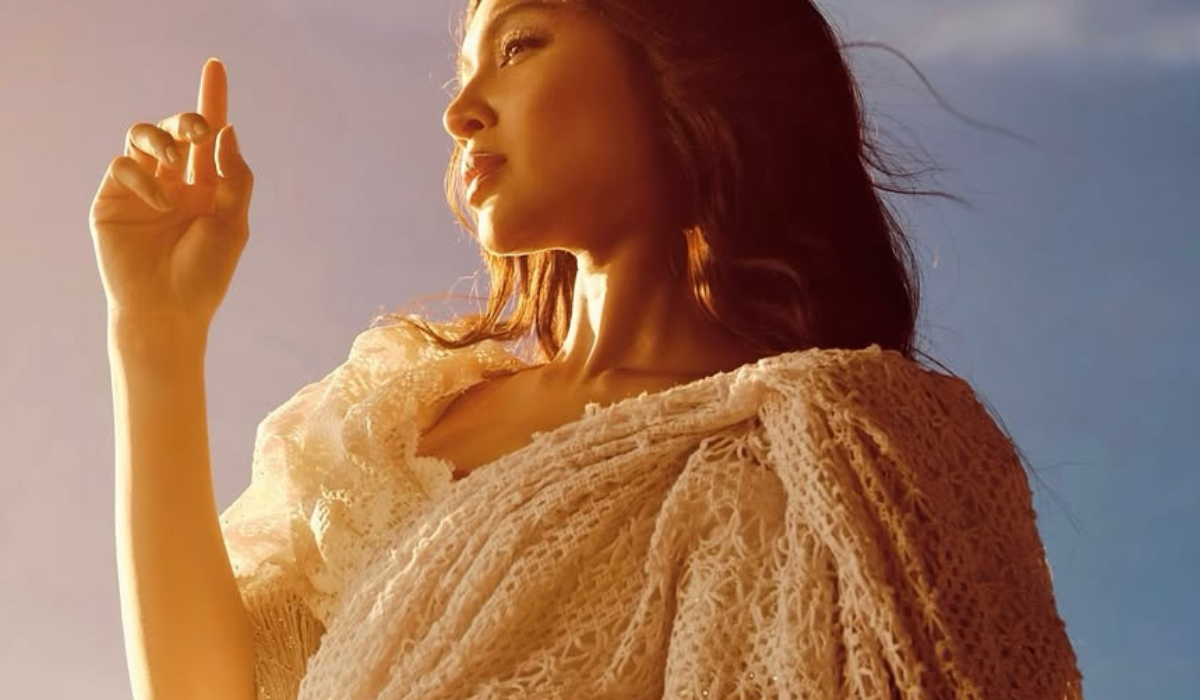

Styled by Lyn Alumno, Nadine Lustre’s Donuts fashion turns Filipino references, warrior dressing, and dystopian details into a visual language of power.
In Donuts, Nadine Lustre dresses for a world caught somewhere between ancient memory and an imagined future.
Released on September 18, the music video for her Apl.de.Ap collaboration casts Nadine as a warrior princess moving through open grasslands and an imagined, oppressive world. Filipino history, spirituality, and fashion informed the universe, with pre-colonial motifs reframed through a contemporary, dystopian lens. Nadine, who served as creative director, told Billboard Philippines that she wanted those influences woven subtly through the “setting, styling, and imagery.” Fashion, then, isn’t ornamental to the fantasy. It helps create it.
The wardrobe was styled by Nadine’s longtime collaborator Lyn Alumno, assisted by Lynus Martin, according to the official Donuts credits. Jelly Eugenio, Paul Nebres, Mariel Munsod, Jessie Maghuyop, Jannine Bance, and Christella Alvarez handled hair and makeup across the production.
Warrior dressing gets a dystopian direction
Rather than reproducing historical dress piece for piece, Donuts builds its fashion language through draping, layering, texture, exposed skin, sculptural accessories, and armor-like accents. Earthy neutrals and distressed finishes allow Nadine to look at home against the rugged landscape, while sharper shapes and metallic details pull her firmly into an imagined future.
The styling makes sense within Nadine’s larger concept for the video. She wanted Filipino influences embedded subtly throughout the world rather than treated as obvious decoration, while the pre-colonial references are pushed through a contemporary, dystopian treatment.
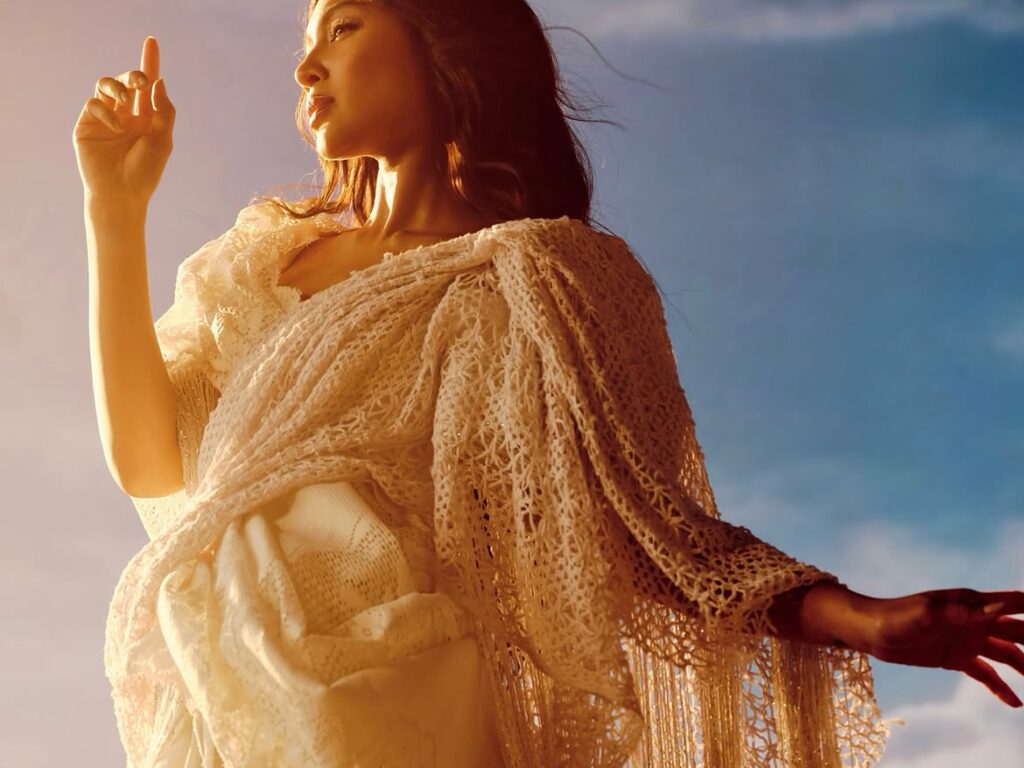
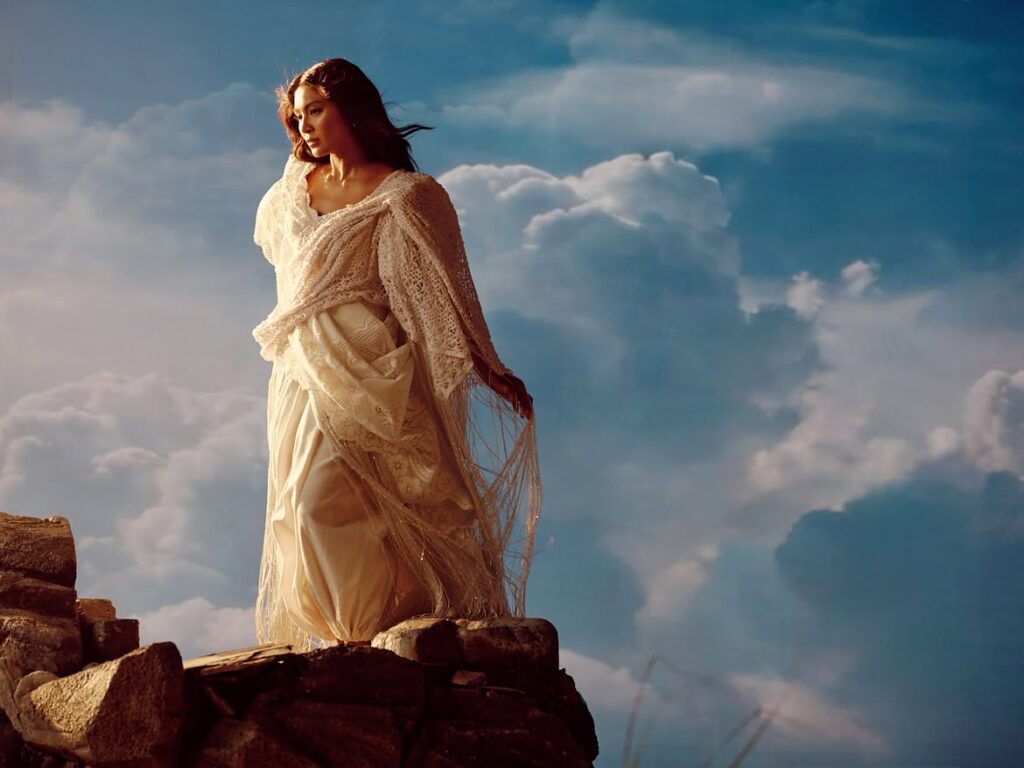
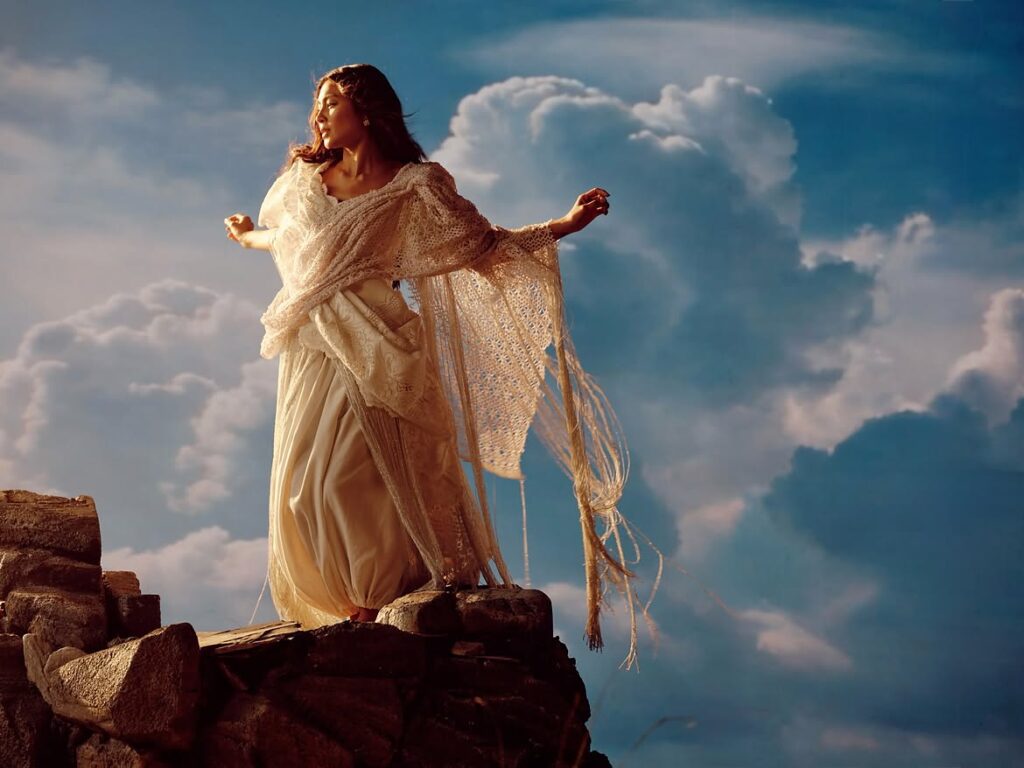
Her warrior princess therefore feels more future-facing than folkloric. The clothes suggest a character who has assembled her wardrobe for survival: fabrics wrap and fall around the body, accessories resemble talismans or pieces of armor, and deliberately raw textures keep even the more regal looks from feeling precious.
The costumes carry character
One of the strongest ideas running through the wardrobe is contrast. Nadine can appear regal without looking pristine, sensual without becoming soft, and armored without being swallowed by conventional battle gear.
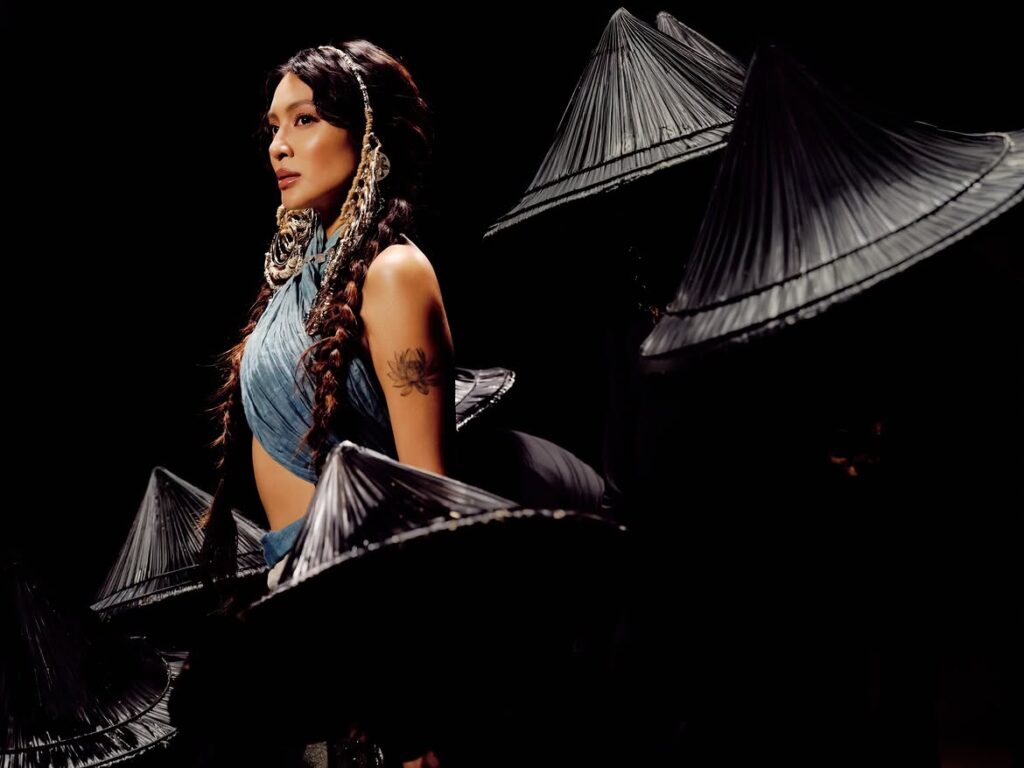
The silhouettes frequently expose the shoulders, torso, or legs while building visual weight elsewhere through layers, drapes, cuffs, jewelry, and headpieces. It gives the character a certain physicality: these aren’t clothes designed simply to pose in. They appear made for someone expected to move through this strange landscape.
The effect also makes the body itself part of the styling. Instead of hiding Nadine underneath elaborate costume, the wardrobe often uses skin as negative space between pieces, creating a more stripped-down interpretation of fantasy dressing.
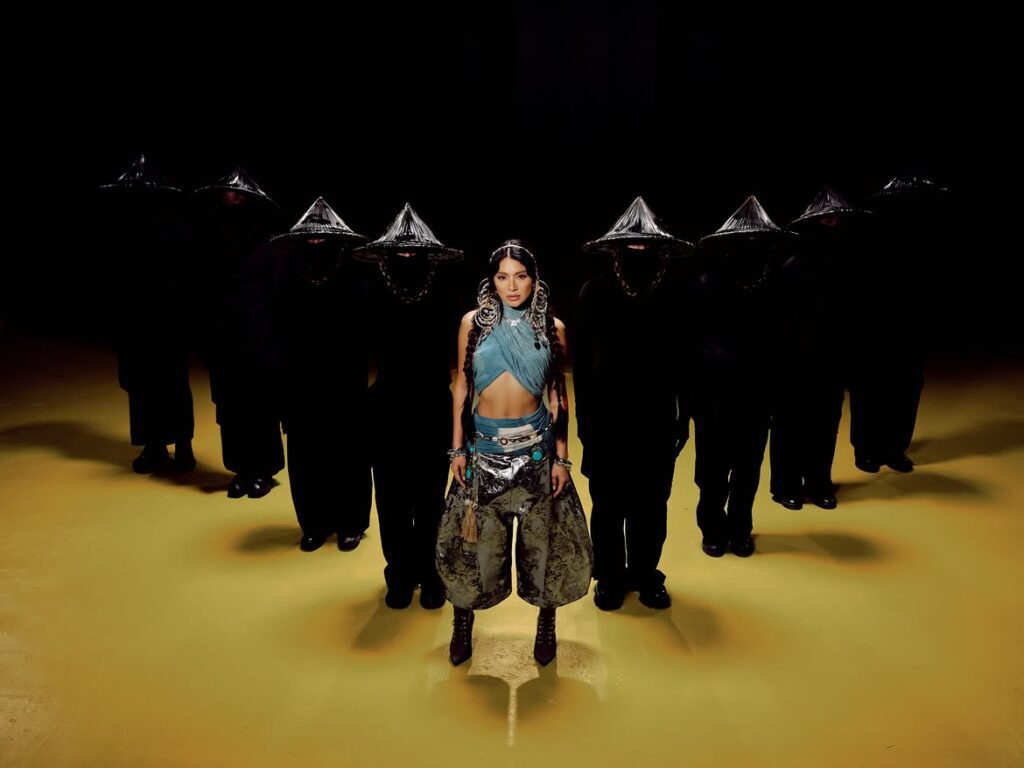
Filipino references don’t have to look literal
Perhaps the smartest fashion decision in Donuts is resisting an overly literal reading of Filipino heritage.
Nadine’s stated intention was to make the fictional universe feel rooted in being Filipino, while allowing her collaborators to interpret the concept across styling, production design, movement, and the camera. The finished wardrobe follows that philosophy: Filipino identity becomes a starting point for invention rather than a strict historical dress code.
There are visual echoes of warrior dress, indigenous ornamentation, handworked materials, earthy textiles, and pre-colonial regalia, yet the combinations deliberately belong to no single period. Futuristic styling interrupts the historical cues; distressed finishes disrupt anything too ceremonial.
The approach allows heritage and experimentation to exist in the same frame.
Lyn Alumno helps shape the fantasy
Alumno’s role becomes crucial because Donuts asks the wardrobe to do more than make its star look good. Styling has to communicate hierarchy, danger, femininity, and power while remaining coherent with the world Nadine envisioned.
The official credits confirm Alumno as stylist and Martin as her assistant, though they do not itemize the designer or label responsible for every individual costume. Without a confirmed credit from Alumno, Nadine, or the designers themselves, assigning specific pieces based purely on their appearance would risk misidentifying Filipino designers.
What can be credited with certainty is the styling team’s hand in turning Nadine’s premise into a cohesive wardrobe. Nadine herself has spoken about that collaborative process, saying each department brought its own perspective to her initial idea.
Fashion becomes part of Nadine’s transformation
The clothes ultimately make the most sense when viewed alongside the theme Nadine has attached to this creative chapter: transformation, stepping into power, and becoming comfortable with oneself.
Her warrior princess makes those ideas physical. She isn’t dressed as delicate royalty waiting to be protected. Bare skin sits beside armor-like adornment; flowing fabric meets hardened accessories; femininity exists without fragility.
Even the setting sharpens the effect. Against windswept grasslands and deliberately sparse surroundings, every piece of jewelry, draping, texture, and headwear has room to register. Fashion becomes one of the primary ways the viewer understands who this woman is before the story explains her.
The most compelling achievement of the Donuts wardrobe may be its refusal to make Filipino identity look fixed in time. Under Nadine’s creative direction and Alumno’s styling, heritage becomes something that can be draped, distressed, armored, accessorized, and imagined forward.
Related story: Struggling to find glasses that fit? Nadine Lustre gets it
Related story: How Nadine Lustre’s Siargao restaurant changed my mind about plant-based food