
Sensory collectibles are giving adults something small to hold onto when stress starts stacking up.
Stress balls have gotten significantly sweeter. Instead of the standard foam sphere sitting on an office desk, today’s tactile toys come as jiggly Japanese-style mochi squishies, squeezable NeeDohs, taba squishies, and blind-box dumplings—cute collectibles seemingly made for kids but slowly finding their way into grown-up hands.
This behavior is not entirely new. People have always had clicked pens, bounced knees, bitten nails, or fiddled with whatever fits between their fingers. A 2024 systematic review found an emerging association between sensory-processing differences and stress levels among adults, although researchers stressed that the relationship remains complex. In other words, seeking a certain sensation may feel satisfying for some people, but there is no single sensory solution guaranteed to soothe everyone.
So, what is “the squishy”?
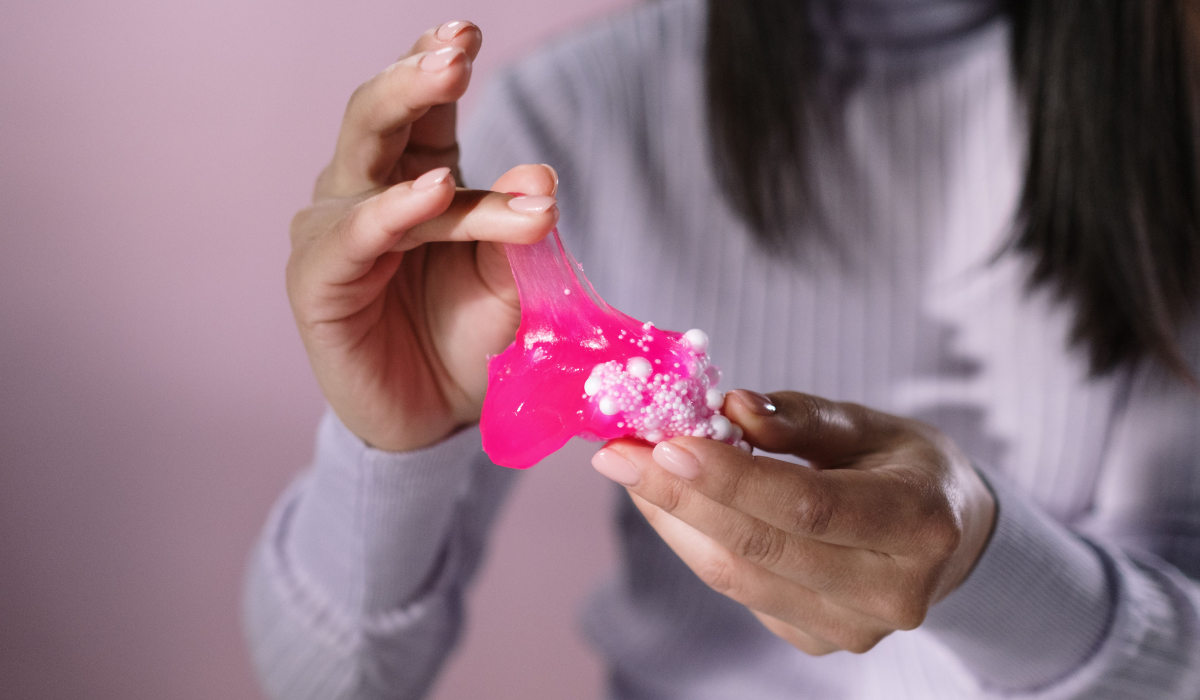
“The squishy” is a soft, squeezable sensory toy. Think slow-rising taba toys, tiny mochi animals, jelly-filled shapes, stress balls, and the particularly popular NeeDoh family. Schylling, NeeDoh’s manufacturer, describes its products as sensory squishes designed to be squeezed, stretched, and smushed, with different densities and textures delivering different tactile experiences. Its Nice Cube, for instance, feels softer under a slow squeeze and firmer under a fast one.
The appeal is cross between collecting and comforting. Cute characters, candy colors, food-shaped forms, and surprise packaging turn a tactile tool into something you can display, trade, or tuck into a tote. In that sense, the squishy sits somewhere between a stress ball, sensory object, and small-scale collectible—a childhood-coded object finding fresh function in adulthood.
Why squeezing can feel soothing?
There is some science behind the squeeze, but it should not be stretched too far. A 2026 systematic review and found that using stress balls during conscious surgical procedures provided a small but consistent reduction in anxiety, although the researchers cautioned that limited studies, small samples, and differing protocols weakened how extensively those findings could be applied.
Another 2026 randomized controlled trial offers an interesting clue about touch itself. Researchers studying chronically stressed young adults found that self-soothing touch reduced momentary stress and fatigue, with effects comparable to the brief meditation condition used in the study. That does not mean squeezing a dumpling-shaped toy produces the same result, but it does support the broader idea that simple sensory rituals can sometimes supply short-term soothing.
The sensory search stretches beyond squishies
Squishies are only one part of the picture. Acupressure rings, textured trinkets, fidget devices, and even adult pacifiers have entered the sensory-seeking conversation. Acupressure has the strongest research base of that bunch: a systematic review and meta-analysis of 27 studies found that it significantly reduced anxiety, though substantial differences between studies mean the results require caution.

Adult pacifiers are also more controversial. They became a reported trend in China in 2025, marketed online as tools for stress relief and sleep, but medical professionals warned that prolonged use could potentially affect oral health and teeth. Unlike stress-ball studies or clinical acupressure research, solid evidence that adult pacifiers meaningfully regulate stress is lacking—making this one viral “comfort” claim worth taking with caution.
Child’s play, grown-up pressure
Perhaps what makes the squishy craze click is that these objects are portable, playful, pocket-sized, and pleasantly pointless: there is no score to secure, screen to scroll, or skill to sharpen. You can just simply squeeze.
Science has not established squishies as a cure for chronic stress, anxiety, or mental fatigue, and research on fidget devices remains mixed. One randomized study of adults with ADHD, for example, found no significant improvement in physiological measures of stress from using a fidget ball. Still, if a soft little strawberry or squishy cube supplies a satisfying sensory break, there is little mystery in why adults might want one within reach.
Related story: What’s an analog bag? The low-tech trend taking over totes
Related story: Feeling anxious? A ‘panic pouch’ could bring a little calm