
The 64th edition just wrapped and between the packed palazzos and back-to-back exhibitions, these were the standouts worth knowing about.
Milan Design Week 2026 ran from April 20 to 26, drawing designers, architects, and creative industry figures from around the world to the Italian city for its 64th annual Salone del Mobile. This year’s Fuorisalone theme, “Be the Project,” put the focus on process. From the thinking and making behind a finished piece rather than the final object alone. Fashion houses, sportswear giants, and independent studios all showed up with something to show.
Here are the ones that stuck with us:
Chloé x Poltronova: The Tomato Chair
The Tomato chair was originally designed in 1970 by French designer Christian Adam for Poltronova, an Italian manufacturer associated with the country’s Radical design movement. The chair’s soft, rounded silhouette was a direct response to the rigid furniture of its era. Very few were produced at the time, and surviving originals are now considered collector’s pieces.
Related story: How design influences what we feel, do, and remember
Related story: Stockholm syndrome: Why this Ikea collection has captured our design hearts for 40 years
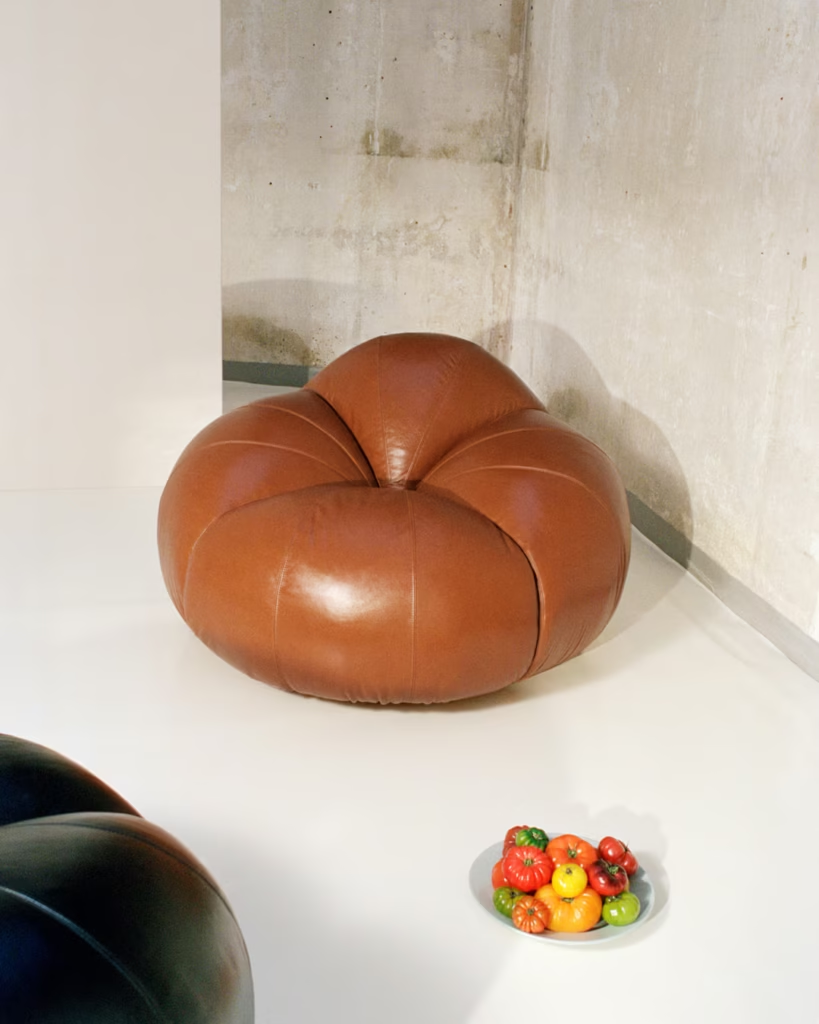
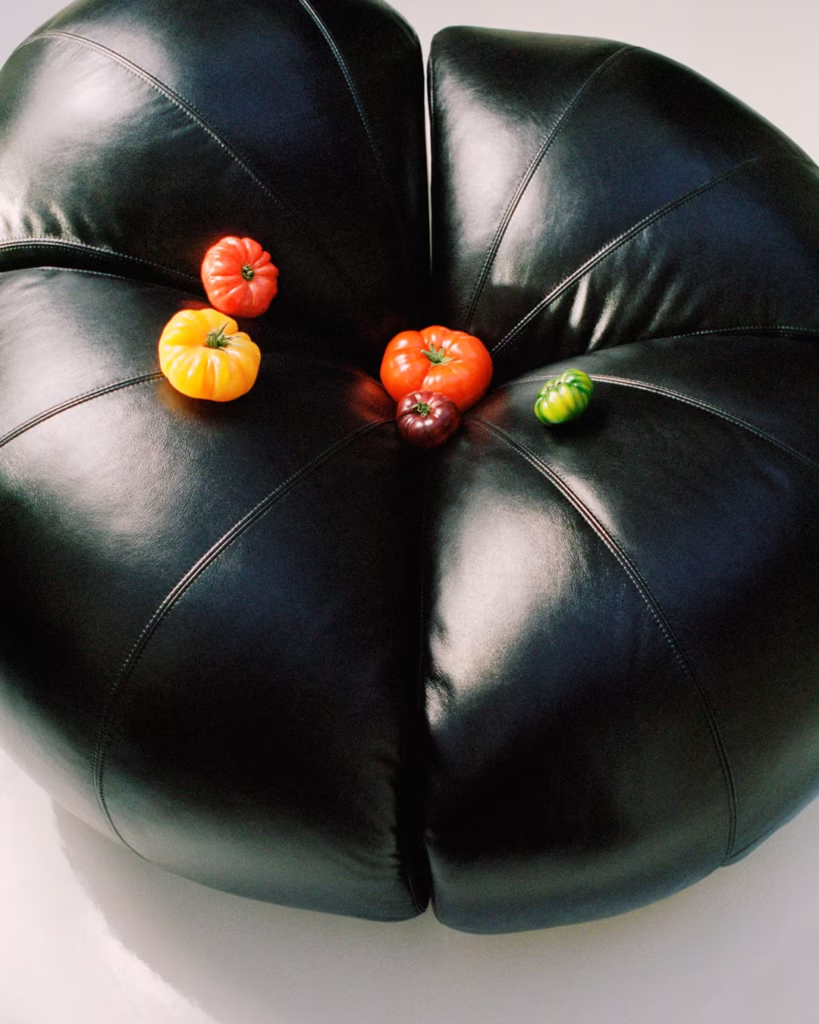
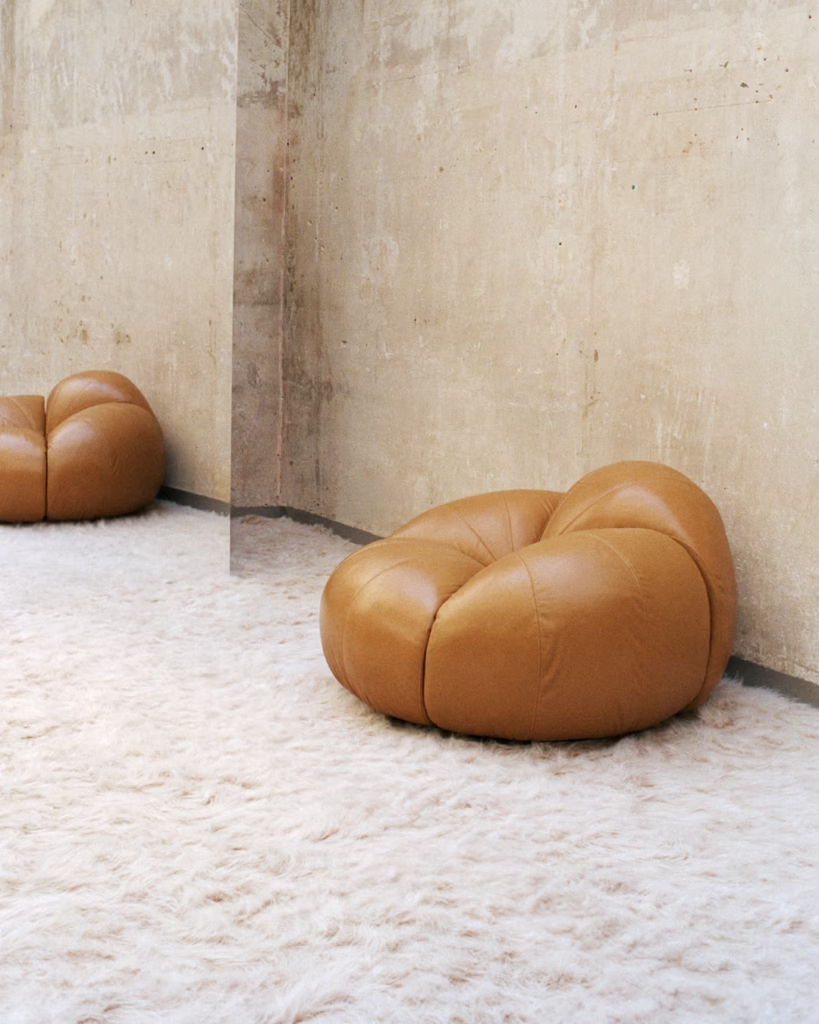
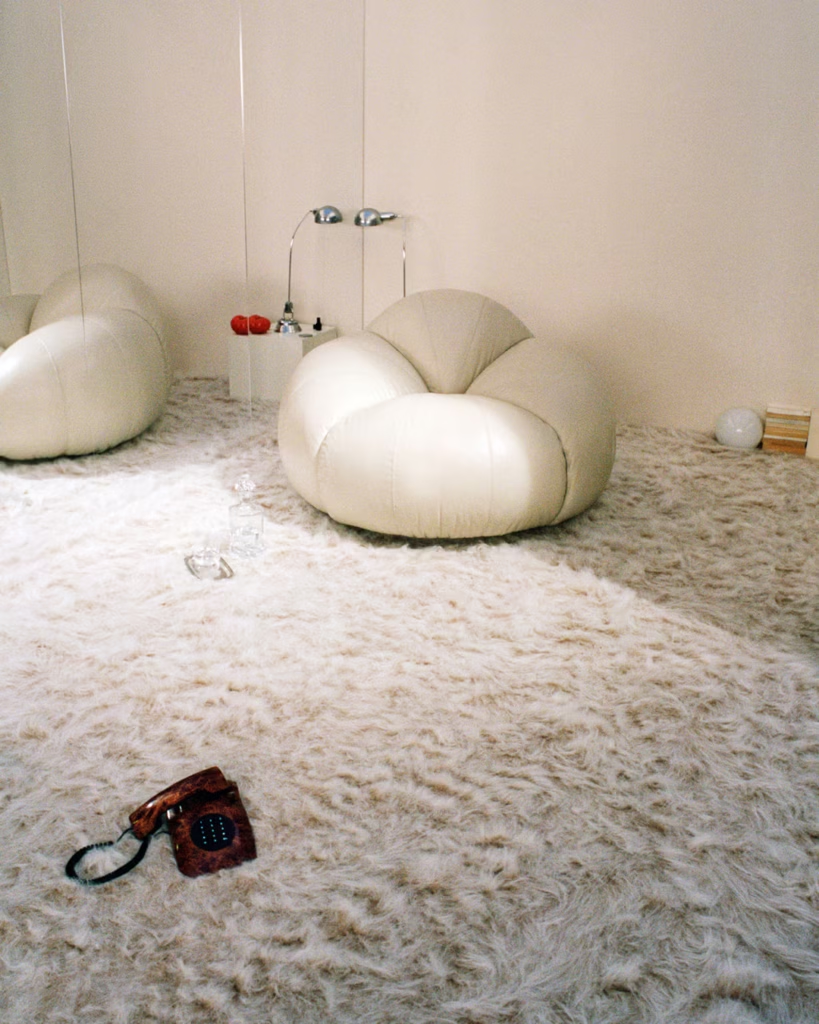
For Design Week 2026, Chloé partnered with Poltronova to bring the chair back. The re-edition is made to order and stays faithful to Adam’s original design. The only update is material: naturally tanned leather in four colors — cream, cognac, sand, and black. It was on view at Via della Spiga 30 from April 22 to 26.
Related story: Chloe Pre-Fall 2026 embraces the chicness and joy of spontaneity
Related story: Chloé’s S/S26: Chemena Kamali revives retro romance with florals, draping
Dior Corolle Lamps
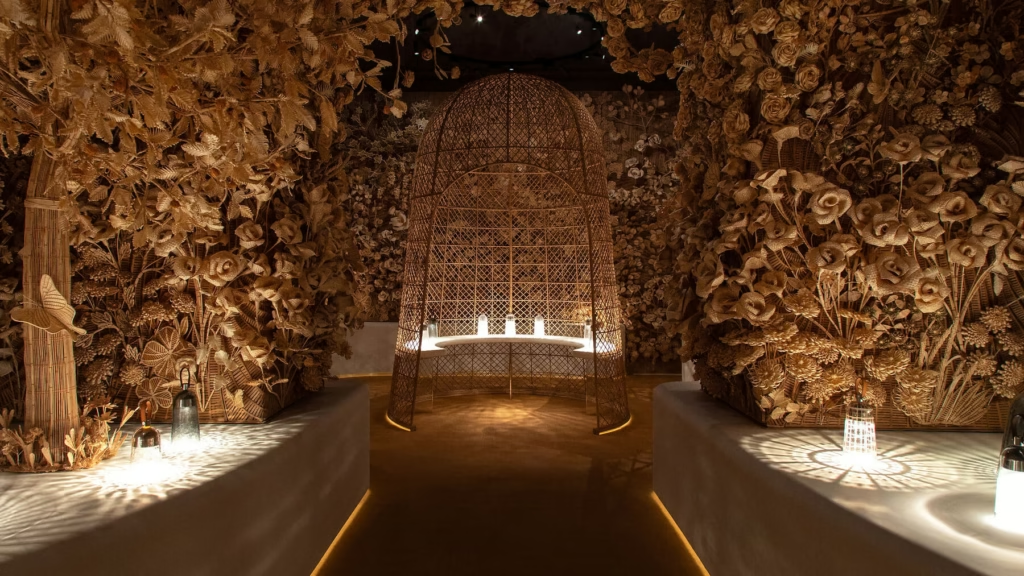
Noé Duchaufour-Lawrance first designed the Corolle lamp for Dior in 2019, drawing from the shape of Christian Dior’s 1947 New Look skirt. For 2026, he came back with 27 new references all presented at Palazzo Landriani and priced from €2,300.
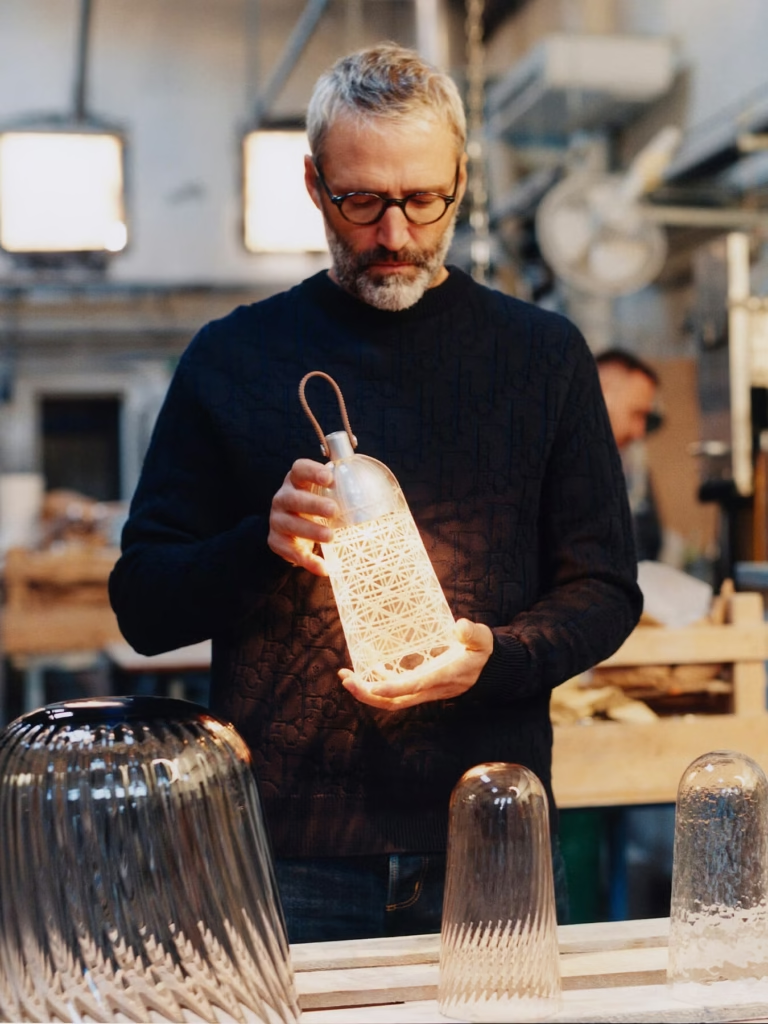
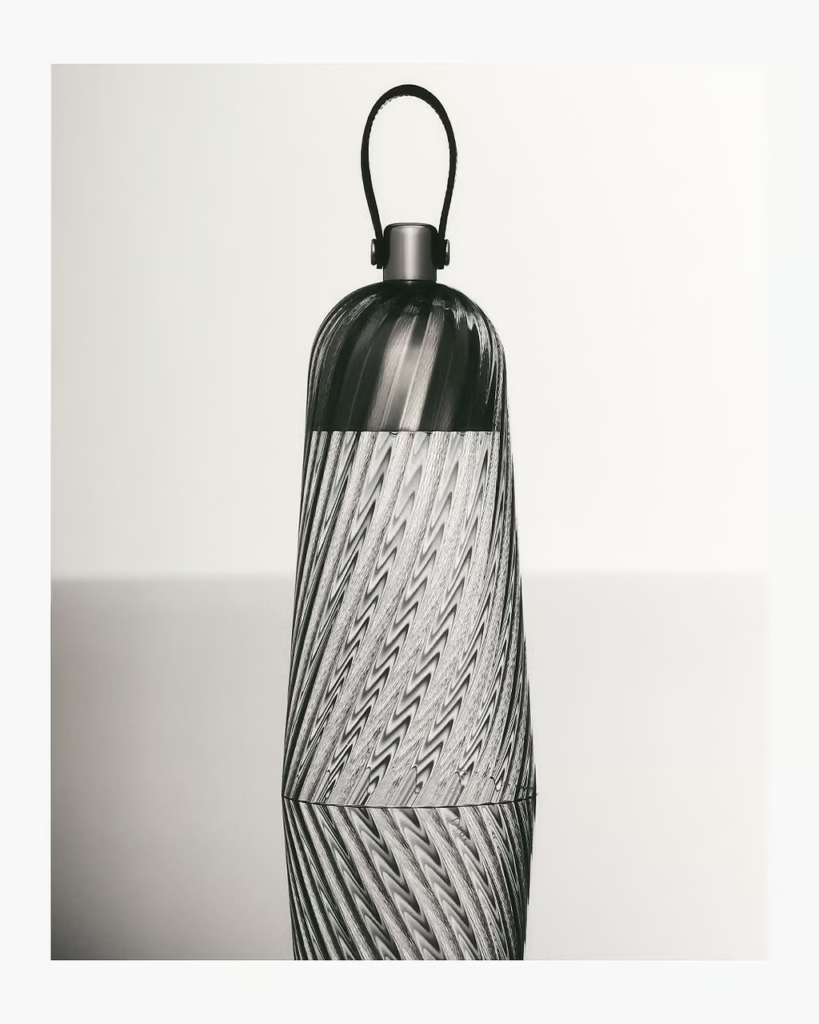
This chapter focused on surface and technique. Duchaufour-Lawrance went through Dior’s archives looking for textile textures he could translate into glass. Pleated fabric became a glassblowing method using ridged molds and a twist during blowing. Tulle became filigree. A skirt caught mid-movement became mano volante, where the glassmaker shapes the material while it is still hot. The glass bells were handmade in Murano. The bamboo-wrapped versions, referencing Dior’s cannage motif, were woven in Kyoto. The collection comes in 11 patterns and four sizes, including table and portable versions.
Related story: Dior Fall 2026 at Paris Fashion Week turns the Tuileries Garden into a runway
Related story: Flowers bloom in motion at Jonathan Anderson’s first Dior haute couture show
Related story: Dior Homme’s Winter ‘26-‘27 show is Jonathan Anderson having more fun
Gucci Memoria
Demna’s first major cultural project for Gucci took over the Chiostro di San Simpliciano, a 15th-century cloister in Milan’s Brera neighborhood with twelve large tapestries covering 105 years of the house’s history.
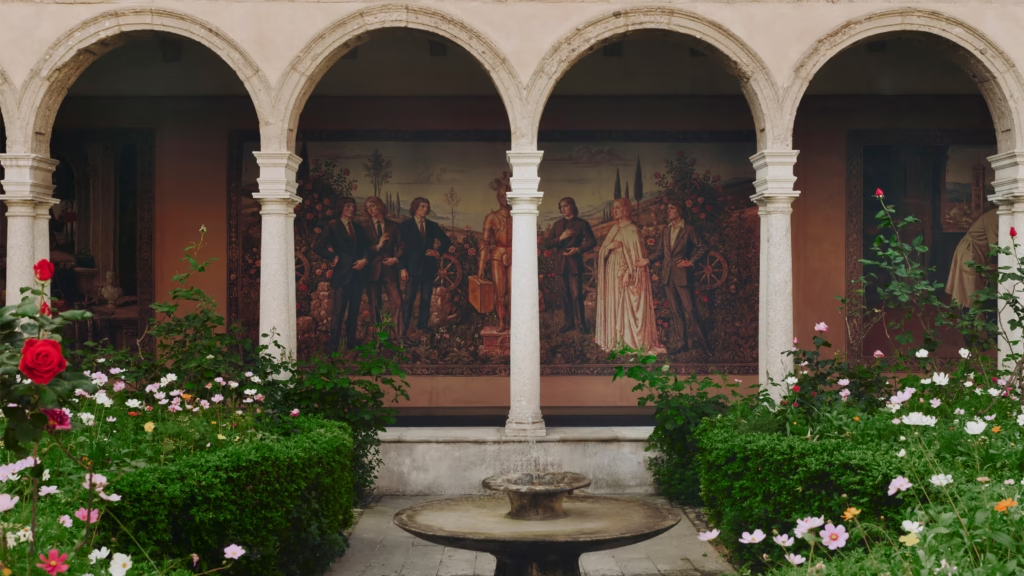
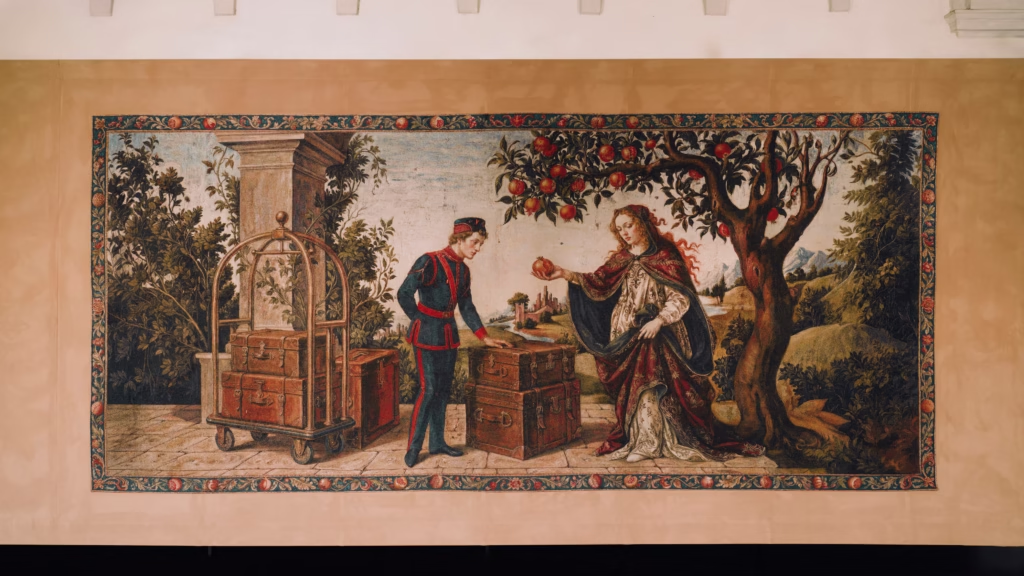
The tapestries were made by Tessitura Grassi, a family of weavers based outside Bergamo who have worked with custom looms since the 1950s. The narrative moved from Guccio Gucci’s early days as a hotel porter in London, through the Florence leather workshops, the family disputes of the 1980s and ’90s, Alessandro Michele’s tenure, and finally to Demna shown in a gaming chair applying finishing touches to a coat from his debut La Famiglia collection.
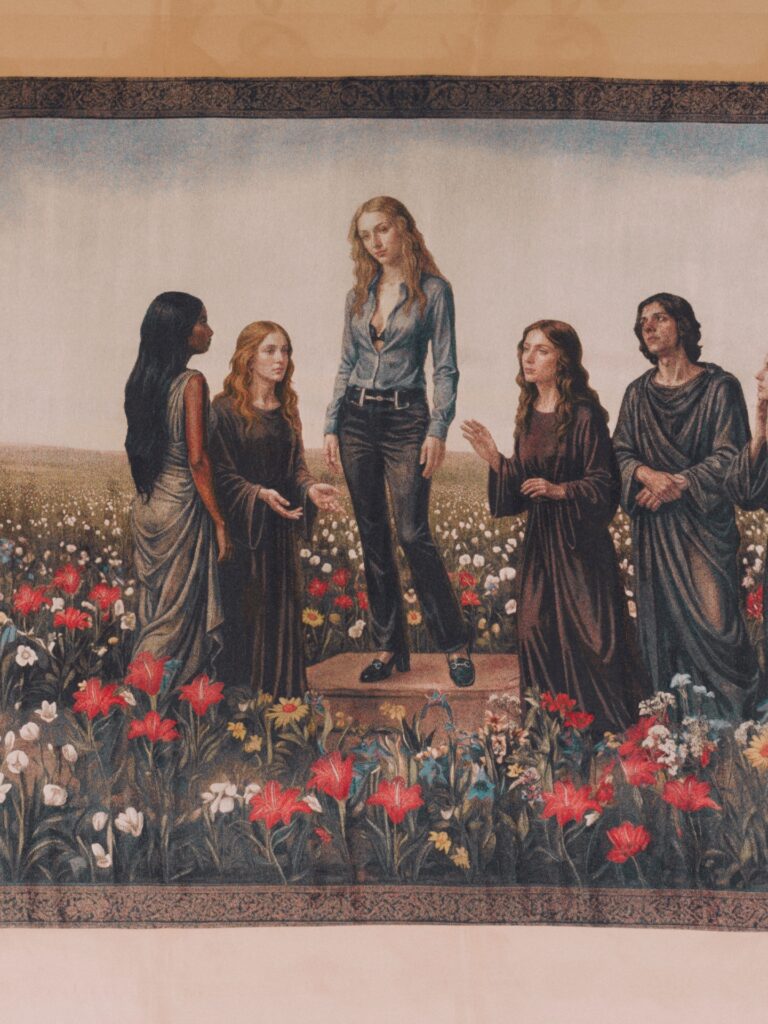
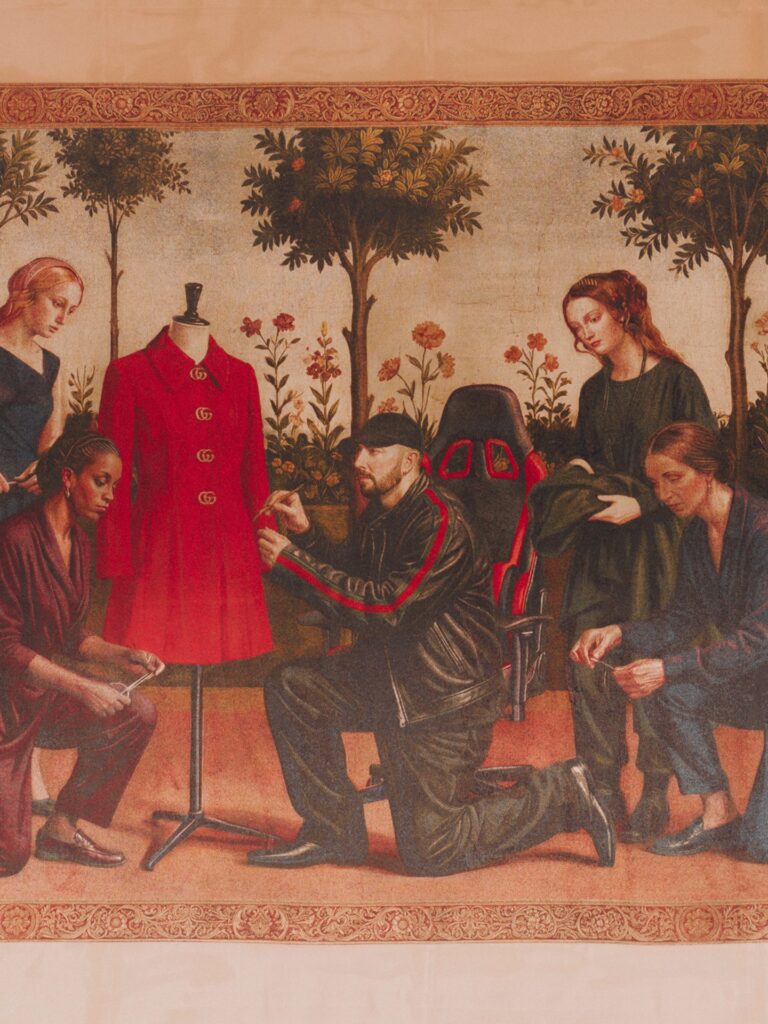
The courtyard was planted with wildflowers and roses around a central fountain. Vending machines nearby dispensed canned cocktails named after La Famiglia archetypes: Drama Queen, Fashion Icon, Mega Pesantone, Super Incazzata.
Related story: Demna’s first Gucci show is all about the Italian house’s big attitude
Related story: Gucci Spring 2026 unveiled through star-studded film ‘The Tiger’
Bottega Veneta x Kwangho Lee
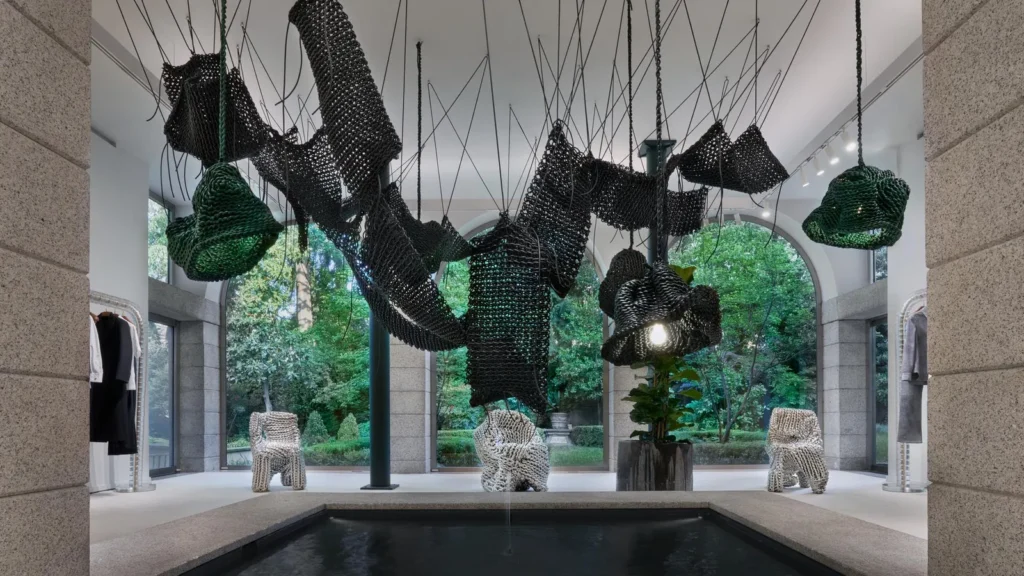
Seoul-based designer Kwangho Lee created a site-specific installation inside Bottega Veneta’s store on Via Sant’Andrea — his first time working with leather. He wove thick leather cords into interlocking forms that wrapped around the store’s central water feature, filling the space with something that felt more like growth than display.
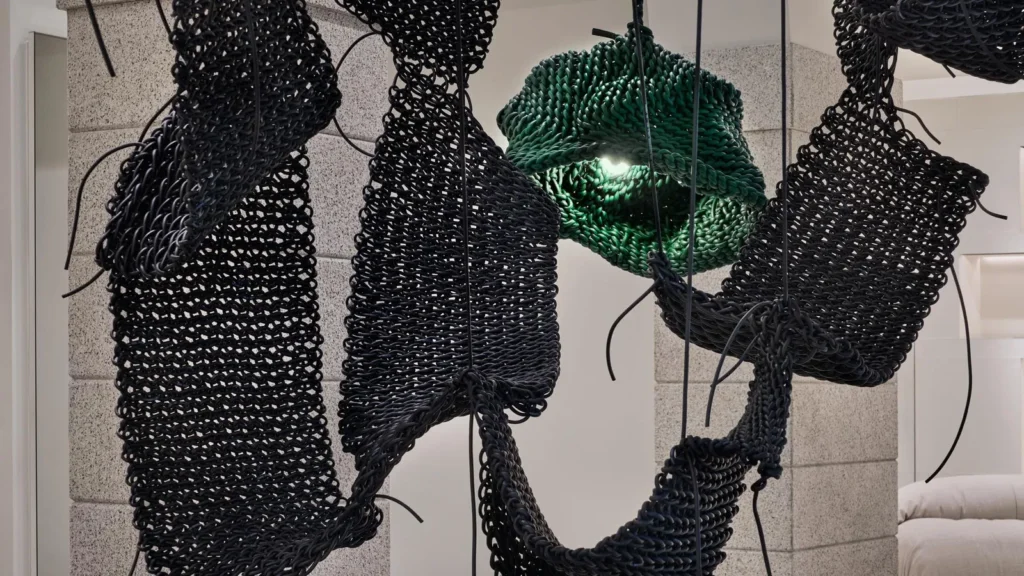
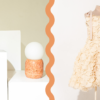
For Bottega Veneta, a house whose identity is built on the intrecciato weave, the installation was a direct extension of its material language into a spatial context.
Related story: Louise Trotter debuts first Bottega Veneta collection at Milan Fashion Week
Related story: Bottega Veneta’s S/S25 collection is Matthieu Blazy’s playful farewell
Jil Sander: Reference Library
Reference Library was a collaboration between Jil Sander and the magazine Apartamento, designed by Milan studio studioutte. Sixty books — each chosen by a different writer, designer, artist, architect, or filmmaker — were placed on chrome lecterns in a mirrored room, individually lit. Visitors registered for one-hour slots and were handed white gloves at the door. They could pick up and read anything in the room. The gloves were theirs to keep.
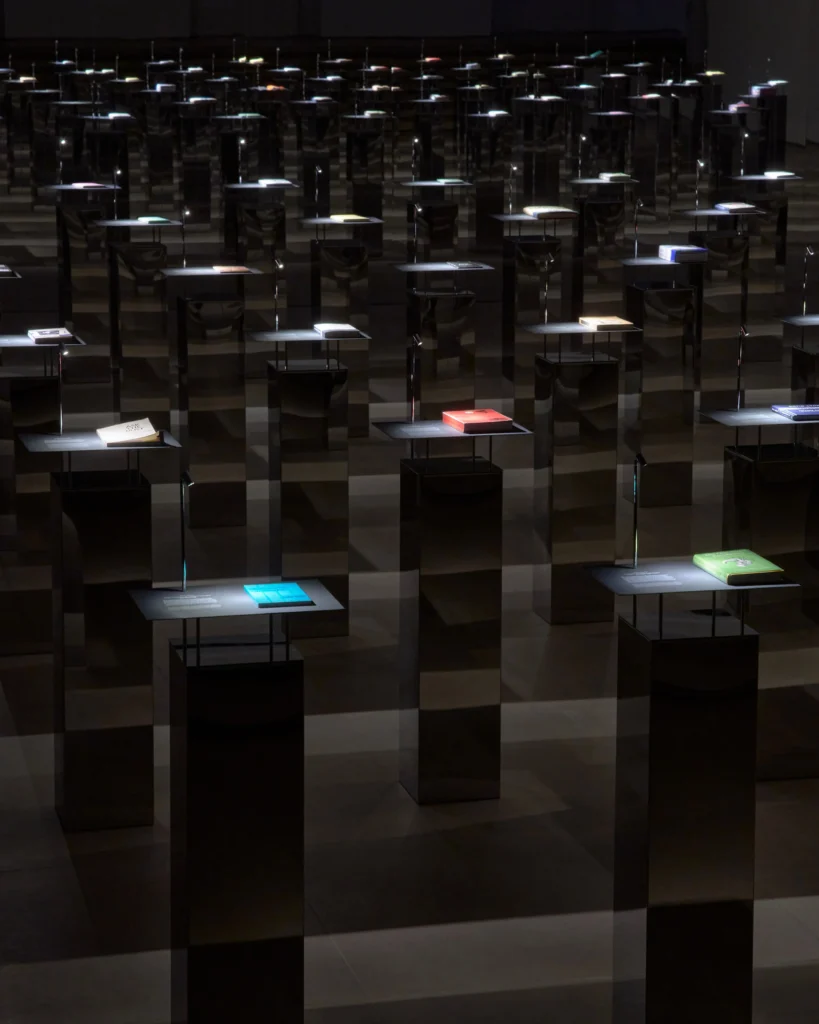
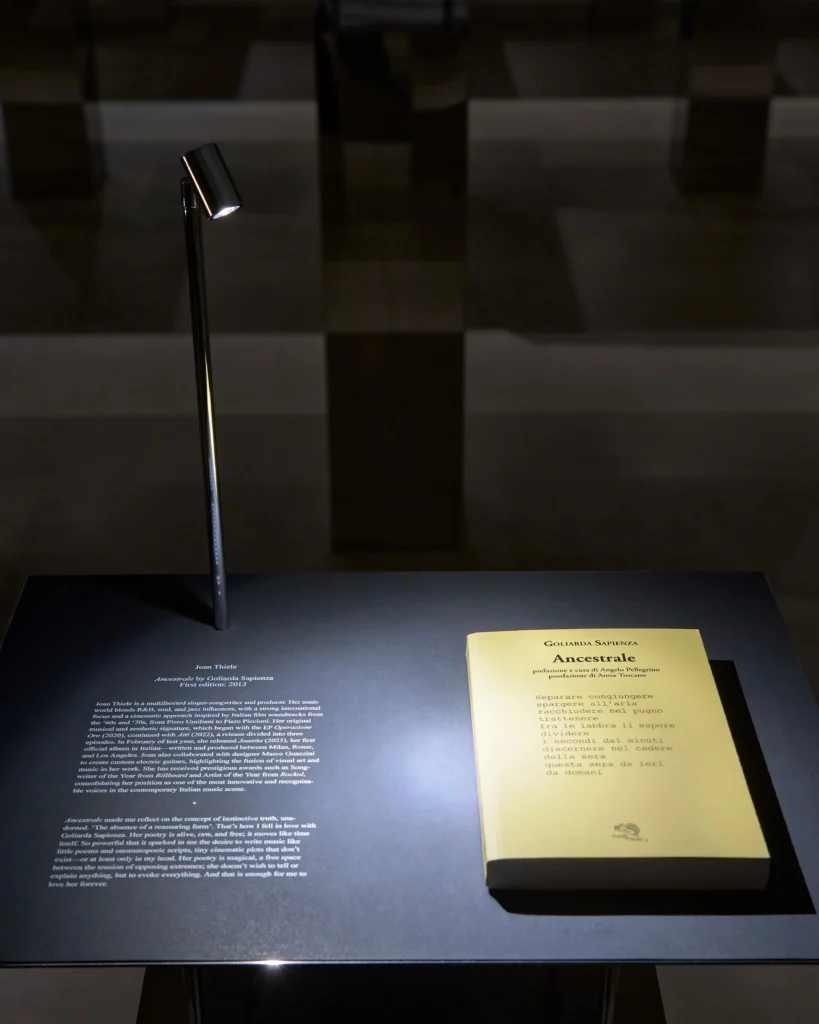
The sixty titles together formed a picture of what people in creative fields are reading and passing on — a simple idea, well executed.
NikeAir_Lab x Dropcity
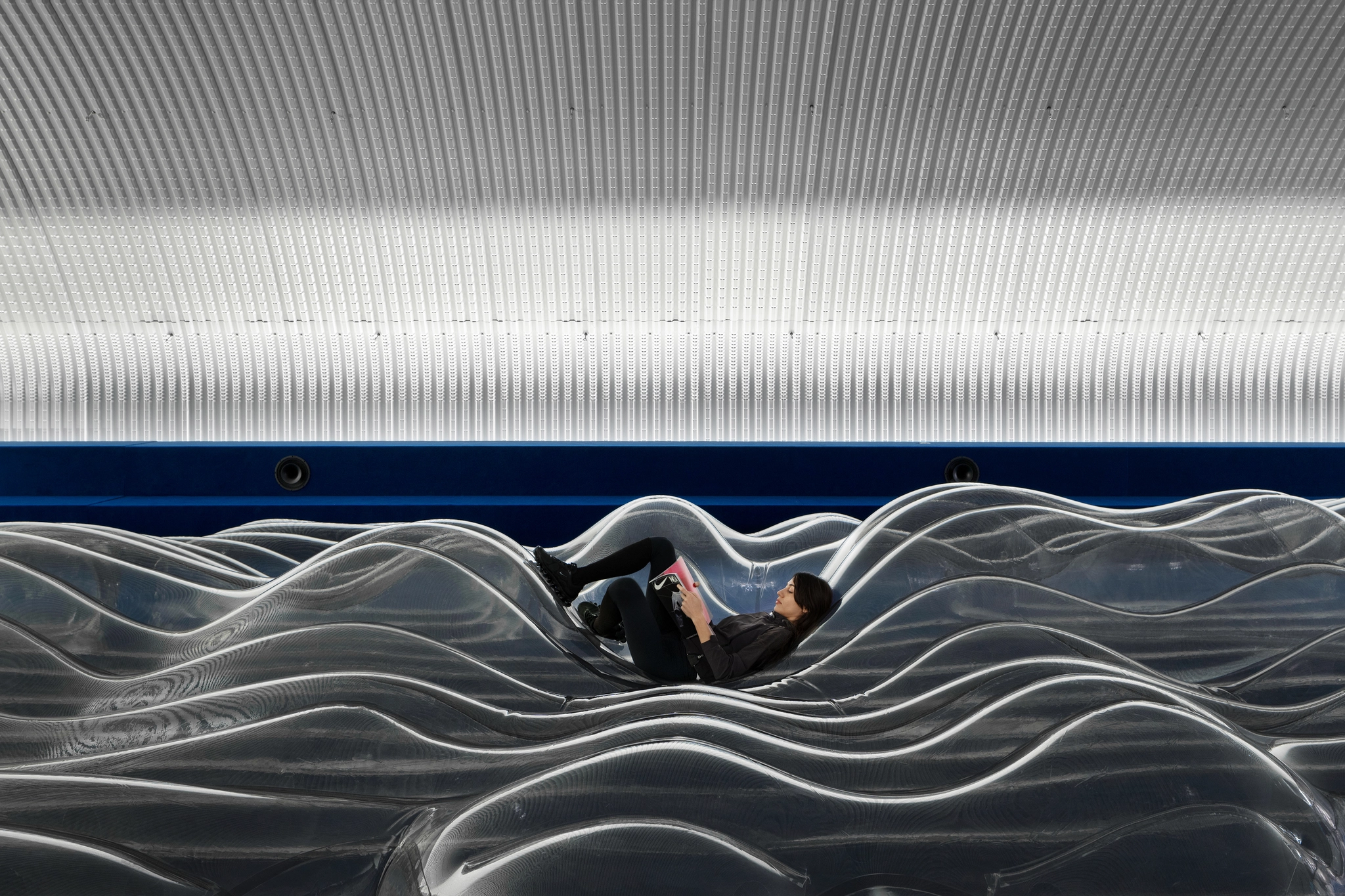
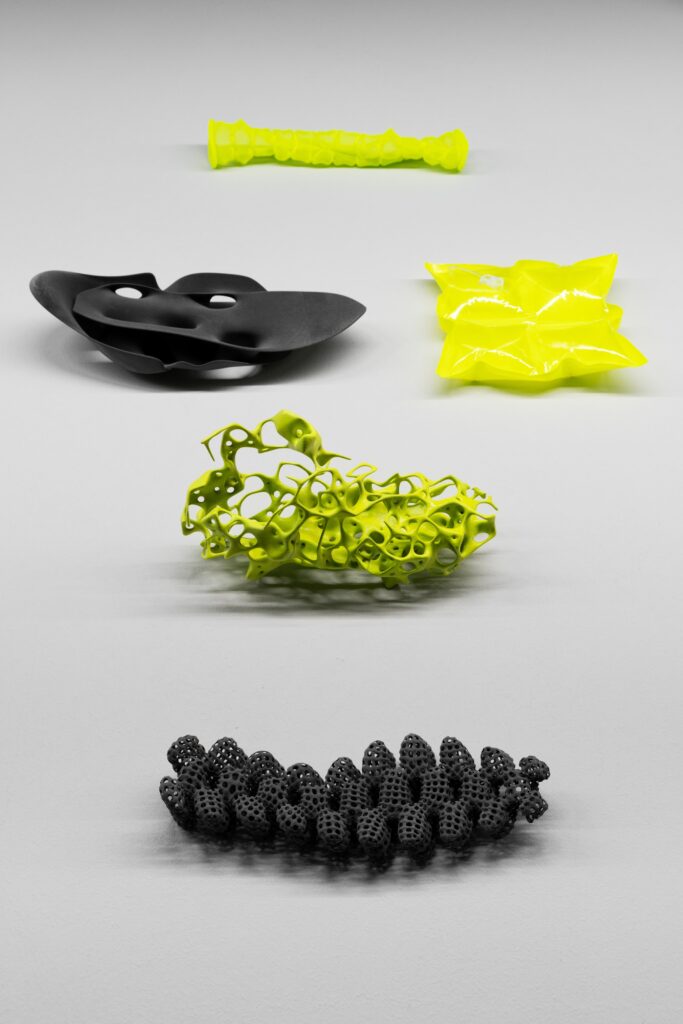
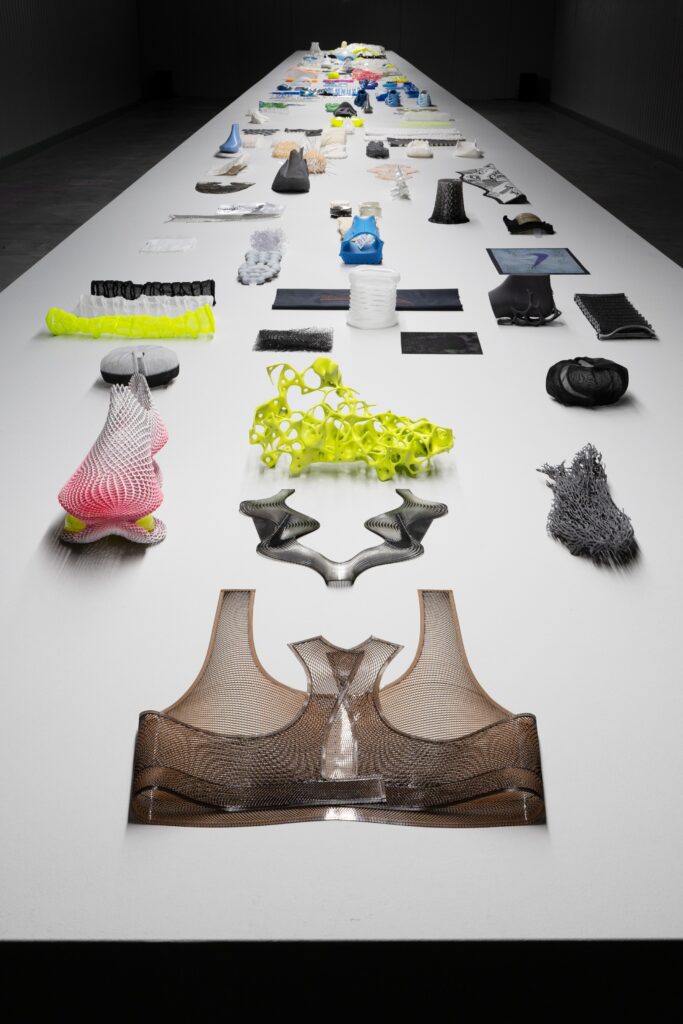
Nike partnered with Dropcity, a Milan-based design and architecture center, to open NikeAir_Lab at Via Sammartini 72 for the week. The exhibition showed nearly 100 prototypes tracing the history of Nike Air including never-before-seen samples from Air Liquid Max, FlyWeb, Radical AirFlow, and Therma-FIT Air Milano. Eight interactive stations with robotic arms, thermoforming machines, and pneumatic kits let visitors work hands-on with air as a design material.
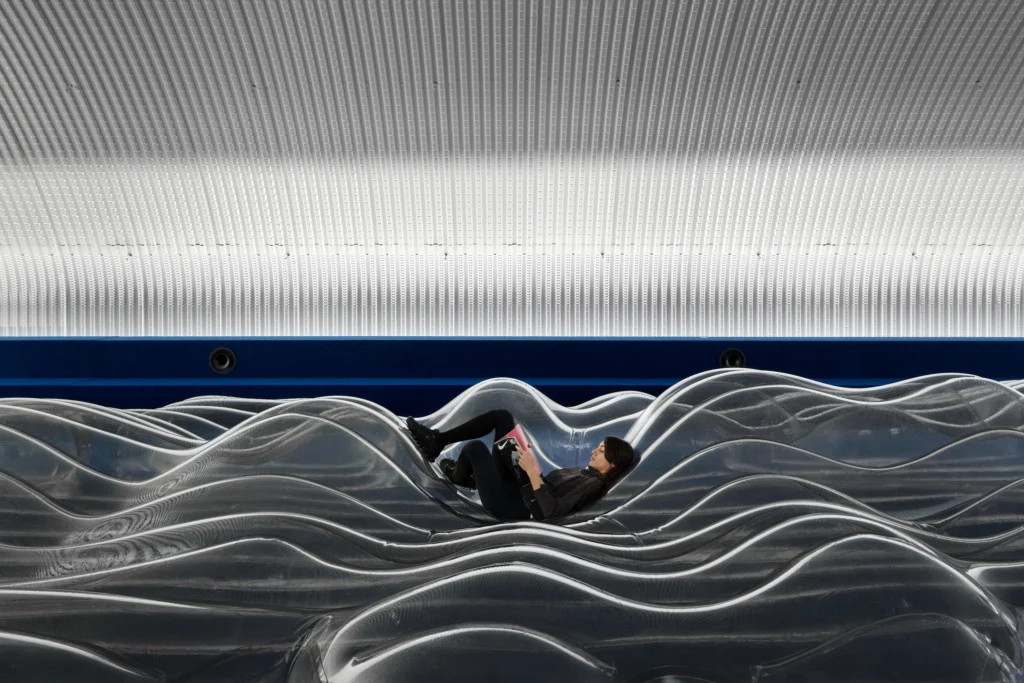
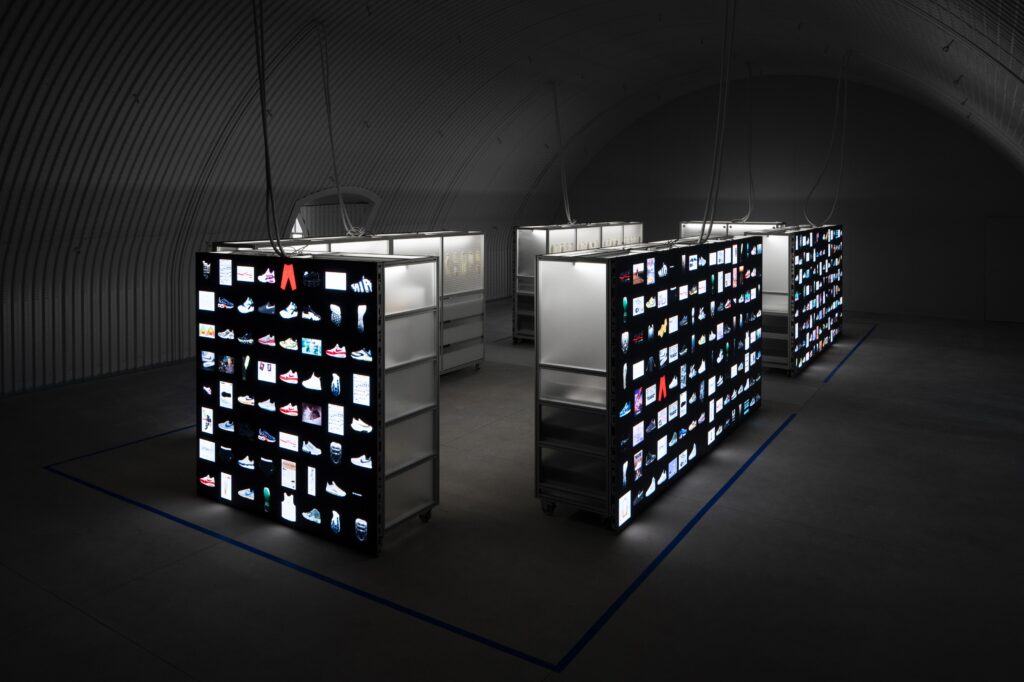
The lab does not disappear after Design Week. Dropcity, which holds a 20-year agreement with the City of Milan, is set to become one of Europe’s largest architecture centers — over 10,000 square meters with 300-plus workstations available to creatives at subsidized rates. The Air Lab becomes a permanent part of that space, open to the public when Dropcity opens its doors later this year.
Related story: Would you buy sneakers in blind boxes? Nike and Puma are hoping you would
Relatd story: Swarovski adds sparkle to Nike Ja 2 for NBA All-Star Weekend