

Eight players. One trophy. This is your Indian Wells cheat sheet to the women’s season-ending showdown.
If the four Grand Slams are tennis’ headline acts, the WTA Finals is the tournament reserved for the season’s very best. Each year, the top eight singles players and top eight doubles teams gather for a week to decide who finishes on top.
This year comes with a new address and a few first-time qualifiers. New to the game, like many of Alex Eala’s fans? The format can seem befuddling at first. Lucky for you, here’s The POST’s easy-to-digest cheat sheet to the WTA Finals, women’s tennis’ ultimate yearly showdown.
Related story: Flag carrier, flag bearer: 5 reasons Alex Eala and Philippine Airlines are a perfect match
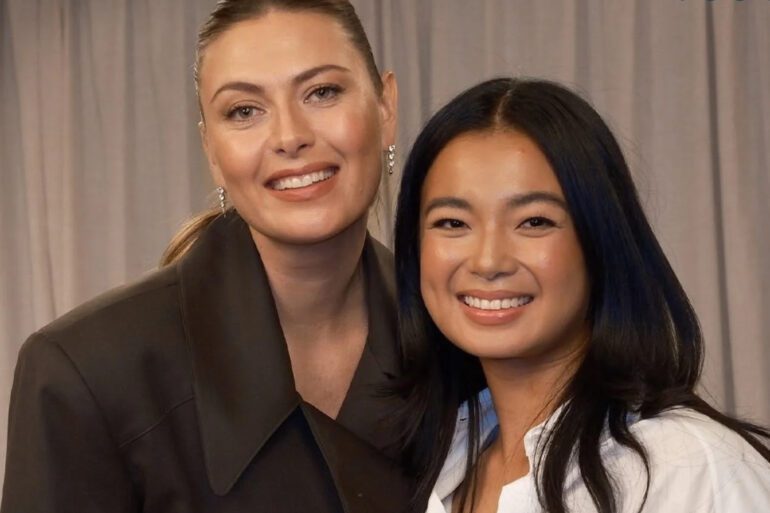
Related story: Alex Eala talks perfection, pressure, and progress with Maria Sharapova
A brief history
The tournament is almost as old as the modern women’s tour. It was first played in October 1972 at a country club in Boca Raton, Florida, as the finale of the Virginia Slims Circuit, a full year before the WTA itself was formally founded. Seventeen-year-old Chris Evert beat Australia’s Kerry Melville Reid in the final, 7-5, 6-4, and took home $25,000. She won again the following year and finished with four titles in all.
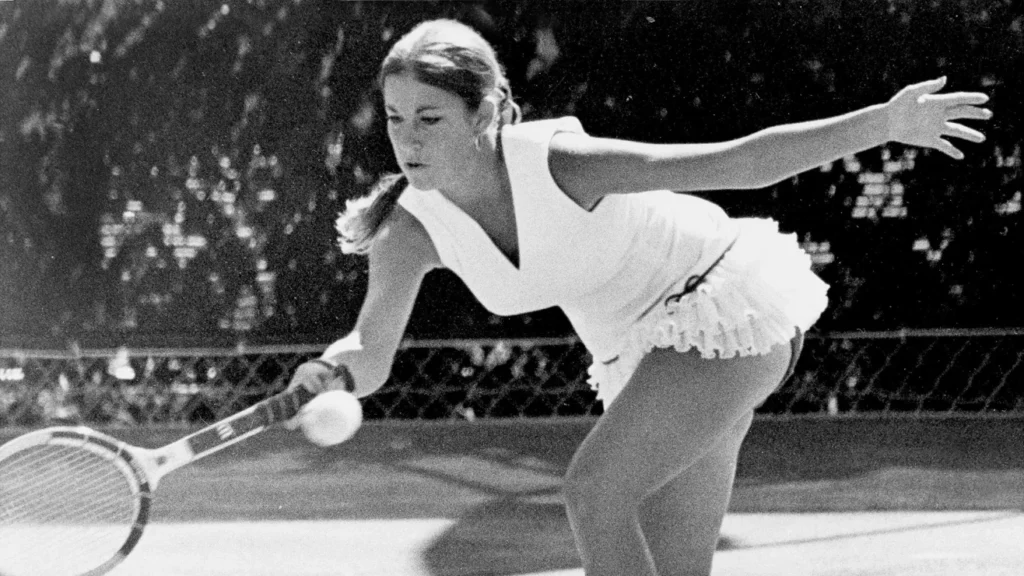
The event then went on the road. It moved to Los Angeles in 1974, then to New York’s Madison Square Garden in 1977, before a one-year stop in Oakland in 1978. It returned to the Garden in 1979 and stayed for two decades until 2000. In that time, the arena made the tournament a fixture of the sporting calendar.
The Garden also served as the stage for some of the sport’s defining rivalries, including Evert’s showdowns with Martina Navratilova in the 1983 and 1984 finals, and Steffi Graf’s remarkable title spree in 1987, 1989, 1993, 1995, and 1996.
Related story: High stakes, high prices: How the 2026 US Open served drama on and off the court
Related story: Forget all-white: The 7 most talked-about women’s kits at the 2026 US Open
Related story: 2026 US Open primer: Players, paychecks, pop trivia
The champions’ club
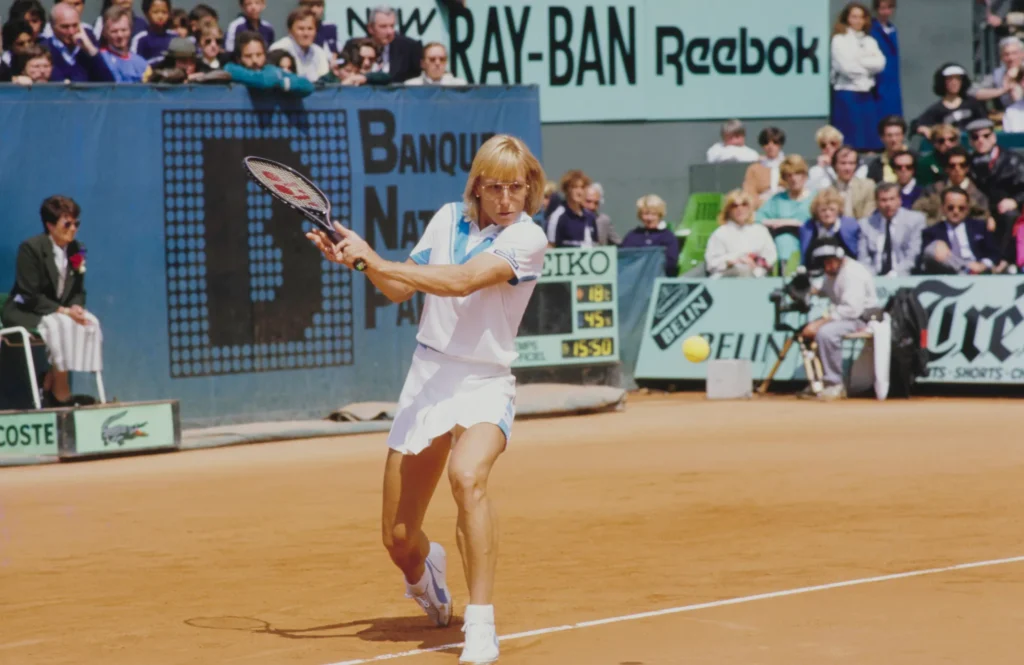
Martina Navratilova leads the record books with eight singles titles and 13 in doubles. Graf and Serena Williams have five singles titles each, while Evert has four.
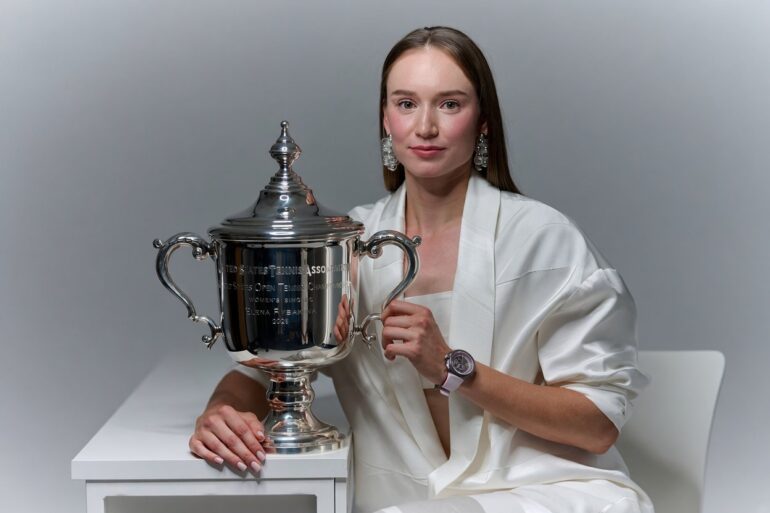
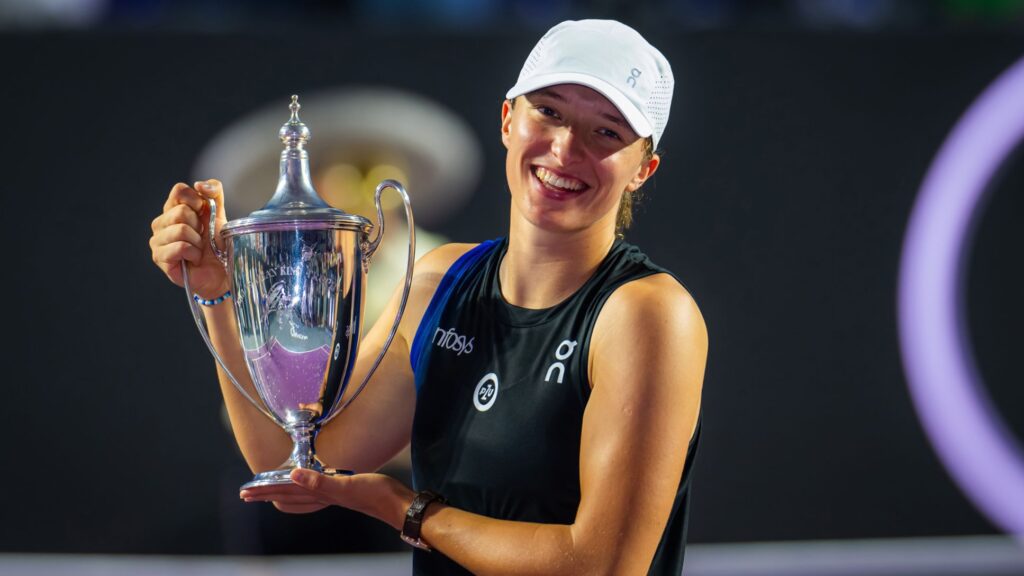
More recent winners include some of my favorites: Iga Świątek in 2023, Coco Gauff in 2024, and Elena Rybakina in 2025. The singles champion lifts the Billie Jean King Trophy, while the doubles winners receive the Martina Navratilova Trophy.
A well-traveled event
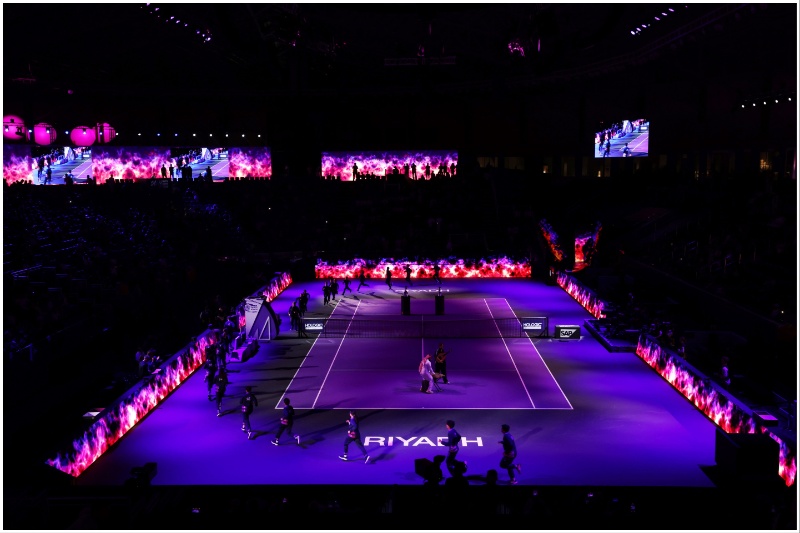
In recent years, the WTA Finals has moved around almost as frequently as the players’ luggage. After New York City, it found itself in Munich (2001), Los Angeles (2002–2005), Madrid (2006–07), Doha (2008–2010), Istanbul (2011–2013), Singapore (2014–2018), and Shenzhen in 2019. The 2020 edition was cancelled because of the pandemic. Guadalajara hosted in 2021, then Fort Worth (2022), Cancún (2023), and Riyadh (2024–2025).
The Indian Wells edition will be the seventh different venue since 2018. The globetrotting is set to pause, though: from 2027, the tournament will settle from 2027-2029 in Charlotte, North Carolina.
Related story: Alex Eala becomes first Filipino to win a WTA title: Why 2026 is her defining year
Related story: When to cheer: Tennis etiquette 101 for Filipino fans
How it works
Think of it as an elite mini-tournament in two acts:
Act 1: Group Stage (round robin)
The eight players (or doubles teams) are divided into two groups of four. Every competitor plays three round-robin matches against the other players in her group. Group standings are decided by total wins.
If two players tie, the head-to-head winner takes precedence. If three players end up tied, tiebreakers such as total sets won, games won, or overall percentage are used to determine who advances.
Act 2: Knockout Stage (semifinals and final)
The top two players from each group advance to the single-elimination semifinals, where the winner of Group A faces the runner-up of Group B, and vice versa. The two semifinal winners meet in the final to decide the champion.
Matches follow standard WTA best-of-three-sets scoring. The doubles draw operates under the exact same two-stage structure.
How to qualify
Qualification is a season-long points race:
Points Calculation: Throughout the calendar year, players accumulate ranking points based on their performance across tournaments. A player’s total on the race leaderboard reflects her top 18 tournament results (including Grand Slams and WTA 1000 events).
Tournament Threshold: To be eligible, players must participate in a minimum number of WTA 1000 and WTA 500 events over the course of the season (typically at least eight combined).
Automatic Qualification: The top seven players on the official race leaderboard automatically earn a spot in the finals.
The Grand Slam Advantage (a.k.a. the confusing 8th spot): The eighth and final spot usually goes to the player ranked eighth on the leaderboard. There is one exception: if someone who won a Grand Slam this season is ranked anywhere from 9th to 20th, she takes that spot instead. If more than one qualifies, the highest-ranked gets it. The rule guarantees that major champions are always in the field, which makes a Slam title a true golden ticket.
Alternates: The players ranked 9th and 10th (or highest non-qualifiers) attend as designated alternates, ready to step in if a qualified player withdraws due to injury or illness.


The singles field is now complete. World No. 1 and defending champion Elena Rybakina was the first to qualify, followed by Aryna Sabalenka, who qualified for her sixth consecutive year. Two of the tour’s brightest young talents have also booked their spots: 19-year-old Mirra Andreeva and 21-year-old Linda Noskova, who will both make their singles debuts at the event. Andreeva lifted her first Grand Slam title at Roland-Garros this year, while Noskova won her first major at Wimbledon.
Americans Jessica Pegula and Coco Gauff are each making a fifth consecutive appearance. Elina Svitolina sealed her place in Wuhan, and Wimbledon finalist Karolina Muchova takes the last spot after Iga Świątek’s and Marta Kostyuk’s withdrawals in the Ningbo Open. Świątek’s withdrawal ends a run of five straight WTA Finals appearances. She or Kostyuk needs another player to withdraw and a call-up as an alternate to make the trip to Indian Wells.
The doubles field is still taking shape. The WTA confirmed on October 19 that three teams have already qualified for the WTA Finals: Guo Hanyu and Kristina Mladenovic, Cristina Bucsa and Nicole Melichar-Martinez, and Elise Mertens and Zhang Shuai. That leaves three places still up for grabs.
Related story: SEAsters rising: Meet the four young stars driving Southeast Asia’s tennis boom
Related story: Game, set, match! Five unforgettable moments at Wimbledon 2026
The prize money
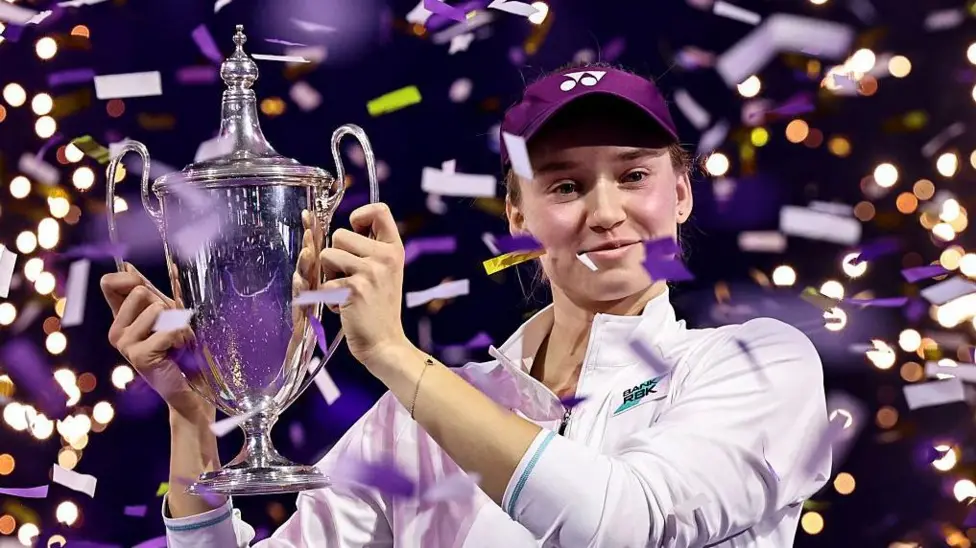
The stakes are huge. Last November in Riyadh, Elena Rybakina collected $5.235 million for going unbeaten, which the WTA said was, at the time, the largest payout in the history of women’s sports. It topped the $4.805 million Coco Gauff earned for winning in 2024, and Aryna Sabalenka, the runner-up, earned about $2.7 million. Rybakina has since broken her own record: after beating Sabalenka in the US Open final in September, she collected $5.5 million, the largest winner’s cheque in tennis history.
Money at the WTA Finals is tied to the round-robin format. Players are paid for each match they play, with more for every win, so an undefeated champion earns the most. This year’s total prize money is listed at $15.5 million, matching the record pot from 2025, which was split into $12.4 million for singles and $3.1 million for doubles.
The move to Indian Wells and Charlotte
The Finals will be played November 8–15 at Indian Wells, California, after the WTA asked to relocate from Riyadh. Riyadh drew criticism when it was announced as the host city in 2024 due to Saudi Arabia’s deplorable human rights record. The Saudi Tennis Federation agreed, ending the hosting deal after two years of what had originally been a three-year agreement. The tournament also returns to the United States for the first time since 2022.
Then in September, the WTA announced that Charlotte will host the Finals from 2027 to 2029. Matches will be played at Spectrum Center, home of the NBA’s Charlotte Hornets, with additional programming at the Charlotte Convention Center. The WTA will also move its global headquarters to the city.

Wherever it’s played, what makes the WTA Finals special won’t change: the season’s best players packed into a single week, a round-robin format that lets a contender recover from a bad day, and a champion who has to beat the very best to lift the trophy.
With this cheat sheet in hand, you’re all but set for the season’s grand finale!
Related story: IN PHOTOS: Alex Eala’s unforgettable 2026 season (so far)
Related story: From chubby cheeks to center court conqueror: Alex Eala’s history-making hour