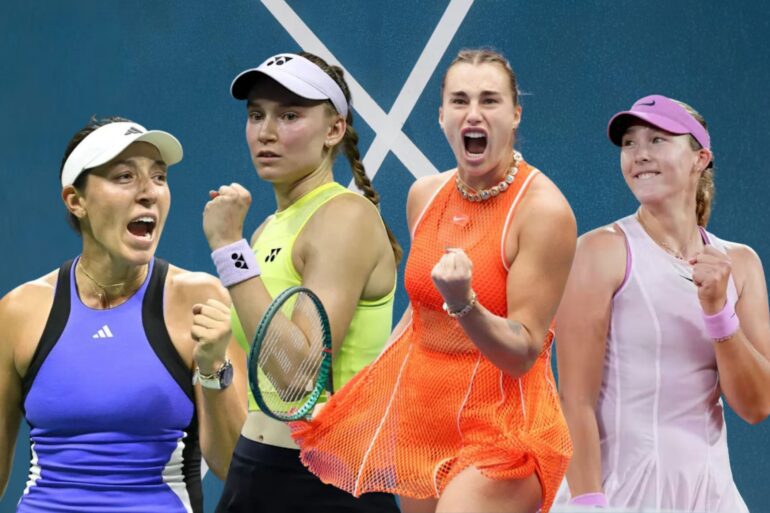
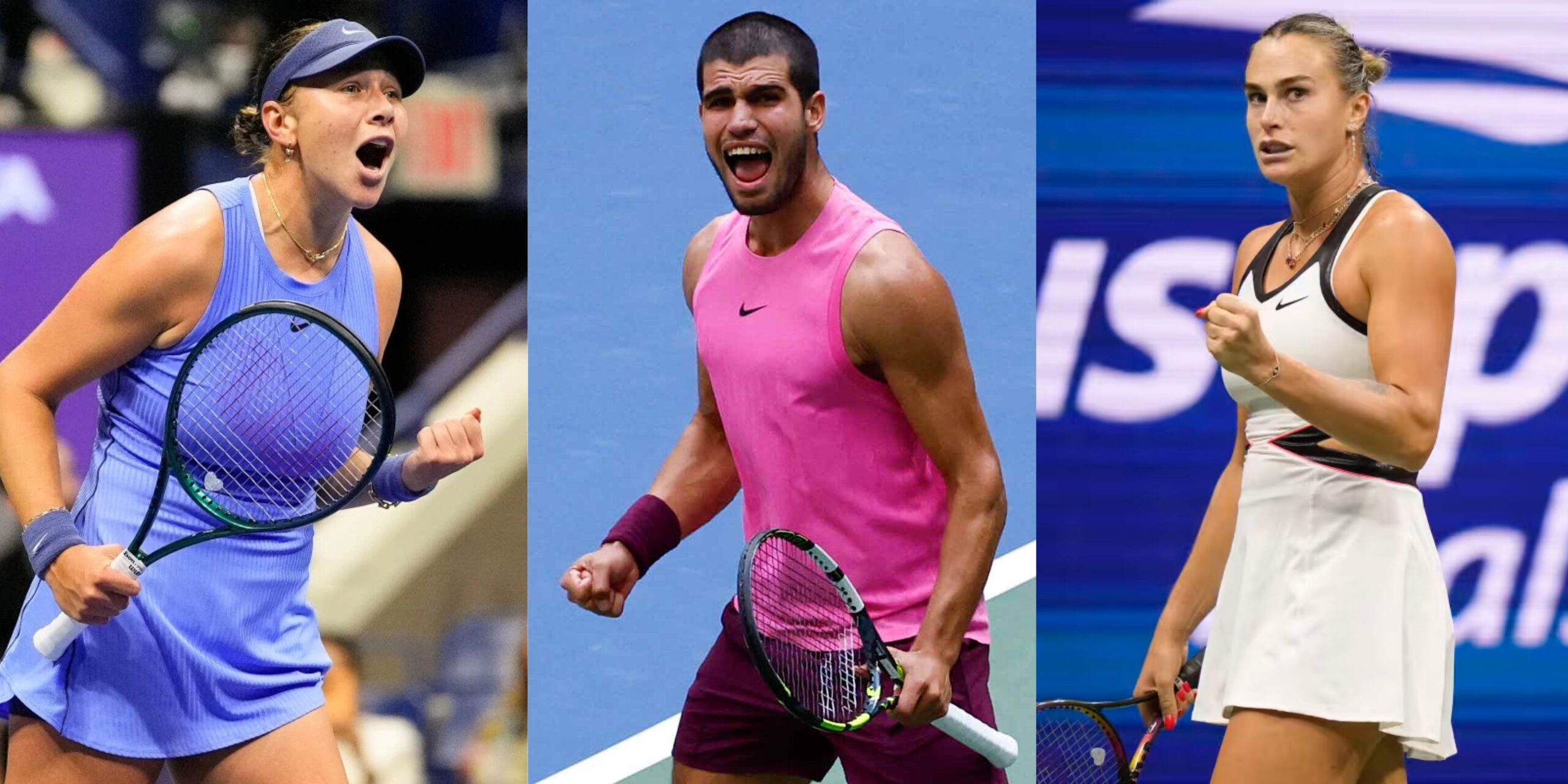

Carlos Alcaraz returns, Jannik Sinner withdraws, Aryna Sabalenka fights to keep her title and No. 1 ranking, and Alex Eala is playing the best tennis of her young career. Flushing Meadows is primed for chaos!
The hard-court summer swing reaches its fever-pitch climax at the 2026 US Open. As always, the year’s fourth and final Grand Slam is loaded with drama: a much-awaited return from injury, a sudden top-tier withdrawal, and rising stars shaking up the ranks.
Arthur Ashe Stadium, now undergoing a massive $800-million makeover, is set for another fortnight of chaos, athleticism, and high stakes—literally, with the prize pool reaching a record-breaking $108 million (P6.68 billion).


The astronomical prize purse cements the US Open’s status as tennis’ most lucrative event, even as soaring ticket prices fuel a growing fan backlash, with grounds passes on the secondary market already topping $250. Still, more than a million fans are expected to make the pilgrimage to Flushing Meadows.
Between defending champion Carlos Alcaraz’s post-injury comeback, world No. 1 Jannik Sinner’s unforeseen withdrawal, and Aryna Sabalenka defending both her title and her precarious grip on the WTA’s top ranking, this year’s tournament promises enough electricity to light up all five of New York’s boroughs.
Related story: Alex Eala becomes first Filipino to win a WTA title: Why 2026 is her defining year
Related story: IN PHOTOS: Alex Eala’s unforgettable 2026 season (so far)
But first, a short history lesson
The US Open may not share Wimbledon’s strict traditions, but Flushing Meadows boasts some of the most groundbreaking moments in tennis history.
First played in 1881 as the US National Championship at the Newport Casino in Rhode Island, the tournament moved to its current home at the USTA Billie Jean King National Tennis Center in Queens back in 1978, trading green clay for blue hard courts. Quick note: Yep, green clay, specifically Har-Tru crushed basalt.
The US Open remains the only Grand Slam to have been played on three different surfaces: grass (1881–1974), green clay (1975–1977), and hard courts (1978–present).

Along the way, it became a trendsetter for the sport:
Leading the yellow ball revolution: The US Open led the charge in 1973 by becoming the first Grand Slam to adopt bright yellow tennis balls, so that TV viewers could easily follow the action on screen. As a stickler for traditions, Wimbledon held out on white balls until 1986.
Interestingly, we have the legendary Sir David Attenborough to thank for the switch. Back in 1967, as a controller for BBC Two, the acclaimed naturalist brought color television to Wimbledon. Realizing that traditional white balls were difficult to track on screen, especially against white baseline court markings, he suggested switching to a high-visibility fluorescent shade. The International Tennis Federation ran tests, settled on “optic yellow,” and the US Open adopted them immediately in 1973.
An equal pay pioneer: That same historic year in 1973, the US Open sent shockwaves across the sporting world by offering equal prize money to both male and female competitors. We have tennis icon Billie Jean King to thank for this.
Related story: Game, set, match! Five unforgettable moments at Wimbledon 2026
Related story: The Alex Eala effect: Here are 5 tennis schools for your young champions
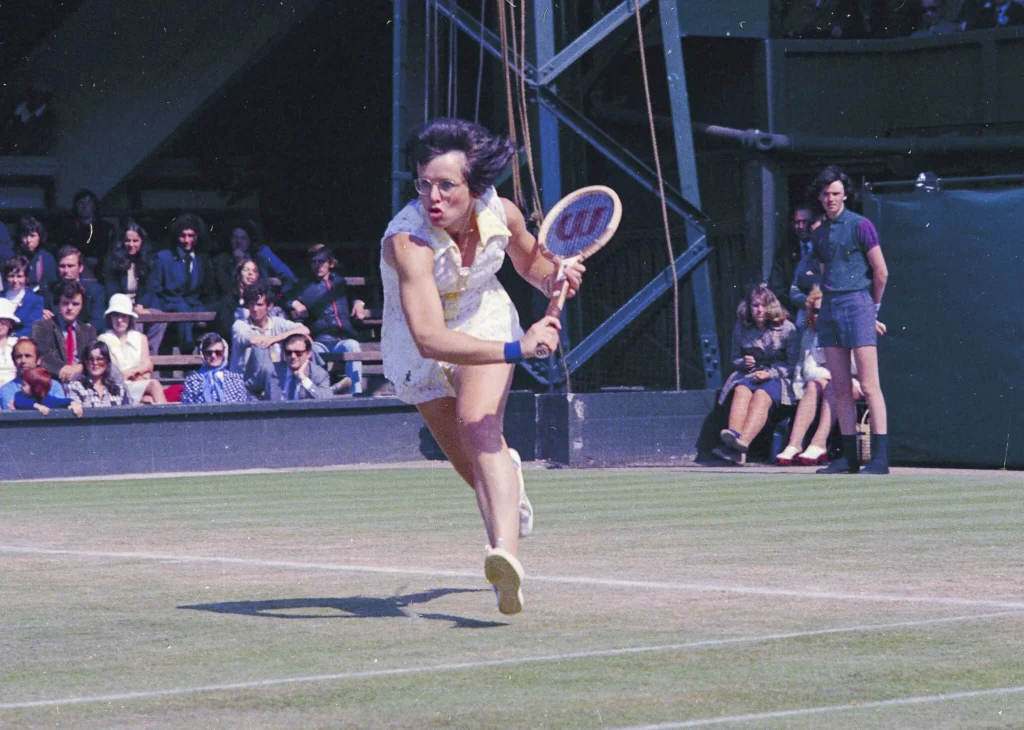
After winning the 1972 title, King was awarded $10,000 compared to male champion Ilie Năstase’s $25,000. Outraged by the $15,000 gap, she threatened that no women would return for the 1973 tournament unless pay parity was achieved. She helped secure a corporate sponsor to bridge the financial shortfall, forcing the tournament to level the prize money.
Twenty-eight years later, the Australian Open became the second Grand Slam to consistently offer equal prize money, formally establishing pay parity in 2001. The tournament had initially introduced pay parity in 1984, and women even earned slightly more than men in 1987 and 1988. However, that lapsed in the years that followed before being permanently restored after over a decade.
The French Open achieved pay parity in 2006, while Wimbledon followed in 2007—33 and 34 years, respectively, after the US Open became the first Grand Slam to offer equal prize money.
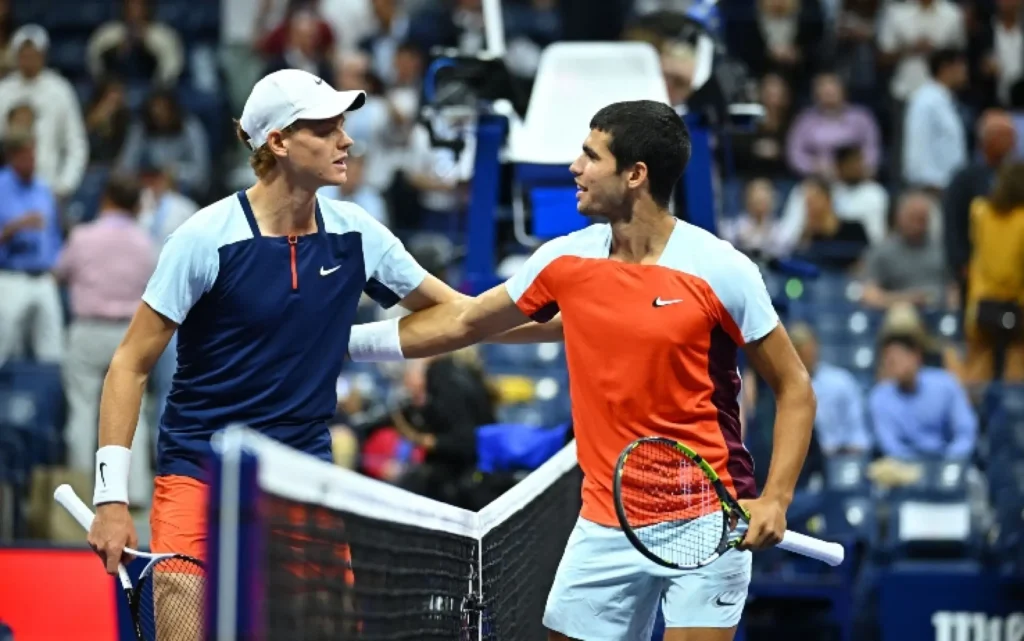
Tennis after dark: Unlike Wimbledon, whose strict local council curfew brings play to a halt at 11:00 PM, New York embraces midnight court madness. Flushing Meadows holds tennis’ late-night record, set in 2022 when Carlos Alcaraz outlasted Jannik Sinner in a quarterfinal thriller that wrapped up at 2:50 AM. This match is widely regarded as the one that announced the Sincaraz rivalry.
A US Open icon—and moneymaker: While Wimbledon holds tight to its quaint British tradition of Strawberries and Cream, the US Open responds with quintessential New York excess: The Honey Deuce.
Created in 2007, this popular pink drink is a refreshing cocktail made with Grey Goose vodka, fresh lemonade, and Chambord raspberry liqueur, served over ice in a collectible souvenir glass and garnished with three frozen honeydew melon balls designed to look like mini tennis balls.
Related story: Wimbledon 2026 is serving looks (and iconic moments!) on and off the court
Related story: REVIEW: Netflix’s ‘Rafa’ is an intimate, inspiring look into one of tennis’ greatest champions
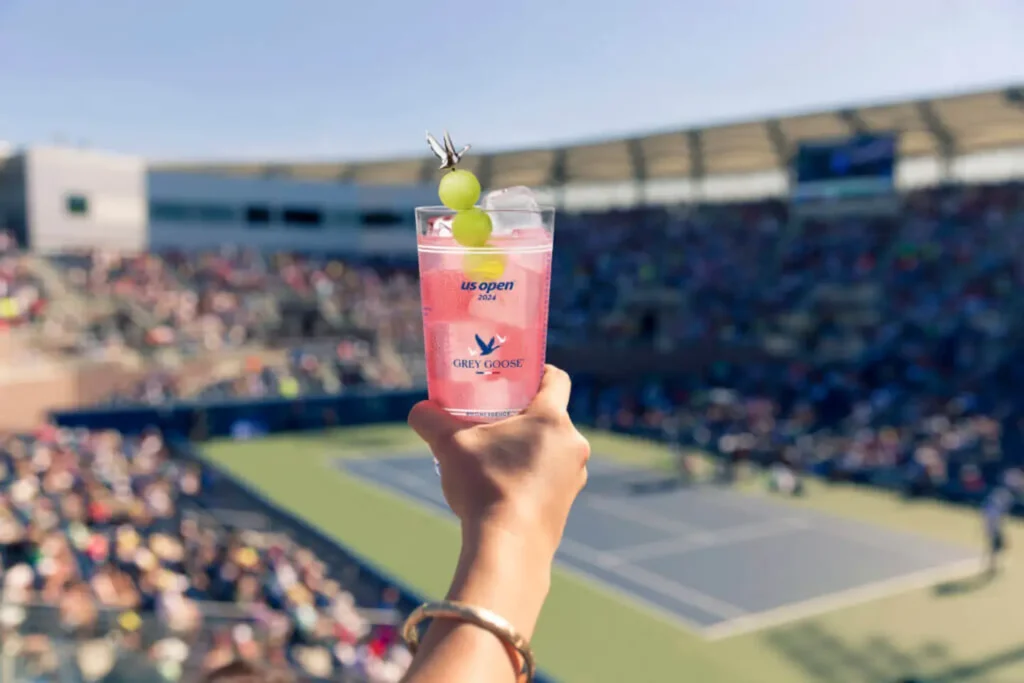
Costing $23 a pop, the Honey Deuce (a play on “honeydew” and “deuce”) has become a cultural phenomenon. In 2025 alone, fans downed over 738,000 Honey Deuces, generating a jaw-dropping $17+ million in revenue—more than enough to cover the prize money for both the men’s and women’s singles champions combined.
It’s all about the money
Off the court, financial storylines dominate the US Open headlines. On one end, the USTA unveiled a historic $108 million prize purse, a 20% jump from 2025 and the largest total player compensation in Grand Slam history. Both the men’s and women’s singles champions will pocket a record $5.5 million (Php339 million), while first-round main-draw departures walk away with $140,000 ($8.6 million). The package also debuts a $2 million Player Support Program dedicated to retirement funds and player welfare.
The increase gives the US Open a clear financial lead over the other majors. Wimbledon’s total purse is around $87.5 million, compared with approximately $72.5 million at the Australian Open and $71.7 million at Roland-Garros.
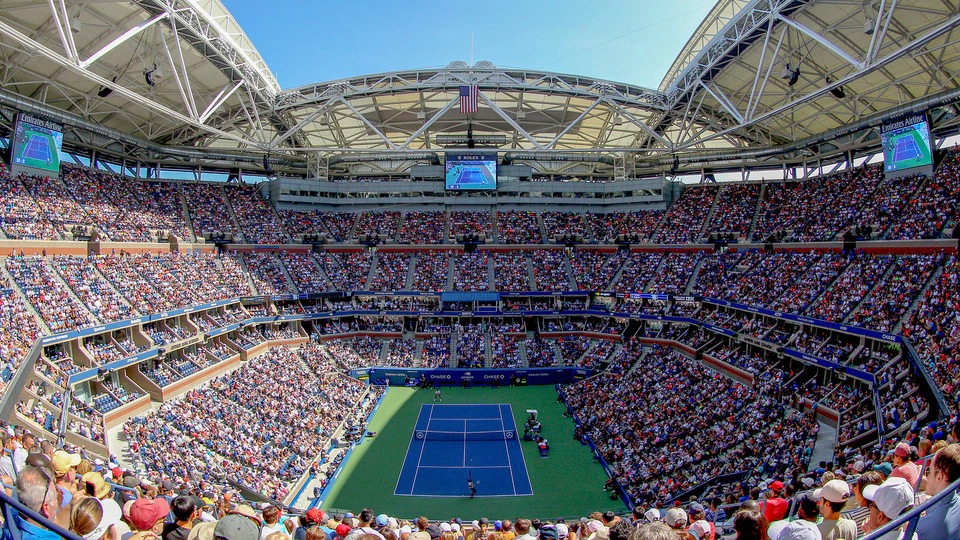
Yet the record payouts contrast sharply with fan experience. Opening-round grounds passes are selling for more than $250 on the secondary market, while upper-bowl weekend tickets have topped $1,200. Courtside seats for the finals are fetching upwards of $10,000.
Fans have voiced their frustration online, criticizing primary vendor pricing structures and resale markups that threaten to price out regular tennis lovers. The New York Times recently published a detailed article on the ticket pricing debacle.
Related story: The women of Wimbledon 2026: Contenders, style, and what to know
Related story: Alex Eala wins Birmingham Open, earns over ₱2 million ahead of Wimbledon
A quick flashback
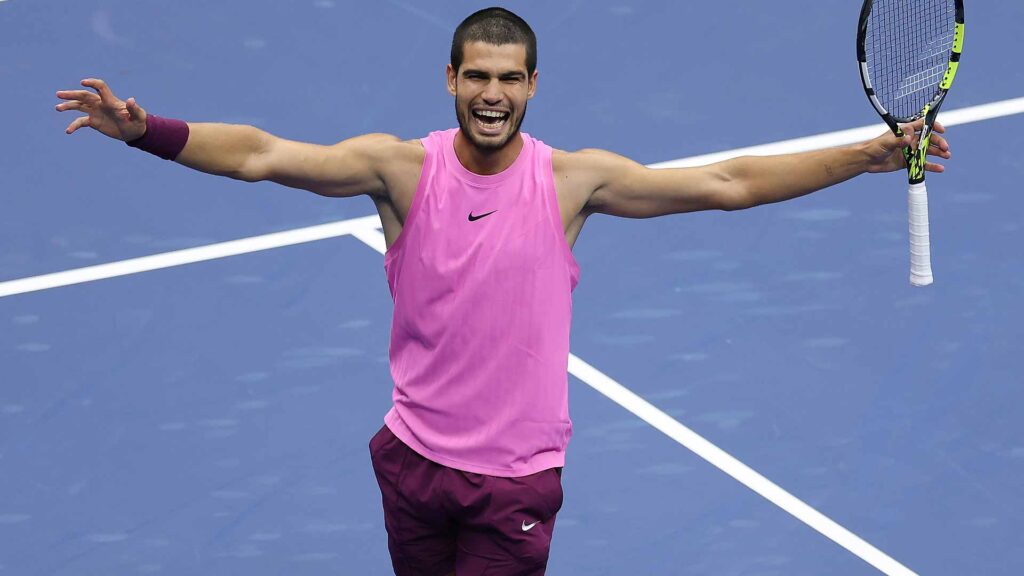
To understand the high stakes in Flushing Meadows this year, one must look back at the dramatic conclusions of the 2025 tournament. On the men’s side, Alcaraz reclaimed his throne in Queens by defeating Sinner in an exhilarating four-set final (6–2, 3–6, 6–1, 6–4), solidifying his status as a multi-surface talent and temporarily taking back the World No. 1 spot.
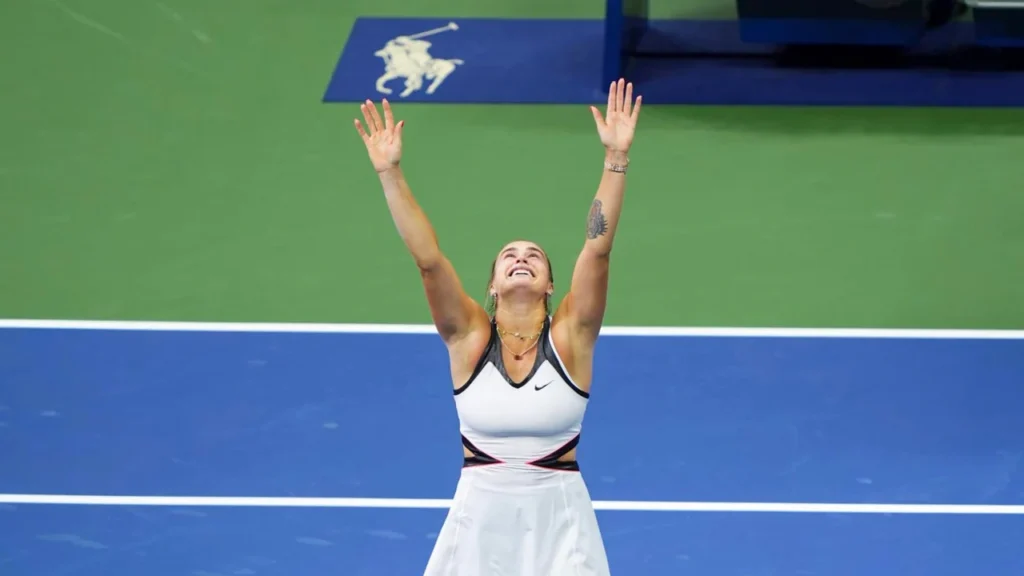
Meanwhile, the women’s draw saw Aryna Sabalenka deliver a masterclass in power baseline tennis to defend her crown, holding off a fierce second-set tiebreak surge from Amanda Anisimova (6–3, 7–6), who was at the time the Wimbledon runner-up.
Related story: Meet Alex Eala: Filipina tennis prodigy smashing barriers
Related story: Filipina firsts, global goals: Alex Eala and Bianca Bustamante meet at the “Oscars of Sports”
Players to watch
All eyes are on the reigning champion, Carlos Alcaraz, currently my favorite player on the ATP Tour. After suffering a wrist injury at the Barcelona Open in April, the 23-year-old Spaniard was sidelined for four months, forcing him to miss both Roland-Garros and Wimbledon. The youngest man to complete a career Grand Slam then confirmed his much-anticipated comeback in a short video message, declaring: “Estoy de vuelta (I’m back). Here we go!”
But just as fans were celebrating Alcaraz’s return—and imagining another Sincaraz final—his fiercest rival, current world No. 1 Jannik Sinner, announced less than 24 hours later that he would withdraw from the US Open citing a knee injury. I promise never to complain about another Alcaraz-Sinner final again if it means seeing these two rivals face each other on the biggest stages.
Sinner’s absence has opened up the men’s draw and eased Alcaraz’s path to a third US Open title. “I’m obviously very sad and disappointed, as New York has a special place in my heart. I was very much looking forward to coming back and playing in the electric atmosphere in front of the great fans there,” Sinner said in an official statement.
With the 25-year-old Italian out, Alexander Zverev is perhaps Alcaraz’s toughest challenger. The German won the French Open earlier this season for his first Grand Slam title and will now be hunting for a second. However (and I will not stop reminding people of this), his profile remains complicated: Zverev has faced domestic-abuse allegations from two former partners, which he has repeatedly denied. The New York Times examined his polarizing status after his French Open triumph in this incisive report.

The GOAT Novak Djokovic remains a contender, backed by peerless Grand Slam experience (including four US Open titles), while American hopes will rest on Taylor Fritz, Ben Shelton, and Frances Tiafoe.
Over on the women’s side, defending champion Aryna Sabalenka enters New York amid serious questions regarding her ability to defend both her crown and her world No. 1 ranking. The 28-year-old finds herself in an uncharacteristic slump, exiting three straight tournaments before the quarterfinal stage following a fourth-round defeat to Naomi Osaka at Wimbledon, a fourth-round loss to Ekaterina Alexandrova in Toronto, and a shock round-of-16 exit to 20-year-old Czech qualifier Sara Bejlek in straight sets in Cincinnati.

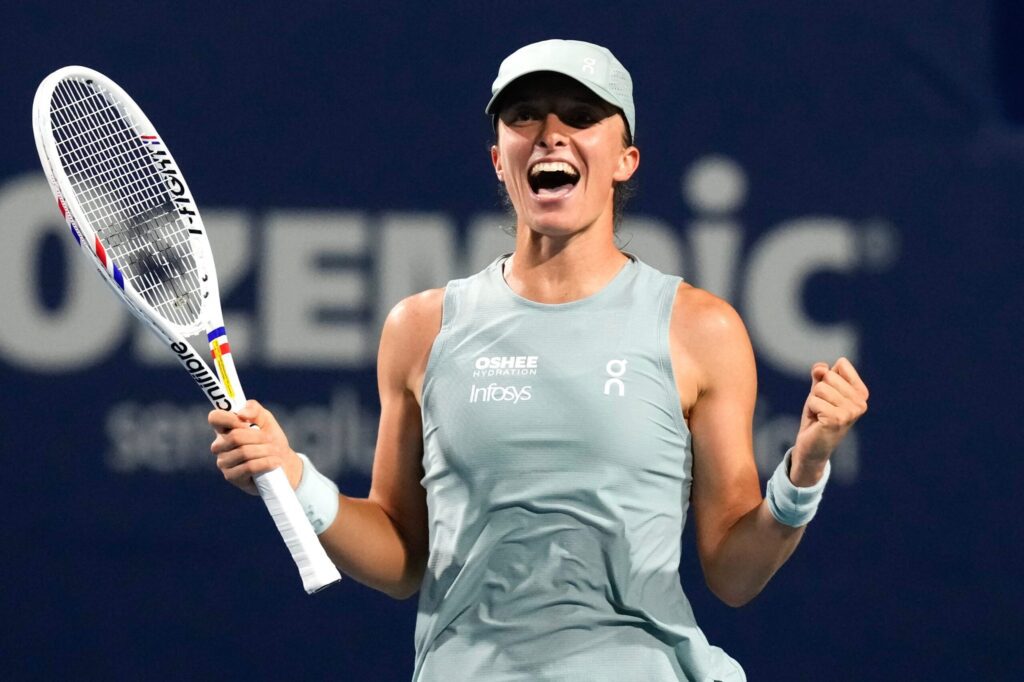
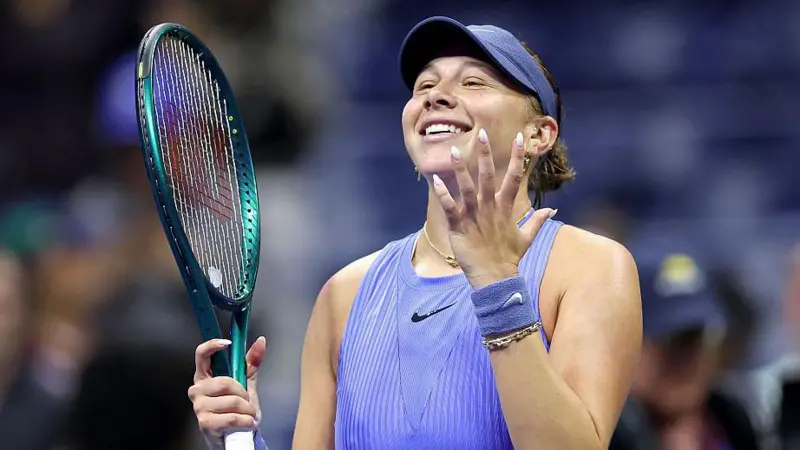
Breathing down Sabalenka’s neck is Kazakhstan’s Elena Rybakina, who is poised to capture the top ranking once last year’s US Open points expire. The world No. 2’s latest attempt to seize the crown came to an abrupt halt, however, when she retired due to injury during her Cincinnati Open quarterfinal against Iga Świątek.
Had Rybakina reached the Cincinnati final, she would already be world No. 1. But Sabalenka faces a steeper uphill battle to keep the top spot: Rybakina trails the Belarusian by just 434 points in the live rankings and is defending only 240 points in New York. Sabalenka, meanwhile, must defend a massive 2,000 points and needs to win the entire tournament to retain her world No. 1 status.
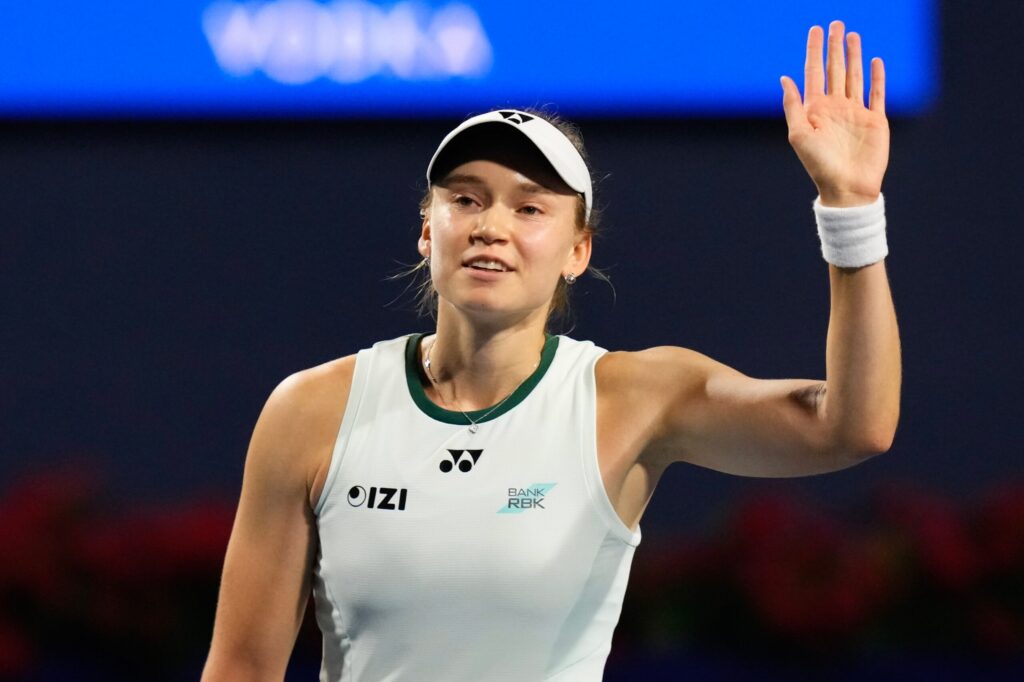

Meanwhile, you can never count out former world No. 1 and six-time Grand Slam champion Iga Świątek (for me the GOAT of this generation and Britannica agrees), who remains a formidable threat. Despite a lackluster first half of the year, Iga has found her stride during a stellar hard-court swing, capped off by a dominant title run at the Toronto Open—marking her 26th career singles title and 12th WTA 1000 trophy. Despite a semifinal loss to Jessica Pegula at the Cincinnati Open that snapped her fiery 10-match winning streak, Iga remains a top favorite for the US Open. Armed with momentum and a return to her sharp form, the Polish star heads to New York aiming to capture her second Flushing Meadows crown.
Beyond home-court advantage, Pegula and Coco Gauff bring peak confidence into the US Open, having reached the Cincinnati Open final, with Gauff taking home the trophy in dominant fashion, 6-2, 6-4, her second in Cincy. Both Americans are playing elite-level tennis and will be tough to beat in Queens.
The depth of the women’s field extends far beyond these three big names. Last year’s runner-up Amanda Anisimova, Ukrainians Elina Svitolina and Marta Kostyuk, Russian teen sensation and French Open winner Mirra Andreeva, Wimbledon champ Linda Nosková, Czech compatriot Karolína Muchová, and four-time Grand Slam champion Naomi Osaka ensure a bracket packed with tenacious champions.
What about Serena Williams? After her Wimbledon comeback ended in a tough first-round loss to Maya Joint, the legend chose to skip the US Open singles draw. But she isn’t bypassing New York entirely. Williams is making a high-profile return in mixed doubles alongside Carlos Alcaraz as a wildcard entry.
Reflecting on her competitive return, Williams noted, “It was really great to be back… I never expected to be here.” With Alcaraz enthusiastically sharing “Let’s gooooo!” on social media following the draw reveal, the pair is set to bring added excitement in Flushing Meadows.
Related story: When to cheer: Tennis etiquette 101 for Filipino fans
Related story: From chubby cheeks to center court conqueror: Alex Eala’s history-making hour
Alex Eala rising
Then there’s our very own Alexandra “Alex” Eala. Her meteoric rise over the past year has seen her grow from a promising prospect into a genuine—and even feared—Grand Slam contender.
Alex has climbed to a career-high No. 18 in the world and is projected to be seeded 17th in New York following the withdrawal of injured Canadian star Victoria Mboko. That would make Alex the highest-seeded Southeast Asian singles player in Grand Slam history—another milestone in a breakthrough season.
Yet she is not merely chasing records. In the Open Era, no Southeast Asian singles player has advanced farther at a Grand Slam than Thailand’s Tamarine Tanasugarn and Indonesia’s Yayuk Basuki, who remain the region’s only quarterfinalists. Alex now has an opportunity to build on that legacy and take Southeast Asian tennis to greater heights.
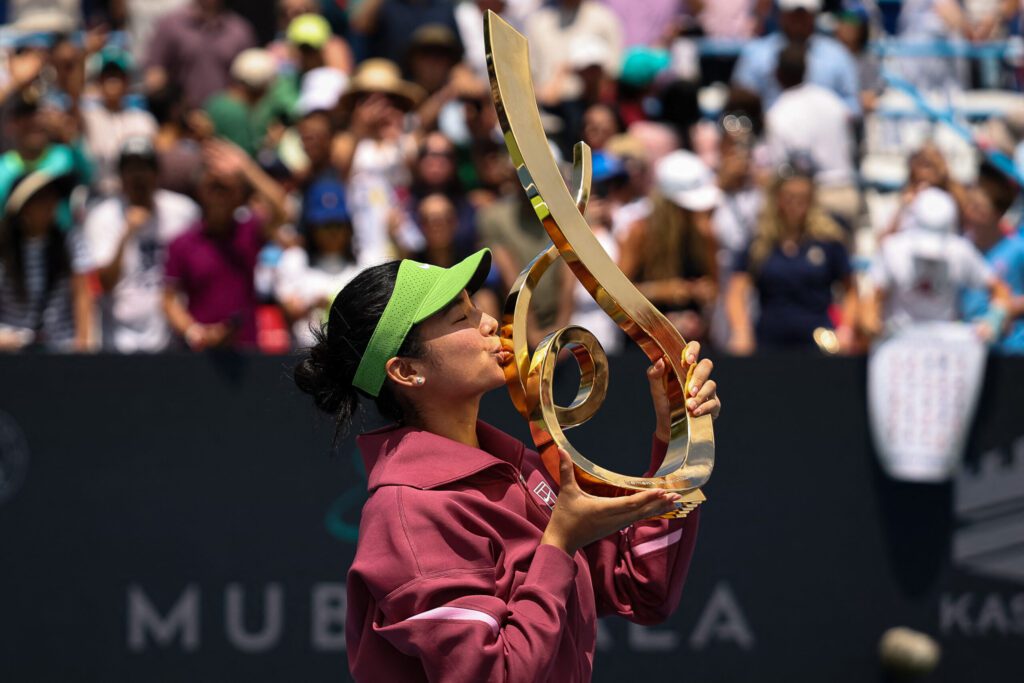
Her biggest assets are her left-handed topspin, impressive return game, unrelenting competitiveness, and a massive (and loud LOL) fanbase. Alex has played 56 singles matches in 2026 with a 37–19 record—the busiest workload on the WTA Tour this season. After her recent success on North American hard courts, she arrives in Flushing Meadows with both the confidence and sharper gameplay to make a serious run.
From a staggering prize money pool to a brilliant roster of players, the 2026 US Open has all the ingredients for an instant classic. Grab a cup of Honey Deuce (or make your own!), get ready for all-nighters if you’re watching from the Philippines, and let the games begin!