
Love it or hate it, tennis’ final Grand Slam of the year never fails to be the buzziest.
The 2026 US Open lived up to its signature high-octane New York drama. From major shifts on the court to fan outcry in the stands, the two-week tournament delivered another round of unforgettable tennis alongside plenty of off-court chatter.
Between Elena Rybakina and Alexander Zverev claiming new titles, “Eala Mania” sweeping the grounds, and the intense backlash over courtside influencers and sky-high ticket prices, Flushing Meadows was at its absolute noisiest. Love it or hate it, tennis’ final Grand Slam never fails to be the buzziest.
Here are the defining moments that had everyone talking.
Elena Rybakina shines
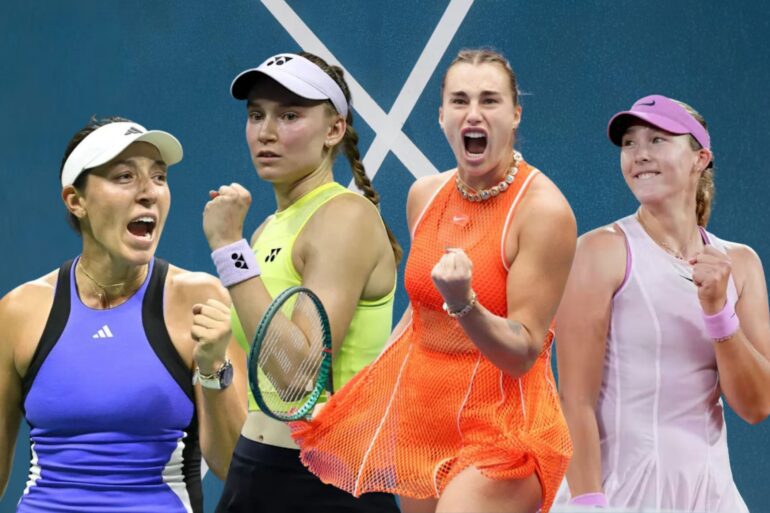
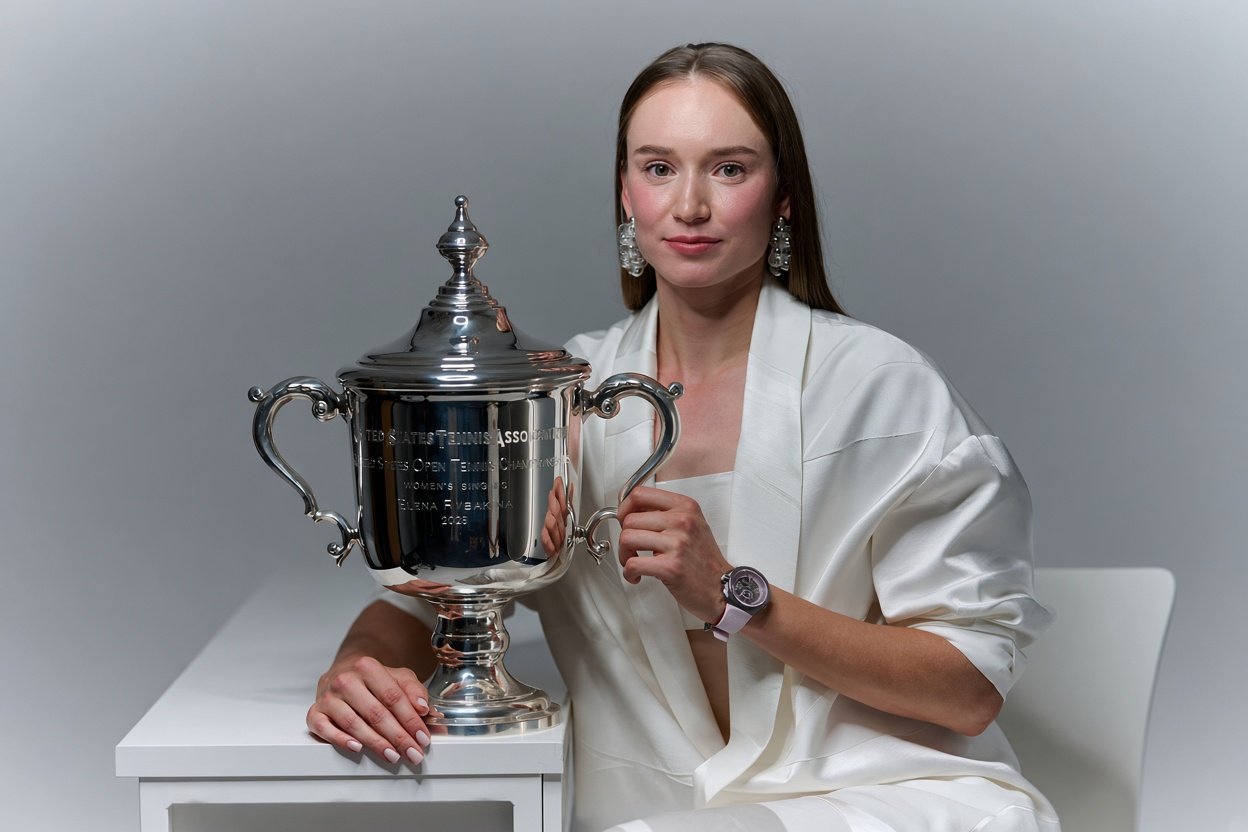
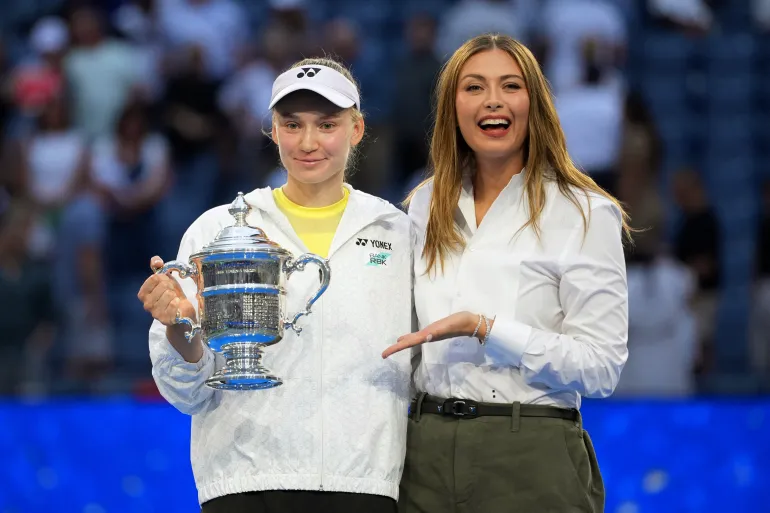
In Saturday’s final, the Russian-born Kazakhstani delivered a majestic performance to claim her first US Open title and seal a total changing of the guard at the top of women’s tennis, defeating two-time defending champion Aryna Sabalenka 6-4, 5-7, 6-2 in Arthur Ashe Stadium.
Related story: Forget all-white: The 7 most talked-about women’s kits at the 2026 US Open
Related story: 2026 US Open primer: Players, paychecks, pop trivia
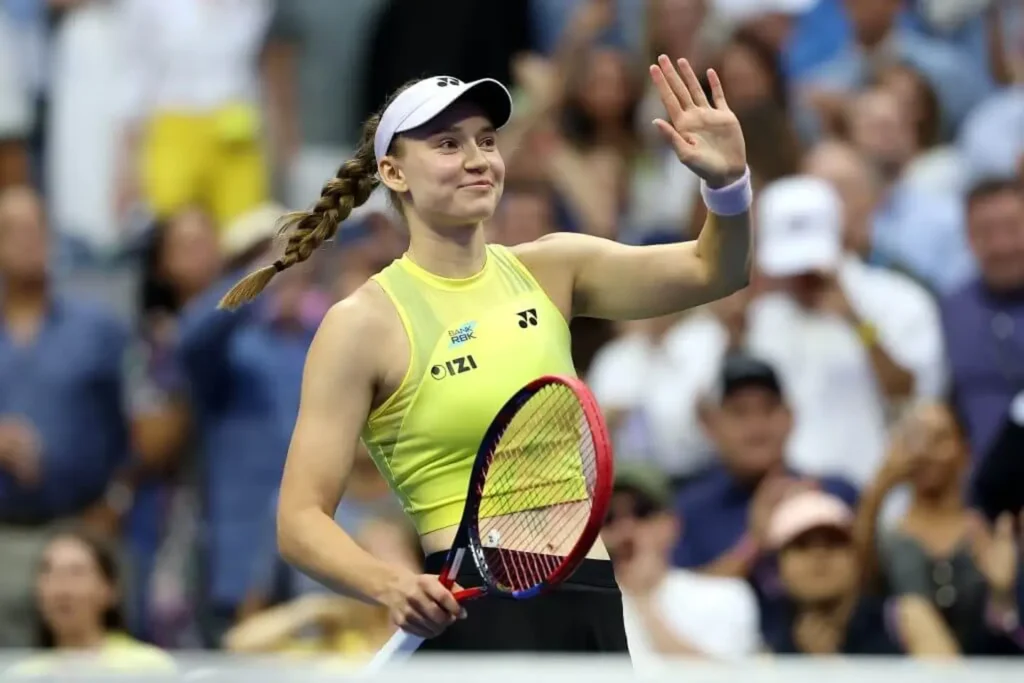
In what proved to be a total takeover in New York, Rybakina stripped Sabalenka of everything the 28-year-old Belarusian had spent the past two years building. Earlier in the week, Rybakina’s quarterfinal victory over China’s Zheng Qinwen officially ended Sabalenka’s 99-consecutive-week reign atop the WTA rankings, ensuring her rise to world No. 1 regardless of the final’s outcome.
Winning the US Open punctuated her dominance this season, earning Rybakina her second Grand Slam crown of 2026—following her Australian Open triumph in January, also over Sabalenka—and her third major title overall. The US Open title also made her $5.5 million richer, the largest payout in Grand Slam history, while tying her with Sabalenka and French Open winner Mirra Andreeva for a tour-high three titles this year. Rybakina’s other 2026 title was a WTA 500 in Stuttgart. Sabalenka, meanwhile, is Slam-less for the first time since 2022.
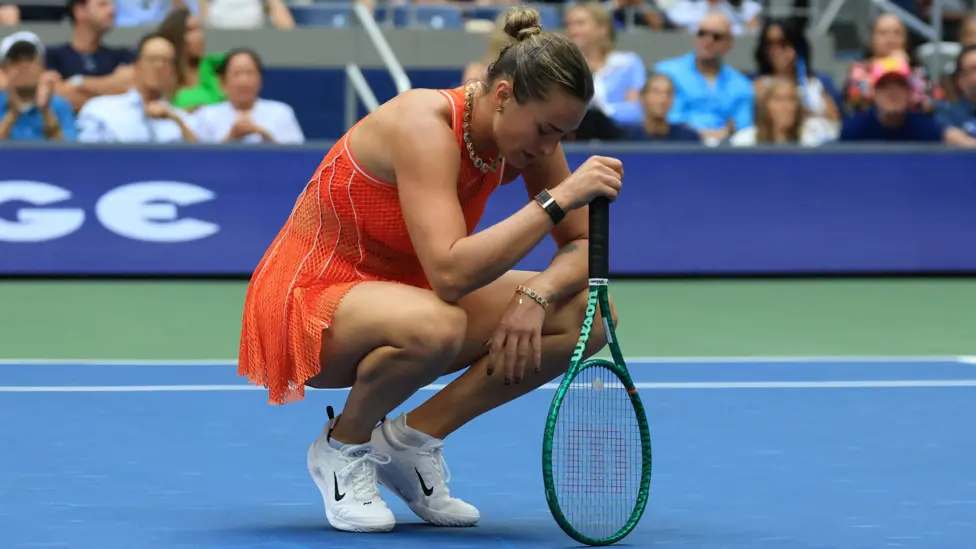
Powered by a powerful baseline game, Rybakina halted Sabalenka’s quest to become the first woman to win three consecutive singles titles in New York since Serena Williams (2012–2014). Instead, Poland’s Iga Świątek remains the only player, man or woman, this decade to complete a Grand Slam three-peat while retaining the World No. 1 spot, accomplished at Roland Garros from 2022 to 2024.
Rybakina now leaves Queens holding both the trophy and a commanding lead at the summit of the women’s game.
Related story: SEAsters rising: Meet the four young stars driving Southeast Asia’s tennis boom
Related story: Serving style: Celebrity looks at the 2026 US Open
Zverev wins second Slam
Over at the men’s side, German Alexander Zverev triumphed over American Ben Shelton in four sets, 6-3 7-6 (7-2) 5-7 6-2. Having captured his maiden Grand Slam at Roland Garros earlier this summer, lifting the trophy on Arthur Ashe Stadium earns him his second career major—and his first on hard courts—while laying to rest his painful 2020 US Open final defeat against Dominic Thiem.
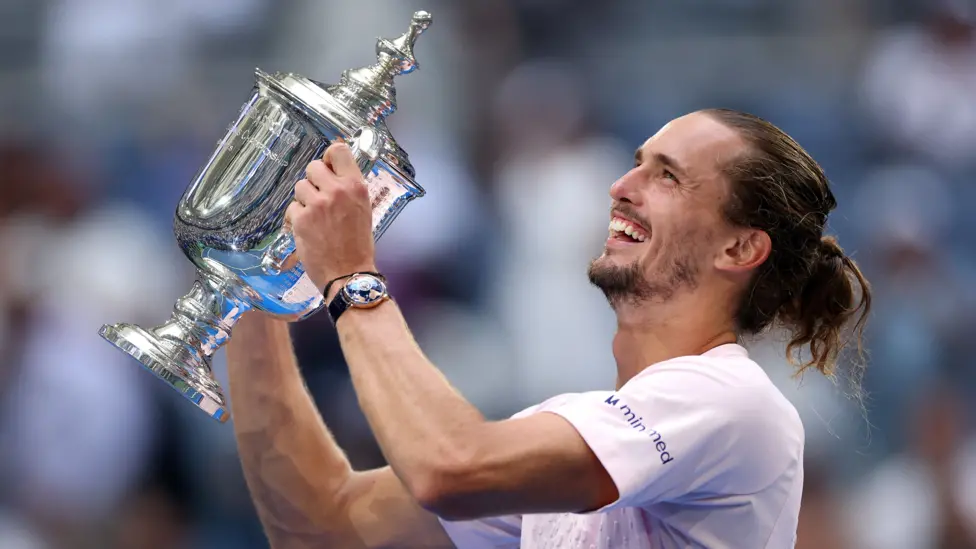
Adding 2,000 ranking points from Flushing Meadows brings the 29-year-old closer to the world No. 1 spot for the first time in his career. The victory also extends Zverev’s head-to-head record against Shelton to 6-0.
Despite being a newly minted two-time Grand Slam winner, Zverev’s public image remains deeply complex, a point worth emphasizing, as he continues to face scrutiny over domestic abuse allegations brought by two former partners, both of which he has consistently denied. His polarizing status was examined in a New York Times report following his breakthrough at Roland Garros.

At the start of the US Open, things were a little more unpredictable, with world No. 1 Jannik Sinner withdrawing even before the tournament. Perennial rival and defending champion Carlos Alcaraz marked a highly anticipated comeback after a wrist injury sidelined him for four months.
The 23-year-old seven-time Grand Slam champion fought his way to the quarterfinals before falling to Shelton in a grueling five-set match. With the draw’s biggest heavyweights sidelined, the door swung wide open for a new champion—and Zverev stood ready to capitalize.
Related story: Alex Eala becomes first Filipino to win a WTA title: Why 2026 is her defining year
Related story: IN PHOTOS: Alex Eala’s unforgettable 2026 season (so far)
“Eala Mania” continues
Filipino tennis sensation Alex Eala captured widespread attention throughout the tournament’s opening week, building on the momentum generated by her sensational victory over then-defending champion Świątek in the third round of Wimbledon and sustained by her maiden WTA title in Washington, D.C.
Entering the tournament seeded 17th and as the world No. 18, the highest-ever for a Filipino and a Southeast Asian, the 21-year-old delivered a decent US Open run. She scored convincing straight-set victories over Mary Stoiana and Oleksandra Oliynykova, before falling to good friend Iva Jovic, 5-7, 6-3, 5-7, in a three-hour, three-set battle in Arthur Ashe Stadium, which many analysts say is the most exciting of the tournament.

Alex’s scheduling also triggered heated online debate among fans and experts. With thousands of passionate Filipino supporters packing the stands and driving up ticket resale prices, some purists questioned placing a rising star on show courts like Arthur Ashe over more established players. However, tournament organizers cited packed stadium crowds, massive digital engagement, and global fan interest as easy justification for granting Alex the biggest venues.
Off-court, Alex’s crossover potential caught the eye of fashion icon and tennis aficionado Anna Wintour, who publicly praised the Filipina star during the US Open, saying, “We had the young Filipino star —you could see even in such a young star how interested she is in fashion and how she wants to learn about it and follow it.”

Following her campaign at Flushing Meadows, the 21-year-old made her debut at New York Fashion Week. After earlier appearances at the Michael Kors and Calvin Klein shows, Alex capped her week in the front row of the Tory Burch runway show—sitting alongside Wintour herself, actress Amanda Seyfried, and singer-songwriter Lauryn Hill, boosting her status as tennis’ newest style favorite.
Related story: When to cheer: Tennis etiquette 101 for Filipino fans
Related story: From chubby cheeks to center court conqueror: Alex Eala’s history-making hour
Influencers under fire
Beyond the on-court drama, the prominent (and mostly annoying) presence of social media influencers across Arthur Ashe and Louis Armstrong stadiums emerged as a major flashpoint. The USTA nearly doubled its official content creator program to roughly 100 creators this year, with the move sparking intense backlash from tennis fans.
@abcnews A group of social media influencers came under fire for disrupting a Naomi Osaka match at the 2026 US Open, with game officials reportedly chastising the group. #abcnews #news ♬ original sound – ABC News
Frustrations peaked after several viral TikTok videos surfaced showing influencers using bright portable ring lights, posing for photo shoots mid-point, and filming vlogs while completely turning their backs on active play. The most infamous incident involved a group of TikTokers filming content during the first‑round match between Naomi Osaka and Anastasia Zakharova, distracting spectators and drawing sharp criticism online.
Critics argued that gifting prime courtside suites to creators who paid little attention to the sport degraded the fan atmosphere and created distractions for players, prompting tournament organizers to publicly reinforce rules on court etiquette.
Record-high ticket prices
Compounding fan frustration were the astronomical ticket prices. According to secondary market data, get-in ground pass tickets surged to an average of $288—up 13% from last year—with even basic opening-weekend grounds passes listed at $277 (over quadruple their $65 face value).
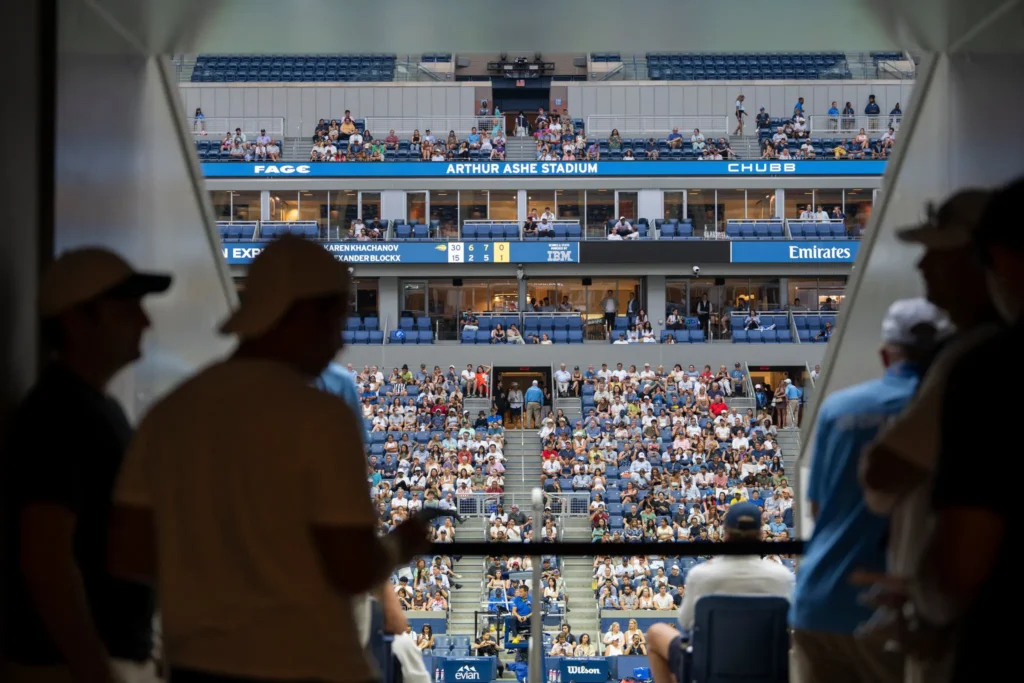
For the final weekend, average ticket prices on resale platforms hovered around $510, while prime baseline seats for the finals commanded thousands of dollars. The combination of steep price tags pricing out traditional tennis fans alongside courtside suites reserved for TikTok creators fueled an ongoing debate over commercialization at modern Grand Slam events.
Related story: Game, set, match! Five unforgettable moments at Wimbledon 2026
Related story: Wimbledon 2026 is serving looks (and iconic moments!) on and off the court
Related story: The women of Wimbledon 2026: Contenders, style, and what to know