
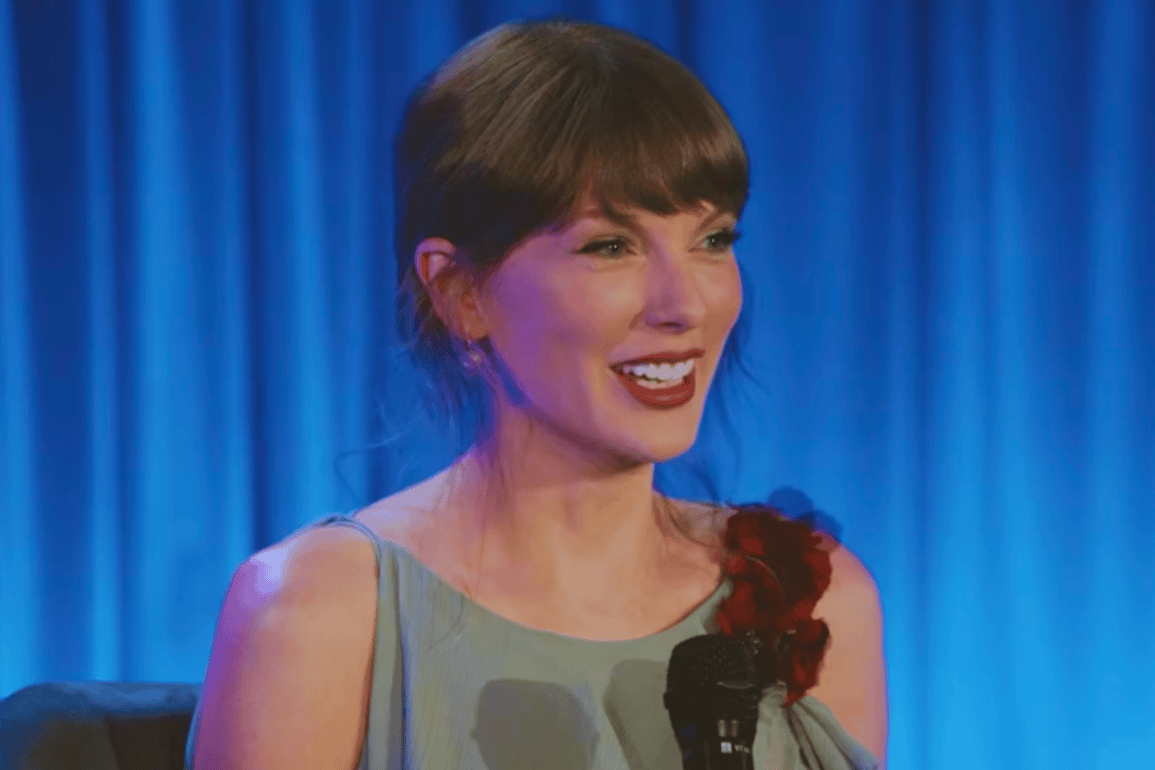
Swift looked back on 20 years of songwriting at the Grammy Museum. Naturally, she left us with enough life advice to fill the blank spaces in our own Notes app.
Taylor Swift has always known how to turn a very specific moment into something millions of people understand. A scarf left at someone’s sister’s house. A getaway car. A boy whose Chevy truck supposedly kept breaking down on back roads at night.
During The Icon Sessions With Taylor Swift: A 20-Year Retrospective, she finally explained some of the thinking behind those details. Recorded at the Grammy Museum’s Clive Davis Theater, the intimate conversation saw Swift looking back on everything, from writing “Tim McGraw” as a teenager to reclaiming her first six albums through Taylor’s Versions.
Related story: Taylor Swift’s Songwriters Hall of Fame induction proves her lyrics were always the legacy
Related story: I remember it all too well: Growing up with Taylor Swift
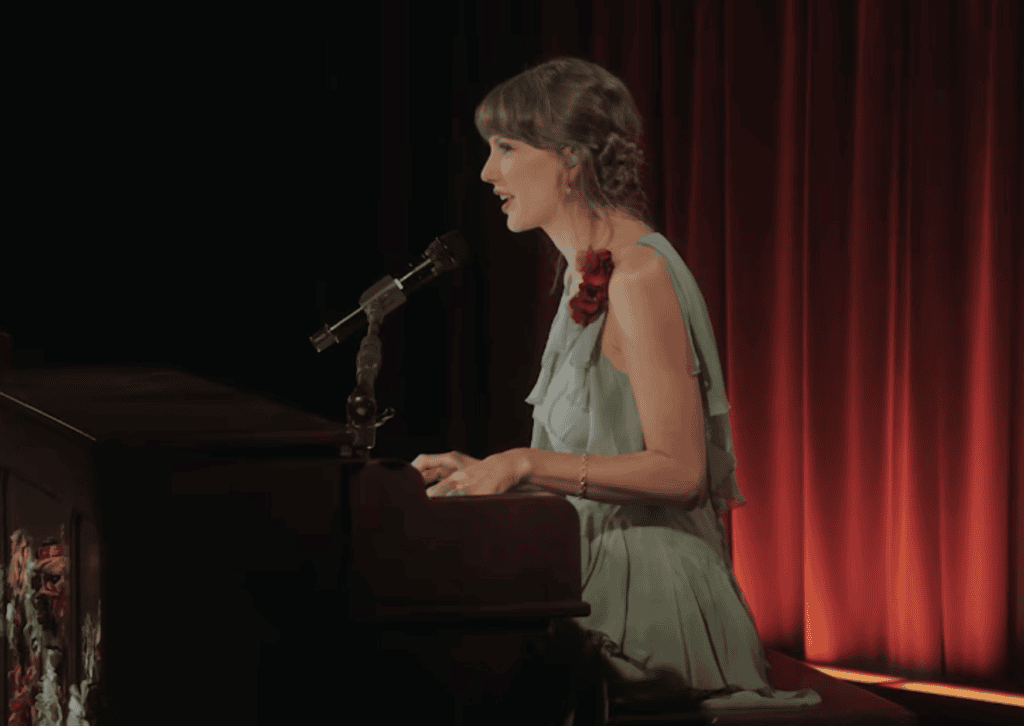
She also revealed that “I Knew You Were Trouble” began as a sad piano ballad before Max Martin and Shellback suggested turning it into the dubstep-powered song we know today. After the interview, she sat at her Eras Tour piano and performed a surprise mashup of “I Knew It, I Knew You,” “August,” and “All Too Well.”
But the best part of the conversation was hearing Taylor talk about creativity, criticism, and trusting yourself. As a Swiftie, I came for the songwriting stories and left with these reminders.
I never turned to music to forget my human experience. I turned to music to remember it.
Taylor does not write to escape her life. She writes so she will not lose it.
That explains why time and memory appear so often in her songs. She remembers what someone wore, where they stood, what the weather felt like, and how everything ended. The details may belong to Taylor, but the feelings quickly become ours.
Related story: REVIEW: Taylor Swift’s new ‘Toy Story 5’ song feels like coming home
Related stoy: Taylor Swift’s ‘The Tortured Poets Department’ has us sitting, sinking and screaming in tempestuous ruin
It also made me think about how often we try to rush past uncomfortable experiences. We delete the pictures, avoid the old places, and pretend we no longer care. Taylor’s songs suggest another choice. And that is to look at the memory, understand it, and make something meaningful out of it. You do not have to write a ten-minute masterpiece about your ex. Sometimes remembering simply means admitting that something mattered.
The details have to have a significance to the story at hand.
Swifties have spent years studying Taylor’s lyrics as though there will be a surprise quiz after the bridge. This conversation confirmed that the details are there for a reason.
Taylor used “Tim McGraw” as an example. The lyric about a Chevy truck getting stuck on back roads sounds innocent at first. As she explained, however, it was really about two teenagers parking somewhere to kiss, then telling their parents the truck had broken down.
When Taylor released her debut album at 16, people questioned whether country music’s adult listeners would care about the life of a high school student. She trusted her perspective anyway.
We’re dealing in emotional truths that either resonate or don’t.
That decision now seems obvious because we know what followed. At the time, it was a real risk. Taylor did not match the audience profile that industry executives had studied, but she understood something their charts could not measure. You do not need to share someone’s exact life to recognize their feelings. Most listeners were not teenage girls trying to become country singers in Nashville. They still knew what it felt like to want someone, lose someone, or hope they would remember you.
Data can tell us who usually listens. It cannot always predict what will make somebody feel seen. And that’s where Taylor’s music comes in.
Putting out music you’ve made that you love so much is not the path to universal validation.
Even Taylor Swift cannot make everyone approve of her. Every album, lyric, outfit, friendship, and facial expression can become an argument online. If universal validation were the goal, she would never finish anything.
Instead, she returns to the people who care about the music and to the fact that she still loves making it. That does not erase criticism, but it gives her a reason to keep going when the noise gets loud.
The takeaway is simple but also slightly painful: being proud of your work does not guarantee that everyone will understand it, but you still have to make it.

“I Knew You Were Trouble” almost sounded completely different. Taylor brought Max Martin and Shellback a sad piano ballad with no drums in mind. They heard it and asked one chaotic, career-altering question: “What if it had dubstep?”
My favorite people to be in the room with are ‘yes, and’ people.
Taylor was unsure, but she tried it. The experiment became one of the defining songs of Red and peaked at No. 2 on the Billboard Hot 100.
“Yes, and” does not mean every suggestion is brilliant. It means giving an idea enough room to show you what it could become. The best people do not make your world smaller before you have explored it. They bring something to the room, listen to what you brought, and help both ideas grow.
Taylor’s discussion of reputation was one of the interview’s notable parts.
When people are mocking me, it’s really fun to mock them back.
She remembered a period when people seemed determined to misunderstand her. Sincere explanations only gave them more material, so she answered differently. “Look What You Made Me Do” used humor, exaggeration, and a Taylor emerging from the grave to show what it felt like to be cornered.
The album was not only a clapback, though. Beneath the snakes and newspaper headlines was a story about finding a small, private source of warmth while strangers decided who you were.

Her lesson was not that we should respond to every critic. It was that other people do not get to choose what happens to us next. Taylor took a painful public story and changed its language. She made it theatrical, funny, and very romantic.
You think you will remember it. You will not.
Finally, some extremely practical advice from the woman whose Notes app apparently requires endless scrolling. Save the idea.
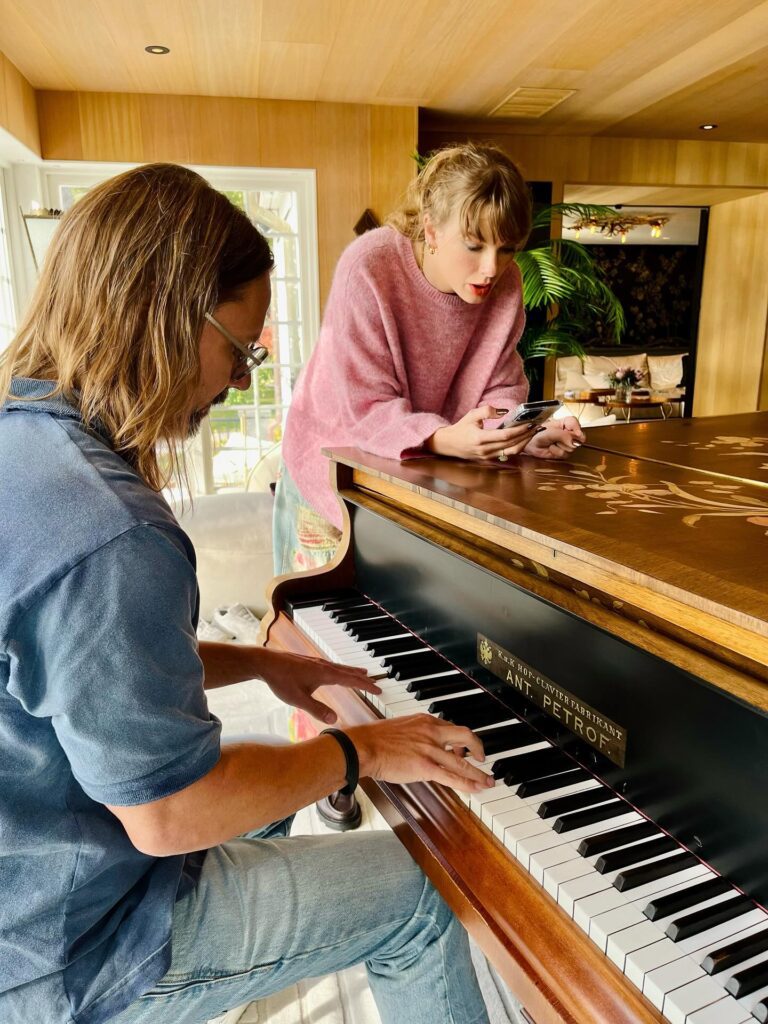
Taylor said melodies and lyric fragments can arrive anywhere, including while she is falling asleep or stuck in an awkward social situation. She records them immediately because trusting her memory has rarely worked. Most of those sleepy voice notes may sound terrible the next morning. Every once in a while, however, one contains the start of something worth keeping.
Write down the funny sentence. Save the oddly specific observation. Record the melody, even if you have to mumble it into your phone. Inspiration does not always arrive as a complete song. Sometimes it is only one puzzle piece asking not to be lost.
Related story: Taylor Swift buys back her masters after a six-year battle
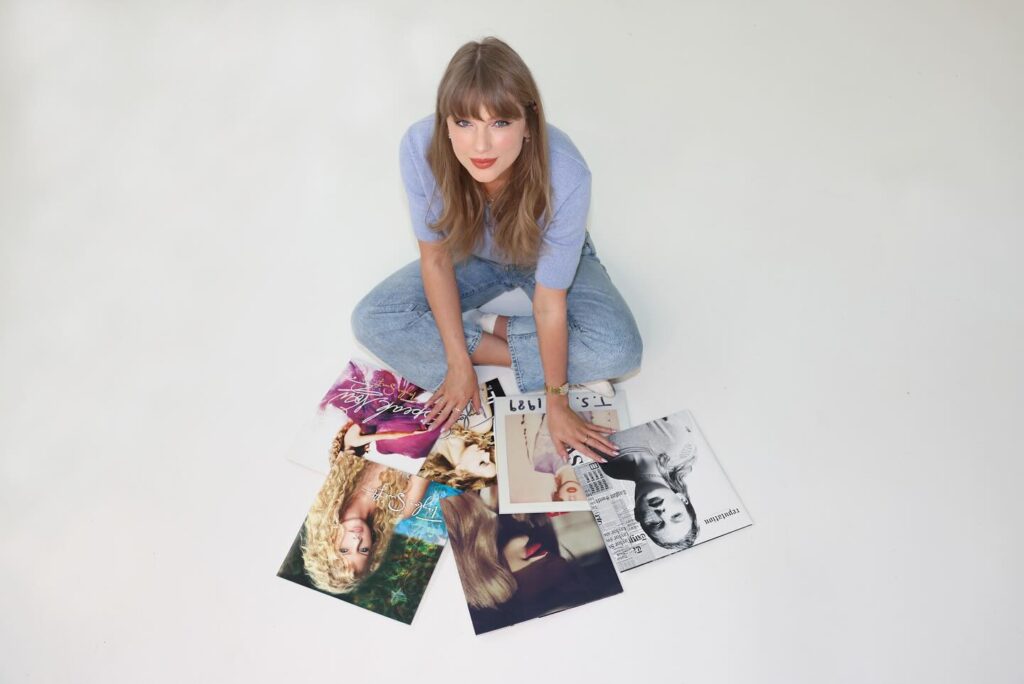
I hope that you will show up to work even when the idea fairy doesn’t.
Taylor Swift’s biggest lesson after 20 years is to keep showing up. At the end of the conversation, Taylor offered one final hope for the songwriters in the room: show up to work even when the “idea fairy” does not.
Taylor trusts inspiration, but she does not sit around waiting for it. She studies, saves fragments, follows her instincts, listens to collaborators, and keeps working when an idea is still hiding. She also refuses to make the same creative move twice. From country to pop, from Folklore’s fictional characters to the reclamation of Taylor’s Versions, she has let her work change without abandoning the emotional honesty at its center.
The surprise mashup was lovely, of course. Still, the interview left me thinking about the less glamorous part of being Taylor Swift—the thousands of hours it took before the idea fairy knew exactly where to find her.
Watch the full interview here:
Related story: Taylor Swift and Travis Kelce wedding: Everything we could dig up
Related story: Did Travis Kelce make Taylor Swift a bad songwriter?
Related story: Endgame: Inside Taylor Swift and Travis Kelce’s love story