
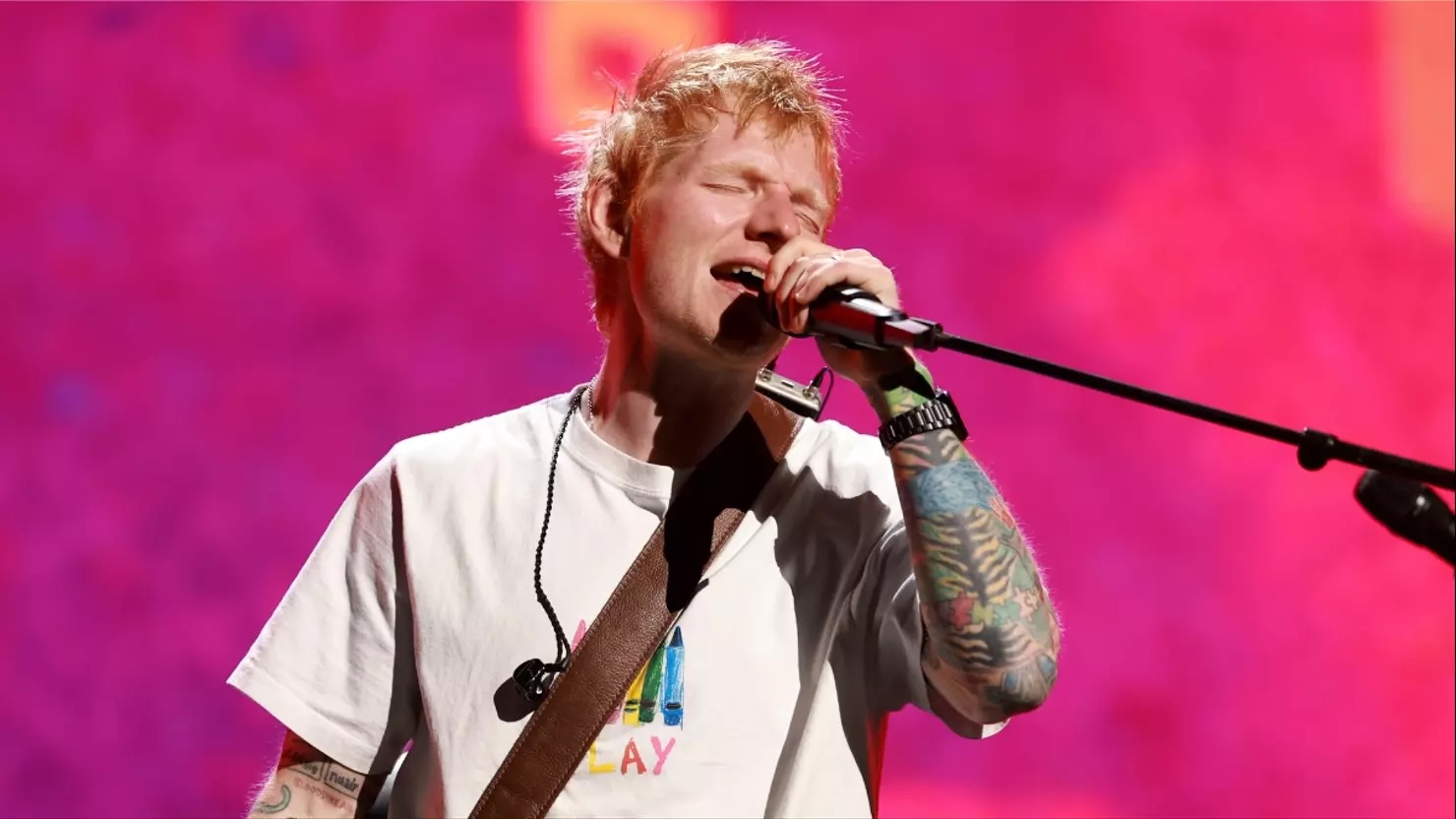
The fallout from Ed Sheeran’s Loop Tour proves that as global crises deepen, the line between entertainment and activism is becoming harder to draw.
I was a high school freshman when I first read Elie Wiesel’s Night (1956). The harrowing memoir about the Nobel Peace Prize (1986) laureate’s survival in Nazi concentration camps during the Holocaust left such a profound impression on me that I have read it twice since, despite the heavy emotional toll it exacted on me as a young reader. Wiesel’s famous stance on neutrality stayed with me above all else: “We must always take sides. Neutrality helps the oppressor, never the victim. Silence encourages the tormentor, never the tormented.”
That conviction is why I believe neutrality is a myth—and why silence in the face of injustice only serves the powerful. When given the choice, we have a moral obligation to stand with the oppressed over the oppressor. This is a lesson I have passed on to my son, Nico, and one I remind him of often.
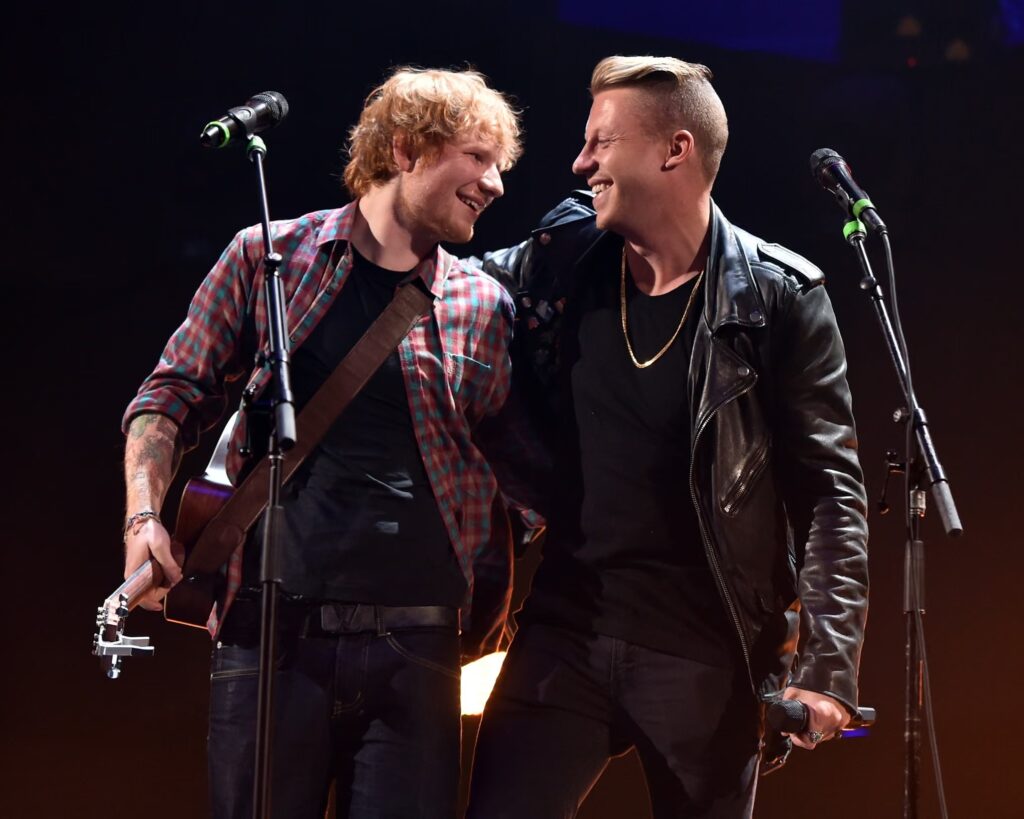
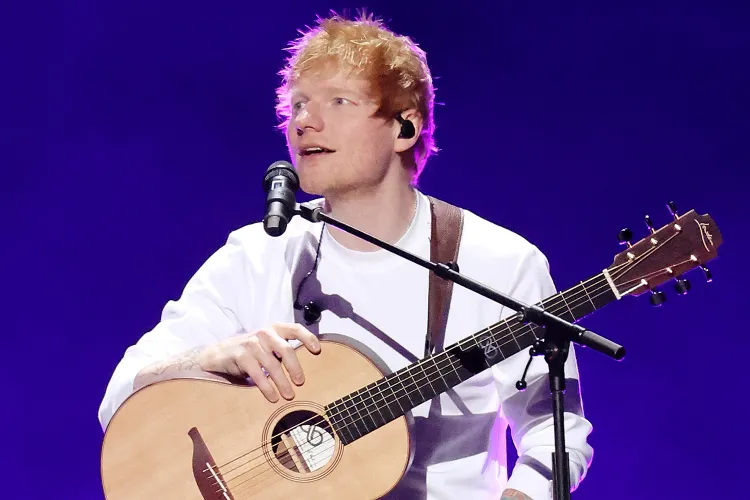
This principle lies at the heart of our strong reaction to the recent fallout surrounding Ed Sheeran’s Loop Tour (Nico is a huge Sheeran fan—but apparently not so anymore). Opening act Macklemore was removed from the tour after delivering an opening-night speech in support of Palestine and displaying images of Gaza’s destruction. Facing intense pressure and threats of concert cancellations from venue owners and promoters who deemed his remarks immensely divisive, the tour dropped him from the lineup.
When every remaining supporting act subsequently withdrew in protest, the controversy sparked a fierce debate: Can major concert tours ever truly remain neutral spaces, or does staying quiet on human suffering equate to taking the oppressor’s side?
Related story: REVIEW: Palestinian-Israeli documentary ‘No Other Land’ is a harrowing yet necessary watch
Related story: Global issues to watch in 2025
Concerts as an escape and a “sanctuary”
When fans buy tickets for a major pop concert, they expect a multi-million-dollar escape: jaw-dropping production numbers, an evening of sing-alongs with fellow fans, and a quick break from everyday stresses. But when real-world politics break through the speakers, that bubble shatters.
The controversy began at MetLife Stadium in New Jersey on September 4 and 5, where rapper Macklemore played his protest song “Hind’s Hall,” which accuses Israel of genocide in the war that followed the Hamas-led attack against Israel on October 7, 2023. The song’s video shows scenes of destruction in Gaza and of protests in New York. “I wanted to stand up on here on stages and stadiums across America,” Macklemore said onstage, “and say two words that are very near and dear to my heart: Free Palestine.”
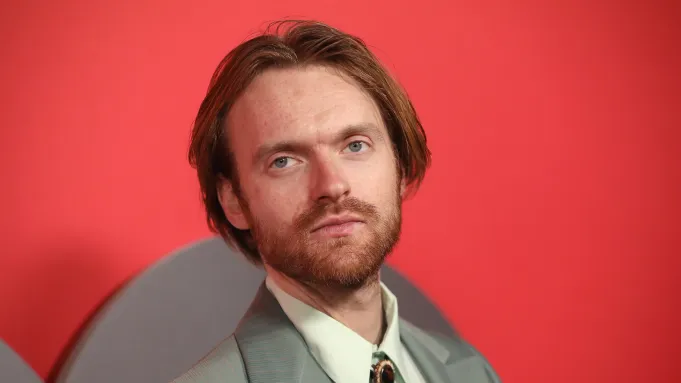
The corporate response was swift. Tour promoters removed Macklemore from the lineup after venue owners—including New England Patriots owner Robert Kraft, who controls Gillette Stadium—threatened to cancel upcoming shows entirely if the rapper remained on the bill. Not long after, the remaining opening acts, including Finneas, Irish singer-songwriter Aaron Rowe, Irish band Beoga, and Danish band Lukas Graham, withdrew in protest, leaving Sheeran to perform solo.

“Artists must not be silenced when they speak up for the oppressed,” wrote Finneas, the Grammy- and Oscar-winning musician and sister Billie Eilish’s primary collaborator, adding, “I stand with Palestine and its people.”
Taking the stage alone at Philadelphia’s Lincoln Financial Field on September 19, his first show after the controversy, Sheeran broke his usual routine to address the issue. Recognizing the heavy tension following Macklemore’s removal and the walkout of his supporting acts, Sheeran expressed regret over how the situation unfolded.
“I’ve had to take and make difficult decisions, and I am making mistakes, and I’m so, so sorry,” he told the audience. “I never wanted to be an activist musician, but this has put me in the middle of an important and passionate argument about free speech and the most complex political issue on the planet.”
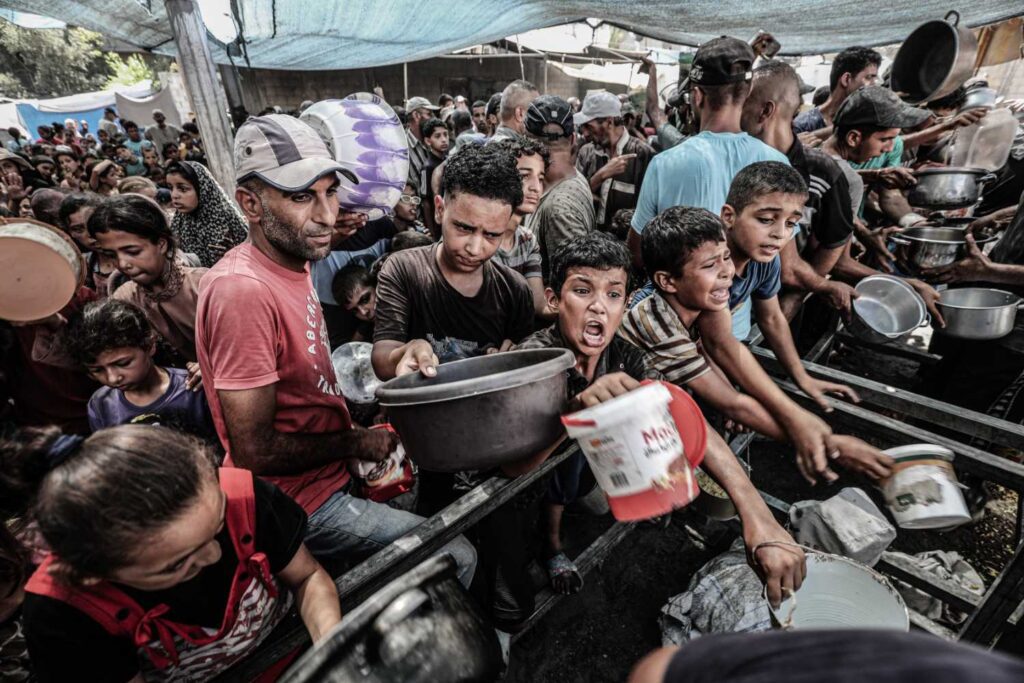
Addressing the ongoing war directly for the first time on stage, the “Lego House” and “Shape of You” hitmaker called what is happening in Gaza “catastrophic and unjustifiable and disproportionate,” while acknowledging that the October 7 attacks were “horrific and compounded centuries of Jewish pain.” He noted his heartbreak over “the scale of devastation and loss of civilian lives, of children’s lives,” as well as “the systemic injustice we’re seeing unfold in the West Bank.”
Despite speaking out, Sheeran, who has long maintained a reputation as music’s “Mr. Nice Guy,” defended his primary vision for the tour: to maintain his concerts as a “sanctuary” centered on unity and humanity, where people holding completely opposing political views can set their differences aside, sit side-by-side, and find common ground through music.
The Grammy winner noted that tour promoters dropped Macklemore under venue pressure, rather than by his own choice. Nevertheless, in the wake of the controversy, ticket prices dropped, and sales slowed for the remaining US dates of the tour—a sharp turn for an artist calculated by Pollstar in late 2025 as the third top-earning concert act of the millennium so far.
Related story: The great AI debate: Hit the brakes or charge ahead?
Related story: Are you paying more than everyone else? Inside the rise of surveillance pricing
Concerts as spaces for unity
On one side of the debate, supporters of political neutrality argue that stadium pop concerts are designed for collective unity rather than political rallies. Commentators emphasizing this perspective point out that ticket-holders pay for an artist’s music, not a political lecture.
Critics of Macklemore’s speech, including advocacy groups like the Israeli-American Council, argued that audience members were “ambushed” by a complex, one-sided political message they had not asked to hear, praising his removal from the tour as “the right action.”
From a business perspective, tour promoters and venue owners argue that when an artist uses a shared stage to express divisive views, it creates security risks and forces ticket-holders into uncomfortable positions. In this view, keeping the stage neutral protects the audience’s experience and ensures live music remains an inclusive space where everyone feels welcome.
Neutrality as an illusion
On the other side, advocates for artistic expression and social responsibility argue that true neutrality in the face of human suffering is an illusion. In a scathing column for The Guardian, sports and culture writer Howard Bryant argued that corporate venue owners function as a censorship apparatus, writing that billionaire stadium owners like Kraft represent “just another billionaire using his power to stifle words,” leaving artists looking “tattered” when they yield to corporate pressure. Highlighting the resulting crisis, Bryant asserted that Kraft’s actions demonstrate how “a rich man applying power” can silence political speech on a massive scale.

In another strongly worded piece for The Guardian, columnist Arwa Mahdawi argued that Kraft’s attempt at corporate censorship on a stadium stage backfired, triggering an unprecedented industry revolt. “Normally news stories about billionaires trying to stamp out free speech are depressing. But watching Kraft’s intimidation attempts backfire on him and his little buddy Ed, has been an absolute joy to watch. It seems Kraft didn’t realize that, for some people, morality is more important than money,” Mahdawi wrote.
She emphasized that stifling free speech only amplified the message Kraft sought to suppress, while Macklemore was steadfast in his focus on the humanitarian crisis rather than corporate damage control. Ultimately, she views the episode as a victory of collective solidarity over billionaire intimidation, while cautioning that “attempts to control what we can talk about will continue.”
Macklemore subsequently pledged his $1 million earnings from the tour to Palestinian relief efforts and invited Kraft to match it, stating on social media that his goal was to “bring the conversation back to where it belongs”: the Palestinian people. Kraft later wrote on social media that Sheeran had already asked him to match his own $2 million donation toward regional humanitarian aid.
Related story: Taylor Swift’s Songwriters Hall of Fame induction proves her lyrics were always the legacy
Related story: Quotes from Taylor Swift about creativity, heartbreak, and growing up that we’re keeping forever
A fight that’s not exactly new
Pop culture history shows that this struggle is far from new. In 1992, Sinéad O’Connor sang Bob Marley’s “War” acapella and ripped a photograph of Pope John Paul II to protest child sexual abuse in the Catholic Church in a now-iconic Saturday Night Live performance. A couple of weeks later, O’Connor was booed at a Bob Dylan tribute concert at Madison Square Garden, where she once again performed “War.”
Throughout the 1990s, rock band U2 routinely broadcast live satellite feeds from war-torn Bosnia during their stadium shows, insisting that ignoring global crises inside a multi-million-dollar venue was a moral failing. In 2003, country group The Chicks faced corporate blacklisting and radio bans after criticizing President George W. Bush on stage during the Iraq War.

All that said, the fallout from the Loop Tour proves that as global crises deepen, the line between entertainment and activism is becoming harder to draw. Some critics argue that Ed Sheeran’s attempt to stay strictly apolitical was naive, pointing out that deciding who gets to speak on a stadium stage is always a political decision. Others contend that forcing pop stars to take a side robs society of the rare spaces where people can still come together despite their differences.
For me, however, a stadium full of tens of thousands of people can never truly be a neutral space. Everything is political, whether you like it or not. Megastars like Ed Sheeran, Taylor Swift, and Justin Bieber possess a rare and extraordinary privilege: a microphone that reaches every corner of the globe. In the face of unspeakable atrocities, using that platform solely to offer an escape is an opportunity very much wasted.
As Elie Wiesel reminded us, neutrality only serves the oppressor, never the victim. May our biggest cultural icons realize, sooner rather than later, that their vast influence finds its highest purpose when giving voice to the silenced.