
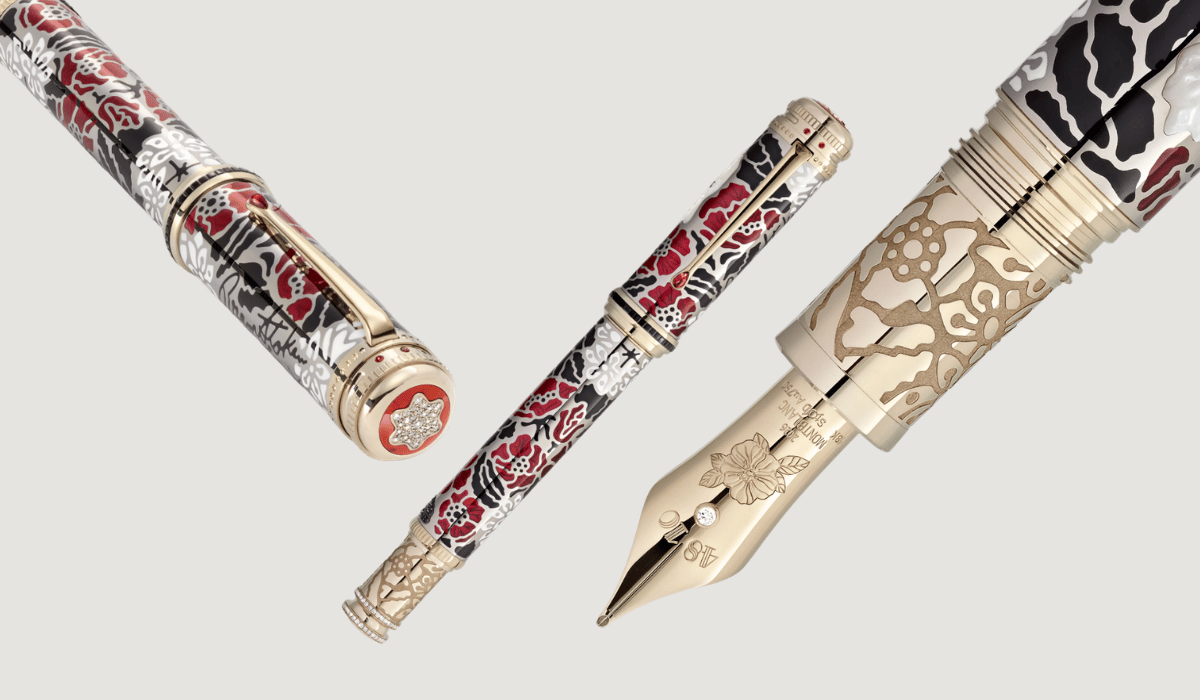

Diamonds and red garnets punctuate the $223,000 design. Only eight pieces are produced.
Long before vampires became fixtures of movies and television, there was Count Dracula. Bram Stoker’s 1897 novel did not invent the vampire, but it gave the creature much of the mythology that continues to haunt popular culture more than a century later. The Irish author drew on folklore, Gothic horror and the scientific anxieties of Victorian society to create a character so enduring that Dracula has long since escaped the pages of the novel that introduced him.
Now Montblanc has found another place for Stoker’s vampire to live: on the fountain pen.
The luxury house has unveiled the Writers Edition Homage to Bram Stoker, its latest collection honoring some of literature’s most influential authors. And rather than simply putting Stoker’s name on a writing instrument, Montblanc has mined Dracula for its strangest and most memorable details.
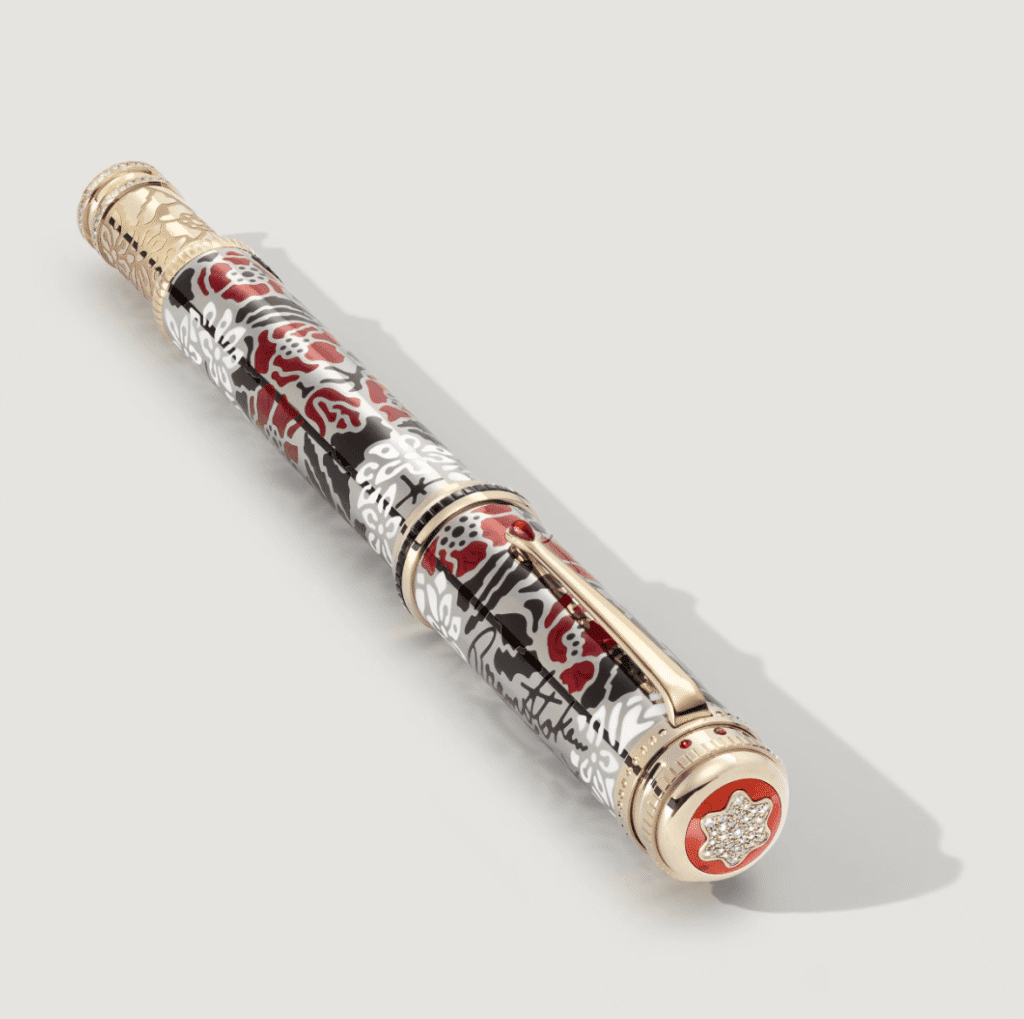
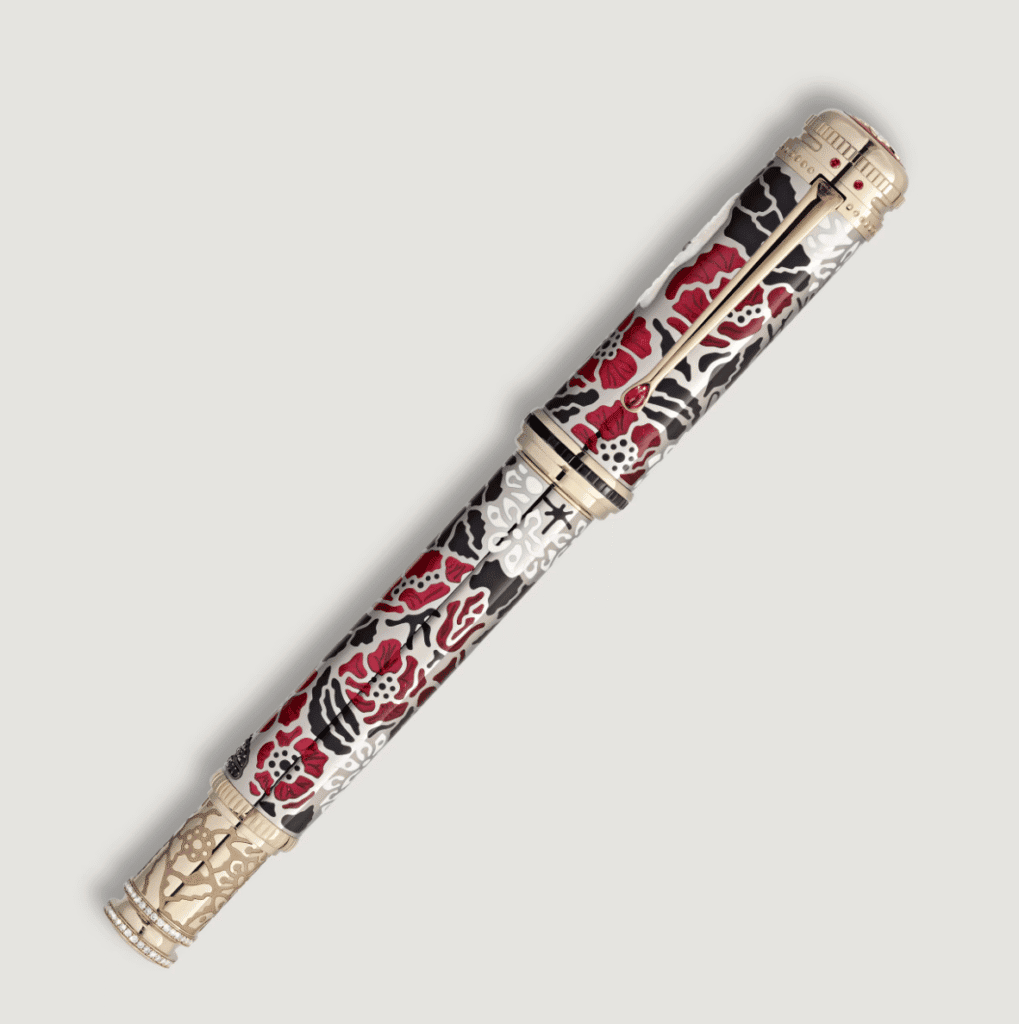
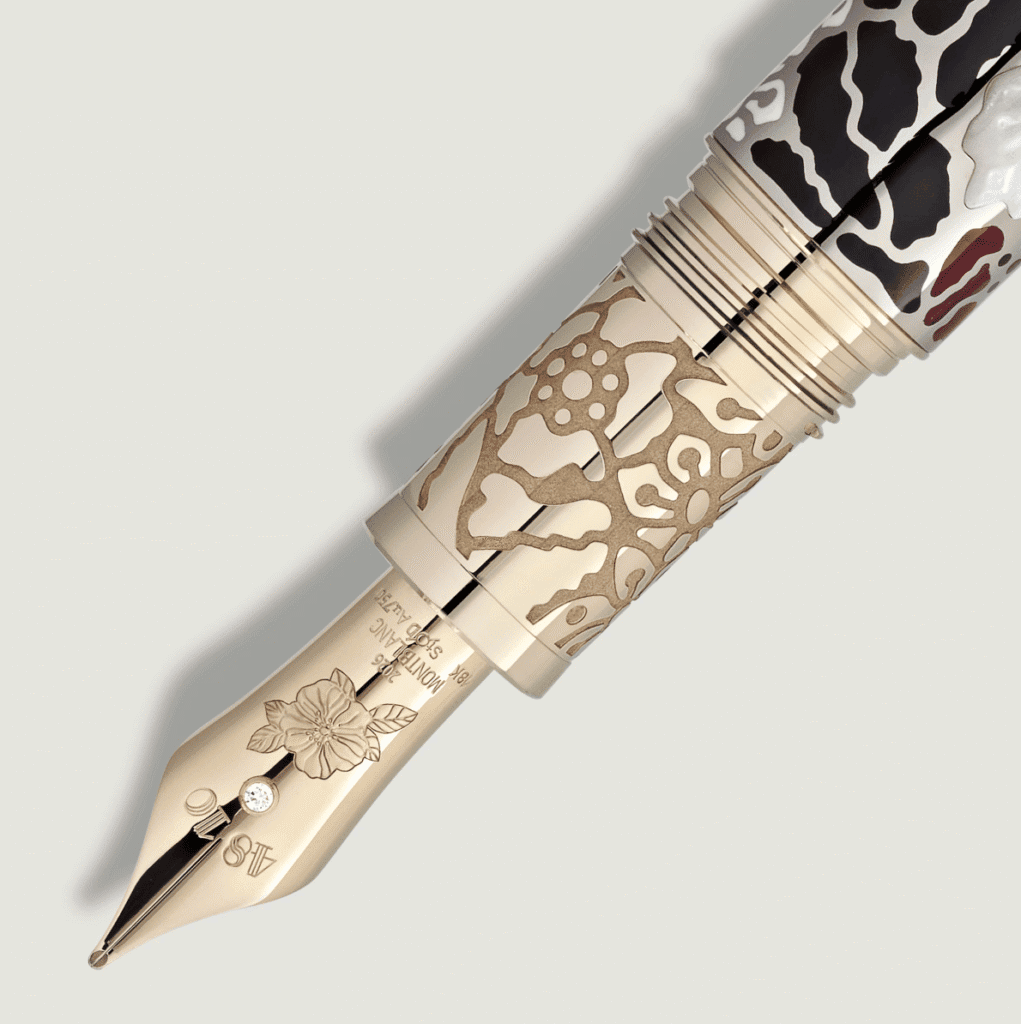
At the very top of the collection is the Writers Edition Homage to Bram Stoker Limited Edition 8, of which only eight pieces are produced. Montblanc lists the fountain pen at $223,000 in the US—that’s P13.9 in today’s exchange rate (Sept. 4, 2026)—putting it in the territory of a house or luxury car, and making it considerably more expensive than many of the objects most people would ever consider writing with.
Garlic and wild roses—both associated with protection against vampires in Stoker’s novel—wind around the writing instrument in an elaborate floral composition. Montblanc renders the motifs using hand-applied enamel, mother-of-pearl, engraving and precious stones.
The pen is constructed from Au 750 gold, with white-gold sections decorated with enamel and mother-of-pearl. Diamonds and red garnets punctuate the design, while the Montblanc emblem itself is made from brilliant-cut diamonds set against red jasper.
Even the solid-gold nib gets the jewelry treatment, with three-dimensional engraving and a diamond accent.
Related story: Montblanc unveils second chapter of ‘100 Years of Meisterstück’ campaign
Related story: Montblanc’s spring-summer Soft collection is a nod to brand’s early writing instruments
Dracula, translated into design
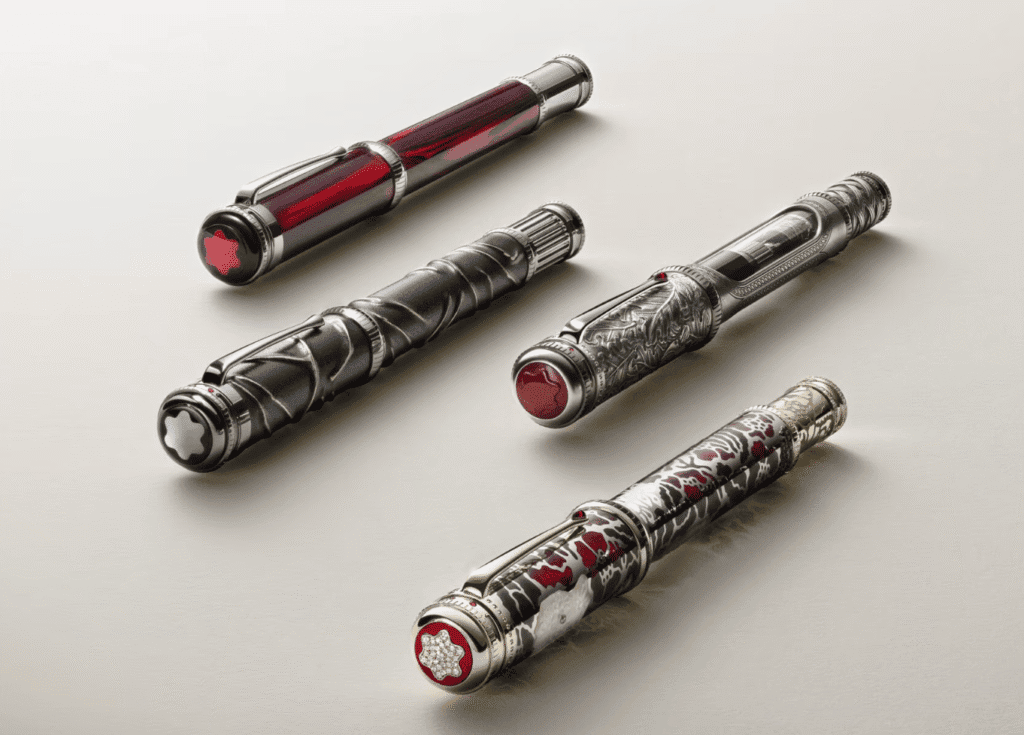
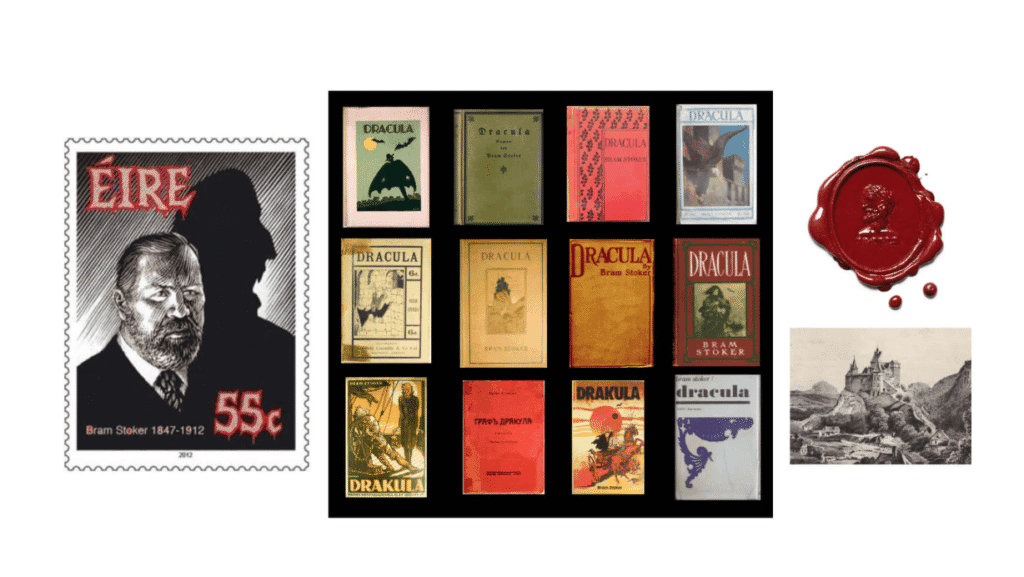
Stoker, who lived from 1847 to 1912, was a civil servant and theater manager before becoming immortalized as the author of Dracula. His novel was steeped in the tension between an ancient supernatural evil and a rapidly modernizing Victorian world. That contrast provides Montblanc with the design language for the collection.
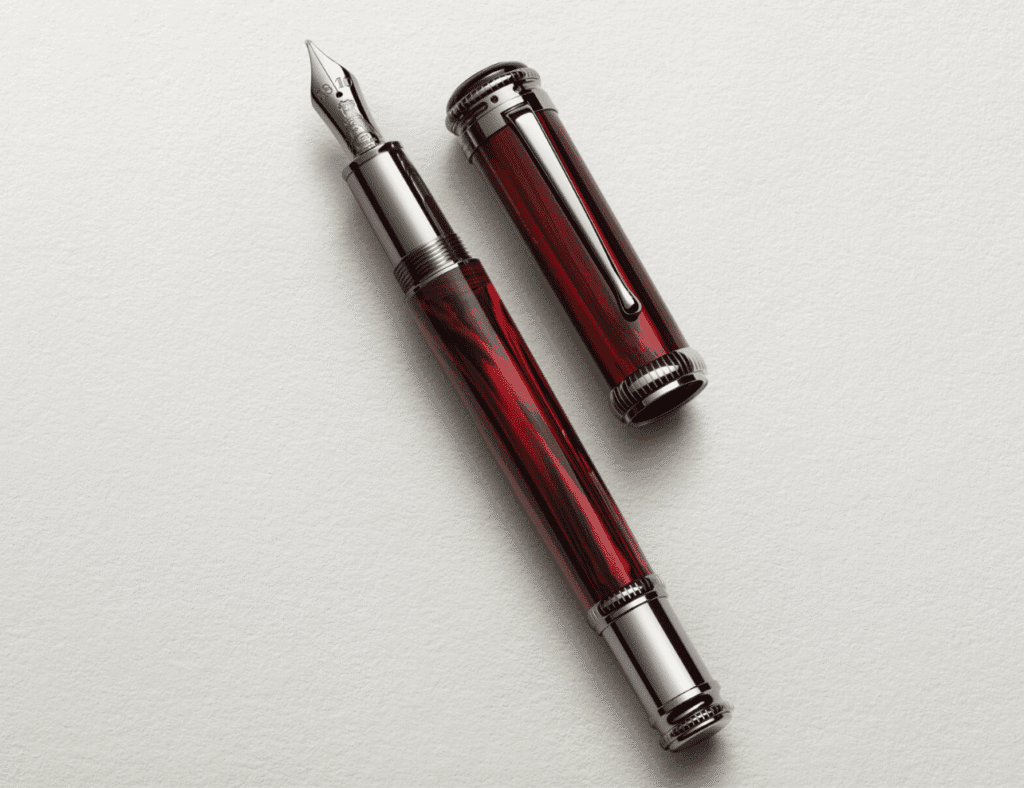
The standard Writers Edition Homage to Bram Stoker fountain pen begins with one of the most visceral images associated with Dracula: blood.
Its precious-resin cap and barrel have a blurred red-and-black appearance, meant to suggest blood mixing with the poison of a vampire bite. Two markings around the clip ring resemble fang marks, while Stoker’s signature is engraved on the cap.
One of Dracula’s fascinating qualities is how often its characters turn to contemporary technology and medicine as they confront something ancient and inexplicable. Blood transfusions, for example, become part of their attempt to save Lucy Westenra after Dracula begins feeding on her.
Montblanc picks up on that tension by modeling elements of the pens after the Pravaz syringe, an important 19th-century medical innovation. The syringe influences the silhouette as well as details of the cone and cap.
The result is an unusual collision: Victorian medical technology meets Gothic horror in a luxury writing instrument.
The standard fountain pen is fitted with a solid Au 750 gold nib bearing details derived from the Stoker family coat of arms. Ruthenium-coated fittings deepen its dark appearance, while a clip inspired by historical Montblanc designs adds another connection to the period.
Montblanc currently lists the fountain pen at $1,730 in the US. A rollerball is $1,380, while the ballpoint version is $1,240.
The collection becomes considerably more elaborate with the Writers Edition Homage to Bram Stoker Limited Edition 1897 or the year Dracula was published, and Montblanc is producing 1,897 examples of this edition.
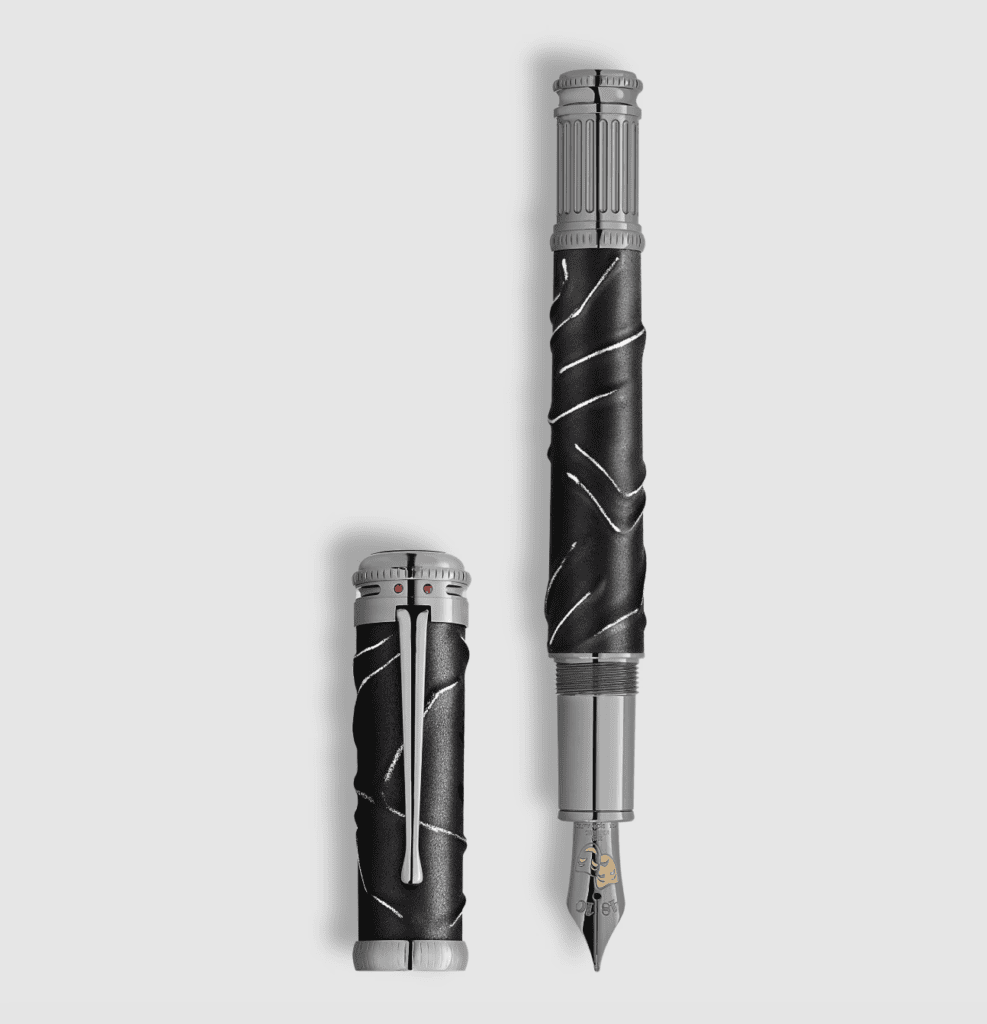
Here, the inspiration shifts from blood to transformation—specifically Dracula’s ability to take the form of a bat. Made from sterling silver with an oxidized finish, the pen has sculpted surfaces resembling a bat’s folded wings. The effect is less literal illustration than Gothic texture, allowing light and shadow to move across the darkened metal.
Two red garnets suggest vampire bite marks, while the Montblanc emblem is rendered in mother-of-pearl. Stoker’s signature is incorporated into the folds of the bat-wing design.
There is even a reference to Stoker’s other life.
For nearly three decades, he worked closely with actor Henry Irving and managed London’s Lyceum Theatre. The pen’s cone draws from the columns outside the theater, while the gold nib carries the familiar masks of comedy and tragedy.

The Limited Edition 1897 fountain pen is listed at $5,700.
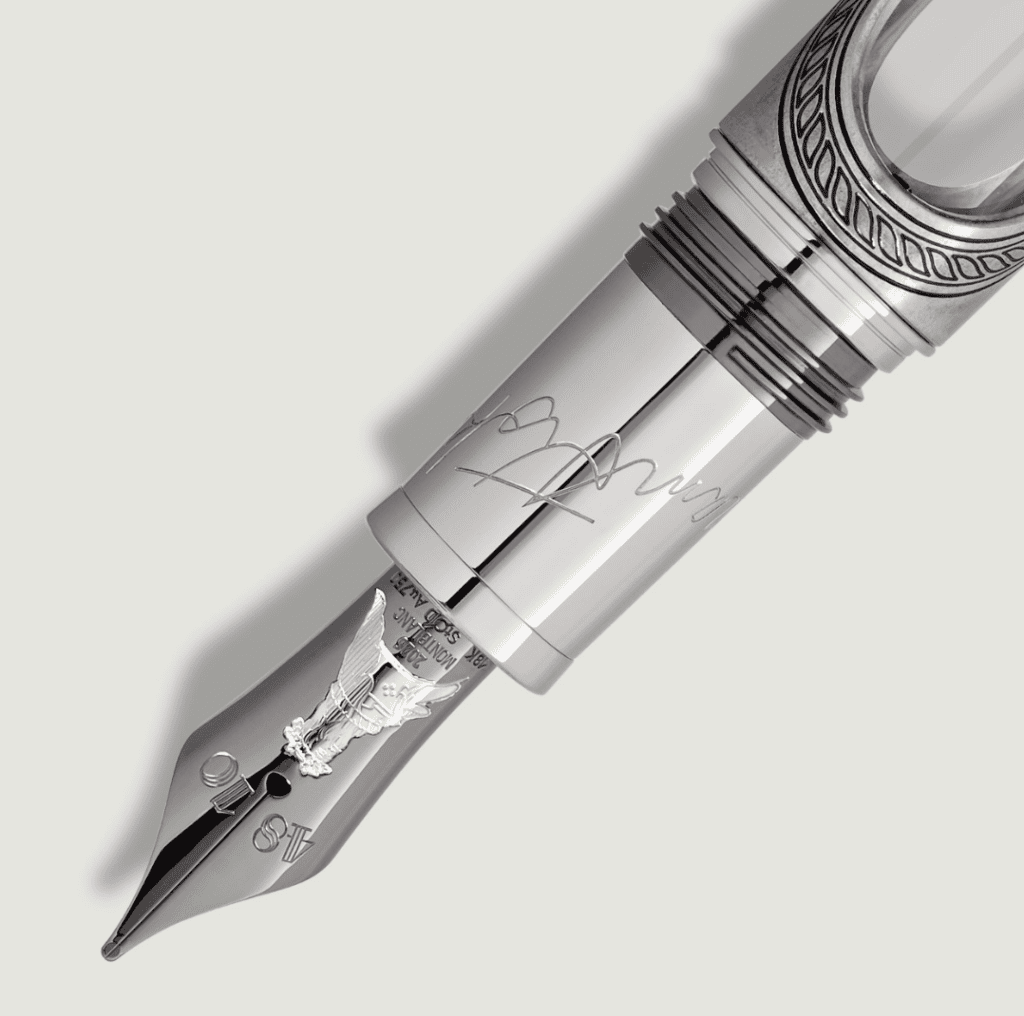
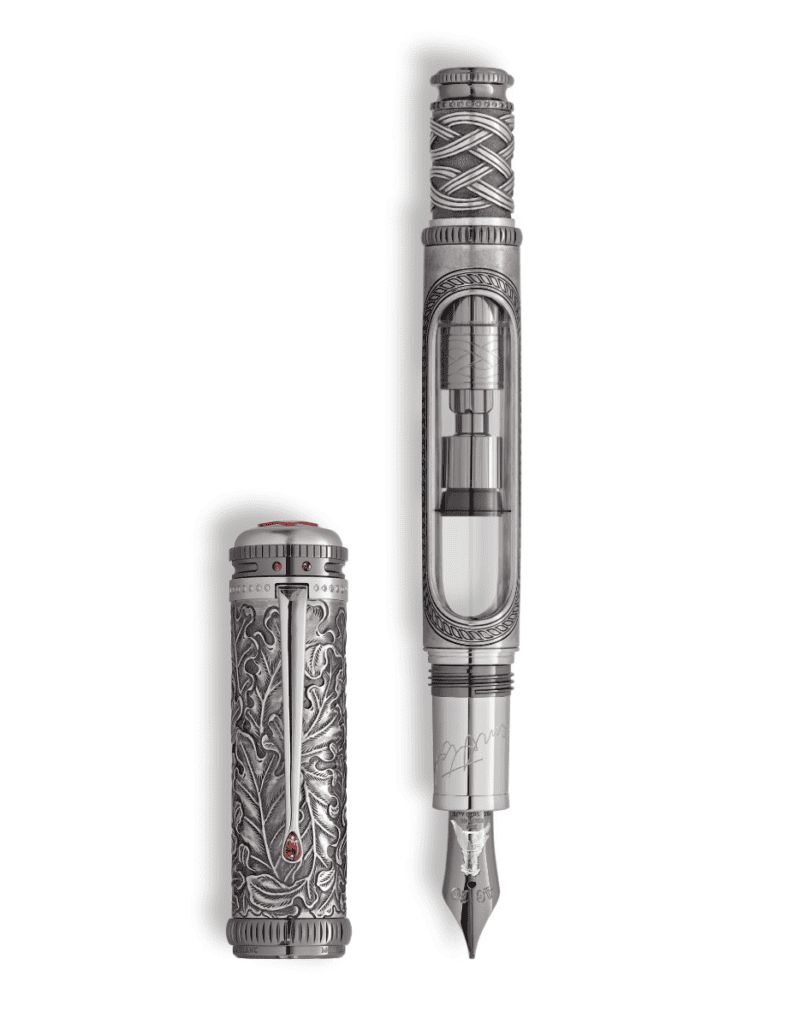
For serious collectors, Montblanc goes deeper into Stoker’s fascination with science with the Limited Edition 93. Only 93 pieces will be produced, the number referring to 1893, when Stoker began working on the novel that would become Dracula.
Made from solid Au 750 white gold, the pen has a blackened finish and openings in the barrel that reveal mechanical details beneath its surface. Again, the Pravaz syringe appears as an influence, reinforcing the collection’s interplay between the supernatural and the scientific.
There are more intimate details as well. Celtic knots incorporated into the design were based on drawings by Stoker’s sister Matilda, while Arts and Crafts-inspired engraving recalls the visual culture of the period.
Red garnets once again stand in for Dracula’s bite, and Stoker’s heraldry appears on the gold nib.
Its price is rather more frightening than the vampire: $50,500.
Dracula has proved remarkably difficult to kill. Published in 1897, the novel helped crystallize the image of the vampire for generations that followed. Countless books, stage productions, movies and television series have reinvented the character, while the basic vocabulary surrounding vampires—bites, blood, bats and the struggle between superstition and reason—remains instantly recognizable.
Montblanc’s collection essentially turns that cultural afterlife back toward the act that started it all: writing.
Related story: Best journaling apps for writing, planning, and reflection
Related story: Ruta Sepetys on writing historical fiction and terrible first drafts