

Maxxing is the latest self-improvement obsession, focused on optimizing every aspect of life. But is it taking self-improvement too far?
Amid rising living costs, political fatigue, and growing uncertainty, many Filipinos are turning inward. If institutions cannot guarantee comfort, stability, or upward mobility, perhaps the next best thing is optimizing the parts of life they can control. Across social media, users are now “maxxing” everything—from sleep schedules and skincare routines to finances and fitness goals. What began as a slurry internet slang has evolved into a cultural shorthand for self-optimization, behind a generation that’s becoming more and more focused on extracting more value, health, and fulfillment from everyday life.
The concept is simple: pick an area of life and maximize it. First came looksmaxxing, which encouraged people to improve their appearance through skincare, fitness, grooming, and style. Soon after, its siblings surfaced: sleepmaxxing, gymmaxxing, healthmaxxing, financial maxxing, and even nonna-maxxing—a slower lifestyle inspired by the habits of Italian grandmothers. Today, nearly every corner of self-improvement has acquired its own “maxxing” label.
The trend’s popularity, however, poses a larger question. Why are people suddenly trying to optimize everything? What does that reveal about modern life, particularly in a country like the Philippines where many citizens continue to navigate economic pressures, institutional frustrations, and an increasingly fast-paced digital culture?
Related story: What’s an analog bag? The low-tech trend taking over totes
Related story: Hobbymaxing: Why this healing trend is the new self-care strategy you need
What is maxxing?
According to Health.com, maxxing refers to the practice of maximizing a specific aspect of one’s life. The term first gained traction through looksmaxxing, a movement centered on improving physical appearance through lifestyle changes and personal care. Over time, the concept expanded into numerous categories, each promising a better version of oneself.
At its core, maxxing is not entirely new. People have always sought self-improvement through exercise, education, career advancement, and healthy habits. What is different today is the language surrounding it. Social media has packaged these pursuits into recognizable trends—complete with checklists, routines, tutorials, and measurable outcomes. The result is a culture where self-improvement has become highly visible, highly documented, and progressively gamified.
Why is it trending?
Part of the answer lies in the platforms themselves. TikTok, Instagram, and YouTube reward transformation stories. A clearer complexion, a stronger physique, a larger savings account, or a more productive routine all make for compelling content. Algorithms favor progress. Audiences engage with before-and-after narratives. Improvement becomes something people not only pursue, but also perform publicly.
The trend also emerged during a period when many people began reassessing their priorities. The pandemic prompted conversations around health, wellness, work-life balance, and mental well-being. At the same time, economic uncertainty pushed individuals to become more intentional about how they spend their time, money, and energy.
In the Philippines, these conversations have taken place against a backdrop of persistent concerns revolving around inflation, wage growth, transportation challenges, healthcare accessibility, and broader governance issues. While no evidence directly links these conditions to the rise of maxxing, they help explain why a culture centered on personal agency might resonate so strongly. After all, when external systems feel difficult to influence, improving one’s own routines can offer a sense of progress.
The many faces of maxxing
Sleepmaxxing
One of the most popular forms of maxxing today focuses on sleep. Sleepmaxxing involves creating routines and environments designed to improve sleep quality. Common practices include maintaining consistent bedtimes, limiting screen exposure before bed, reducing caffeine intake, and optimizing bedroom conditions.
While the term itself is trendy, the science behind it is well-established. Organizations such as the American Academy of Sleep Medicine continue to emphasize the importance of quality sleep for cognitive performance, emotional regulation, cardiovascular health, and overall well-being.
Gymmaxxing
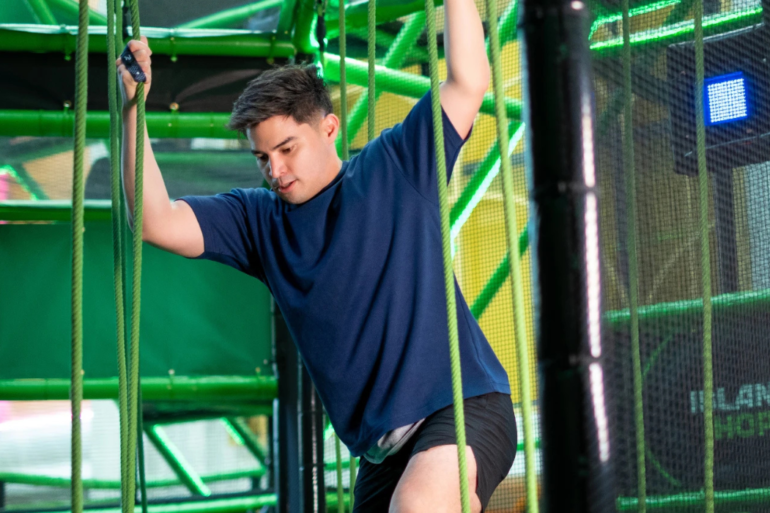
Gymmaxxing centers on maximizing physical fitness through structured exercise programs, nutrition strategies, recovery practices, and performance tracking.
The trend has become especially visible among younger professionals documenting online micro-content: running milestones, strength gains, and physical transformations. Unlike traditional fitness culture, gymmaxxing often incorporates data-driven tools such as smart watches, calorie trackers, and fitness tracker apps like Strava.
Looksmaxxing
Arguably the trend’s mother form, looksmaxxing remains highly influential among social media users. Participants of this initiative focus on improving looks through skincare, dental care, fitness, posture, grooming, fashion, and styling. For some, it serves as a gateway into healthier habits and greater self-confidence.
However, experts have also expressed concern that certain corners of looksmaxxing culture may encourage unrealistic beauty standards, excessive comparisons, or unhealthy obsessions with physical appearance.
Financial maxxing
Not all maxxing revolves around health or aesthetics. Financial maxxing centers on improving personal finances through budgeting, investing, debt reduction, side hustles, and long-term financial planning.
Given ongoing economic pressures worldwide, it is perhaps unsurprising that money-related content has become one of the fastest-growing self-improvement categories online. For many young professionals, financial maxxing represents an attempt to create stability in an increasingly unpredictable economic landscape.
Nonna-maxxing
Among the more unexpected trends is nonna-maxxing, inspired by the lifestyle habits often associated with Italian grandmothers. The term comes from the Italian word nonna, which translates to “grandma.”
The practice emphasizes slower living, home-cooked meals, gardening, walking, community connection, and reducing unnecessary stress. Unlike other forms of maxxing that focus on productivity and efficiency, nonna-maxxing embraces simplicity and sustainability. Ironically, it may be the least intense form of optimization—yet perhaps one of the most appealing.
Healthmaxxing
Healthmaxxing takes a broader approach by combining multiple wellness practices under a single umbrella. Exercise, preventive healthcare, nutrition, hydration, stress management, and recovery all play a role.
Rather than focusing solely on aesthetics, healthmaxxing aims to improve the person’s overall quality of life and long-term well-being. Its growing popularity reflects a wider societal shift toward preventative rather than reactive healthcare.
Are we improving ourselves, or optimizing ourselves to exhaustion?
Despite the growing desire to be heard and seen—whether online or offline, professionally or personally—the popularity of maxxing mirrors something larger than social media trends. For decades, self-improvement was often associated with achieving goals. Today, though, optimization has become a lifestyle in itself. Every habit can be measured. Every routine can be refined. Every area of life can seemingly be improved.
Health.com notes that experts caution against taking this mindset too far. Constant optimization may contribute to burnout, perfectionism, anxiety, and feelings of inadequacy when results fail to match expectations.
Not everything is controllable. Genetics, privilege, circumstance, opportunity, and luck continue to mold outcomes in ways no morning routine can fully overcome. That reality does not make self-improvement meaningless. It simply places it in perspective.

My version of maxxing
The more I researched maxxing, the more I realized I had been doing my own version of it without realizing there was a name for it.
In my 20s, I was far more spontaneous. I could be indecisive, reckless, and comfortable making choices without thinking too much about their long-term consequences. To put it another way, if you’ve ever watched a Filipino teleserye with a rebellious teenager sneaking out, running away from home, and learning lessons the hard way, chances are I’ve done some version of it myself—minus the drugs. Time felt abundant. If I wasted a few hours or made an impulsive purchase, it rarely felt like a big deal.
Motherhood changed that.
When I gave birth to my daughter, my relationship with time shifted dramatically. Suddenly, ten uninterrupted minutes to myself could feel like a luxury. An extra hour in the day felt valuable. Time stopped feeling endless and started feeling finite. That realization has influenced nearly every decision I make.
These days, I pay closer attention to what I eat—not simply because I want to lose weight, but because I want to stay healthy enough to enjoy a long life with my family. I want to feel stronger, more energetic, and more present. Like many mothers, I can speak hours about wanting to get my pink back, but this time, my approach feels more intentional than before. I am less interested in quick fixes and more interested in habits that I can realistically sustain. That same mindset extends beyond health.
I earn more now than I did years ago, but my spending habits are no longer as careless. Before buying something, I often ask myself a series of questions. Will I actually use this repeatedly? Does it align with my priorities? Is it worth the cost, or am I simply responding to a temporary impulse? This same principle applies to experiences.
If I am considering a trip, I think carefully about whether the destination genuinely excites me or whether I am simply following a trend. If I am looking at a class, workshop, or new hobby, I ask whether it will enrich my life or whether I am only interested because everyone else seems to be doing it.
At the end of the day, every decision now passes through a simple filter: Will this make me happier, healthier, or help me grow? It all boils down to being loyal to oneself, your needs, your wants, and everything that life has to offer.
For me, the goal is balance. It means eating healthier without becoming obsessed with dieting. It means improving my appearance without measuring my worth against unrealistic beauty standards. It means saving money while still allowing room for meaningful experiences. It means investing in education, fitness, and personal growth while also protecting time for family.
Financially, it means understanding that discipline and enjoyment can coexist. I invest and save, but I also believe in treating myself occasionally. A thoughtful purchase is not necessarily wasteful if it serves a purpose, lasts for years, and genuinely adds value to daily life. I used to be hard on myself, but what makes it different this time is I am my true ally, lawyer, and even therapist. I do things that fill my cup first before I finally pour onto others’.
Perhaps that is where healthy maxxing differs from unhealthy optimization. The objective is not to squeeze maximum productivity out of every waking hour. It is to become more intentional about where time, energy, attention, and resources go. In a world full of distractions, that may be one of the most valuable skills a person can develop so he can live his best life.
Related story: What women really want from life: We asked 5 ladies across different ages to tell their truths
Related story: Where her paycheck lands: What women love to prioritize in their 30s