
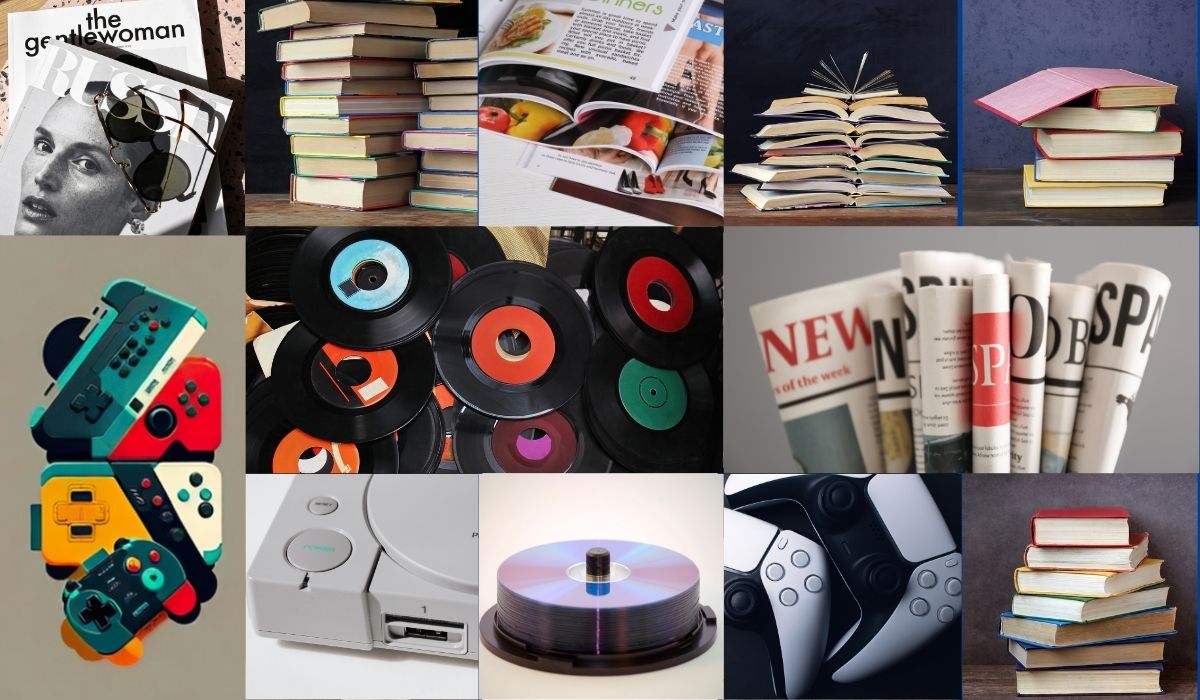

Sony has announced that starting January 2028, all new games for PlayStation 5 will come in digital format only. Imagine the backlash.
Growing up, I was fortunate enough to have a group of friends who shared a love for video games. The first time I played the original Pokémon game on the Nintendo Game Boy was with my bus mates in elementary school. We passed around that light gray handheld console with its iconic magenta A and B buttons the entire ride from school.
Each of us got a turn whenever we defeated a trainer, or until eventually the owner, Ren, had to step off when the bus reached his house. My favorite part was when Ren finally beat the game. He generously loaned his only copy of Pokémon Red (1996) to each of us in turn to start our very own journeys from Pallet Town.
As a millennial, it’s this sense of community that I cherish the most. I remember when our school library announced that they’d have one copy of Harry Potter and the Order of the Phoenix (2003) on the day of its release. My friends and I lined up to sign a blank call card the librarian had set up. It felt like claiming first dibs, or placing a pre-order in today’s terms.
The argument here is not about the vilification of digital media in its entirety or physical media being better. Everyone who grew up in the ‘90s remembers their fair share of blowing into cartridges at least two or three times to have games magically work.
Fast forward to 2013, when I lined up to get a copy of Grand Theft Auto V for the PlayStation 3 in some mall in Quezon City. A bunch of us in the queue just started giddily talking with one another. Sharing our predictions of what came bundled with the standard game disc on top of our best guesses from plot to the more ridiculous surprise Easter eggs, such as guest appearances from the likes of Mark Zuckerberg and Lindsay Lohan. The latter eventually lost a lawsuit against the game’s publisher, Rockstar Games, for allegedly basing a character’s likeness on the actress.
This nostalgic trip, however, came to a head when Sony announced that starting January 2028, all new games for PlayStation 5 will come in digital format only. It means all titles prior to this date will be the last batch of games that will natively come with a dedicated physical disc.
Related story: Are we losing the ability to read books?
Related story: What’s an analog bag? The low-tech trend taking over totes
Related story: Are screens taking over our lives?
That is, if all video game developers and publishers alike abide by the rules. If the past couple of years are any indication, several video game companies have already taken the plunge of exclusively offering digital-only releases of their games.
This comes shortly after the much-anticipated game Grand Theft Auto VI (circa 2026) went live for pre-orders on PlayStation and Microsoft’s Xbox digital storefront, with reports indicating that the $70 (roughly P4,300-P4,500) game will not come with a physical disc release.
For context, I unearthed the very same copy of GTAV that I lined up for more than a decade ago. The physical copy came with the game disc, a manual, and the entire playable map of the game.
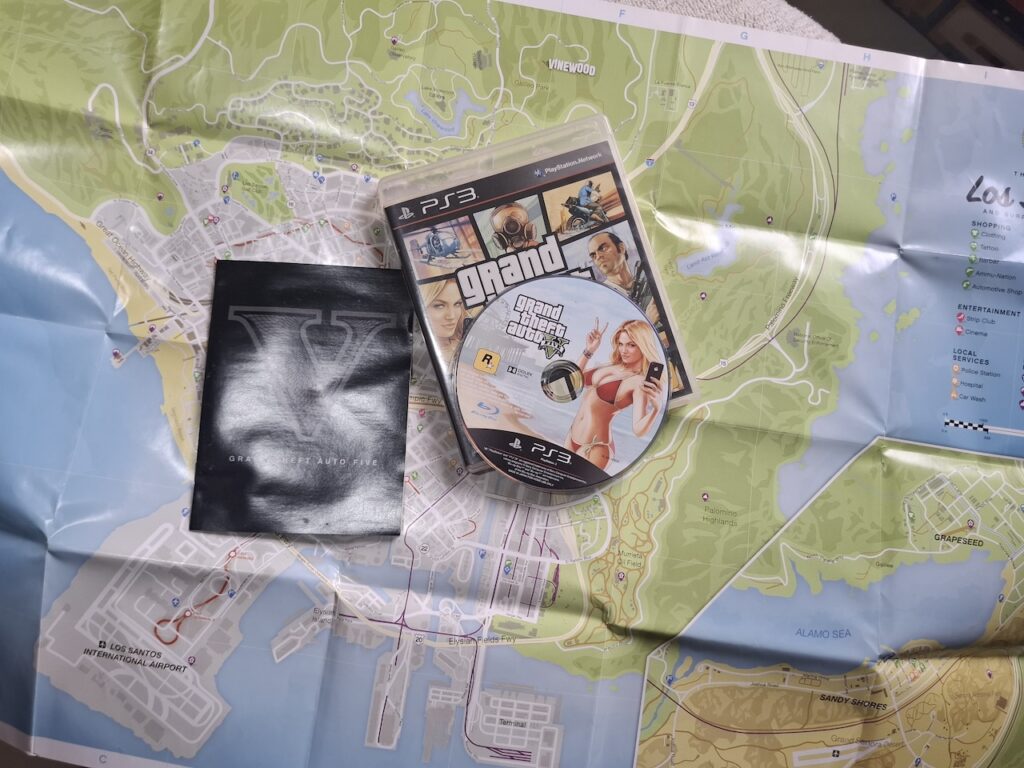
As if that were not enough, Rockstar rubbed further salt into the gaming community’s wounds by confirming that physical copies of GTA VI will still hit store shelves, but it will only contain a piece of paper inside the box with a download code to install the game.
Don’t get me wrong. The argument here is not about the vilification of digital media in its entirety or physical media being better. Everyone who grew up in the ‘90s remembers their fair share of blowing into cartridges at least two or three times to have games magically work.
For their part, Sony would only release a statement addressing the backlash over phasing physical discs a month after during the Q&A session of its recent earnings report. Lin Tao, Sony’s chief financial officer, said through an interpreter that while he understands people’s feelings about physical games, the company is still moving forward with getting rid of discs entirely.
“Digitalization of content overall has been progressing, that’s the big factor,” he said. “It’s not just for PlayStation, but for all kinds of content, digitalization is progressing.”
The price we pay for convenience
The shift from physical media is not exclusive to the video game industry. Books have given way to e-books and audiobooks. In fact, reading a physical book nowadays is sometimes seen as pretentious or deemed to be “performative,” as I’ve recently discussed in a previous think piece. Music and film collections have been reduced to several subscriptions on whichever streaming platform the next trending content is being binged—all contained under the premise of one’s convenience.
There’s nothing inherently wrong with that. However, whatever we gain in convenience when interacting with the world around us comes at the expense of the relationship that connects us with it, or a lack thereof.
Physical resurgence
With the influx of algorithmic streaming suggestions, owning physical media turns into an act of rebellion and a way to preserve and stamp a personal stake in our culture.
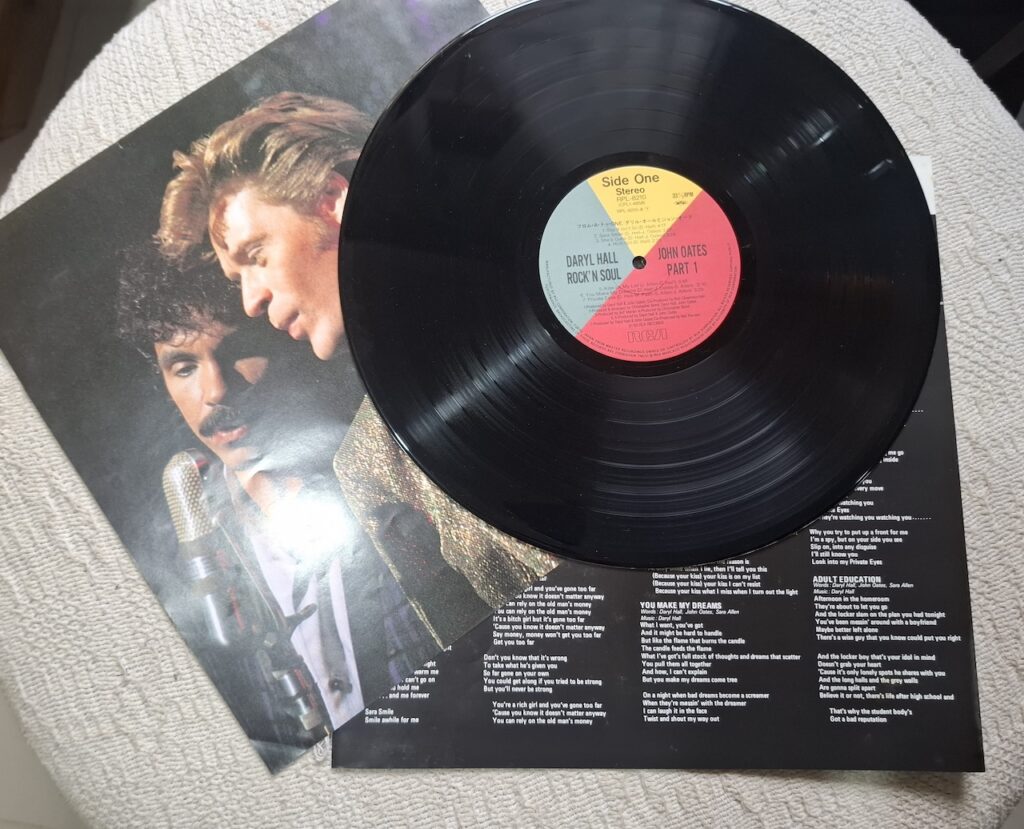
Amid the wave of digitalization, physical media continues to find a niche in the market in resistance to its so-called obsolescence. Take, for example, millennials’ affinity for collecting vinyl records, which has added to its renewed popularity around 2013.
According to a study published by Statista that year, vinyl was officially making a comeback amid steadily increasing sales of 32% in the United States, while compact discs (CD) sales plummeted by 14.5%.

As I grew older, and perhaps coming from the perspective of a history graduate, I started to develop a longing for a time that wasn’t mine. My immersion in vinyl created an attachment and an understanding that, in my own little way, I could take part in a rich tradition of appreciating music and artistry.
The physicality and intentionality of flipping through your record collection create this ritualistic personal experience that a predictive algorithm won’t ever fully capture or replicate.
Of course, there are downsides to physical media, such as storage space and its growing commercial value as a collector’s item. This often leaves you with a handful of records at your disposal. In turn, it leads to multiple repeat listening sessions, developing favorites, and forming stronger, deeply personal collections.
The next wave of physical media
The success of streaming services like Spotify, Netflix, Disney+, to name a few, keeps us glued to our devices without ever realizing that we consume content that we never really picked ourselves. Spotify may have revolutionized the way we listen to music and how easily artists can publish their songs, but prolonged activity on this app is sometimes not really about listening to music we chose, but an algorithmic dictation of what the machinery of content wants to push on that particular session.
Like the millennials before them, Gen Z is supporting physical media as they embrace a more analog way of living and enjoying their hobbies.
In the UK, British department store John Lewis reported a 96% increase in searches for CD players since July this year, with demand pushing its Pure Classic C-D6 and Crosley Voyager models to sell out.
The trend seemed to have crossed borders as US-based entertainment data company Luminate reported CD sales surged 16% to 16.3 million units sold, outpacing vinyl’s 2.4% growth in the first half of 2026. It’s further driven by 60% of Gen Z listeners, who have said they now mostly listen to music from the 1990s or earlier, a significant uptick from just 18% back in 2021.
Inevitably, media formats will continue to change. But if there’s one thing that the digital age cannot replace, besides having a tangible piece of history and art, it’s all the stories and memories that came with a piece of vinyl, a CD, or a video game, which keep us all connected.
Related story: The great AI debate: Hit the brakes or charge ahead?
Related story: How to raise a reader in the era of TikTok