
Hospitality is embracing local cuisine, imaginative dining spaces, and exclusive experiences, reshaping how travelers discover destinations and define memorable stays.
A beautiful suite, impeccable service, and a well-appointed restaurant have long been hallmarks of luxury hospitality. Yet, as travelers become more discerning about where they spend their time and money, the appeal of a five-star stay is finding new expressions.
At Manila Marriott Hotel at Newport World Resorts, two separate gatherings offered a glimpse into this evolution. One explored the future of food across Asia Pacific, while the other examined how hotel loyalty can open doors to experiences that extend well outside the property.
Together, they pointed toward a shift in what travelers value: a stronger sense of place, more personal experiences, and access to opportunities that make the journey as compelling as the destination.
Why local cuisine is taking the lead
At The GreatRoom, Marriott International’s first Philippine launch of its Future of Food Asia Pacific 2027 report put regional cuisine at the center of the conversation.
The findings were revealing. Across participating Marriott properties in Asia Pacific excluding China, 95% identified local cuisine as a leading dining trend, with regional dishes reportedly requested three times as often as Asian and Western cuisine.
“Travelers tend to resonate more with moments unique to their destinations,” explained Petr Raba, Marriott International’s Vice President of Food & Beverage for Asia Pacific excluding China. Ingredients, meals, drinks, and wellness traditions, he added, are becoming central to what guests value.
For the Philippines, where culinary traditions vary across provinces, this presents an opportunity to bring regional recipes and homegrown ingredients into the international hospitality conversation.
Marriott’s Sinagtala Philippine Culinary Arts Program offers one interpretation of this direction. Developed around the Sinagtala Philippine Culinary Arts Cup, the initiative brings together Filipino chefs to refine and preserve familiar dishes while presenting them within a contemporary hotel setting.
The resulting Sinagtala Recipe Book, presented by Manila Marriott’s Director of Culinary, Chef Meik Brammer, features winning entries and signature preparations from participating hotels: Pork Adobo from Clark Marriott Hotel, Vegetable Kare-Kare and Sisig from The Westin Manila, and Sinigang na Hipon and Chicken Inasal from Manila Marriott Hotel.
Guests can explore these recipes through the Future of Food x Sinagtala Buffet, available from October through December 2026 at Manila Marriott Hotel, with prices starting at ₱3,500.
The larger question is an interesting one: how can hotels reinterpret Filipino classics while retaining the character that makes them recognizable in the first place?
A restaurant without walls
Another discussion at The GreatRoom challenged the idea that memorable dining requires a conventional restaurant.
Chef Brammer described how hotel bars, lounges, poolside areas, and other shared spaces are becoming destinations for food and social interaction. Marriott’s report also points to growing demand for smaller, more distinctive dining formats, where lighting, sound, and flexible layouts can transform a familiar venue into something intimate.
Raba called this approach a “micro-concept within the concept,” allowing hotels to create specialized dining experiences within existing spaces.
One example is Selva Shrimp House, introduced at Manila Marriott’s GreatRoom al fresco area in partnership with BlueYou, a seafood company focused on sustainable and restorative supply chains across Southeast Asia.
The concept brings responsible seafood sourcing into the guest experience, giving diners an opportunity to engage with the environmental considerations behind their meals.
Such developments suggest that the next chapter of hotel dining may depend as much on where and how people eat as on what’s served.
The privilege of access
Elsewhere in the same hotel, a separate October 6 gathering at The Den examined another dimension of contemporary luxury: the value of access.
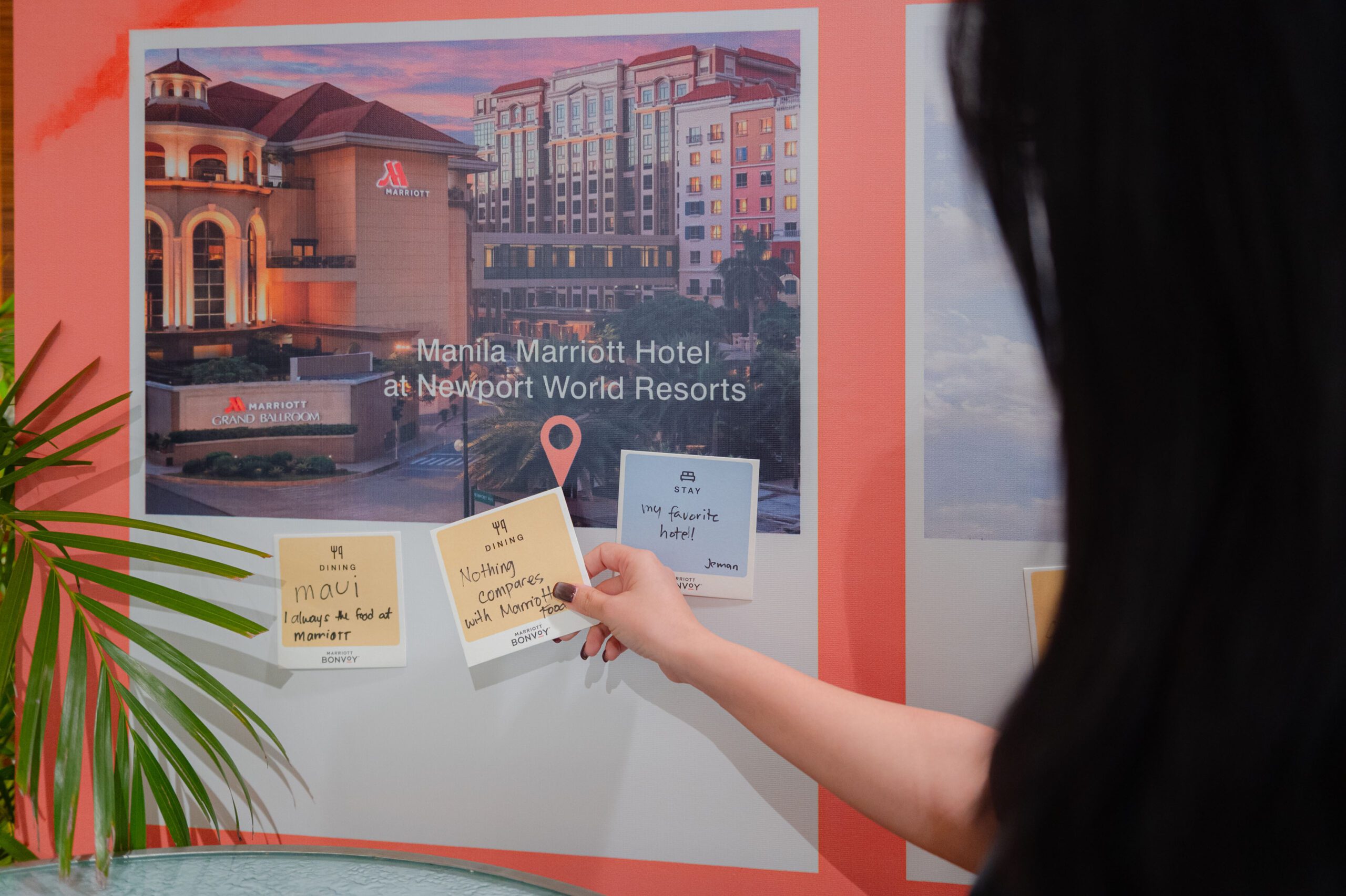
At the Marriott Bonvoy media event, Ching Yee Wong, Vice President of PR and Communications for Marriott International Asia Pacific excluding China, discussed how the company’s loyalty program connects guests with benefits that extend from hotel stays and dining to exclusive events.
Membership is free, with points earned through eligible stays, dining, and participating travel experiences. These can be redeemed for hotel nights and other rewards through Marriott Bonvoy.
Lifestyle personality Nicole Andersson, who hosted the gathering, shared how her collaboration with the brand introduced her to benefits she had previously overlooked, including during visits to Fairfield by Marriott Cebu Mactan and Four Points by Sheraton Palawan Puerto Princesa.

The more interesting proposition, however, lies in Marriott Bonvoy Moments, which allows members to use points for curated experiences, from concerts and culinary encounters to major sporting events. Some are available through fixed-point redemptions, while others require members to bid.
For Filipino tennis enthusiasts, the upcoming Australian Open 2027 offers a timely example. Marriott Bonvoy’s Tennis The World campaign, featuring Filipina tennis star Alex Eala, illustrates how sporting events are becoming part of the hotel loyalty experience, with opportunities for members to access tennis-related privileges and experiences.
It’s a different expression of luxury—one measured through experiences and opportunities that a conventional room reservation doesn’t necessarily provide.
When hospitality becomes personal
The two Marriott gatherings approached hospitality from different directions, yet arrived at a similar proposition.
At The GreatRoom, the discussion centered on cultural identity, Filipino culinary craftsmanship, and the possibilities of more imaginative dining spaces. At The Den, attention turned to the privileges and personal interests that can shape a guest’s journey.
Neither initiative changes the importance of a comfortable room, attentive service, or a well-prepared meal. They do, however, raise expectations for what a hotel can offer.
For the modern luxury traveler, the lasting impression might come from rediscovering a familiar Filipino dish in an unexpected setting, learning the story behind its ingredients, or securing a coveted sporting experience halfway across the world.
Related story: Catriona Gray and other ‘I do’ moments at Marry Me at Marriott
Related story: Marriott is bringing its playful, millennial-focused brand Moxy to the Philippines