
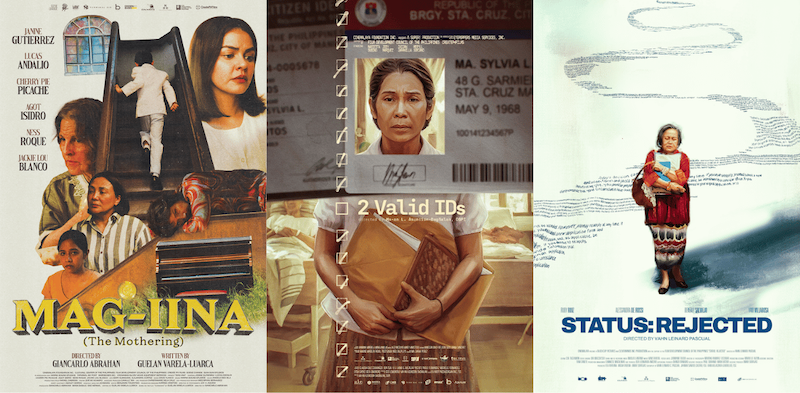

The recently concluded film festival recorded its highest box-office gross ever (P18 million)—and did so with one of the gloomiest lineups in its history.
While the indie fest is almost always dominated by serious films, there is usually at least one comedy or lighthearted fare. Last year’s edition actually had three – the sapphic romp Open Endings, the fantasy-comedy-drama Child No. 82: Anak ni Boy Kana, and the political mockumentary Republika ng Pipolipinas. These were the batch’s top grossing films and they helped push box-office receipts to more than double 2024’s total take, from P5.8 million to a new festival high of P13.4 million.


This year, some levity came from two competition entries – the corruption satire A.ni.mál and the American dream family drama-comedy Status: Rejected. Neither is laugh-out-loud funny, and both are underpinned by a deep exasperation at the dirty, unhealthy status quo among those in positions of power and privilege and those who are barely scraping by.
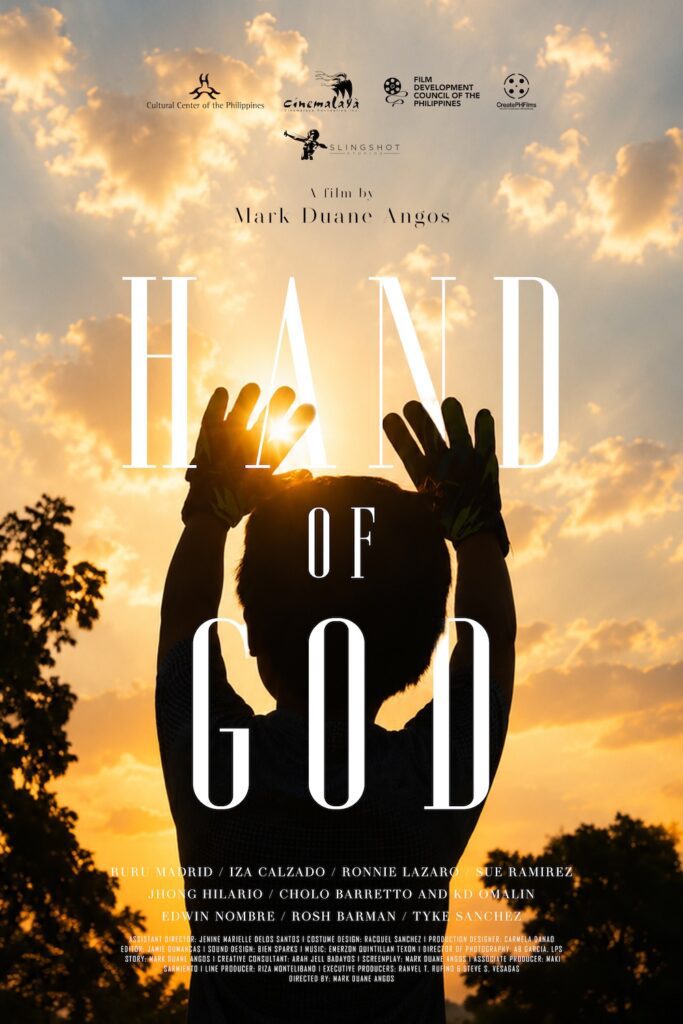
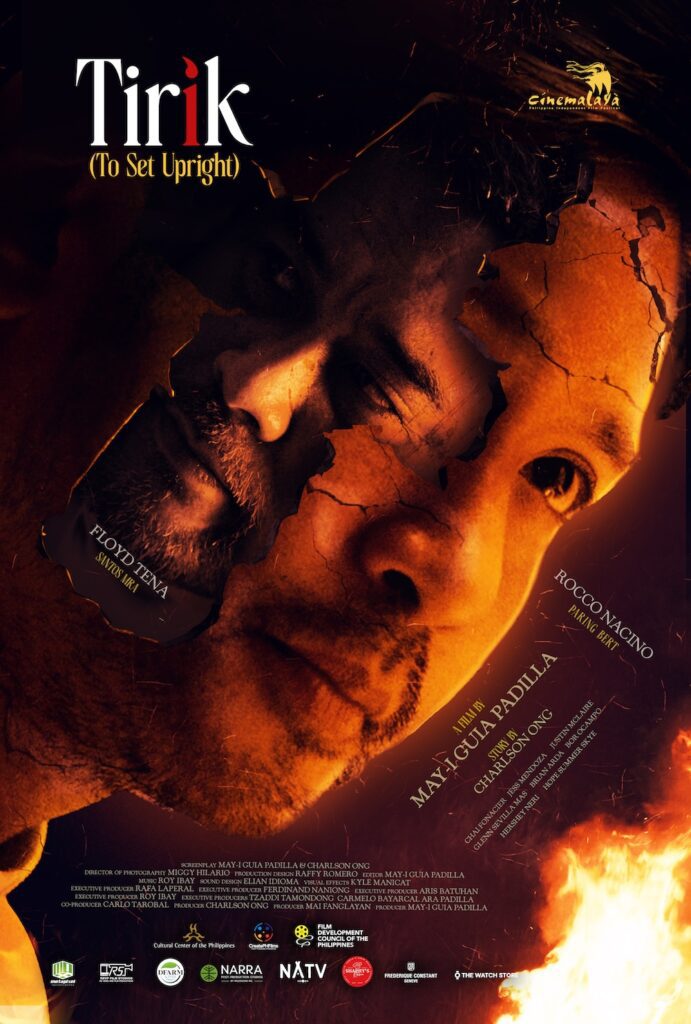
Elsewhere, this year’s edition of the annual indie fest included an HIV story (Tayo Lang Ang Nakakaalam), a drug war thriller (Tirik), and a drama about the war with terrorists in Mindanao (Hand of God). The last one revolves around a child soldier who must decide whether to follow the path laid out for him by the war or choose a future of peace on his own. Ganggang tells a similar story about children caught in the warzone between the military and the rebels. In Mag-iina, a young boy is not only a passive witness to the depravity of his elders at home but is an active participant when the restless spirit of the family patriarch takes control over him.
Related story: The POST profiles: Becoming Kakki Teodoro
Related story: The stories we tell, according to director Ramona Diaz
Related story: For Lea Salonga and Dolly de Leon, the call of the stage is a chance to explore the human condition

And then there’s comedian Pokwang. For her second Cinemalaya film (she debuted in 2016 with the dark comedy Mercury is Mine), she ditched her screen name for her real name, Marietta Subong. She has done this once before, in 2018, for the film Oda Sa Wala, an arthouse psychological drama about a middle-aged woman whose quiet, secluded routine is disrupted by the arrival of an unidentified corpse that prompts a series of events that alter her lonely life and emotional state. In 2 Valid IDs, the 55-year-old actress is again in serious mode, portraying a poor woman who finds herself struggling physically, mentally, and emotionally with bureaucratic red tape and challenged to keep her moral values as she races against time to save her ill husband. She hardly cracks a smile, let alone drop a punchline in a mostly quiet film.
For her effort, she was rewarded with the festival’s Best Actress prize, shared in a rare Cinemalaya tie with Status: Rejected lead Ruby Ruiz.
As an indictment of the unjust class divide and the unfairness between the haves and the have-nots, the powerful and the powerless, 2 Valid IDs packs a more emotional gut-punch than Status: Rejected, captured fully by Subong’s grounded, lifesize, simmering-towards-an-implosive-breakdown performance. These two competition entries together with Best Film winner Mag-iina and exhibition titles Filipiñana and 58th make for one of Cinemalaya’s strongest suites of movies about Filipino women struggling with patriarchy, politics, and privilege.
Here’s a deeper dive on the first three titles that also happen to be the festival’s biggest box office hits this year.
2 Valid IDs is a procedural along the likes of Last Supper No. 3, Best Film at Cinemalaya’s 2009 edition. Both movies track how the country’s slow, cumbersome, corrupt bureaucracy and legal system does the poor no favors. Supper was inspired by a real court case involving the loss of an artwork (the titular “Last Supper” reproduction) and the legal journey the lowly production assistant in charge of its care had to endure, while IDs is a more commonplace story about a woman (Subong) getting for herself the titular government-issued IDs she needs to claim the pera padala from a relative to pay for her husband’s long stay in the hospital.
The 2009 film plays it for laughs; the new one does not. Both are clear-eyed, biting indictments of the awful red tape in government, but IDs, which also depicts the terrible state of healthcare in the country, especially for the poor, brings out more of the pathos and packs more emotional punch. It’s not just because it’s a drama; it’s heartrending because it details how the system pushes an earnest, upstanding, loving everyday woman to eventually resort to street-level corruption and an illegal act. And also because the woman is played by Pokwang with beautiful nuance and lived-in soulfulness.
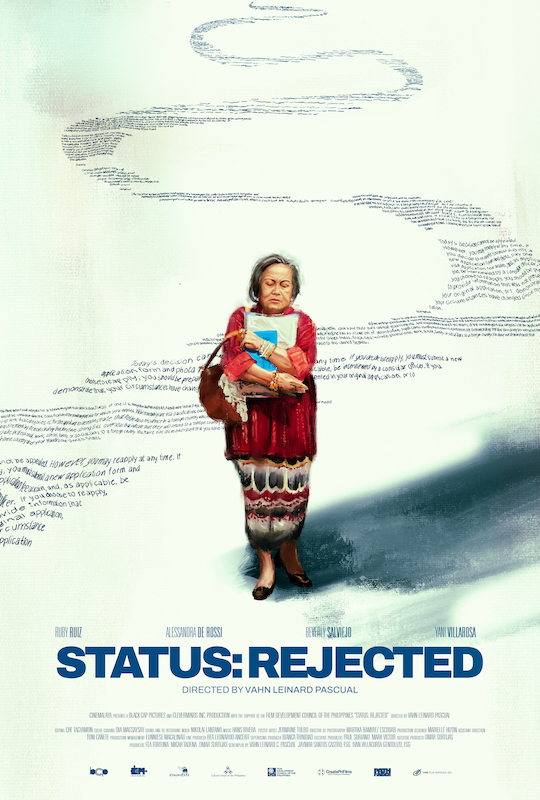
The same can be said for Ruby Ruiz in an even more layered role. Status: Rejected sees the 65-year-old veteran character actress, who has already won the Cinemalaya Best Actress plum in 2019 and two Best Supporting Actress awards, playing a loving but unshowy mother and lola and with-it friend who is hellbent on going to the US in the hope of reuniting with her son and sharing the better life she thinks his son has. After her US Visa application gets rejected for the nth time, she creates a new social media page upon the prodding of her best friend, supposedly to help in her next application.

The moment her page goes live, she gets a friend request from an American guy living in the US. This starts an online affair that gives her the kind of connection and validation that’s been missing in her life in ages. Or so she thinks. The American is eventually revealed to be a scammer, but not before duping her of all the money she has and the little cash her daughter keeps in her cabinet. What she thought was her ticket to love and her American dream turned out to be a nightmare for herself and her family.
On the other end of the Filipino family spectrum in this year’s festival is Mag-iina, about an affluent family damaged by intergenerational trauma, the violence and depravity of men-children, the power of matriarchy both as enabler and resistance to patriarchy, and class exploitation.
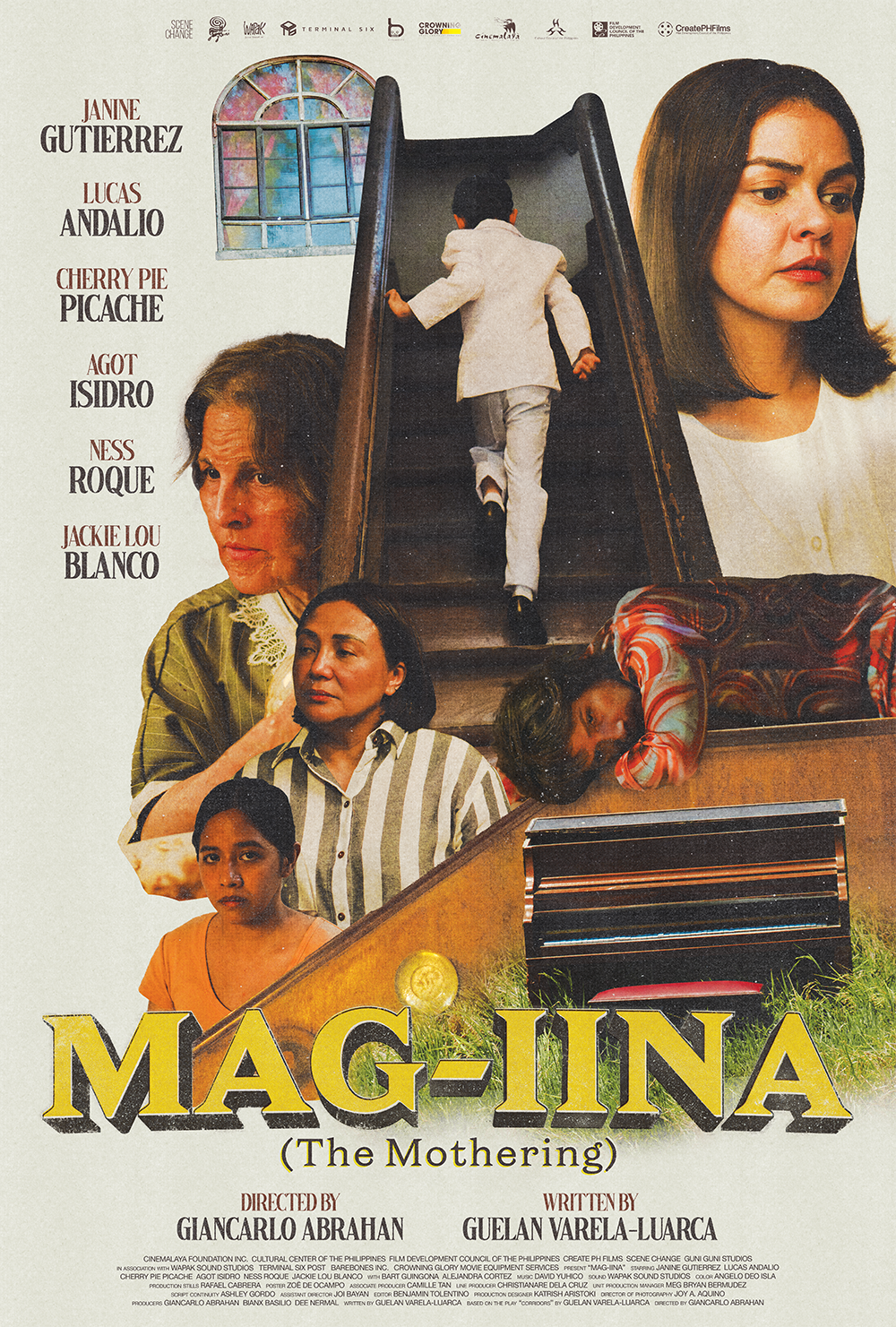
Janine Gutierrez stars as a young millennial returning from the US to her family’s ancestral mansion in the Philippines days before the end of the 40-day mourning period for her departed father. It doesn’t take long before she remembers what drove her away— the toxic family dynamics between her drunken mother (Agot Isidro playing the most gorgeous neurotic in local movies this year so far), her eccentric aunt (Cherry Pie Picache, reliably superb as the relatively sane one keeping the family and home from imploding), and her aging grandmother (Jackie Lou Blanco as we’ve never seen her before, deglamorized in a role of glamour and grandeur).
The family also includes a househelp with her own dark secret and a young adopted boy who gets possessed by the spirit of the departed. The film is a deliciously twisted psychological horror-drama that often sounds and feels like it was culled from a sprawling decades-spanning novel that got dressed up as a mental asylum movie. It’s bold and brave and is unlike anything Cinemalaya has served up before. And it adds a sprinkling of spice to the glum and gloom of this year’s festival.
Related story: The real nostalgia: From Hollywood cash cows to deep cultural longing
Related story: How microdramas turn random scrolling into paid viewing
Related story: From Greece to Morocco: Six ‘The Odyssey’ filming locations to inspire your next epic journey